
Water Pills: What They Are, How They Work, and What You Need to Know
When doctors talk about water pills, medications that help your body get rid of extra fluid through urine. Also known as diuretics, they're one of the most common treatments for high blood pressure and swelling caused by heart or kidney problems. But they’re not just about peeing more—they affect how your body handles salt, water, and even potassium. If you’re taking them, you need to know what’s really happening inside you.
Diuretics, a class of drugs that increase urine output, come in different types. Some, like hydrochlorothiazide, work on the kidneys to flush out sodium and water. Others, like furosemide, hit harder and faster—often used when someone’s retaining a lot of fluid from heart failure. Then there are potassium-sparing types, like spironolactone, that help you keep important minerals instead of losing them. Each one has different risks. For example, taking a water pill with certain blood pressure meds can spike your potassium levels dangerously high, especially if you’re older or have kidney issues. That’s not just a side effect—it’s a real emergency waiting to happen.
Fluid retention isn’t just about puffy ankles. It’s linked to kidney function, how well your kidneys filter waste and balance fluids. When kidneys slow down, fluid builds up, and water pills are often the first tool doctors reach for. But if your kidneys are already damaged, some diuretics won’t work as well—or could make things worse. That’s why dosing isn’t one-size-fits-all. A person with liver disease, for instance, might need a different approach than someone with heart failure. And if you’re on multiple meds, like statins or antibiotics, water pills can interact in ways you won’t find on the bottle.
People often think water pills are harmless because they’re common. But they’re powerful. Too much can lead to dehydration, dizziness, or even dangerous drops in blood pressure. That’s why so many of the posts here focus on how medications affect each other—like how SGLT2 inhibitors can cause dehydration, or how trimethoprim raises potassium levels. Water pills don’t exist in a vacuum. They’re part of a system. Take them with other drugs, and you’re changing how your body handles everything from electrolytes to heart rhythm.
And it’s not just about taking them—it’s about knowing when they’re needed. If you’re swollen, it doesn’t automatically mean you need a water pill. Sometimes it’s your thyroid, your heart, or even too much salt. Misuse can mask real problems. That’s why the posts below cover everything from how these drugs interact with liver disease to why timing matters with other meds. You’ll find real cases, real risks, and real advice—not guesswork.
What you’ll see in the articles ahead isn’t just a list of side effects. It’s a map of how water pills fit into the bigger picture of your health—how they connect to kidney function, blood pressure, drug interactions, and even what you eat. If you’re on them, or thinking about it, this collection gives you the facts you won’t get from a quick Google search.
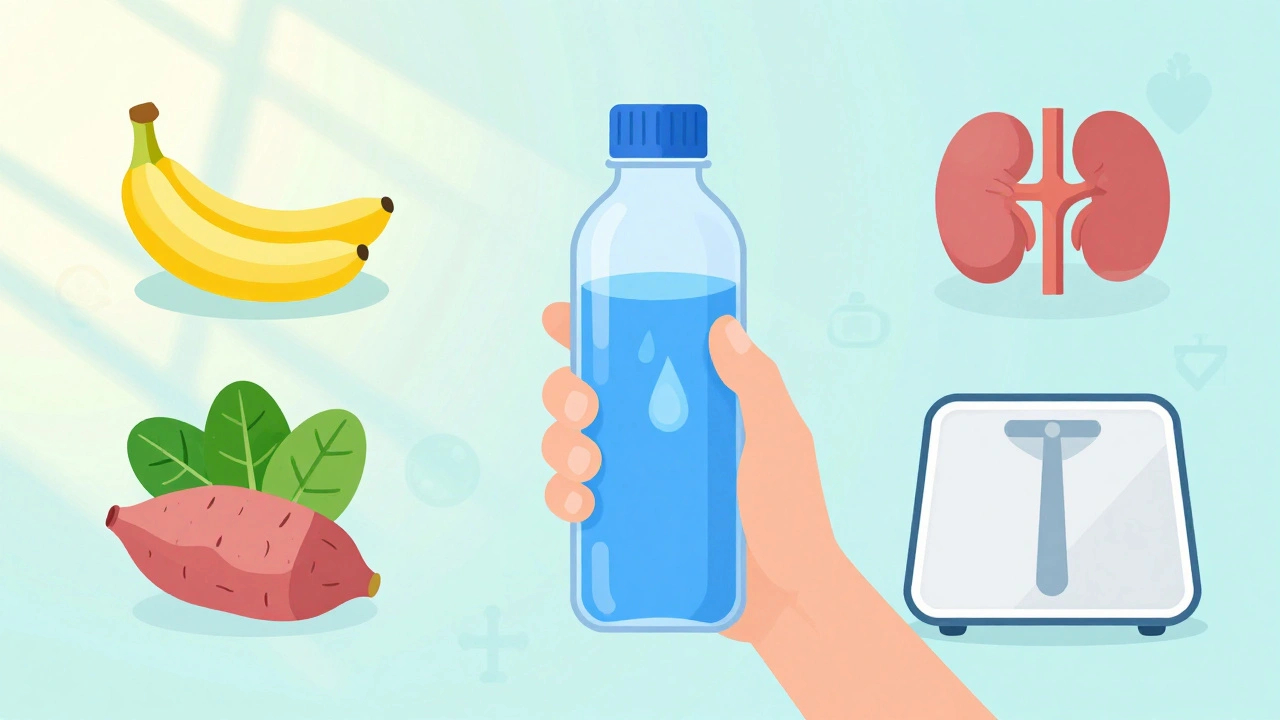
Hydration and Diuretics: How to Balance Fluid Intake to Avoid Side Effects
- Dec, 7 2025
- 11
Learn how to balance fluid intake when taking diuretics to prevent dehydration, electrolyte loss, and dangerous side effects. Practical tips for daily hydration, what to avoid, and how to monitor your body.
Categories
- Medication Information (122)
- Health and Wellness (52)
- Women's Health (7)
- Mental Health (5)
- Support Resources (5)
- Supplements (5)
- Pharmacy Reviews (5)
- Dermatology (4)
- Nutrition (3)
- Fitness and Wellness (3)
Archives
- April 2026 (1)
- March 2026 (10)
- February 2026 (12)
- January 2026 (27)
- December 2025 (30)
- November 2025 (24)
- October 2025 (29)
- September 2025 (14)
- August 2025 (2)
- July 2025 (7)
- June 2025 (2)
- May 2025 (3)
- online pharmacy
- dietary supplement
- medication safety
- health benefits
- side effects
- generic drugs
- drug interactions
- treatment
- wellness
- optimal health
- diabetes management
- safe medication purchase
- online pharmacy Australia
- brand name drugs
- authorized generics
- generic medications
- medication side effects
- link
- women's health
- dietary supplements