
Hydration and Diuretics: How to Balance Fluid Intake to Avoid Side Effects
 Dec, 7 2025
Diuretic Fluid Intake Calculator
Personalized Hydration Guidance
Calculate your safe daily fluid intake based on your diuretic type, kidney function, and health conditions
Enter your details to get personalized recommendations
When you’re on diuretics, drinking water isn’t just about quenching thirst-it’s a balancing act. Too little, and you risk dehydration, dizziness, or muscle cramps. Too much, and you could overload your heart or kidneys, especially if you have heart failure or kidney disease. Diuretics, often called "water pills," are among the most commonly prescribed medications for high blood pressure and heart failure. But they don’t just remove excess fluid-they pull out sodium, potassium, and magnesium too. That’s why managing your fluid intake isn’t optional. It’s essential.
How Diuretics Work (And Why They Throw Off Your Balance)
Diuretics make your kidneys flush out more sodium and water than usual. This reduces fluid buildup in your body, which lowers blood pressure and eases strain on your heart. But here’s the catch: every time you pee more, you lose more than just water. Loop diuretics like furosemide can make you lose up to 2 liters of urine a day. Thiazides like hydrochlorothiazide are milder but still cause daily losses of 50-100 milliequivalents of sodium and 20-40 mEq of potassium. That’s why so many people on these meds feel weak, tired, or get leg cramps.
Potassium-sparing diuretics like spironolactone help reduce potassium loss, but they come with their own risk: too much potassium in the blood. This can be dangerous, especially if you have kidney problems. Many patients end up on a combo of a thiazide and a potassium-sparing diuretic to balance things out. But even then, your body’s electrolyte levels can swing if your fluid intake isn’t steady.
How Much Water Should You Drink?
There’s no one-size-fits-all number. The general advice from the British Heart Foundation and Mayo Clinic is 1.5 to 2 liters (6-8 cups) per day for most people on diuretics. But if your kidneys aren’t working well-say, your eGFR is below 30-you might need to limit fluids to just 1-1.5 liters. On the flip side, if you’re on a strong loop diuretic like furosemide, your doctor might tell you to drink an extra 300-500 mL daily to make up for the extra fluid loss.
The key is consistency. Don’t chug two liters at dinner and then sip nothing all day. That’s a common mistake. Instead, spread your intake evenly. Sip water through the morning and afternoon. Cut back in the evening so you’re not waking up every two hours to pee. Your body handles steady fluid intake better than big bursts.
Watch for These Signs You’re Dehydrated
Dehydration from diuretics doesn’t always feel like thirst. Many people don’t feel thirsty until they’re already low on fluids. Watch for these red flags:
- Dizziness when standing up
- Dark yellow or amber-colored urine
- Dry mouth or lips
- Muscle cramps, especially at night
- Headaches
- Low urine output (less than 400 mL in 24 hours)
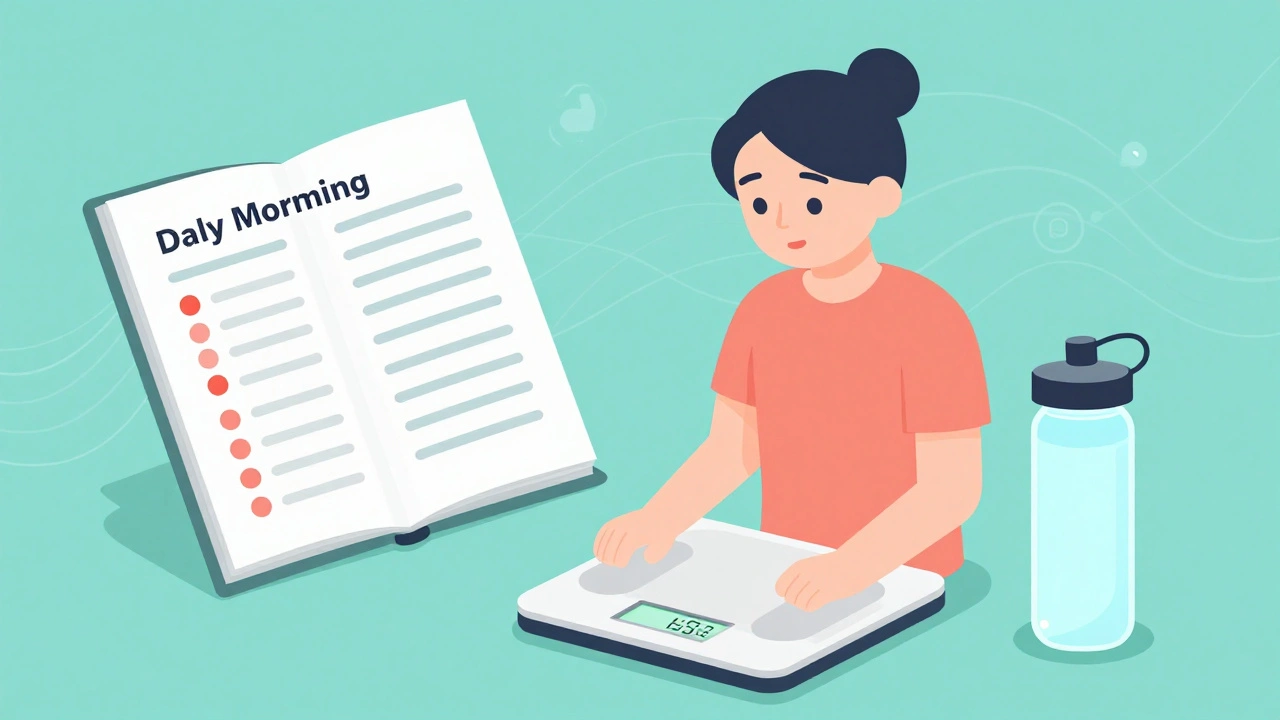
A simple trick: check your morning weight. If you drop more than 2 pounds (1 kg) overnight, you’ve likely lost too much fluid. That’s a signal to talk to your doctor. On the flip side, if you gain 2 pounds or more in a day, you might be drinking too much-especially if you have heart failure. Fluid retention can make your heart work harder, leading to more swelling and shortness of breath.
What to Avoid: Alcohol, Caffeine, and Other Traps
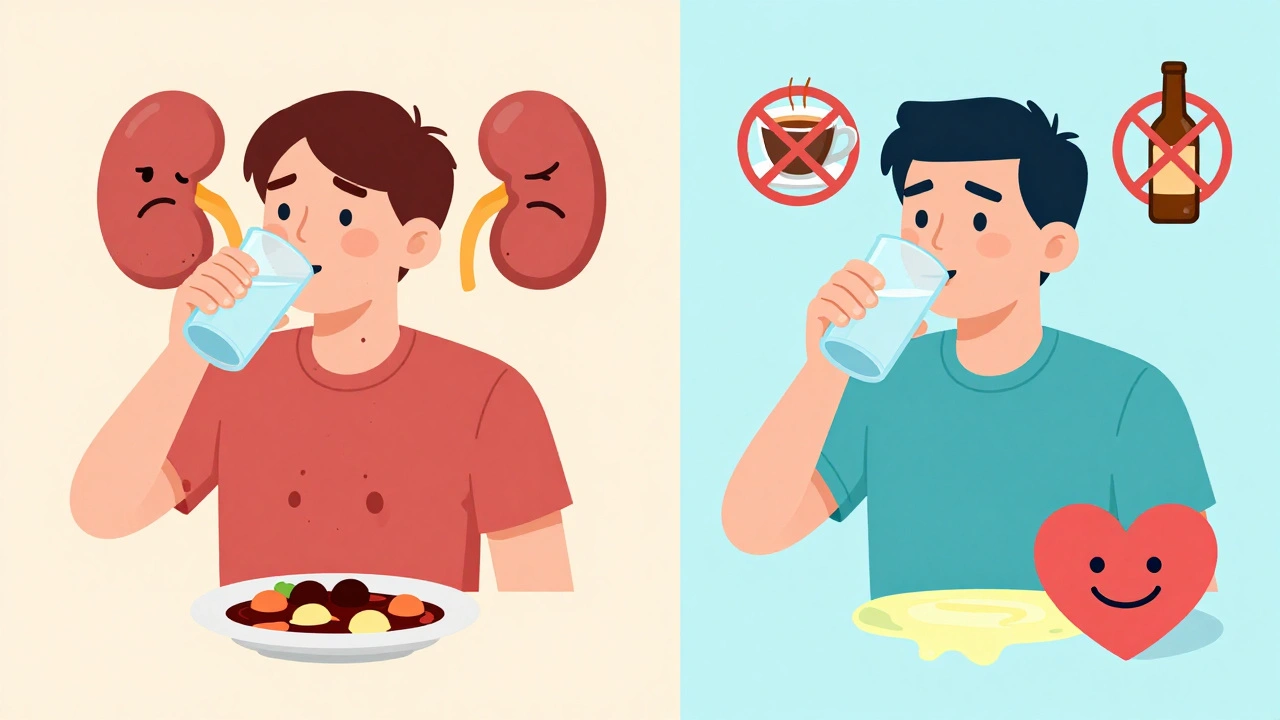
Alcohol is a natural diuretic. So is caffeine-especially if you’re drinking more than 250 mg a day (about 2-3 cups of coffee). Mixing these with prescription diuretics? That’s like turning up the volume on your body’s water loss. Silver Ridge Recovery’s 2024 report found that combining alcohol with diuretics increases dehydration risk by 40-60%. People who do this are 2.7 times more likely to end up in the ER.
And here’s the dangerous cycle: when you’re dehydrated, your blood volume drops. Your heart has to pump harder to circulate less fluid. That can make your blood pressure spike. Some patients misread this as "my diuretic isn’t working" and take more pills. That makes the problem worse. It’s a loop that ends in hospitalization.
How to Replenish What You Lose
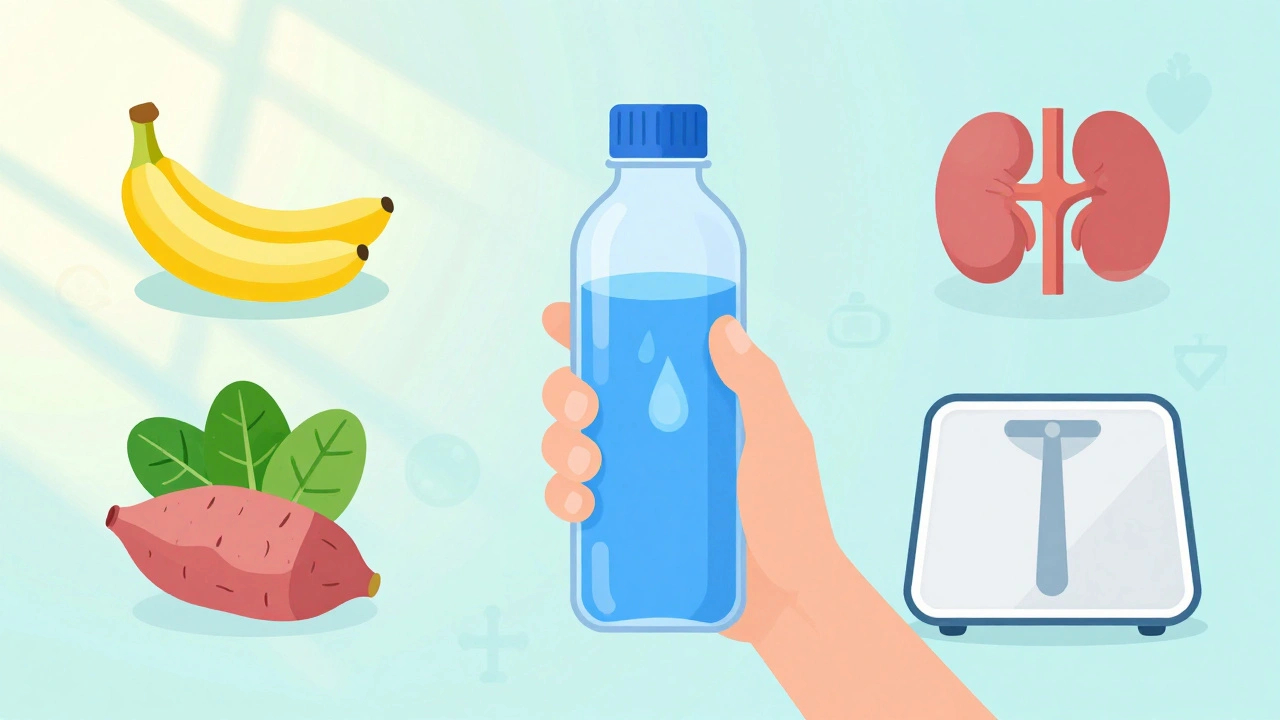
Drinking water alone won’t fix your electrolyte losses. You need sodium, potassium, and magnesium too. Most people get enough sodium from food, but potassium is trickier. Bananas, spinach, sweet potatoes, and oranges help-but they’re not enough if you’re on high-dose diuretics.
Products like DripDrop ORS (oral rehydration solution) are designed for this. One liter contains 1,000 mg sodium, 200 mg potassium, and 250 mg glucose. That’s the exact mix your body needs after diuretic-induced fluid loss. Some patients report fewer cramps and less fatigue after switching from plain water to electrolyte-enhanced drinks.
Don’t reach for sports drinks. Most are loaded with sugar and too little sodium. They’re made for athletes, not people on diuretics.
Monitoring: The Key to Staying Safe
Most doctors will check your blood levels within a week of starting a diuretic. After that, every 3-6 months if you’re stable. But if you’re on a combo therapy or high doses, you might need tests every two weeks.
At home, you can do three simple things:
- Step on the scale every morning, before eating or drinking, after using the bathroom.
- Track your urine output-note how often you go and how much you pee.
- Check your urine color. Pale yellow = good. Dark yellow = drink more.
One patient on PatientsLikeMe, "DiureticDiva," cut her hospital visits from four a year to zero by tracking her weight and urine output daily. She didn’t need fancy gadgets-just a notebook and consistency.
New Tech Is Helping, But Basics Still Matter
In January 2024, the FDA approved the HydraSmart Cup-a smart water bottle that tracks how much you drink and syncs with your health records. Early trials showed a 35% drop in dehydration-related ER visits. AI tools are also being tested to give real-time hydration advice based on your weight, urine, and blood tests.
But none of that replaces the basics: drink steadily, avoid alcohol, watch your weight, and know your urine color. The most effective tool is still your own awareness.
What If You’re Still Having Problems?
If you’re still getting dizzy, cramping, or feeling weak despite following the advice, talk to your doctor. You might need a different diuretic, a lower dose, or an electrolyte supplement. Never adjust your dose on your own. And if you feel faint, have chest pain, or your heart is racing-go to urgent care. These aren’t normal side effects. They’re warning signs.
Hydration isn’t just about drinking water. It’s about listening to your body, understanding your meds, and making small, smart choices every day. The goal isn’t to drink as much as possible-it’s to drink just enough to keep your body in balance.
Can I drink coffee while taking diuretics?
Yes, but limit it. More than 250 mg of caffeine a day (about 2-3 cups of coffee) acts as a natural diuretic and can make dehydration worse. If you drink coffee, count it as part of your daily fluid intake and watch for signs of low potassium-like muscle cramps or irregular heartbeat. Switching to decaf or reducing intake often helps.
Should I take potassium supplements with my diuretic?
Only if your doctor tells you to. Thiazide diuretics can lower potassium, but taking extra potassium without testing can be dangerous. Too much potassium can cause heart rhythm problems. Your doctor will check your blood levels and decide if you need a supplement or a potassium-sparing diuretic like spironolactone instead.
Why do I feel thirsty all the time on diuretics?
Diuretics make your body think it’s losing too much fluid, so it triggers thirst. But drinking too much can cause fluid overload, especially if you have heart failure. Sip small amounts throughout the day instead of chugging. If thirst is constant and intense, your electrolytes might be off. Get a blood test.
Can I use salt substitutes on diuretics?
Be careful. Many salt substitutes contain potassium chloride. If you’re on a potassium-sparing diuretic like spironolactone or eplerenone, these can push your potassium levels too high, leading to dangerous heart rhythms. Always check with your doctor before using them.
How long does it take to get used to managing hydration on diuretics?
Most people need 4 to 6 weeks to find their rhythm. It’s a learning curve. You’ll make mistakes-like drinking too much at night or ignoring early thirst. That’s normal. The key is tracking: weigh yourself daily, check your urine color, and talk to your doctor if things feel off. After a few months, it becomes second nature.
What should I do if I miss a dose of my diuretic?
Don’t double up. If you miss a morning dose, take it as soon as you remember-unless it’s late afternoon. Taking it too late can disrupt sleep with frequent urination. If you miss it entirely, skip it and go back to your regular schedule. Never take extra doses to make up for a missed one. Talk to your doctor if you miss doses often.
Final Thought: It’s Not About Drinking More-It’s About Drinking Right
Diuretics save lives. But they also demand attention. You can’t outdrink a diuretic. You can’t ignore your body’s signals. The best strategy isn’t to drink the most water possible-it’s to drink consistently, monitor your body, and avoid the traps like alcohol and caffeine. With the right balance, you’ll feel better, avoid hospital visits, and stay in control of your health.
Rich Paul
December 8, 2025 AT 21:20diuretics are wild bro. i thought i was just supposed to chug water like a thirsty camel but turns out u gotta be a scientist now. lost 3lbs overnight last week and panicked. my dr said i was fine but now i’m paranoid every time i pee.
Ruth Witte
December 10, 2025 AT 11:53THIS. 🙌 I switched to DripDrop after months of cramps and holy cow-no more 3am leg spasms. Also stopped drinking coffee after 2pm and my sleep improved. You’re not just hydrating-you’re reprogramming your body. 💪💧
Katherine Rodgers
December 12, 2025 AT 00:26Oh great. So now I need to track my pee color like I’m a damn camel in the desert? Next they’ll make me wear a hydration aura bracelet. 🤡 At least my dog doesn’t need a blood panel to drink from the bowl.
Ronald Ezamaru
December 13, 2025 AT 07:23There’s a reason the British Heart Foundation and Mayo Clinic both say 1.5–2 liters. It’s not arbitrary. Your kidneys aren’t just filters-they’re diplomats. They need steady input to avoid chaos. I’ve seen patients crash from both extremes: too little fluid, too much sodium, too many energy drinks. Consistency beats intensity every time.
And no, sports drinks aren’t the answer. They’re sugar bombs disguised as science. If you’re not an athlete sweating through a 10K, you don’t need that much glucose. Your body isn’t a race car-it’s a well-tuned engine that runs best on clean fuel.
Electrolytes matter. Potassium isn’t just a supplement-it’s a lifeline when you’re on thiazides. But don’t self-prescribe. I had a guy take 200mg potassium pills daily because he read it online. Ended up with arrhythmia. Your doctor checks labs for a reason.
The HydraSmart Cup is neat tech, sure. But the real innovation is still the notebook. Write down your weight, your color, your timing. Patterns emerge. You start to feel your own rhythm. That’s when you stop being a patient and become your own advocate.
And yes, alcohol and caffeine are double agents. They pretend to hydrate but actually sabotage. One beer after work? Fine. Three? You’re playing Russian roulette with your electrolytes.
It’s not about drinking more. It’s about drinking wisely. Your body isn’t asking for volume. It’s asking for balance.
Steve Sullivan
December 13, 2025 AT 14:08lol i just started my diuretic last month and i thought i was being smart by drinking 3L a day. turned out i was bloated as hell. my dr laughed and said "you’re not a camel, you’re a human with heart failure." now i sip. slowly. like a person who doesn’t want to die.
also i started weighing myself every morning. lost 1.5 lbs in 2 days? drink more. gained 2? cut back. it’s dumb but it works. no fancy apps needed. just a scale and a brain.
also i stopped drinking coffee. not because it’s evil. but because i realized i was using it to replace thirst. and then i’d be dizzy. so now i drink water. and sometimes tea. and i feel like a new person.
Lauren Dare
December 13, 2025 AT 15:16Let’s be real: if you’re on spironolactone and using a salt substitute, you’re one banana away from cardiac arrest. Potassium isn’t a vitamin you can just sprinkle on your oatmeal. It’s a controlled substance disguised as a food. Your doctor isn’t being dramatic-they’re trying to keep you alive.
And yes, the FDA approved a "smart cup." But the fact that we need a $100 bottle to remind us to drink water like a normal human being says more about our healthcare system than it does about hydration.
Also, if you’re still confused after reading this, you probably shouldn’t be managing your own meds. Go see your nephrologist. Or your cardiologist. Or your damn pharmacist. Stop Googling and start listening.
Gilbert Lacasandile
December 15, 2025 AT 06:24I just wanted to say thanks for this. I’ve been on furosemide for 5 years and never knew about the morning weight thing. Started doing it last week-my numbers are way more stable now. Also cut out the afternoon soda. Small changes, big difference.
Still struggle with the evening pee thing. But I’m trying. Baby steps.
Graham Abbas
December 16, 2025 AT 12:14There’s a quiet philosophy here, isn’t there? That health isn’t about maximizing intake, but harmonizing with biology. We’ve been taught to drink eight glasses-dogma. But the body doesn’t care about numbers. It cares about rhythm. Flow. Balance. Like a river, not a flood.
Diuretics expose our illusions of control. We think we can outsmart our physiology with pills and protocols. But the truth is humbler: we’re guests in our own bodies. And guests don’t overstay their welcome. They don’t guzzle the host’s wine. They sip. They listen. They leave the table when it’s time.
That’s why tracking matters. Not because it’s scientific. Because it’s sacred. It’s the daily act of returning to yourself.
Kathy Haverly
December 18, 2025 AT 05:25So let me get this straight: I’m supposed to drink 1.5L of water, avoid caffeine, avoid alcohol, eat bananas, track my pee, weigh myself, avoid salt substitutes, and now I need a $100 smart cup? And if I miss one thing, I’m gonna die? Wow. What a miracle this isn’t a cult. I’m just here for the free meds and the Netflix. Not the hydration cult.
Also, I’m 72. I don’t care about your DripDrop. I drink what I want. And if I wake up to pee? Good. At least I’m not dead.
George Taylor
December 18, 2025 AT 20:49...This post is 98% fluff. You didn’t mention thiazide-induced hyponatremia. Or the fact that many patients are misdiagnosed as "dehydrated" when they’re actually over-diuresed. And you completely ignored the role of aldosterone in fluid retention. Also, DripDrop? That’s a marketing scam. The WHO oral rehydration solution is cheaper, proven, and doesn’t have artificial flavors. And why are you promoting a smart cup? Are we turning patients into data points now? This reads like a pharmaceutical ad disguised as patient education.
Also, "DiureticDiva"? Really? That’s the best example you could find? Sounds like a TikTok influencer, not a medical case study.
Ronald Ezamaru
December 20, 2025 AT 06:20George, you’re right about the WHO solution. It’s literally just salt, sugar, and water. No branding. No hype. Just science. I’ve had patients who couldn’t afford DripDrop-so I told them to mix 1/2 tsp salt + 6 tsp sugar + 1L water. Same osmolarity. Same results. Cheaper than a bottle of Gatorade.
And yes, the "DiureticDiva" story isn’t peer-reviewed. But it’s real. I’ve seen it happen. One woman tracked her weight for 6 months, stopped guessing, and went from 4 ER visits to zero. No magic. Just consistency.
As for the smart cup-it’s not about the tech. It’s about the reminder. Most people don’t know what 1.5L looks like. They think a soda bottle is enough. The cup just makes the invisible visible.
And no, this isn’t pharma fluff. It’s what I tell every patient. The science is solid. The advice is simple. The danger is in the noise. Not the message.