
Medicare Part D Policies: What They Cover and How They Affect Your Medication Costs
When you're on Medicare, Medicare Part D policies, government-backed prescription drug plans that help cover the cost of medications for people enrolled in Medicare. Also known as Medicare prescription drug coverage, these plans are offered by private companies approved by Medicare and are designed to lower your out-of-pocket costs for pills you take every day. Without one, you could pay full price for insulin, blood pressure meds, or heart medications—costs that can easily hit hundreds of dollars a month.
Not all drugs are covered the same. Each plan has a drug formulary, a list of medications the plan covers, organized into tiers based on cost. Tier 1 usually includes generic drugs with the lowest copay, while Tier 4 or 5 might include specialty drugs like those for cancer or rheumatoid arthritis—with much higher costs. If your medicine isn’t on the formulary, you might pay full price or need to request an exception. And if you hit the coverage gap—often called the donut hole, a phase in Part D where you pay more out-of-pocket after reaching initial coverage limits—you’ll still get discounts on brand-name and generic drugs, but you’ll need to track your spending carefully.
These policies aren’t one-size-fits-all. Your plan’s cost depends on your income, the drugs you take, and where you live. Some plans have $0 premiums but higher copays. Others charge more upfront but cover more of your meds. If you take multiple prescriptions, especially for chronic conditions like diabetes or heart disease, choosing the wrong plan can cost you thousands over a year. That’s why it’s not enough to just pick the cheapest plan—you need to match it to your actual meds.
Medicare Part D policies also interact with other health conditions. For example, if you have kidney disease and take blood thinners like apixaban, or liver issues that affect how your body processes drugs, your plan might not cover the exact dose or brand your doctor recommends. Some plans require prior authorization for certain meds, or limit how much you can get per month. That’s why understanding your formulary and coverage rules isn’t just paperwork—it’s a way to avoid delays, denied claims, or dangerous gaps in treatment.
Below, you’ll find real-world guides on how medications behave under different health conditions—like how trimethoprim can raise potassium levels, how SGLT2 inhibitors cause dehydration, or how liver disease changes drug metabolism. These aren’t just medical facts—they’re the kind of details that help you ask the right questions when choosing or reviewing your Medicare Part D policy. Whether you’re managing multiple prescriptions, dealing with side effects, or trying to cut costs, the posts here give you the practical knowledge to navigate your coverage without guesswork.
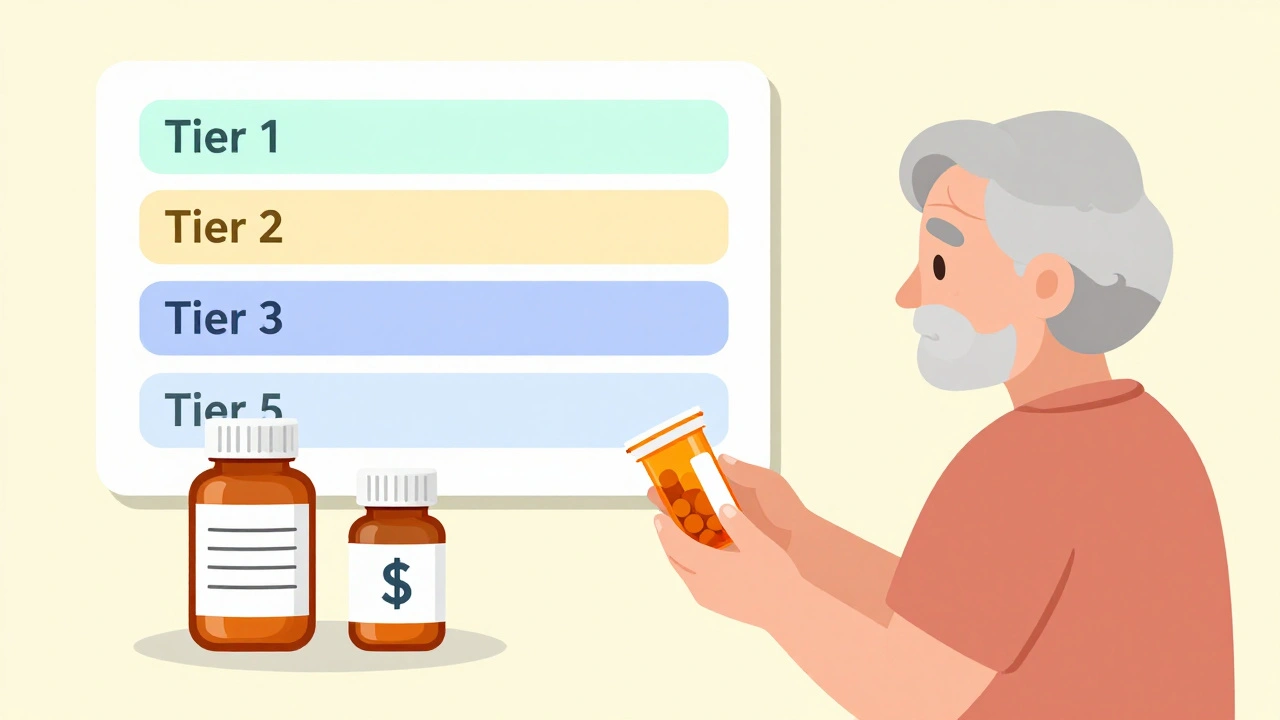
Medicare Part D Substitution: What You Can and Can't Swap Under Your Drug Plan
- Dec, 6 2025
- 13
Medicare Part D substitution lets plans swap your prescription for a cheaper drug - but not all swaps are safe. Learn how formularies, tiers, and the $2,000 out-of-pocket cap affect your coverage in 2025.
Categories
- Medication Information (122)
- Health and Wellness (52)
- Women's Health (7)
- Mental Health (5)
- Support Resources (5)
- Supplements (5)
- Pharmacy Reviews (5)
- Dermatology (4)
- Nutrition (3)
- Fitness and Wellness (3)
Archives
- April 2026 (1)
- March 2026 (10)
- February 2026 (12)
- January 2026 (27)
- December 2025 (30)
- November 2025 (24)
- October 2025 (29)
- September 2025 (14)
- August 2025 (2)
- July 2025 (7)
- June 2025 (2)
- May 2025 (3)
- online pharmacy
- dietary supplement
- medication safety
- health benefits
- side effects
- generic drugs
- drug interactions
- treatment
- wellness
- optimal health
- diabetes management
- safe medication purchase
- online pharmacy Australia
- brand name drugs
- authorized generics
- generic medications
- medication side effects
- link
- women's health
- dietary supplements