
Insulin on Board: What It Means for Blood Sugar Control and Medication Safety
When you take insulin, it doesn’t just disappear after you inject it. Insulin on board, also called active insulin or residual insulin, is the amount of insulin still working in your body after a dose. Also known as active insulin, it’s the key number your pump or CGM uses to avoid stacking doses and crashing your blood sugar. If you don’t account for it, you could give yourself another shot too soon — and end up with a severe low that needs emergency help.
People using insulin pumps or multiple daily injections rely on this number every day. It’s not just a tech feature — it’s a safety tool. For example, if you gave 3 units of rapid-acting insulin at lunch and your blood sugar is still high at 3 p.m., your pump might show you still have 1.5 units active. That tells you: don’t give more yet. Wait. Let the insulin work. This is how you avoid insulin stacking, the dangerous practice of giving extra insulin before the previous dose has finished working. It’s also why some people with type 1 diabetes, a condition where the body doesn’t make insulin and must rely entirely on injections or pumps feel confused when their sugar drops hours after eating — they forgot the insulin they took earlier was still active.
Insulin on board isn’t the same for everyone. It depends on the type of insulin you use. Rapid-acting insulins like Humalog or Fiasp peak in about an hour and clear out in 3 to 4 hours. Longer-acting ones like Lantus or Tresiba don’t count toward insulin on board because they work slowly and steadily. Your device calculates this based on the insulin’s duration, your last dose, and your current blood sugar. But here’s the catch: if you’re sick, stressed, or inactive, your body may process insulin slower — meaning insulin on board could be higher than the device shows. That’s why you still need to check your sugar and think critically. Don’t let the number make decisions for you.
Doctors and diabetes educators often skip explaining this clearly. But knowing insulin on board can save you from hospital trips. It’s why people who track it closely report fewer lows and more stable days. You don’t need to be a tech expert. You just need to understand that insulin doesn’t vanish. It lingers. And if you ignore that, your body pays the price.
Below, you’ll find real-world advice from people managing diabetes with precision — how they use insulin on board to fine-tune meals, correct highs, and avoid mistakes. These aren’t theory articles. They’re practical guides from those who’ve been there.
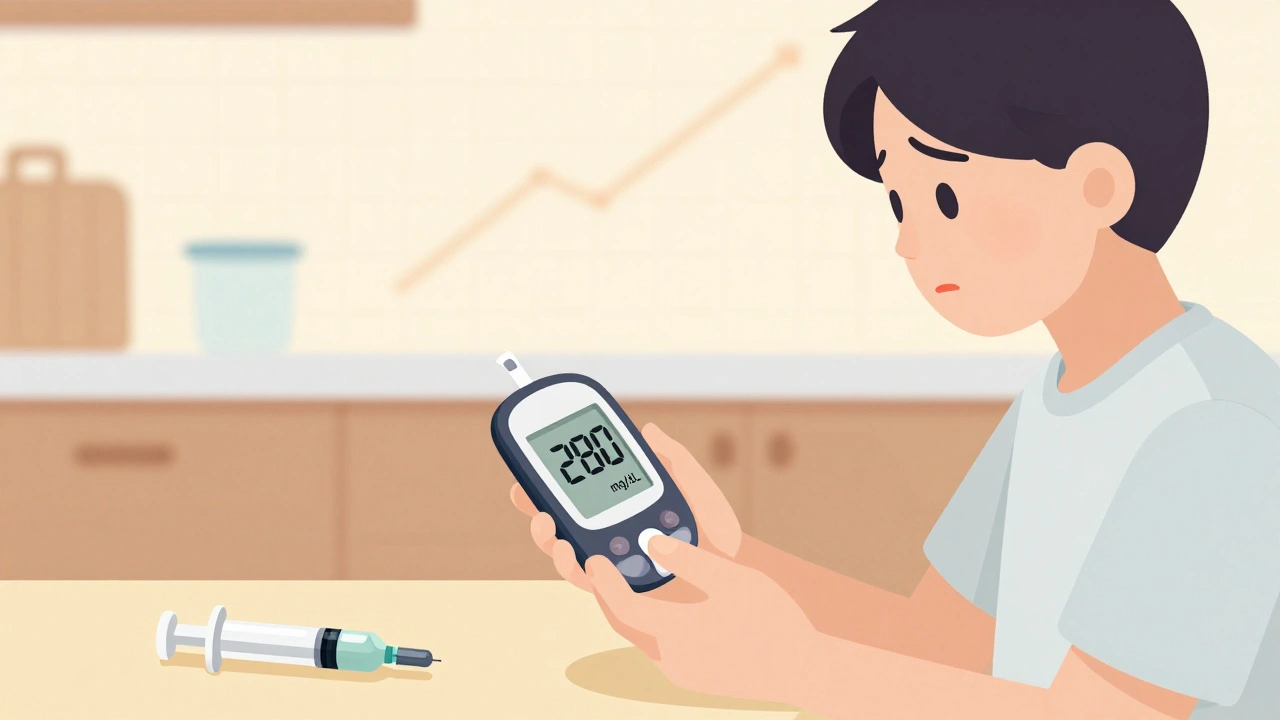
Insulin Stacking: How to Avoid Dangerous Hypoglycemia with Safe Dosing Intervals
- Dec, 4 2025
- 15
Insulin stacking happens when you give rapid-acting insulin too soon after your last dose, causing dangerous low blood sugar. Learn how to avoid it with safe dosing intervals and real-world tips.
Categories
- Medication Information (122)
- Health and Wellness (52)
- Women's Health (7)
- Mental Health (5)
- Support Resources (5)
- Supplements (5)
- Pharmacy Reviews (5)
- Dermatology (4)
- Nutrition (3)
- Fitness and Wellness (3)
Archives
- April 2026 (1)
- March 2026 (10)
- February 2026 (12)
- January 2026 (27)
- December 2025 (30)
- November 2025 (24)
- October 2025 (29)
- September 2025 (14)
- August 2025 (2)
- July 2025 (7)
- June 2025 (2)
- May 2025 (3)
- online pharmacy
- dietary supplement
- medication safety
- health benefits
- side effects
- generic drugs
- drug interactions
- treatment
- wellness
- optimal health
- diabetes management
- safe medication purchase
- online pharmacy Australia
- brand name drugs
- authorized generics
- generic medications
- medication side effects
- link
- women's health
- dietary supplements