
Insulin Stacking: How to Avoid Dangerous Hypoglycemia with Safe Dosing Intervals
 Dec, 4 2025
Insulin Stacking Calculator
Insulin Stack Risk Calculator
This tool helps you determine if you're at risk of insulin stacking by calculating how much insulin is still active in your system.
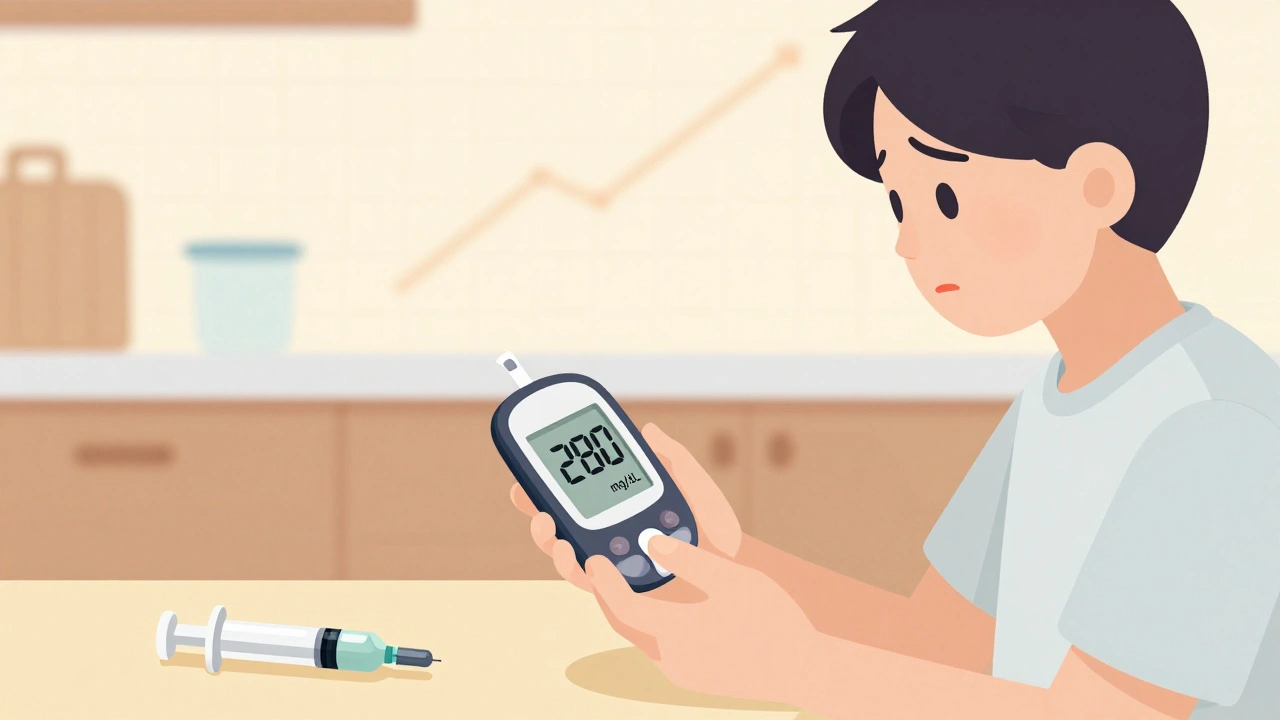
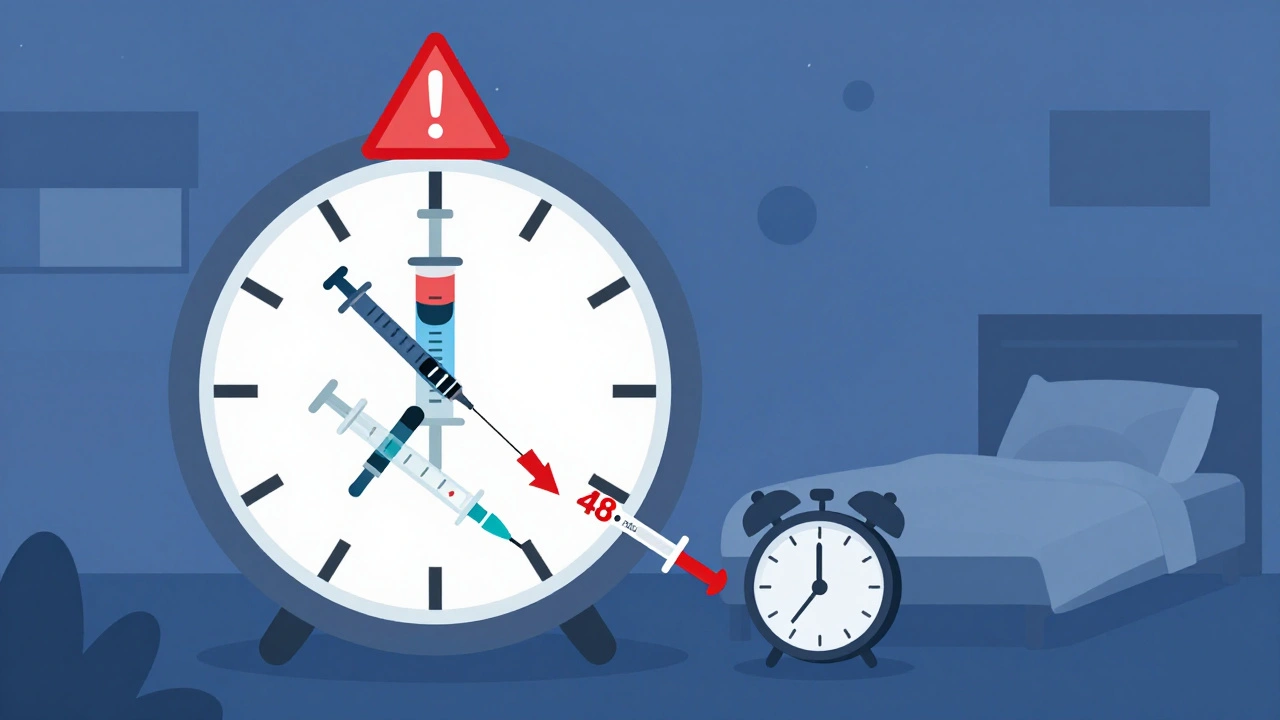
Imagine this: you eat dinner, check your blood sugar, and see it’s 280 mg/dL. You take your usual correction dose of insulin. Two hours later, it’s still at 220 mg/dL, so you take another dose. By midnight, you’re sweating, shaking, and confused. Your blood sugar has crashed to 48 mg/dL. You didn’t do anything wrong-except you didn’t know insulin stacking was happening.
Insulin stacking isn’t a myth. It’s a real, dangerous, and preventable mistake that thousands of people on insulin make every day. It happens when you give another dose of rapid-acting insulin before the last one has finished working. The result? Too much insulin in your system. And that means low blood sugar-sometimes dangerously low.
What Exactly Is Insulin Stacking?
Insulin stacking occurs when you give a correction dose of rapid-acting insulin-like lispro (Humalog), aspart (NovoLog), or glulisine (Apidra)-within 3 to 4 hours of your last dose. Your body hasn’t used up the insulin from the first shot yet. When you add more, the effects pile up. That’s stacking.
It’s not about taking insulin too often. It’s about not accounting for what’s still active in your bloodstream. Think of it like pouring water into a cup that’s already half full. You don’t stop pouring just because the cup isn’t full yet-you have to wait until some of the water drains out.
Rapid-acting insulins start working in 15 minutes, peak around 60 to 90 minutes, and keep lowering blood sugar for 3 to 5 hours. That’s the window you need to respect. If you give another dose before 4 hours have passed, you’re likely stacking.
Why It’s So Dangerous
Hypoglycemia from insulin stacking isn’t just an inconvenience. It’s a medical emergency.
According to a 2022 study from the Veterans Affairs Greater Los Angeles Healthcare System, about 10% of all diabetes-related hospitalizations are caused by low blood sugar. And nearly 37% of those overnight lows in hospitalized patients happened because someone gave a correction dose too soon after the last one.
The risks are real: shaking, confusion, seizures, loss of consciousness, even death. A 2021 JAMA Internal Medicine study found that people who had severe hypoglycemia were 2.5 times more likely to die than those who didn’t.
And it’s not rare. In one survey of people using insulin pumps, users reported giving three correction boluses in under three hours to bring down a high reading-only to wake up shaking at a blood sugar of 50 mg/dL. That’s not a one-off. It’s a pattern.
Basal vs. Bolus: The Big Difference
Not all insulin is the same. That’s why stacking only applies to rapid-acting insulins, not long-acting ones.
Long-acting insulins like glargine (Lantus), detemir (Levemir), or degludec (Tresiba) are designed to work slowly over 12 to 42 hours. They’re meant to be taken once a day, consistently. You don’t stack these. You build up a steady background level.
Insulin degludec, for example, has a half-life of 25 hours. It takes 3 to 4 days to reach steady state-but even then, it doesn’t suddenly spike or pile up like rapid-acting insulin. That’s why giving a second dose of Tresiba 24 hours later is safe. Giving a second dose of Humalog 2 hours later? That’s stacking.
The confusion comes when people treat basal insulin like bolus insulin. Or worse, when they think they can use the same correction rules for both. That’s where mistakes happen.
Real Stories, Real Consequences
On diabetes forums, the stories are heartbreaking-and common.
A user named “Type1Runner87” on Diabetes Daily wrote about taking a correction dose 90 minutes after dinner because their sugar was still high. They didn’t realize the first dose hadn’t kicked in yet. By 2 a.m., their blood sugar was 42 mg/dL. They needed glucagon.
Another user on Reddit, “PumpNewbie2024,” said they gave three correction boluses in three hours trying to fix a 300 mg/dL reading. They woke up trembling, their blood sugar at 50 mg/dL. They didn’t know their pump was still counting the first two doses as active.
These aren’t careless mistakes. They’re knowledge gaps. Many people are never taught how insulin works over time. They’re taught: “If your sugar is high, give more insulin.” But they’re never taught: “Wait. How much is still working?”
How to Avoid Insulin Stacking
The solution isn’t complicated. It’s just not taught well enough.
Wait at least 4 hours between correction doses of rapid-acting insulin. That’s the standard. But here’s the catch: not everyone clears insulin at the same rate.
People with kidney problems, older adults, or those on certain medications may clear insulin slower. Their insulin stays active longer-up to 5 or 6 hours. If you’re one of them, you need to adjust.
Here’s how to do it safely:
- Always note the time and dose of your last rapid-acting insulin.
- If your blood sugar is high, ask: “Has it been at least 4 hours since my last dose?”
- If yes, calculate your correction dose normally.
- If no, don’t give more insulin yet. Wait. Try a small snack if you’re feeling low. Walk around. Drink water. Give your body time.
Some people think, “I’ll just take half a dose.” That’s still stacking. Even a small extra dose adds up. The math doesn’t work that way.
The Role of Technology
Technology is making insulin stacking harder to make.
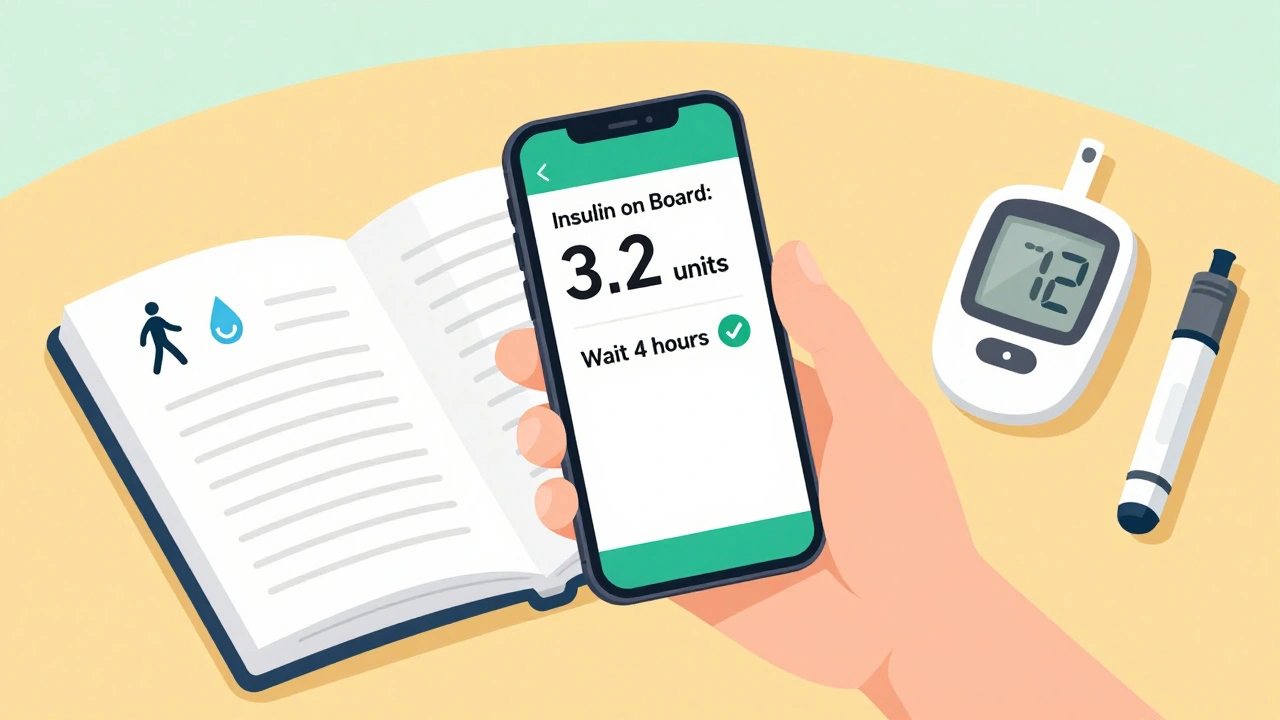
Modern insulin pumps like the Tandem t:slim X2 and Omnipod 5 calculate something called insulin on board (IOB), also known as active insulin. They track how much insulin is still working in your body and automatically reduce your correction dose-or even block it-if you’re at risk of stacking.
For example, if your pump sees you took 4 units of insulin 2 hours ago, and you try to bolus another 4 units, it might suggest only 1 or 2 units-or say, “Too soon. Wait.”
Even standalone devices like the BolusGuard calculator help MDI users (those who inject insulin multiple times a day) track their IOB manually. You enter your last dose and time, and it tells you how much is still active.
And then there’s the InPen system, which syncs with your smartphone. It logs every injection, calculates IOB, and sends alerts if you’re about to stack. It’s FDA-approved and works with most rapid-acting insulins.
What If You Don’t Use a Pump or CGM?
About 12.3 million Americans use insulin but don’t have a continuous glucose monitor (CGM). That’s over half of all insulin users. For them, stacking is much harder to avoid.
Without real-time data, you’re flying blind. That’s why keeping a written log is critical. Write down:
- Time of each rapid-acting insulin dose
- Amount given
- Meal eaten (if any)
- Next blood sugar check
Use a simple notebook or a free app like Glucose Buddy. Review it daily. After a few weeks, you’ll start seeing patterns: “I always go low if I correct after 3 hours.” Or, “I need to wait 5 hours after breakfast.”
The American Diabetes Association’s 2023 Standards of Care say: “Correction doses should not be administered within 3-4 hours of previous rapid-acting insulin without accounting for residual activity.” That’s not a suggestion. It’s a safety rule.
How Long Does It Take to Learn?
Learning to avoid insulin stacking takes time. It’s not something you master in a week.
Studies show it takes most people 2 to 3 months of consistent CGM use to understand their personal insulin action curve. Some clear insulin faster. Some slower. Some have delays because of stress, illness, or exercise.
The DIAMOND trial in 2022 found that 22% of users had insulin activity lasting longer than 5 hours. That means for nearly 1 in 4 people, the 4-hour rule isn’t enough. They need 5 or even 6 hours.
That’s why personalization matters. Don’t just follow the book. Watch your numbers. Learn your body. Adjust based on real data-not guesswork.
The Cost of Getting It Wrong
Insulin stacking isn’t just a health risk. It’s a financial one too.
In the U.S., hypoglycemia-related hospitalizations cost $1.1 billion a year. About 35% of those are directly tied to insulin stacking errors. That’s $385 million in preventable costs.
Hospitals that implemented EHR alerts to block correction doses within 4 hours saw a 50% drop in hypoglycemia events within a year. Nurses who used to miss the cause of low blood sugar now spot it instantly.
It’s not just about saving money. It’s about saving lives.
Final Thoughts: It’s Not About More Insulin-It’s About Timing
High blood sugar feels scary. You want to fix it now. But rushing to give more insulin is like hitting the brakes harder when you’re already skidding.
Insulin stacking is avoidable. You don’t need fancy tech. You don’t need to be perfect. You just need to know: wait 4 hours between correction doses of rapid-acting insulin. Check your log. Trust your data. Let your body catch up.
If you’re unsure, wait. Eat a small snack. Walk. Recheck in an hour. Better to have a sugar of 160 than 50.
One simple rule can prevent thousands of lows. One simple rule can save your life.
Annie Gardiner
December 5, 2025 AT 22:25So let me get this straight - we’re supposed to just wait 4 hours when our blood sugar is sky-high? Like, what if I’m sweating and dizzy and my brain feels like mush? Wait? Wait for what? For my body to turn into a zombie? This feels like medical gaslighting.
Rashmi Gupta
December 7, 2025 AT 07:44India has been managing diabetes for centuries without pumps or apps. We used bitter gourd, neem, and patience. Now everyone’s obsessed with tech. You don’t need IOB. You need discipline. And maybe less sugar in your chai.
Andrew Frazier
December 8, 2025 AT 19:03lol at the 4 hour rule. Bro I took insulin at 7pm, saw 290 at 9pm, gave 3 more units. Woke up at 3am with a 45. Guess what? I’m still alive. And I didn’t need a fancy pump to tell me what to do. The system’s rigged to sell you gadgets. Real diabetics just adapt.
Kumar Shubhranshu
December 9, 2025 AT 06:244 hours is a myth. My insulin lasts 6. I know because I tested it. Stop pretending everyone is the same. The guidelines are lazy. Real people have real bodies.
Mayur Panchamia
December 10, 2025 AT 09:05WHAT?! You mean to tell me that the pharmaceutical-industrial complex has been PROFITING from our ignorance?! Of course they have! They sell you the insulin, then sell you the pump, then sell you the CGM, then sell you the app that tells you NOT to overdose on their damn insulin! This is a SCAM! A MULTIBILLION-DOLLAR SCAM! AND THEY’RE CALLING IT ‘MEDICINE’?!?!?!?!?!?!?!?!?!?!
Karen Mitchell
December 10, 2025 AT 11:53It is imperative to underscore that the medical community’s failure to adequately educate patients on insulin pharmacokinetics constitutes a grievous breach of the standard of care. This is not a matter of personal responsibility; it is systemic negligence. One cannot reasonably expect laypersons to intuit complex pharmacological dynamics without formal instruction - yet, we persist in doing so. This is indefensible.
Geraldine Trainer-Cooper
December 12, 2025 AT 11:31Just wait. That’s it. No apps. No math. Just wait. It’s wild how the simplest thing is the hardest to do.
Nava Jothy
December 13, 2025 AT 08:55I’ve been doing this for 17 years and I still cry when I go low 😭 I just want to feel normal… Why does my body hate me so much? 🥺 I tried waiting 4 hours… but my sugar stayed at 300 and I was so tired… I just needed to fix it… I’m so tired of being a burden 💔
Kenny Pakade
December 15, 2025 AT 08:17Who the hell wrote this? A Big Pharma shill? Wait 4 hours? That’s not advice - that’s a death sentence for people who actually live with this. My blood sugar doesn’t care about your 4-hour rule. Mine spikes fast and crashes harder. You think I want to be shaking at 3am? I’d rather be dead than have another seizure because some doctor in a lab coat thinks insulin works like clockwork.
brenda olvera
December 17, 2025 AT 00:58Just wanted to say thank you for writing this. I’ve been scared to ask for help because I thought I was just bad at this. Turns out I wasn’t failing - I was just never taught. I’m gonna start writing things down. One day at a time 💪❤️
Myles White
December 17, 2025 AT 06:57There’s a lot to unpack here. I’ve been on insulin for 12 years and I’ve gone through every phase - the denial, the rage, the guilt, the tech obsession, the burnout. What nobody talks about is the emotional labor of managing this. You’re not just calculating carbs and units - you’re constantly second-guessing yourself, replaying every meal, every shot, every low. And the worst part? No one else sees it. Your family thinks you’re being dramatic. Your doctor says ‘just follow the guidelines.’ But the guidelines don’t know your life. They don’t know you’re working two jobs, sleeping four hours, and still trying to be a parent. So yes, wait four hours - but also, please, be kind to yourself. You’re doing better than you think.
olive ashley
December 17, 2025 AT 21:24IOB? Pfft. My pump’s been wrong twice. Once it said I had 0.8 units left when I’d actually crashed. Another time it blocked a dose and I ended up in the ER at 380. Tech is a crutch. And now they want us to trust it? I’d rather trust my fingers and a notebook. And yeah, I know I’m ‘doing it wrong’ but I’ve survived this long without a $1200 gadget telling me what to do.
Ibrahim Yakubu
December 19, 2025 AT 07:26In Nigeria, we don’t have access to pumps or apps. We use insulin vials and syringes. We wait. We observe. We learn. You think your 4-hour rule is advanced? We’ve been doing this since before your tech existed. We don’t need algorithms. We need respect. And access. Not more gadgets. More insulin. More training. More dignity.
Jackie Petersen
December 19, 2025 AT 21:35So let me get this right - the solution to insulin stacking is… wait? That’s it? No new drug? No miracle fix? No FDA approval? I’m supposed to just sit there while my sugar climbs and my brain turns to mush? This is why I hate diabetes. It’s not a disease. It’s a punishment.
Brooke Evers
December 21, 2025 AT 14:52I hear you, Jackie. I’ve been there too. That feeling of being trapped between high numbers and fear of crashing… it’s exhausting. But here’s what helped me: I started keeping a ‘waiting log.’ I’d write down the time, the reading, how I felt, and then just sit with it. Sometimes I’d walk around the block. Sometimes I’d drink water and breathe. I didn’t fix it right away - but I didn’t make it worse either. Over time, I learned my body’s rhythm. You’re not alone. And you’re not failing. You’re learning.