
Fluid Intake: How Water and Hydration Affect Medications and Health
When you think about fluid intake, the total amount of liquids consumed daily, including water, beverages, and moisture from food. It's not just about quenching thirst—it's a key player in how your body processes drugs, protects your kidneys, and avoids dangerous side effects. Too little can turn a safe medicine into a risk. Too much can flood your system, especially if you have heart or kidney issues.
Dehydration, a state where your body loses more fluids than it takes in is a silent danger with many medications. SGLT2 inhibitors, for example, increase urine output to lower blood sugar—but that same effect can leave you dizzy or low on blood pressure if you’re not drinking enough. The same goes for diuretics, NSAIDs, and even some antibiotics like trimethoprim. When your kidneys don’t have enough fluid, they struggle to filter drugs properly, leading to buildup and toxicity. This isn’t theoretical—people on multiple meds end up in the ER because they skipped water after a workout or didn’t realize their blood pressure pill was making them lose more than they thought.
Kidney function, how well your kidneys remove waste and balance fluids directly ties to how much fluid you need. If you have reduced kidney function, as with chronic kidney disease or aging, your body can’t handle large fluid shifts. DOACs like apixaban and rivaroxaban rely on kidney clearance—drink too little, and you risk clots. Drink too much, and you might overload your system. Even liver disease affects fluid balance because your body holds onto sodium and water when the liver can’t make enough protein. Fluid intake isn’t one-size-fits-all. It’s a balancing act shaped by your meds, your organs, and your daily habits.
Electrolyte balance, the levels of minerals like sodium, potassium, and magnesium in your blood, shifts with how much you drink. Low sodium from overhydration can cause confusion or seizures. High potassium from too little fluid and certain antibiotics can trigger dangerous heart rhythms. These aren’t just lab numbers—they’re real, life-threatening changes that happen quietly. People with heart failure are told to limit fluids, but not because water is bad—it’s because their bodies can’t manage it. Meanwhile, someone on a high-dose diuretic might need to sip more to avoid fainting. The same rule doesn’t apply to everyone.
What you drink matters too. Coffee and tea count toward your fluid intake, but alcohol doesn’t—it pulls water out of your cells. Sugary drinks add calories and can spike blood sugar, which affects how your body handles insulin or SGLT2 drugs. Even protein shakes, if taken too close to thyroid meds, can interfere with absorption—not because of the liquid, but because of what’s in it. Fluid intake isn’t just about volume. It’s about timing, type, and your personal health picture.
You’ll find real stories here—how someone avoided kidney damage by adjusting water around their blood thinner, how a senior stopped fainting after learning their NSAID needed more fluid, and why a man with liver disease had to rethink his daily bottle of water. These aren’t guesses. They’re lessons from people who lived through the consequences. The posts below give you the exact rules, risks, and fixes—not theory, not fluff, just what works when your health is on the line.
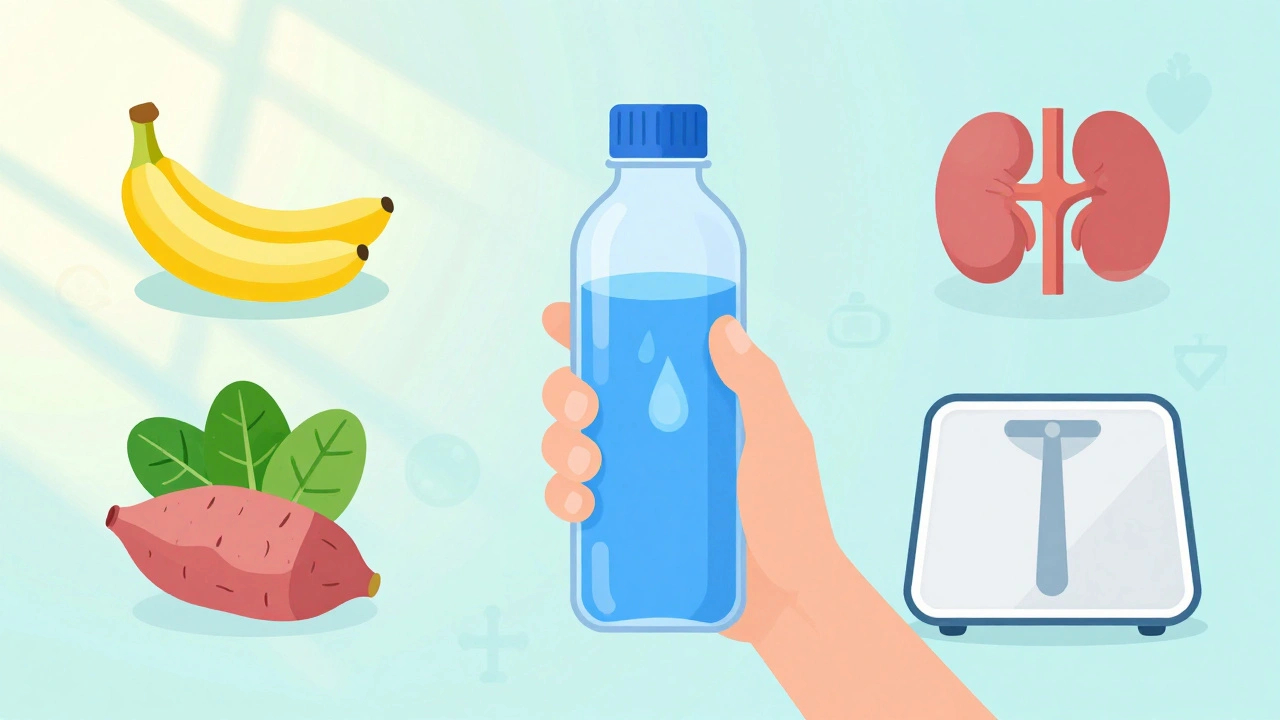
Hydration and Diuretics: How to Balance Fluid Intake to Avoid Side Effects
- Dec, 7 2025
- 11
Learn how to balance fluid intake when taking diuretics to prevent dehydration, electrolyte loss, and dangerous side effects. Practical tips for daily hydration, what to avoid, and how to monitor your body.
Categories
- Medication Information (122)
- Health and Wellness (52)
- Women's Health (7)
- Mental Health (5)
- Support Resources (5)
- Supplements (5)
- Pharmacy Reviews (5)
- Dermatology (4)
- Nutrition (3)
- Fitness and Wellness (3)
Archives
- April 2026 (1)
- March 2026 (10)
- February 2026 (12)
- January 2026 (27)
- December 2025 (30)
- November 2025 (24)
- October 2025 (29)
- September 2025 (14)
- August 2025 (2)
- July 2025 (7)
- June 2025 (2)
- May 2025 (3)
- online pharmacy
- dietary supplement
- medication safety
- health benefits
- side effects
- generic drugs
- drug interactions
- treatment
- wellness
- optimal health
- diabetes management
- safe medication purchase
- online pharmacy Australia
- brand name drugs
- authorized generics
- generic medications
- medication side effects
- link
- women's health
- dietary supplements