
Electrolyte Balance: How Medications, Kidneys, and Diet Affect Your Body's Critical Equilibrium
When your body maintains electrolyte balance, the right levels of minerals like sodium, potassium, calcium, and magnesium in your blood and fluids. Also known as mineral homeostasis, it’s not just about feeling energized—it’s about keeping your heart beating normally, your muscles contracting, and your nerves firing without misfires. This balance isn’t static. It’s constantly adjusted by your kidneys, hormones, and what you eat or drink—and it’s easily disrupted by common medications.
Take potassium levels, a key electrolyte that affects heart rhythm and muscle function. Too high? You could get dangerous heart arrhythmias. Too low? Muscle cramps, fatigue, even paralysis. That’s why antibiotics like trimethoprim, a common drug used for urinary infections can be risky—they block potassium excretion, especially in older adults or people on blood pressure meds. The same goes for SGLT2 inhibitors, diabetes drugs that flush sugar and water out through urine. They don’t just lower blood sugar—they can drain fluids and electrolytes, leading to dehydration and dizziness. And if you’ve got renal impairment, reduced kidney function that limits how well your body filters and reabsorbs electrolytes, even small changes in meds or fluid intake can tip the scales.
Electrolyte balance isn’t just about pills. It’s about how your body handles stress, illness, and daily habits. Dehydration from vomiting, diarrhea, or just not drinking enough water can throw off sodium and potassium faster than you think. Liver disease, heart failure, and even steroid use change how your body holds onto fluids and minerals. That’s why people on long-term corticosteroids or taking multiple meds for chronic conditions need to watch this closely. You won’t always feel it coming—until your heart skips, your legs cramp, or you feel dizzy standing up.
What you’ll find below are real-world stories from people who’ve been there: how a simple antibiotic raised potassium to dangerous levels, how SGLT2 inhibitors caused dehydration in someone who didn’t realize they were losing fluids, how kidney disease forced dose changes in blood thinners, and how timing your meds around food or drinks made all the difference. These aren’t theory pages—they’re practical checklists, warning signs, and fixes from people managing complex health mixes. You don’t need a medical degree to protect your electrolytes. You just need to know what to look for—and what to ask your doctor.
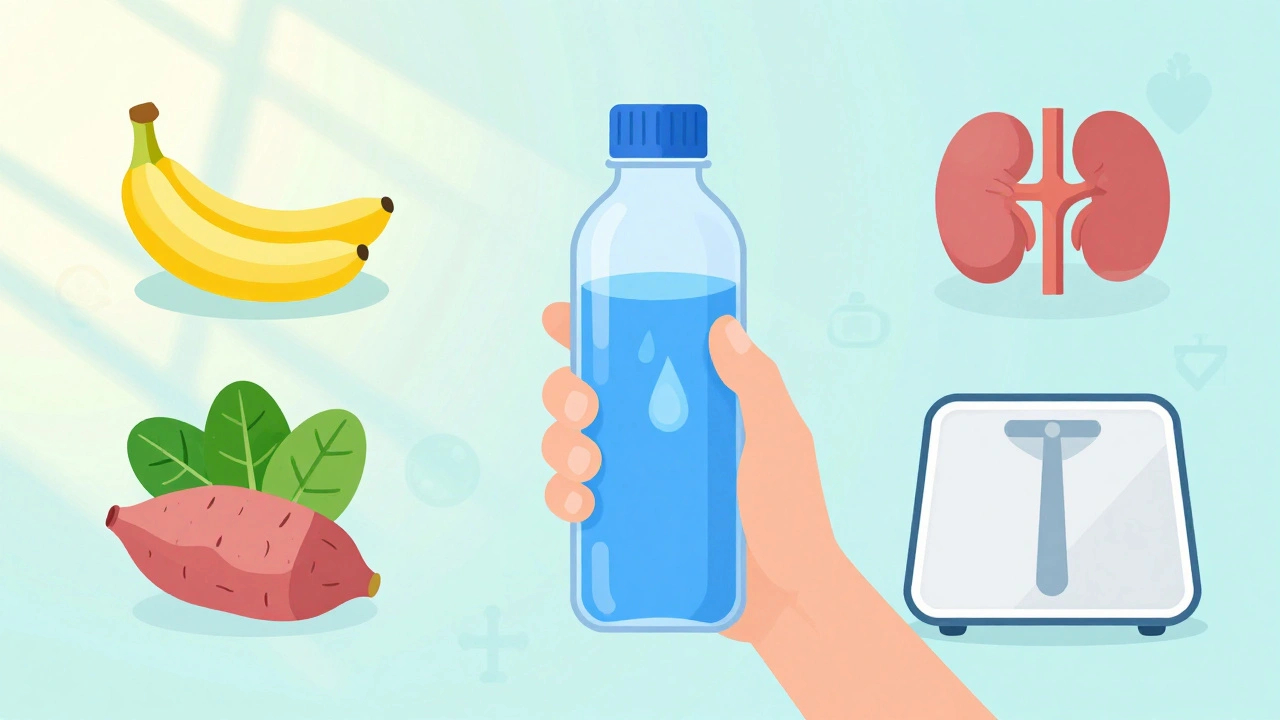
Hydration and Diuretics: How to Balance Fluid Intake to Avoid Side Effects
- Dec, 7 2025
- 11
Learn how to balance fluid intake when taking diuretics to prevent dehydration, electrolyte loss, and dangerous side effects. Practical tips for daily hydration, what to avoid, and how to monitor your body.
Categories
- Medication Information (122)
- Health and Wellness (52)
- Women's Health (7)
- Mental Health (5)
- Support Resources (5)
- Supplements (5)
- Pharmacy Reviews (5)
- Dermatology (4)
- Nutrition (3)
- Fitness and Wellness (3)
Archives
- April 2026 (1)
- March 2026 (10)
- February 2026 (12)
- January 2026 (27)
- December 2025 (30)
- November 2025 (24)
- October 2025 (29)
- September 2025 (14)
- August 2025 (2)
- July 2025 (7)
- June 2025 (2)
- May 2025 (3)
- online pharmacy
- dietary supplement
- medication safety
- health benefits
- side effects
- generic drugs
- drug interactions
- treatment
- wellness
- optimal health
- diabetes management
- safe medication purchase
- online pharmacy Australia
- brand name drugs
- authorized generics
- generic medications
- medication side effects
- link
- women's health
- dietary supplements