
Diuretics: What They Are, How They Work, and What You Need to Know
When your body holds onto too much fluid, diuretics, medications that help your kidneys remove excess water and salt through urine. Also known as water pills, they’re one of the most common treatments for high blood pressure, heart failure, and swelling in the legs or abdomen. But they’re not a one-size-fits-all fix. How they work, who benefits, and what side effects to watch for depend on your health, other meds you take, and even your diet.
Diuretics don’t just make you pee more — they change how your kidneys handle sodium and water. Some, like furosemide, a loop diuretic often used for severe fluid buildup, act fast and hard, pulling fluid out quickly. Others, like hydrochlorothiazide, a thiazide diuretic commonly prescribed for high blood pressure, work slower but are gentler on the body. Then there’s spironolactone, a potassium-sparing diuretic that helps with fluid retention without draining essential minerals. Each type has a different job, and mixing them up can lead to trouble — like low potassium, dizziness, or even kidney strain.
Many people on diuretics also take blood pressure meds or heart drugs, which is where things get tricky. For example, taking a diuretic with an antibiotic like trimethoprim can spike your potassium levels dangerously high. Or if you’re on an SGLT2 inhibitor for diabetes, adding a diuretic might push you into dehydration territory. Even something as simple as skipping salt or drinking too much water can throw off your balance. That’s why it’s not just about taking the pill — it’s about understanding how your body reacts to it.
People with kidney problems, liver disease, or heart failure often rely on diuretics, but those same conditions make dosing harder. If your liver can’t process drugs well, or your kidneys are already struggling, the same dose that helps one person might overload another. That’s why doctors check kidney function, electrolytes, and blood pressure regularly when you’re on these meds. And if you’re older or taking multiple pills, you’re at higher risk for side effects like falls from dizziness or muscle cramps from low sodium.
There’s no magic to diuretics — they’re tools, not cures. They don’t fix the root cause of fluid buildup, whether it’s heart failure, cirrhosis, or kidney disease. But used right, they can make a huge difference in how you feel. The key is knowing which type you’re on, why you’re taking it, and what to watch for. You’ll find real-world stories below about how people manage diuretics with other meds, how dehydration sneaks up on you, and why skipping a dose isn’t always harmless. These aren’t theory pieces — they’re lessons from people who’ve been there.
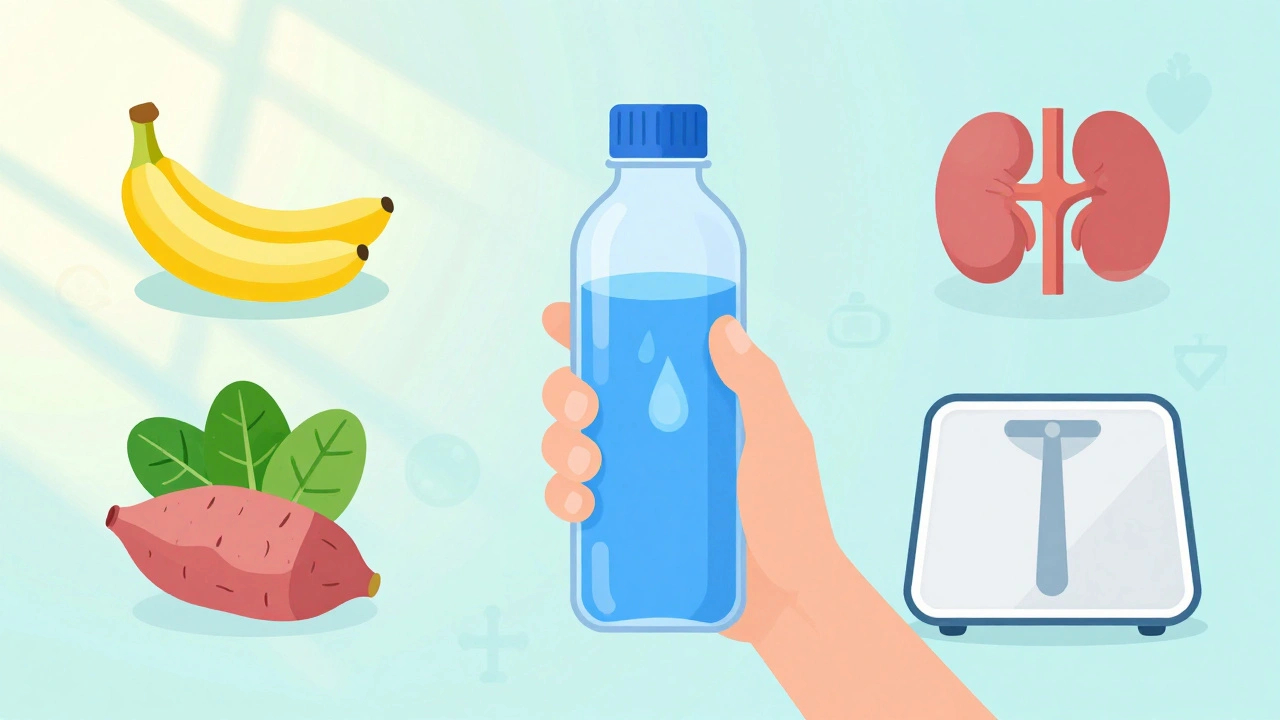
Hydration and Diuretics: How to Balance Fluid Intake to Avoid Side Effects
- Dec, 7 2025
- 11
Learn how to balance fluid intake when taking diuretics to prevent dehydration, electrolyte loss, and dangerous side effects. Practical tips for daily hydration, what to avoid, and how to monitor your body.
Categories
- Medication Information (121)
- Health and Wellness (52)
- Women's Health (7)
- Mental Health (5)
- Support Resources (5)
- Supplements (5)
- Pharmacy Reviews (5)
- Dermatology (4)
- Nutrition (3)
- Fitness and Wellness (3)
Archives
- March 2026 (10)
- February 2026 (12)
- January 2026 (27)
- December 2025 (30)
- November 2025 (24)
- October 2025 (29)
- September 2025 (14)
- August 2025 (2)
- July 2025 (7)
- June 2025 (2)
- May 2025 (3)
- April 2025 (4)
- online pharmacy
- dietary supplement
- medication safety
- health benefits
- side effects
- generic drugs
- drug interactions
- treatment
- wellness
- optimal health
- diabetes management
- safe medication purchase
- online pharmacy Australia
- brand name drugs
- authorized generics
- generic medications
- medication side effects
- link
- women's health
- dietary supplements