
TMP-SMX Potassium Risk: What You Need to Know About Side Effects and Alternatives
When you take TMP-SMX, a combination antibiotic made of trimethoprim and sulfamethoxazole, commonly prescribed for urinary tract infections, bronchitis, and pneumonia. Also known as Bactrim or Septra, it’s effective—but it can quietly raise your potassium levels, especially if your kidneys aren’t working at full strength. This isn’t just a minor side effect. High potassium, or hyperkalemia, a condition where blood potassium levels rise above normal, often due to kidney problems or certain drugs, can cause irregular heartbeats, muscle weakness, or even cardiac arrest. It’s not rare: studies show up to 1 in 20 older adults on TMP-SMX develop dangerously high potassium, especially if they’re over 65, have diabetes, or take blood pressure meds like ACE inhibitors or spironolactone.
The real danger? You won’t feel it until it’s serious. Unlike a stomachache or rash, high potassium doesn’t always cause obvious symptoms at first. By the time you feel your heart skip or your arms go numb, it’s already an emergency. That’s why doctors check your kidney function and potassium levels before and during treatment—especially if you’re on long-term therapy. People with chronic kidney disease are at the highest risk, but even those with mild kidney changes can be affected. If you’re taking potassium supplements, oral or intravenous forms of potassium used to treat low potassium levels, often prescribed alongside diuretics, or salt substitutes like potassium chloride, the risk doubles. The same goes for NSAIDs like ibuprofen, which reduce kidney blood flow and make it harder for your body to flush out excess potassium.
What can you do? First, don’t stop your antibiotic without talking to your doctor. But do ask: "Is my potassium level being monitored?" and "Could this interact with my other meds?" If you’re on TMP-SMX and feel unusually tired, have muscle cramps, or notice your heart acting funny, get checked right away. Simple blood tests can catch this before it becomes life-threatening. For some, switching to another antibiotic like nitrofurantoin or cephalexin makes more sense—especially if you’re older or have kidney issues. The goal isn’t to avoid TMP-SMX entirely, but to use it wisely. If you’ve had high potassium before, your doctor might choose a different path from the start.
Below, you’ll find real-world insights from people who’ve dealt with this risk, plus clear comparisons between antibiotics and how to stay safe when your kidneys are under stress. These aren’t theory pages—they’re practical guides written for patients who need to know what to ask, what to watch, and what alternatives actually work.
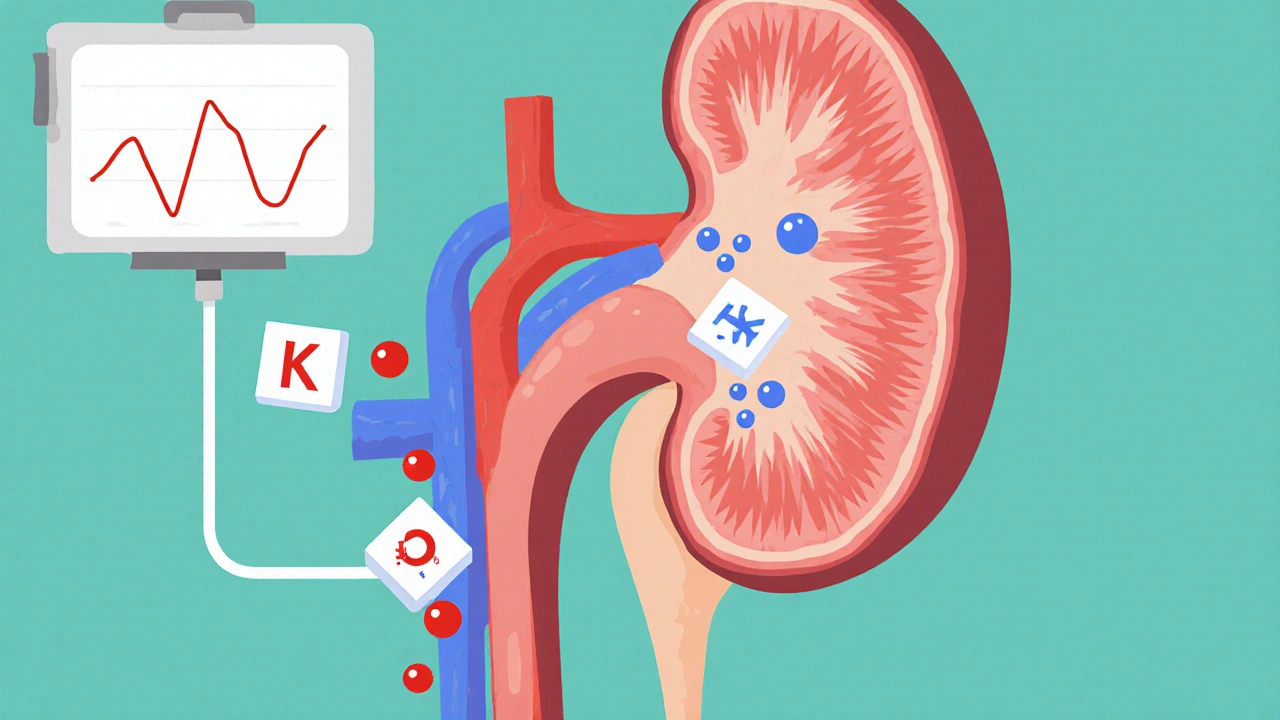
Trimethoprim and Potassium Levels: How This Common Antibiotic Can Raise Your Risk of Hyperkalemia
- Nov, 27 2025
- 14
Trimethoprim, a common antibiotic, can dangerously raise potassium levels-especially in older adults or those on blood pressure meds. Learn the risks, who’s most vulnerable, and safer alternatives.
Categories
- Medication Information (121)
- Health and Wellness (52)
- Women's Health (7)
- Support Resources (5)
- Supplements (5)
- Pharmacy Reviews (5)
- Dermatology (4)
- Mental Health (4)
- Nutrition (3)
- Fitness and Wellness (3)
Archives
- March 2026 (9)
- February 2026 (12)
- January 2026 (27)
- December 2025 (30)
- November 2025 (24)
- October 2025 (29)
- September 2025 (14)
- August 2025 (2)
- July 2025 (7)
- June 2025 (2)
- May 2025 (3)
- April 2025 (4)
- online pharmacy
- dietary supplement
- medication safety
- health benefits
- side effects
- generic drugs
- drug interactions
- treatment
- wellness
- optimal health
- diabetes management
- safe medication purchase
- online pharmacy Australia
- brand name drugs
- authorized generics
- generic medications
- medication side effects
- link
- women's health
- dietary supplements