
Hyperkalemia Warning: What You Need to Know About High Potassium Risks
When your blood potassium levels climb too high, you’re dealing with hyperkalemia, a condition where excess potassium disrupts heart and muscle function. Also known as high potassium, it doesn’t always cause symptoms—until it suddenly does, like a skipped heartbeat or muscle weakness that won’t go away. This isn’t just a lab number. It’s a real, life-threatening risk, especially if you have kidney disease, take certain blood pressure meds, or use salt substitutes.
Kidney disease, the most common cause of hyperkalemia means your kidneys can’t flush out extra potassium like they should. Even small changes in diet or meds can push levels into danger. Medication interactions, like ACE inhibitors, ARBs, or potassium-sparing diuretics are another big trigger. Many people don’t realize their blood pressure pill is quietly raising their potassium. And don’t forget electrolyte imbalance, a broader term that includes potassium spikes from dehydration, diabetes, or even too many sports drinks. These aren’t abstract concepts—they’re everyday risks for millions.
What makes hyperkalemia tricky is how quiet it is. You might feel fine until your heart starts acting up. That’s why doctors check potassium levels regularly if you’re on certain meds or have kidney issues. The good news? You can often prevent it. Know your meds. Watch your salt substitutes. Avoid potassium-rich foods if advised. And if you’re on dialysis or have advanced kidney disease, this isn’t optional—it’s critical.
The posts below give you real, practical advice on how these risks show up in daily life. You’ll find clear breakdowns of how common drugs like ACE inhibitors and diuretics can push potassium up, what to watch for if you’re on multiple meds, and how kidney problems turn a normal diet into a hidden danger. No fluff. No guesswork. Just what you need to stay safe.
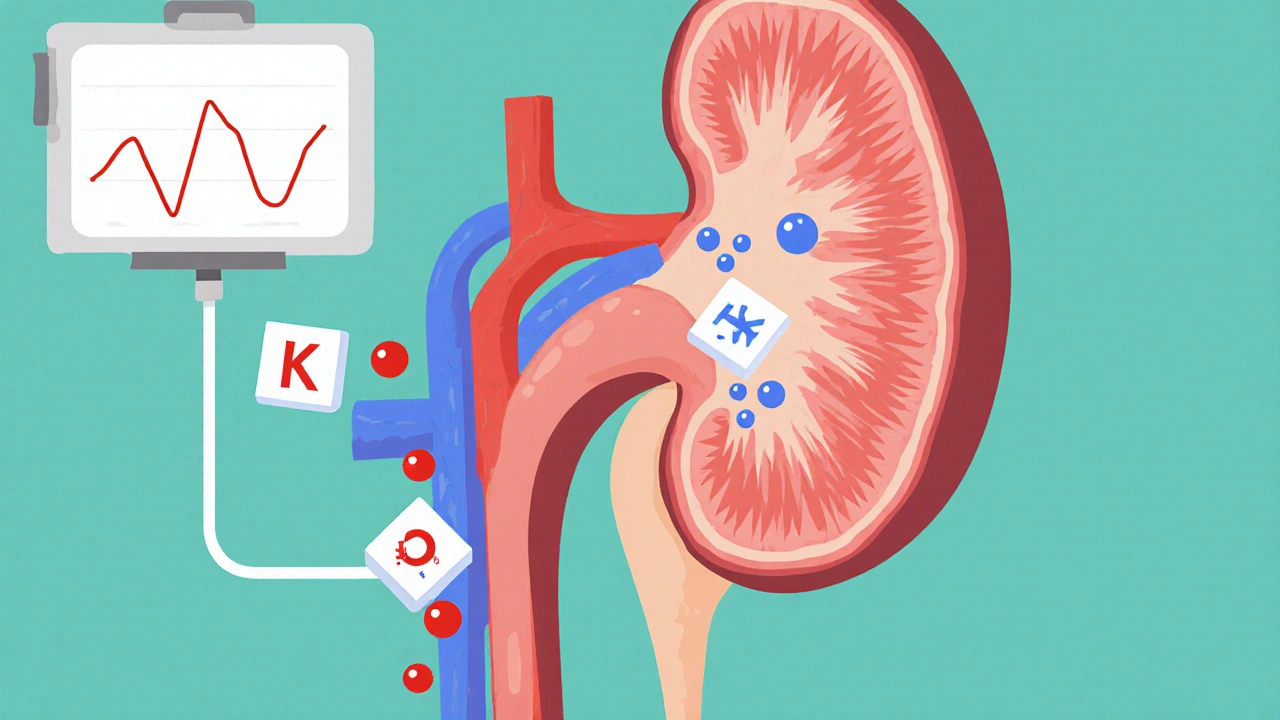
Trimethoprim and Potassium Levels: How This Common Antibiotic Can Raise Your Risk of Hyperkalemia
- Nov, 27 2025
- 14
Trimethoprim, a common antibiotic, can dangerously raise potassium levels-especially in older adults or those on blood pressure meds. Learn the risks, who’s most vulnerable, and safer alternatives.
Categories
- Medication Information (121)
- Health and Wellness (52)
- Women's Health (7)
- Mental Health (5)
- Support Resources (5)
- Supplements (5)
- Pharmacy Reviews (5)
- Dermatology (4)
- Nutrition (3)
- Fitness and Wellness (3)
Archives
- March 2026 (10)
- February 2026 (12)
- January 2026 (27)
- December 2025 (30)
- November 2025 (24)
- October 2025 (29)
- September 2025 (14)
- August 2025 (2)
- July 2025 (7)
- June 2025 (2)
- May 2025 (3)
- April 2025 (4)
- online pharmacy
- dietary supplement
- medication safety
- health benefits
- side effects
- generic drugs
- drug interactions
- treatment
- wellness
- optimal health
- diabetes management
- safe medication purchase
- online pharmacy Australia
- brand name drugs
- authorized generics
- generic medications
- medication side effects
- link
- women's health
- dietary supplements