
Hatch-Waxman Act: How It Shapes Generic Drugs and Your Medication Costs
When you pick up a generic version of a brand-name drug at the pharmacy, you’re seeing the direct result of the Hatch-Waxman Act, a 1984 U.S. law that balanced drug innovation with affordable access. Also known as the Drug Price Competition and Patent Term Restoration Act, it’s the reason you can buy generic versions of pills like Lipitor or Nexium for a fraction of the original price. Before this law, companies spent years and millions just to get a copy of a drug approved — even if the patent had expired. The Hatch-Waxman Act changed all that by creating a faster, cheaper path for generic drug makers to prove their versions work just as well.
This law didn’t just help patients — it reshaped the entire pharmaceutical industry. It gave brand-name companies a way to extend their patents by up to five years if they had to wait for FDA approval after developing a new drug. At the same time, it let generic makers file applications without repeating expensive clinical trials. All they had to prove was that their version was bioequivalent — meaning it delivered the same amount of medicine into your bloodstream at the same rate. That’s why your doctor can switch you from brand to generic without changing your results. And it’s why the FDA now approves hundreds of generics every year, saving Americans over $300 billion annually.
But the Hatch-Waxman Act isn’t just about price tags. It’s tied to real-world issues you might face: delayed access to generics because of patent tricks, or sudden price spikes when no generic is available yet. It also affects how long you wait for new treatments — because companies need patent protection to justify the cost of research. That’s why you see so many posts here about drug interactions, dosing, and alternatives. The Hatch-Waxman Act is the hidden engine behind most of the medications you use daily, whether you’re taking a statin, an antibiotic, or a thyroid pill.
Below, you’ll find practical guides on how to use medications safely, avoid interactions, and get the most out of your prescriptions. Many of these posts — like those on generic medication delivery, steroid tapering, or cholesterol therapy — exist because the Hatch-Waxman Act made these drugs affordable and widely available. Understanding this law helps you see why your meds cost what they do, and why some generics take longer to appear than others. You’re not just reading about pills. You’re reading about a system that’s designed to keep you healthy without breaking the bank.
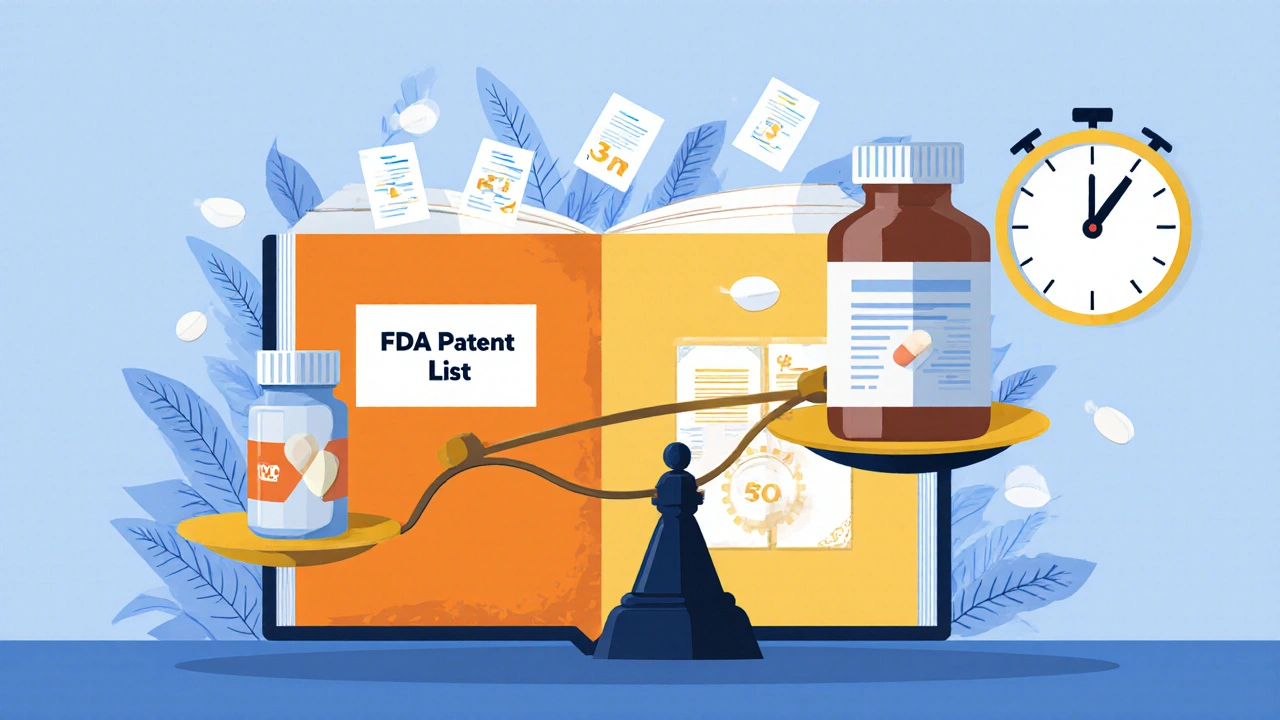
How Paragraph IV Patent Challenges Speed Up Generic Drug Entry
- Nov, 25 2025
- 8
Paragraph IV certification under the Hatch-Waxman Act lets generic drug makers challenge brand patents to enter the market early. This legal process drives down drug prices and has saved U.S. consumers over $1.6 trillion.
Categories
- Medication Information (121)
- Health and Wellness (52)
- Women's Health (7)
- Mental Health (5)
- Support Resources (5)
- Supplements (5)
- Pharmacy Reviews (5)
- Dermatology (4)
- Nutrition (3)
- Fitness and Wellness (3)
Archives
- March 2026 (10)
- February 2026 (12)
- January 2026 (27)
- December 2025 (30)
- November 2025 (24)
- October 2025 (29)
- September 2025 (14)
- August 2025 (2)
- July 2025 (7)
- June 2025 (2)
- May 2025 (3)
- April 2025 (4)
- online pharmacy
- dietary supplement
- medication safety
- health benefits
- side effects
- generic drugs
- drug interactions
- treatment
- wellness
- optimal health
- diabetes management
- safe medication purchase
- online pharmacy Australia
- brand name drugs
- authorized generics
- generic medications
- medication side effects
- link
- women's health
- dietary supplements