
Supine vs. Side Sleeping: Which Position Reduces Sleep Apnea Best?
 Jan, 5 2026
Why Your Sleep Position Matters for Sleep Apnea
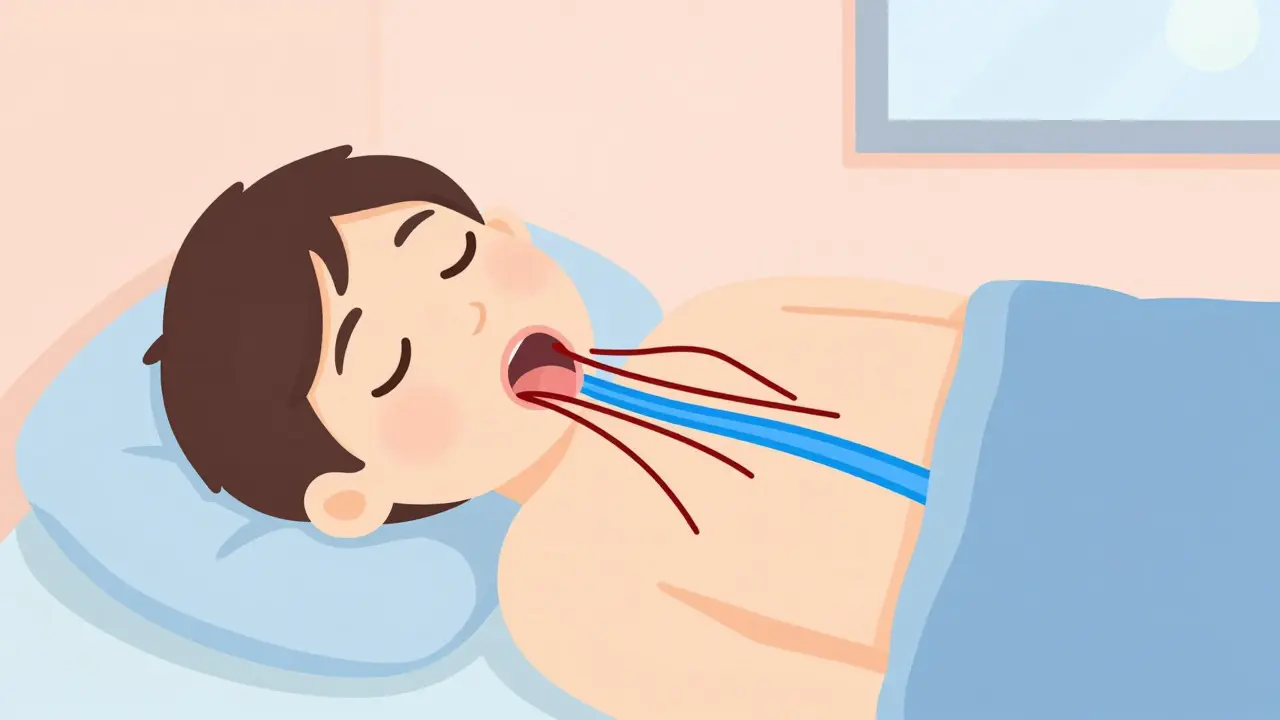
If you snore loudly, wake up gasping, or feel exhausted even after a full night’s sleep, your position might be the culprit. Sleeping on your back - called supine sleeping - is the worst position for obstructive sleep apnea (OSA). When you lie flat on your back, gravity pulls your tongue and soft tissues backward, narrowing your airway. This can cause breathing to stop dozens of times an hour. Switching to side sleeping can cut those events in half or more. For many people, just changing how they sleep is enough to fix their apnea - no mask, no machine.
What Happens When You Sleep on Your Back
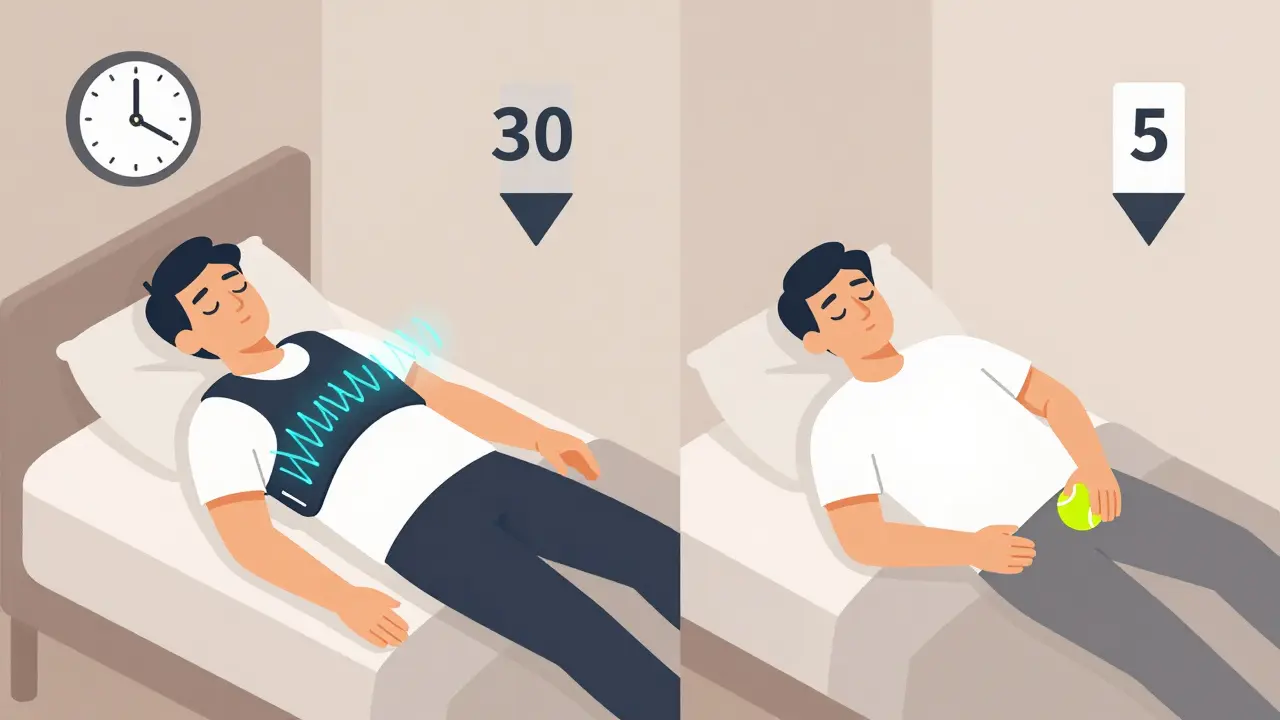
When you’re on your back, your tongue doesn’t just rest comfortably. It slips backward into your throat, blocking airflow. Studies show this reduces your airway space by 30-40% compared to lying on your side. That’s why apnea events spike dramatically in the supine position. For someone with positional OSA, their breathing might be fine on their side - only 5 interruptions per hour - but jump to 30 or more when on their back. The severity isn’t just in frequency. Apneas last longer, oxygen levels drop deeper, and heart rate swings become more extreme. This isn’t just about feeling tired. It’s about strain on your heart and brain.
How Side Sleeping Helps
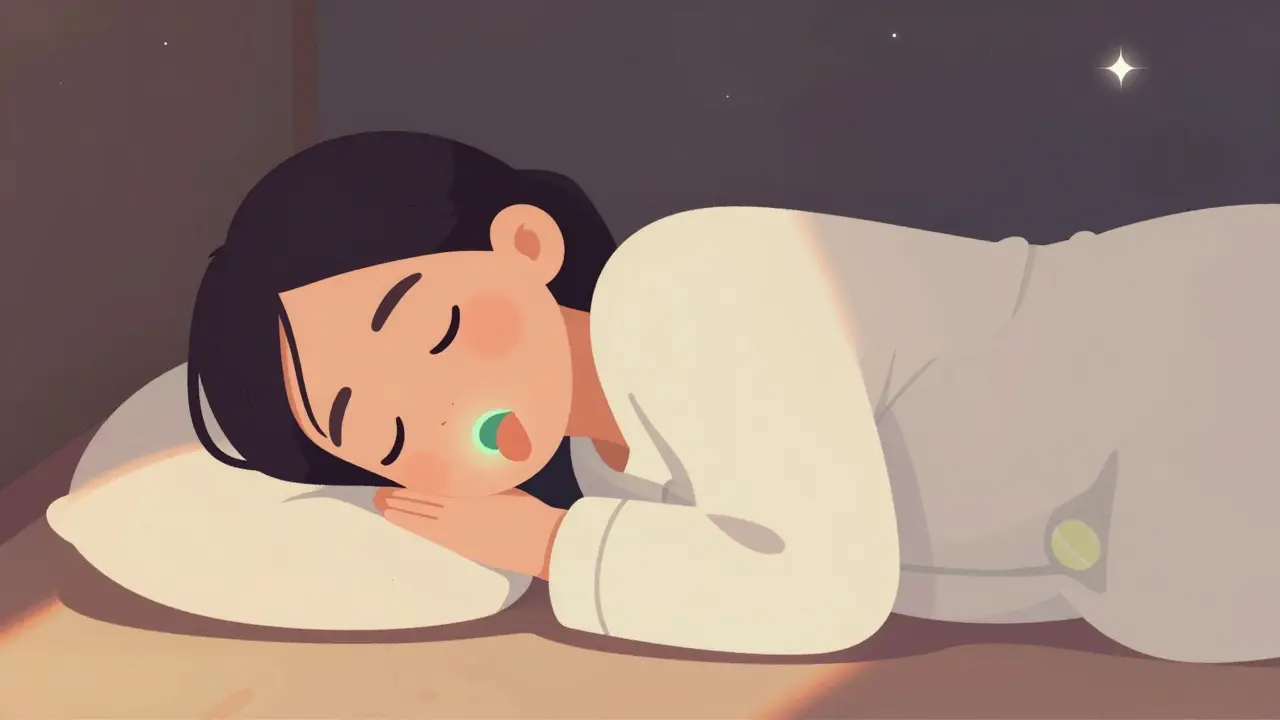
Side sleeping keeps your airway open by using gravity to your advantage. Your tongue stays forward, your throat stays clear, and your breathing stays steady. Research from the Sleep Foundation confirms side sleeping reduces snoring and apnea events more than any other position. It’s not a cure-all - but for people with positional OSA, it’s often enough. Some patients go from severe apnea to mild or even normal levels just by staying on their side. Bed partners notice the difference too. Snoring often stops within seconds of a position change. That’s not magic. That’s physics.
What Is Positional Therapy?
Positional therapy is any method that keeps you from rolling onto your back while you sleep. It’s not about forcing you awake. It’s about gently guiding you to stay on your side. The simplest version? Sew a tennis ball into the back of your pajama shirt. It’s uncomfortable to roll onto your back, so you naturally shift to your side. It’s cheap, easy, and surprisingly effective - if you can tolerate it. But many people quit within weeks because the ball digs in, wakes them up, or just feels silly.
Advanced Tools: Vibration Trainers and Smart Devices
Modern positional therapy uses tech, not tennis balls. Devices like the NightBalance Sleep Position Trainer (SPT) wear like a vest and vibrate softly when you roll onto your back. The vibration isn’t loud enough to wake you - just enough to nudge you back to your side. A 2015 study in the Journal of Clinical Sleep Medicine found that 68% of users using the SPT reached treatment success (AHI under 5), compared to just 43% using the tennis ball method. More importantly, compliance was over 30% higher with the SPT. People stuck with it. They slept better. They felt better. And they didn’t hate their device.
CPAP vs. Positional Therapy: What Works Better?
CPAP is still the gold standard. It keeps your airway open with steady air pressure. But here’s the catch: half of people who get a CPAP machine stop using it within a year. It’s bulky. It’s noisy. It chafes your face. Positional therapy doesn’t have those problems. While CPAP lowers your apnea-hypopnea index (AHI) more overall, positional therapy wins on consistency. People use it 35-40% more often than CPAP. And for someone with positional OSA, that’s the difference between treatment that works and treatment that doesn’t. Experts agree: if your apnea is worse on your back, positional therapy should be your first try - not your last resort.
Who Is a Good Candidate?
Not everyone with sleep apnea benefits from positional therapy. You need to have positional OSA - meaning your apnea is much worse on your back. How do you know? A sleep study that tracks events by position. If your supine AHI is at least double your side AHI, you qualify. Studies show 50-60% of OSA patients fall into this group. But many never get tested for it. Doctors often treat everyone the same - with CPAP - even if position is the real problem. If you’ve tried CPAP and quit, or if you’re newly diagnosed and want to avoid a mask, ask your doctor for a positional analysis. It could change everything.
Cost and Options: From DIY to High-Tech
You don’t need to spend hundreds to start. A tennis ball and an old T-shirt cost under $5. Specialized anti-supine pillows range from $20 to $50. They wedge your body into side-sleeping alignment. For more reliable results, devices like NightBalance or Smart Nora cost $300-$500. These are medical-grade tools, often covered by insurance if prescribed. The market for these devices has grown 25% a year since 2020. More people are realizing: you don’t need a machine to breathe better. You just need to stop sleeping on your back.
What About Central Sleep Apnea?
Positional therapy mainly helps obstructive sleep apnea. For central sleep apnea - where your brain doesn’t signal your body to breathe - the benefits are less clear. Some studies suggest side sleeping might help by improving lung expansion and nerve signaling, but the evidence is thin. If you have central apnea, positional therapy alone won’t fix it. But if you have mixed apnea (both types), it can still help reduce the obstructive component. Always get a full diagnosis before assuming which type you have.
Getting Started: Your 2-Week Plan
Start simple. For two weeks, try sleeping on your side with a pillow behind your back to prevent rolling. Use a phone app to track your position if you can. If you wake up on your back, roll back over. Don’t fight it. Just reposition. After two weeks, see how you feel. Less snoring? Fewer night awakenings? More energy in the morning? If yes, keep going. If not, talk to your doctor about a sleep study. If you’re serious, consider a vibration trainer. Most people need a few nights to adjust. But after a week, many say they sleep deeper than they have in years.
Why Most People Fail - And How to Avoid It
The biggest reason positional therapy fails? People give up too soon. The tennis ball method feels awkward. The device vibrates at first and feels annoying. But discomfort fades. Your body adapts. The real test is consistency. Don’t expect miracles on night one. It takes 10-14 days for your brain to learn a new sleep habit. If you stick with it, the payoff is huge: better sleep, lower blood pressure, less daytime fatigue, and no mask to clean every morning. For many, it’s the only treatment they’ll ever need.
Brian Anaz
January 6, 2026 AT 08:12Venkataramanan Viswanathan
January 7, 2026 AT 12:28Vinayak Naik
January 7, 2026 AT 17:34Kelly Beck
January 8, 2026 AT 05:40Molly McLane
January 8, 2026 AT 07:12Beth Templeton
January 8, 2026 AT 23:00Joann Absi
January 10, 2026 AT 17:02Jeane Hendrix
January 10, 2026 AT 21:44Rachel Wermager
January 12, 2026 AT 08:11