
State Pharmacy Boards: How to Verify Pharmacy Licenses and Avoid Counterfeit Drugs
 Mar, 1 2026
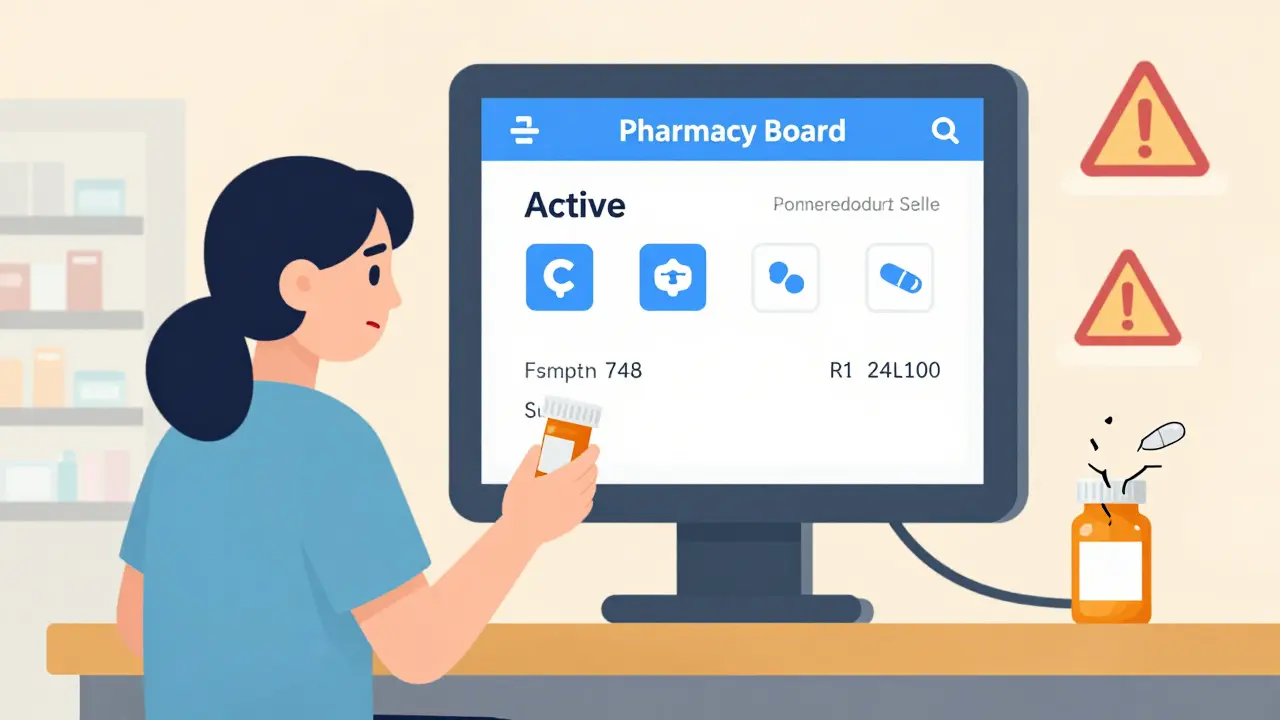
When you pick up a prescription, you assume the pharmacist handing it to you is licensed, trained, and accountable. But what if they aren’t? In 2023, 47% of disciplinary actions against pharmacists involved practicing with an invalid or expired license - a statistic that should scare anyone who relies on medication. State pharmacy boards exist to stop this before it happens. They’re the frontline defense against unqualified practitioners, and knowing how to verify a license isn’t just a best practice - it’s a safety habit.
What Exactly Is a State Pharmacy Board?
Every U.S. state, plus D.C., Puerto Rico, Guam, and the U.S. Virgin Islands, has its own pharmacy board. These aren’t just bureaucratic offices - they’re legally empowered agencies created since the late 1800s to protect public health. The first one started in Massachusetts in 1878. Today, 56 boards regulate around 350,000 pharmacists and 300,000 pharmacy technicians nationwide. Their job is simple: make sure only qualified people handle medications. They issue licenses, renew them, set continuing education rules, investigate complaints, and suspend or revoke licenses when someone breaks the rules. If a pharmacist is caught selling fake drugs, mixing wrong dosages, or selling prescriptions without a valid order - the board finds out and acts. These boards don’t work in isolation. They’re part of a national network coordinated by the National Association of Boards of Pharmacy (NABP). But here’s the catch: each board runs its own system. That means the way you check a license in Maryland is different from how you check one in California. And if you’re verifying a pharmacist for work, a hospital, or even just to feel safe, you need to know how to do it right.Why License Verification Matters More Than Ever
Counterfeit drugs are a growing threat. Fake pills laced with fentanyl, expired antibiotics repackaged as new, or unapproved versions of popular medications - these aren’t just rumors. In 2022, the FDA seized over 12 million counterfeit drug units. Many of these entered the U.S. through unlicensed or improperly licensed pharmacies, especially online ones. A licensed pharmacist is trained to spot these. They know where to source drugs, how to read batch codes, and what red flags to look for. An unlicensed person? They don’t. And if you’re buying from a pharmacy where the pharmacist’s license is expired or suspended, you’re gambling with your health. Employers know this. According to the 2023 American Society of Health-System Pharmacists survey, 78% of hospitals now require primary source verification - meaning they check directly with the state board, not with a resume or third-party service. Retail pharmacies are catching up too. If you’re hiring a pharmacist, skipping this step isn’t negligence - it’s a lawsuit waiting to happen.How to Verify a Pharmacy License: Step by Step
Verifying a license is easy - if you know where to look. Here’s how to do it right:- Find the official website of the state’s pharmacy board. Search for “[State] Board of Pharmacy.” Avoid third-party sites - they’re outdated or misleading.
- Look for a link labeled “License Verification,” “Verify a License,” or “License Search.” It’s usually under “For the Public” or “Consumer Resources.”
- Enter at least one identifier: full name, license number, or city. Some states require both first and last name. Don’t guess - partial info gives false results.
- Review the results. You should see: full name, license number, type (pharmacist, technician, intern), issue date, expiration date, and current status.
- Check the status carefully. “Active” means they’re good to go. “Suspended,” “Revoked,” or “Probation” means they’re not allowed to practice. “Retired” or “Deceased” means they’re no longer active.
Some states, like Maryland, let you search by zip code or city. Others, like the District of Columbia, warn you that incomplete info leads to errors. Always use the full legal name. If the pharmacist changed their name after marriage, try both versions.
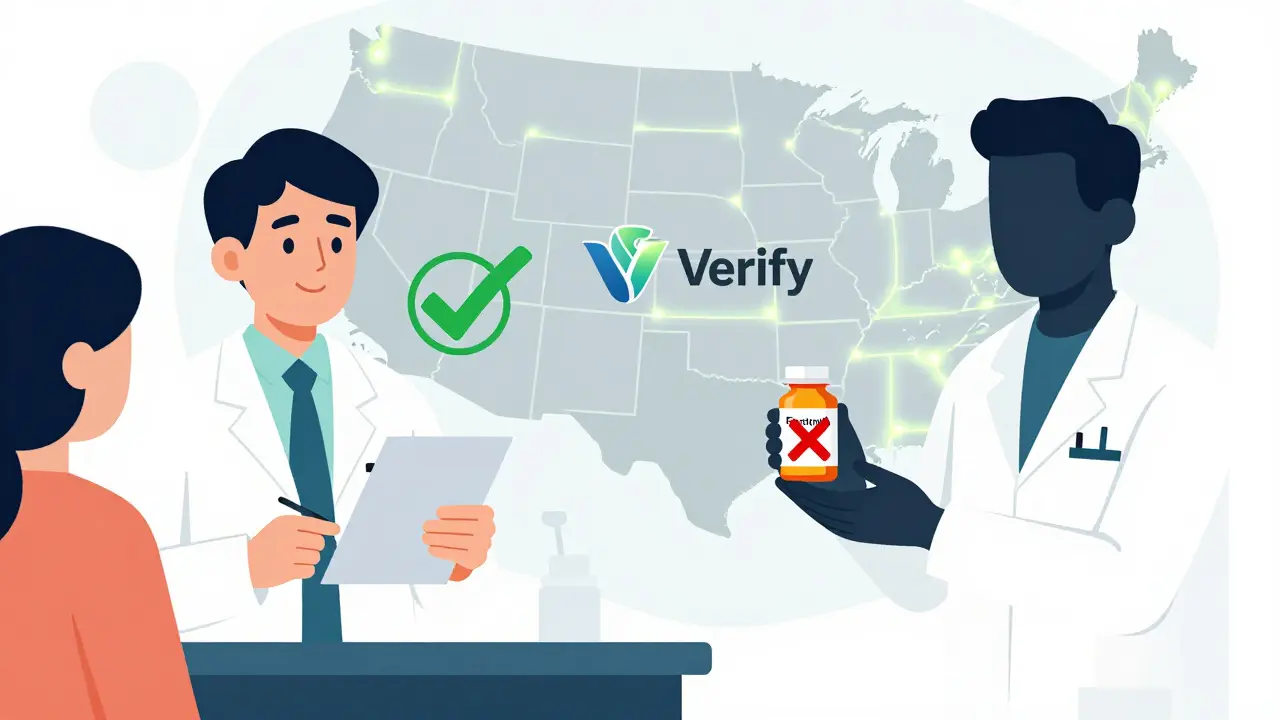
Most state boards offer this for free. You don’t need to pay. If a site asks for money to verify a license, it’s probably a scam.
State-by-State Differences You Need to Know
Not all verification systems are created equal. Here’s what you’re likely to run into:- Maryland: Lets you search by 11 criteria - name, license number, city, zip, even status. Their system handles about 12,000 queries a month. But users report delays: one pharmacist on Reddit said it took three weeks for their new license to appear after passing the exam.
- District of Columbia: Requires full name or license number. No fuzzy matching. If you miss a middle initial, you get no results. But users praise its speed - verification letters arrive in two business days.
- California: Shows disciplinary history, not just status. If a pharmacist was fined for dispensing errors, you’ll see it.
- Texas: Includes continuing education credits. You can see if they’re up to date on required training.
That inconsistency is frustrating. A pharmacist with licenses in three states? You’ll need to check three different websites. That’s where NABP Verify comes in.
NABP Verify: The National Shortcut
The National Association of Boards of Pharmacy launched NABP Verify in 2020. It’s a single portal that pulls data from 48 participating state boards. Instead of checking 56 sites, you check one. Here’s how it works:- You create a free profile.
- Link your state license(s).
- NABP confirms each one.
- You get a digital badge you can share - like a verified badge on social media.
It costs $59 a year. That’s not cheap - but for pharmacists who work across state lines (especially in telehealth or mail-order pharmacies), it saves hours. One pharmacy owner in Colorado said it cut credentialing time from 14 days to 3 when expanding to three new states.
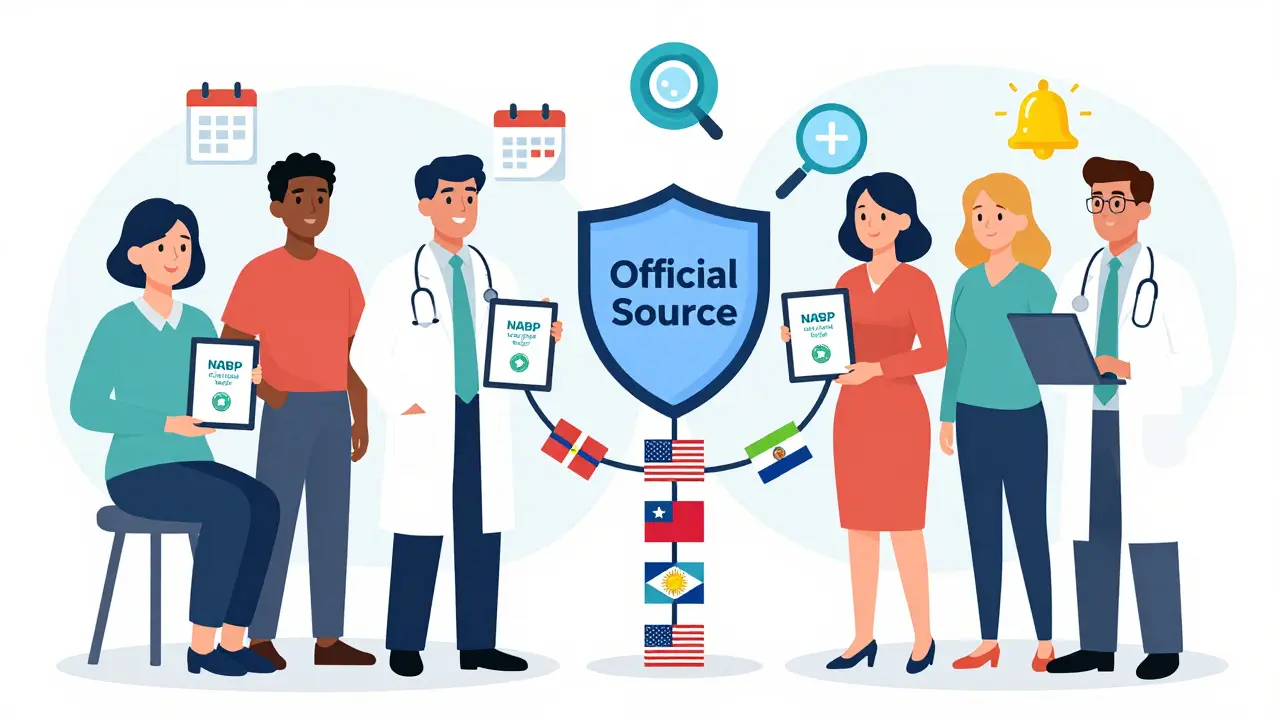
Important: NABP Verify is a convenience tool. It’s not a replacement for checking the state board directly. Why? Because state boards are the official source. NABP updates once a day. A state board might update in real time if someone gets suspended. If you’re hiring someone or verifying a license for legal reasons - always go back to the state source.
What the System Gets Wrong - And Why It’s Dangerous
Here’s the ugly truth: verification systems are slow. A 2022 study found pharmacy boards update disciplinary actions an average of 14.3 days after a decision is made. Medical boards? 12.4 days. That might not sound like much - but in that gap, a suspended pharmacist could still be working. Dr. Susan Cornell, a pharmacy law expert, put it bluntly: “State board systems often lack real-time updates, creating dangerous gaps where practitioners may appear licensed when they’re actually under investigation.” Other common problems:- Expired licenses still show as “active” during grace periods (some states allow 30-60 days to renew).
- Name variations (maiden names, missing middle initials) cause searches to fail.
- Outdated websites crash or return error messages.
- Some boards don’t update disciplinary records for months.
That’s why you shouldn’t trust a pharmacist’s word. Don’t take their license number at face value. Don’t assume a resume is accurate. And never rely on a third-party verification service unless it’s linked directly to the state board.
What You Can Do - Even If You’re Not a Pharmacist
You don’t have to be a healthcare worker to protect yourself. Here’s how:- Before filling a prescription: Ask the pharmacist for their name. Then go to your state’s board website and verify their license. Takes two minutes.
- If you’re buying online: Only use pharmacies with a VIPPS seal (Verified Internet Pharmacy Practice Sites). That means they’re licensed and verified by NABP.
- If you suspect fraud: Report it. Every state board has a complaint line. You can also report to the FDA’s MedWatch program.
- If you’re hiring: Never skip primary source verification. Even if someone has years of experience - check the board.
Counterfeit drugs don’t always look fake. They can be packaged perfectly. The only way to know if the person dispensing them is qualified? Verify their license.
What’s Changing in 2026
By 2025, 90% of state boards are expected to have real-time license updates. That’s huge. Right now, if a pharmacist gets suspended on Monday, it might not show up online until Friday - or later. NABP is expanding NABP Verify to include pharmacy technicians in Q2 2024. That’s important - techs handle 70% of prescription filling in many pharmacies. If they’re unlicensed, the risk is just as high. The Interstate Pharmacy Licensure Compact (IPLC) now includes 23 states. That means pharmacists can get one license and practice across those states - but only if they’re verified through the compact. It’s a step toward simpler, safer verification. Still, the core rule hasn’t changed: the state board is the only official source. No app, no website, no resume can replace it.Can I verify a pharmacist’s license for free?
Yes. Every state pharmacy board offers free online license verification. You don’t pay to check if someone is licensed. If a site asks for money, it’s not official. Some states charge a small fee (under $10) if you request an official letter to send to another state - but the online lookup is always free.
What does it mean if a pharmacist’s license says "Suspended"?
It means they’re not allowed to practice pharmacy right now. Suspensions usually happen after investigations into misconduct - like dispensing errors, selling controlled substances without a prescription, or practicing without continuing education. A suspended license is not temporary - it’s a serious red flag. Never fill a prescription from a pharmacist with this status.
Why does my state’s verification site say "No results found"?
This usually means one of three things: the name is misspelled, the license number is wrong, or the person isn’t licensed in that state. Try variations - middle initials, maiden names, or different spellings. If you’re sure they’re licensed, they might be licensed in a different state. Check other states where they’ve worked. Also, new licenses can take 2-6 weeks to appear in the system after issuance.
Is NABP Verify reliable enough to use instead of checking the state board?
NABP Verify is convenient, especially for multi-state practitioners, but it’s not a substitute for checking the state board directly. It updates once daily, while state boards may update in real time after disciplinary actions. For legal, employment, or safety purposes - always confirm with the official state source. Think of NABP Verify as a helpful tool, not the final word.
How often should I verify a pharmacist’s license?
Verify before you start using a new pharmacy or hiring a new pharmacist. Then, check again every 6-12 months - especially if you’re on long-term medication or if there’s been a change in staff. Licenses expire, get suspended, or get renewed. What was valid last year might not be valid today.
Betsy Silverman
March 2, 2026 AT 04:44Just verified my pharmacist’s license after reading this. Turns out her license was flagged as "pending renewal"-she’d been working for two weeks with an expired one. Scary stuff. I’m never taking meds from someone without checking first.
Ivan Viktor
March 3, 2026 AT 18:04So let me get this straight-we’re trusting our lives to a website that might not update for 14 days? And we’re supposed to be okay with that? Yeah, no thanks.
Zacharia Reda
March 4, 2026 AT 22:24My cousin’s a pharmacist in Texas. He told me the CE credits show up on the board site like clockwork-but if you miss one by a week, they slap you with a fine AND a 30-day suspension. No warning. No grace. Just boom, you’re off the clock until you pay up. It’s brutal, but honestly? I get it. You can’t afford sloppy people handling opioids.
Jeff Card
March 5, 2026 AT 13:29I used to work in a hospital pharmacy. We had a guy who swore he was licensed in three states. We checked. One was expired. One was suspended for diverting meds. The third? Never existed. He’d forged the license number. We called the board. They showed up the next day with cops. You think this is overkill? Wait until someone you love gets a fake pill laced with fentanyl because you didn’t verify.
Matt Alexander
March 5, 2026 AT 22:02Simple rule: if you don’t see "Active" on the state site, don’t trust it. No exceptions. No "but he’s been here 10 years." If the board says no, he’s done. Period.
Gretchen Rivas
March 6, 2026 AT 00:13Verified my pharmacist yesterday. Active. Good to go. Took 90 seconds. Do it.
Mike Dubes
March 7, 2026 AT 16:02Man, I tried to check my pharmacist’s license last week. The site crashed. Then I tried again. Then I tried on my phone. Then I called the office. They said "oh yeah, we just renewed her, it’ll be up in a few days." So now I’m supposed to just trust them? No thanks. I’m switching pharmacies.
Helen Brown
March 9, 2026 AT 15:51What if the state board itself is corrupted? What if they’re covering up suspended pharmacists to avoid bad press? I read somewhere that some boards get funding from pharmaceutical companies. Who’s really watching the watchers? This whole system feels like a house of cards.
Donna Zurick
March 9, 2026 AT 16:51Just did it. Verified my pharmacist. She’s active. Felt better than taking a Xanax. Seriously, everyone do this. It’s free. It’s two minutes. You’re worth it.
Tobias Mösl
March 10, 2026 AT 10:36You people are naive. This isn’t about licenses. It’s about control. The boards are owned by Big Pharma. They only revoke licenses when it’s convenient. The real problem? The system is rigged. If you’re not in the club, you’re out. And if you’re lucky, you won’t end up on a ventilator because your "licensed" pharmacist gave you a placebo.
tatiana verdesoto
March 11, 2026 AT 05:59This is such an important post. I’ve been telling my mom to check her pharmacist for years. She thought it was overkill. Now she’s checking every time. Small actions save lives. Thank you for putting this out there.
Ethan Zeeb
March 11, 2026 AT 17:18State boards are slow. They’re underfunded. They’re broken. And if you’re waiting for them to fix themselves, you’re already dead. The only solution? Demand real-time public APIs. Let the public verify in real time. No more 14-day delays. If they won’t do it, we should shut them down and build our own.
Pankaj Gupta
March 12, 2026 AT 20:52In India, we don’t have a centralized pharmacy board system. Pharmacists often operate without formal verification. Reading this made me realize how lucky we are in the U.S. to even have this structure. It’s not perfect, but it’s a foundation. We should protect it, not dismiss it.
Alex Brad
March 14, 2026 AT 18:49Always check. Always. Even if you’ve been going to the same pharmacy for 20 years. People change. Licenses expire. Don’t assume. Verify.
Renee Jackson
March 15, 2026 AT 07:18It is imperative that all individuals, regardless of professional affiliation, engage in the proactive verification of pharmacy licensure status. The integrity of public health depends upon the rigorous adherence to official regulatory channels. This practice constitutes not merely a precaution, but a moral obligation.