
Spinal Cord Injury: Understanding Function Loss, Rehabilitation, and Assistive Devices
 Dec, 12 2025
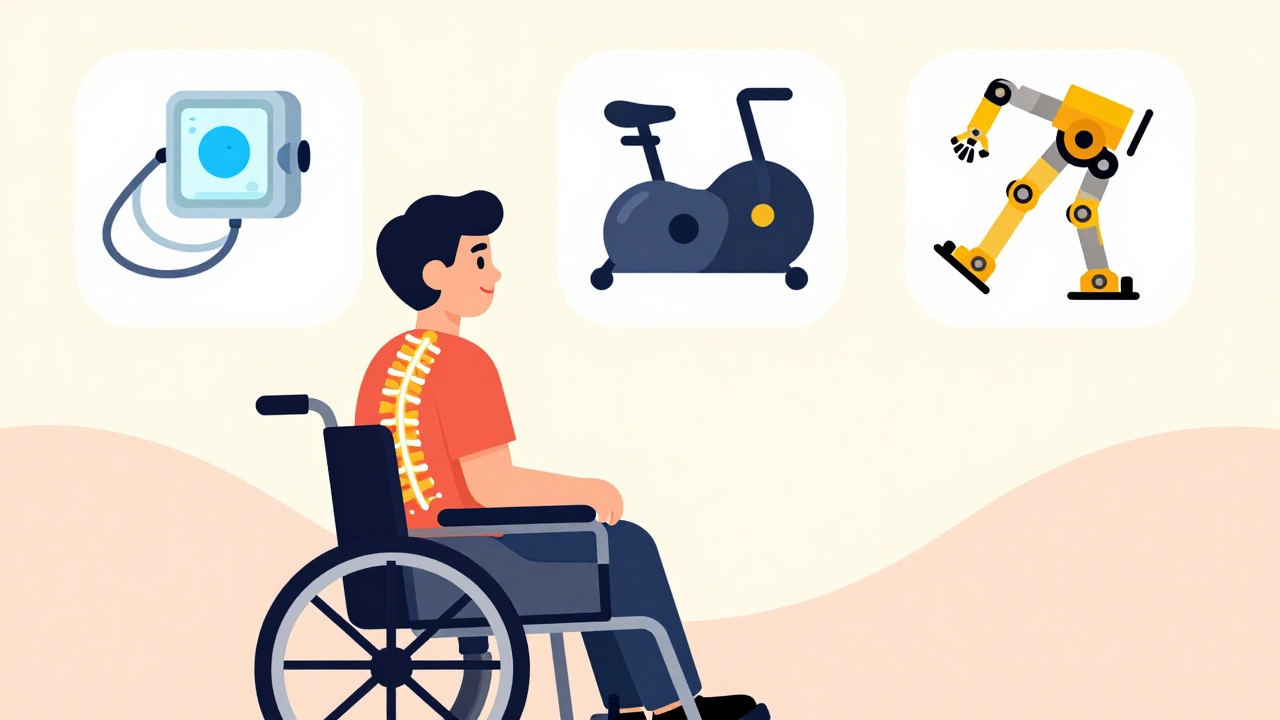
When your spinal cord gets injured, it’s not just about losing movement or feeling. It’s about losing control over your body in ways you never imagined-how you sit, stand, breathe, or even go to the bathroom. Every year, around 17,800 new cases happen in the U.S. alone, mostly from car crashes, falls, or violence. But survival rates have improved. Now, the real challenge isn’t just staying alive-it’s learning how to live again.
What Happens When the Spinal Cord Is Damaged?
The spinal cord is your body’s main communication line between your brain and everything below your neck. When it’s injured, signals can’t get through. That’s why someone with a high neck injury (C1-C4) might need a ventilator to breathe, while someone with a lower injury (L1-L5) might keep arm function but lose leg movement. The damage doesn’t always mean total loss. Incomplete injuries-where some nerve signals still get through-can lead to partial recovery. About 59% of people with incomplete paraplegia regain some walking ability. Complete injuries? Only 1-3% recover the ability to walk. The location and severity of the injury determine what you can and can’t do. But here’s the key: recovery isn’t just about nerves healing. It’s about your body and brain learning new ways to move.Rehabilitation Starts the Day You’re Stable
Rehab doesn’t wait. It starts within 24 to 72 hours after your condition stabilizes. That’s when therapists begin passive range-of-motion exercises-moving your arms and legs for you-to prevent muscles from tightening and joints from locking up. If you’re flaccid (limp), they do this once a day. If you’re spastic (muscles tighten randomly), they do it two or three times a day. Inpatient rehab programs are intense. You’ll get at least three hours of therapy, five days a week. That’s physical therapy, occupational therapy, speech therapy, and more-all working together. A team of doctors, nurses, psychologists, and social workers designs your plan. It’s not just about strength. It’s about learning how to transfer from bed to wheelchair, how to manage bowel and bladder care (which takes 45 to 90 minutes every day), and how to prevent pressure sores. One of the biggest wins? People with incomplete injuries can regain 80-90% of their functional potential in the first year. That means dressing yourself, feeding yourself, using a phone, driving a modified car-all possible with the right rehab.Technology That Moves You Again
Modern rehab isn’t just about stretching and strengthening. It’s about machines that help your body remember how to move. Functional Electrical Stimulation (FES) bikes are common. They send tiny electrical pulses to your leg muscles, making them contract and pedal. Studies show FES cycling improves heart health more than arm cycling-boosting oxygen use by 14.3%. But they cost around $5,000 out-of-pocket, and insurance rarely covers them fully. Then there are robotic exoskeletons like Ekso and ReWalk. These are the machines that let people with paralysis stand and take steps. One user said it gave him his first steps in three years. But here’s the catch: each session lasts only 25-45 minutes because they’re exhausting. And they need two or three therapists to operate safely. They’re not for everyone-and they’re not magic. For upper limbs, devices like Armeo help people with cervical injuries practice reaching, grabbing, and holding. And in 2022, the FDA approved the first implantable diaphragm pacing system for C3-C5 injuries. It reduces ventilator dependence by 74%. That’s life-changing.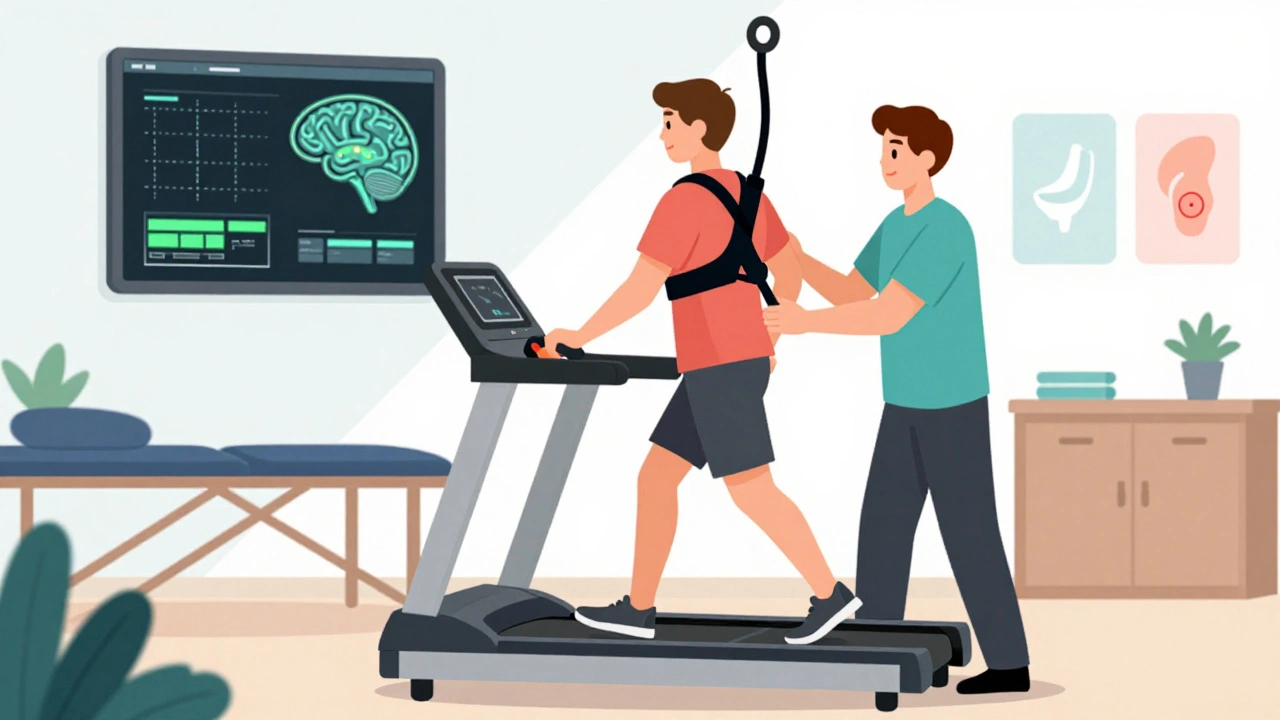
What Works Better? Treadmill vs. Walking
Walking training has two main approaches: overground walking and treadmill training with body weight support. The treadmill version uses a harness to hold you up while a belt moves your legs. It’s not natural-but it works better. A 2021 study found that treadmill training improved walking speed by 23% more than regular walking over 12 weeks. Why? It activates more of your brain’s walking circuits. But it also makes your steps shorter and faster than normal. That’s not a flaw-it’s a trade-off. The goal isn’t to walk like you used to. It’s to walk safely and consistently.Managing the Hidden Challenges
Most people focus on walking. But the real daily battles are quieter. Spasticity affects 65-78% of people with SCI. That means muscles tighten without warning-sometimes painfully. Doctors use baclofen pills and Botox injections. Studies show this cuts spasticity by 40-60% in most people. Breathing problems? High cervical injuries can paralyze your diaphragm. That’s why coughing techniques, chest percussion, and incentive spirometry are critical. They cut pneumonia risk by 65%. And bowel and bladder care? That’s a full-time job. No one talks about it much, but it’s one of the biggest reasons people feel isolated. You need a strict routine. Miss it, and you risk infection or hospitalization.Assistive Devices: Freedom in a Chair
Not everyone walks again. But that doesn’t mean you’re stuck. Power wheelchairs with tilt, recline, and standing functions give you independence. Specialized seating systems prevent pressure sores. But Medicare only covers 80% of the cost after your deductible. That leaves $1,200 to $3,500 out of pocket for the best seats. Voice-controlled home systems, adaptive keyboards, and smart home tech let you control lights, temperature, and entertainment without lifting a finger. These aren’t luxuries-they’re necessities for dignity.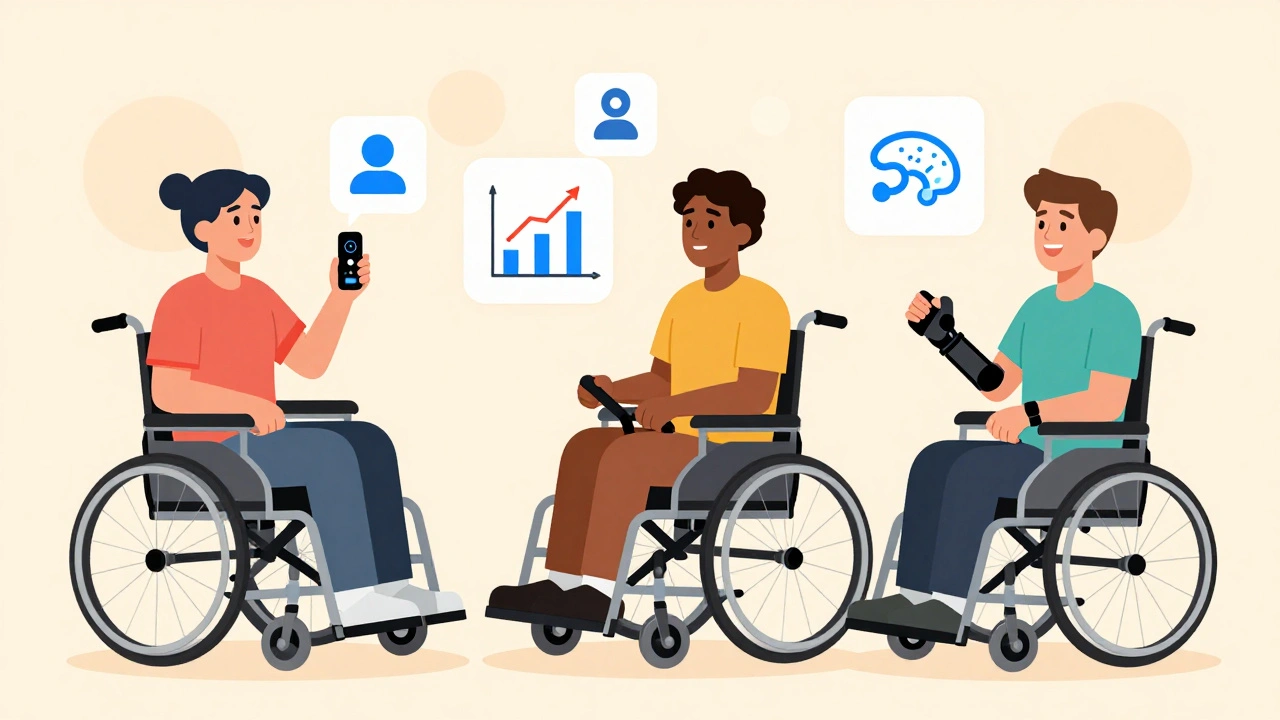
Why People Quit Rehab at Home
You leave the hospital with a plan. But most people stop doing their exercises within six months. Why? Lack of motivation. Lack of follow-up. Lack of support. A 2022 survey found 68% of people quit home programs because no one checked in. That’s a huge gap. Rehab doesn’t end when you leave the clinic. It becomes part of your daily life. Peer support makes a difference. At Spaulding Rehabilitation, 82% of patients said talking to someone who’d been through it improved their mental health more than any therapy session.The Future Is Personalized
The field is changing fast. Brain-computer interfaces are being tested-early results show 38% better hand function in people with neck injuries. AI is now helping therapists adjust exercises in real time based on your progress. By 2025, two-thirds of top rehab centers will use AI-driven plans. But money is still a wall. Medicare covers only 83% of actual rehab costs. Many centers struggle to afford the latest tech. And insurance companies often deny coverage for exoskeletons or FES bikes unless you jump through endless hoops.What You Need to Know
- Recovery isn’t linear. Some days are better than others. That’s normal. - You don’t have to walk to live well. Many people thrive without it. - Your rehab team is your team. Speak up if something isn’t working. - Assistive tech isn’t optional-it’s your independence. - Peer support saves lives. Find your community. The road after a spinal cord injury is long. But it’s not empty. Thousands of people are walking it ahead of you-with wheelchairs, exoskeletons, voice assistants, and sheer determination. You’re not alone. And with the right support, you can rebuild a life that’s full, even if it looks different than before.Can you walk again after a spinal cord injury?
It depends on whether the injury is complete or incomplete. About 59% of people with incomplete injuries regain some walking ability, often with help from exoskeletons or treadmill training. For complete injuries, only 1-3% recover the ability to walk. But walking isn’t the only goal-many people live full, independent lives using wheelchairs and assistive devices.
How long does spinal cord injury rehab last?
Intensive inpatient rehab usually lasts 6 to 12 weeks. But recovery doesn’t stop there. Outpatient therapy continues for months or years. Many people do daily home exercises for life. The first year is the most critical-most functional gains happen then. But progress can continue for years with consistent effort and the right tools.
Are robotic exoskeletons worth it?
They’re not a cure, but they can be life-changing. Exoskeletons like Ekso and ReWalk let people stand and take steps they haven’t been able to in years. But sessions are short (25-45 minutes), require multiple therapists, and cost tens of thousands of dollars. Insurance rarely covers them fully. For some, the mental and physical benefits outweigh the cost. For others, a wheelchair is more practical. It’s personal.
What’s the most important part of SCI rehab?
Preventing secondary complications. That means avoiding pressure sores, pneumonia, muscle contractures, and urinary infections. These complications can hospitalize you and undo all your progress. Daily care routines-skin checks, breathing exercises, bowel/bladder management-are more important than any fancy machine.
Can you get insurance to cover assistive devices?
Medicare and private insurers cover basic wheelchairs and some mobility aids, but often only after you pay a deductible. For high-end equipment like powered wheelchairs with standing features or FES bikes, coverage is hit or miss. Many people pay $1,200 to $3,500 out of pocket. Advocacy groups and state programs sometimes help with funding gaps.
How do you stay motivated after rehab ends?
Connection is key. People who join peer support groups, attend SCI community events, or work with a coach are far more likely to stick with their routine. Set small goals-like doing 10 minutes of stretching every morning. Track progress. Celebrate wins, even small ones. And don’t be afraid to ask for help when motivation dips. You’re not supposed to do this alone.
What’s new in spinal cord injury tech?
The FDA approved the first implantable diaphragm pacing system in 2022, helping people with high neck injuries breathe without ventilators. Brain-computer interfaces are in early trials and already show 38% better hand control. AI-driven therapy plans are now used in 65% of top rehab centers. And wearable sensors are being tested to predict spasticity before it happens. The future is personalized, predictive, and more powerful than ever.
Webster Bull
December 14, 2025 AT 05:14It’s not about walking. It’s about living. I’ve seen people who never stood again but ran businesses, wrote books, raised kids. The body changes, but the person? Still whole.
Stop measuring worth by mobility.
You’re not broken. You’re adapted.
Bruno Janssen
December 14, 2025 AT 08:51I used to think rehab was about getting better. Now I know it’s about learning to live with the loss. I don’t talk about it much. But I’m still here.
Deborah Andrich
December 14, 2025 AT 15:00Someone told me once that dignity isn’t about walking-it’s about choosing how you live. I’ve spent years in wheelchairs and I’ve never felt more free. The machines don’t heal you. The people around you do. Find your tribe. They’ll carry you when you can’t carry yourself.
And yes-you’re allowed to be mad. Angry. Sad. Then keep going.
Tommy Watson
December 16, 2025 AT 02:23Exoskeletons? Pfft. $50k for 25 minutes of walking? My cousin got one and now he’s broke and still can’t pee on his own. They’re just fancy toys for rich people who want to post pics on Instagram. Real rehab is doing your bowel routine at 3am while your mom cries in the next room. That’s the real hero stuff.
Stop selling hope like it’s a product.
Donna Hammond
December 17, 2025 AT 21:56Let me clarify something: FES bikes aren’t just about leg movement-they improve cardiovascular health, reduce spasticity, and lower risk of pressure ulcers. The 14.3% increase in oxygen use isn’t a statistic-it’s a life extension.
And yes, insurance fights are brutal. But if you document your medical necessity properly-especially with a physiatrist’s letter-you can win. I’ve helped over 30 people get coverage. Reach out. I’ll walk you through it.
You’re not alone in this bureaucracy.
Willie Onst
December 18, 2025 AT 09:30Man, I’m from Texas and I used to think ‘rehab’ meant lifting weights and gritting your teeth. Then my brother got injured. Now I see it’s about patience. About small wins. Like the first time he fed himself with a weighted spoon. No exoskeleton. No fanfare. Just him. And that moment? That’s the whole damn point.
Keep showing up. Even on the days you feel like giving up.
Love you, bro.
Shelby Ume
December 18, 2025 AT 10:35While the clinical data presented is both accurate and compelling, it is imperative to recognize that the psychosocial dimensions of spinal cord injury rehabilitation remain under-researched and underfunded. The institutional emphasis on biomechanical outcomes often marginalizes the lived experience of chronic pain, social isolation, and identity reconstruction. A holistic model must prioritize psychological continuity as much as physical function.
Recommendation: Integrate narrative medicine into standard rehab protocols.
Jade Hovet
December 19, 2025 AT 20:54OMG I JUST SAW THIS AND I CRIED 😭
My dad’s been in a chair for 12 years and he still does his FES bike every morning like clockwork. He says it’s his ‘magic time’. I didn’t even know what it was until last week.
Also-Botox for spasticity? YES. He says it’s the only thing that lets him sleep. 🙌
PS-Anyone else use voice control for their lights? I got mine for $80 on Amazon and it changed everything. #SCIcommunity
nithin Kuntumadugu
December 21, 2025 AT 04:19They don’t want you to know this but the whole SCI rehab industry is a scam run by Big Pharma and the wheelchair mafia. Why do you think they push exoskeletons? To keep you dependent. Real healing comes from alkaline diets, cold plunges, and quantum energy. The FDA? Controlled by GE and Johnson & Johnson. They don’t want you walking free. They want you buying $3000 seats.
Wake up.
Also, your diaphragm pacing device? It’s a chip. They’re tracking you.
Harriet Wollaston
December 22, 2025 AT 13:36I didn’t walk again. But I learned to dance in my chair. I learned to laugh when my bladder leaks. I learned that love doesn’t need legs.
My daughter draws pictures of me as a superhero now. I wear my wheelchair like a crown.
You’re not losing anything. You’re becoming more.
sharon soila
December 23, 2025 AT 08:40Rehabilitation is not a destination. It is a daily practice. Each morning, you choose to move your body, to care for your skin, to breathe deeply, to connect with another human being. These are not exercises. They are acts of defiance against despair. And each one matters.
Do not underestimate the power of consistency.
You are stronger than you believe.
Hamza Laassili
December 24, 2025 AT 10:54Why are we letting the government decide what tech we get?! We’re Americans! We built the moon landing! Why can’t we get a damn exoskeleton covered?! Medicare’s a joke. This ain’t Canada. We don’t need hand-holding. We need freedom. And if I have to pay $3k out of pocket to stand up again, then I’ll do it. Screw the system. I’m taking back my body.
Constantine Vigderman
December 24, 2025 AT 22:55Okay so I just got my first FES bike and holy cow it’s like my legs remembered how to work 😅
Went from 0 to 15 mins in a week. My therapist said it’s because I’m ‘neuroplastic as hell’-which I didn’t know was a thing.
Also I’m trying to do 10 min stretches every morning. It’s hard. But I’m doing it. And I’m proud.
Anyone else feel like their brain is rewiring? Like… weird dreams about walking? 😴🧠
Cole Newman
December 25, 2025 AT 03:44You guys are missing the point. No one talks about how your spine doesn’t just get damaged-it gets forgotten. By doctors. By insurance. By your own family after six months. They think you’re ‘fixed’ because you’re not dead. But you’re not alive either. You’re just… existing.
Rehab doesn’t fix you. It just teaches you how to hide the pain better.
Casey Mellish
December 26, 2025 AT 11:00From down under: We’ve got a brilliant rehab center in Melbourne that uses AI to adjust therapy in real time. It reads your muscle response and tweaks resistance automatically. No more guessing. No more ‘try harder’. Just precision.
Also-we call them ‘mobility aids’ here, not ‘devices’. Language matters.
And yes, we’re still fighting insurance. But we’re winning. Slowly.
You’re not alone. We’re all in this together.