
Signs of Pediatric Medication Overdose and When to Call Poison Control
 Jan, 23 2026
What to Watch For When a Child Might Have Taken Too Much Medicine
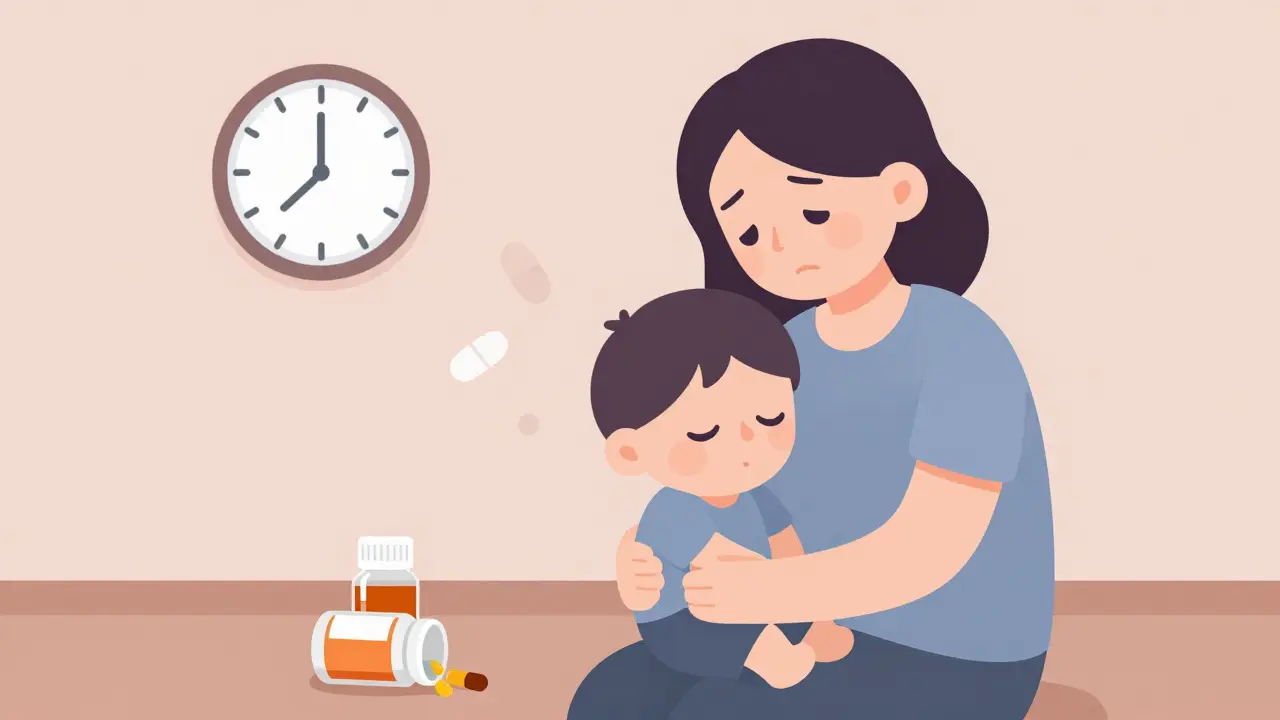
If your child swallowed a pill they weren’t supposed to, or you’re not sure how much they took, don’t wait for symptoms to show. Many dangerous overdoses don’t start with crying or vomiting - they start quietly, and by the time you notice, it’s already too late.
Children’s bodies process medicine differently than adults. A single extra pill, a teaspoon too much, or even a few drops of liquid can push a child into medical danger. The most common culprits? Acetaminophen (Tylenol), cough syrups, ADHD meds, and opioids like oxycodone or fentanyl - even when they’re prescribed.
Here’s what you need to know: signs of pediatric medication overdose aren’t always obvious. Some show up in minutes. Others take hours. And some? They don’t show up at all until the damage is done.
Key Signs of Overdose by Medicine Type
Not all overdoses look the same. The symptoms depend on what the child took. Knowing the red flags for each category can save a life.
Acetaminophen (Tylenol)
This is the most common single substance involved in pediatric poisonings. The scary part? A child can seem perfectly fine for 24 hours after swallowing too much - even if their liver is already being destroyed.
Early signs (within 24 hours) may include:
- Nausea or vomiting
- Loss of appetite
- Abdominal pain, especially on the right side
- Extreme tiredness or drowsiness
After 24 to 48 hours, symptoms worsen: yellowing skin or eyes (jaundice), confusion, bleeding easily, or even coma. The good news? If you act fast, there’s a treatment called N-acetylcysteine (NAC) that can stop the damage - but only if given within 8 hours. After 16 hours, it’s only about 40% effective.
Opioids (Oxycodone, Hydrocodone, Fentanyl)
These are used for pain, but even a small amount can shut down breathing. Fentanyl is especially dangerous - it’s 50 to 100 times stronger than morphine, and it’s now found in counterfeit pills sold as oxycodone or Adderall.
Warning signs include:
- Pinpoint pupils (tiny dots in the center of the eyes)
- Unresponsive to loud voices or shaking
- Limp body, slumped over
- Slow, shallow, or stopped breathing
- Blue or gray lips and fingernails
- Cold, clammy skin
- Gurgling or choking sounds (like they’re drowning)
If you see any of these, call 911 immediately. If you have naloxone (Narcan), give it now - even if you’re not sure it’s an opioid. One dose, then wait 2-3 minutes. If no improvement, give another. Keep giving doses until help arrives.
Stimulants (ADHD Medications like Adderall, Ritalin)
These drugs speed up the body. Too much can cause a dangerous spike in heart rate, temperature, and blood pressure.
Signs of overdose:
- Fast, shallow breathing
- High fever (over 104°F)
- Severe agitation, panic, or hallucinations
- Seizures or uncontrollable shaking
- Chest pain or racing heartbeat
- Confusion or loss of coordination
These kids may look hyper, not sleepy. But their body is in crisis. Don’t wait. Call poison control or 911.
Cough and Cold Medicines
These are often mixed with acetaminophen or antihistamines. Parents think they’re safe because they’re sold over the counter. But a few extra teaspoons can cause seizures, coma, or death in young children.
Watch for:
- Drowsiness or extreme lethargy
- Blurred vision or hallucinations
- Fast or irregular heartbeat
- Difficulty urinating
- Flushed, dry skin
These symptoms can appear within 30 minutes. And if the child took multiple products - like a cold syrup and a pain reliever - you could be looking at a double overdose.
When to Call Poison Control vs. 911
You don’t have to be sure. If you think your child took too much medicine, call Poison Control. Now. Even if they seem fine.
The national Poison Control number is 800-222-1222. It’s free, confidential, and available 24/7. You can also use webPOISONCONTROL® online for non-emergency cases.
But if your child has any of these symptoms, call 911 immediately:
- Unresponsive or can’t be woken up
- Not breathing or breathing very slowly
- Seizures or violent shaking
- Blue or gray lips, face, or fingernails
- Swelling of lips, tongue, or throat
- Severe rash or hives spreading quickly
Don’t wait to see if they get worse. Don’t try to make them throw up. Don’t give them milk or charcoal unless a professional tells you to. Just call.
And here’s the most important thing: call Poison Control even if you think it’s a small amount. A child weighing 20 pounds can have a fatal reaction to just one adult-strength pill. And with acetaminophen, you might not know it’s dangerous until it’s too late.
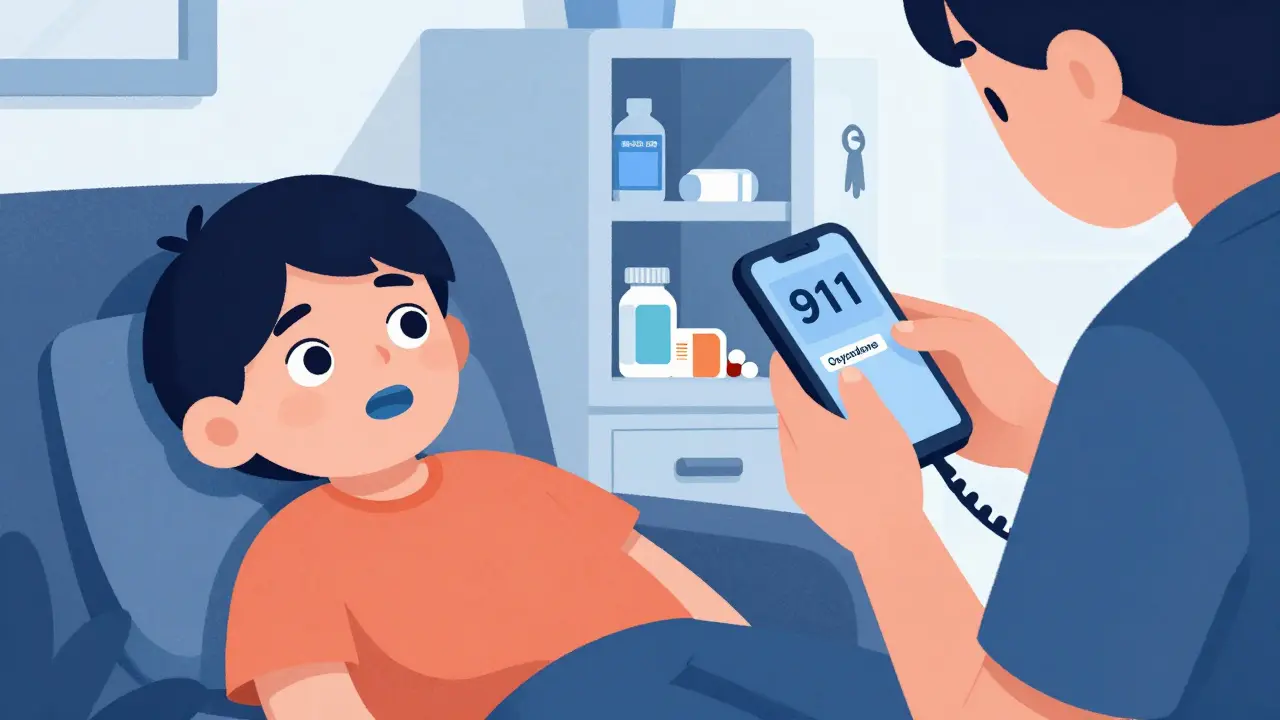
What to Do Right Now - Even Before Help Arrives
While you’re waiting for emergency services or talking to Poison Control, do this:
- Check if your child is breathing. Look for chest movement. Listen for breath sounds.
- If they’re not breathing, start rescue breathing if you know how.
- If they’re unresponsive, rub your knuckles firmly against their sternum or upper lip. This can sometimes wake them up.
- If you have naloxone and suspect opioids, give it now. One spray in one nostril. Wait 2-3 minutes. If no response, give another dose.
- Keep the medicine container. Bring it with you to the hospital.
- Don’t give anything by mouth unless told to.
Time matters. The sooner you act, the better the outcome.
Why Most Overdoses Happen - And How to Prevent Them
Over 60% of childhood poisonings happen in the child’s own home. And 70% of acetaminophen overdoses happen because parents give two medicines that both contain it - like giving Tylenol for fever and a cold syrup that also has acetaminophen.
Here’s how to prevent this:
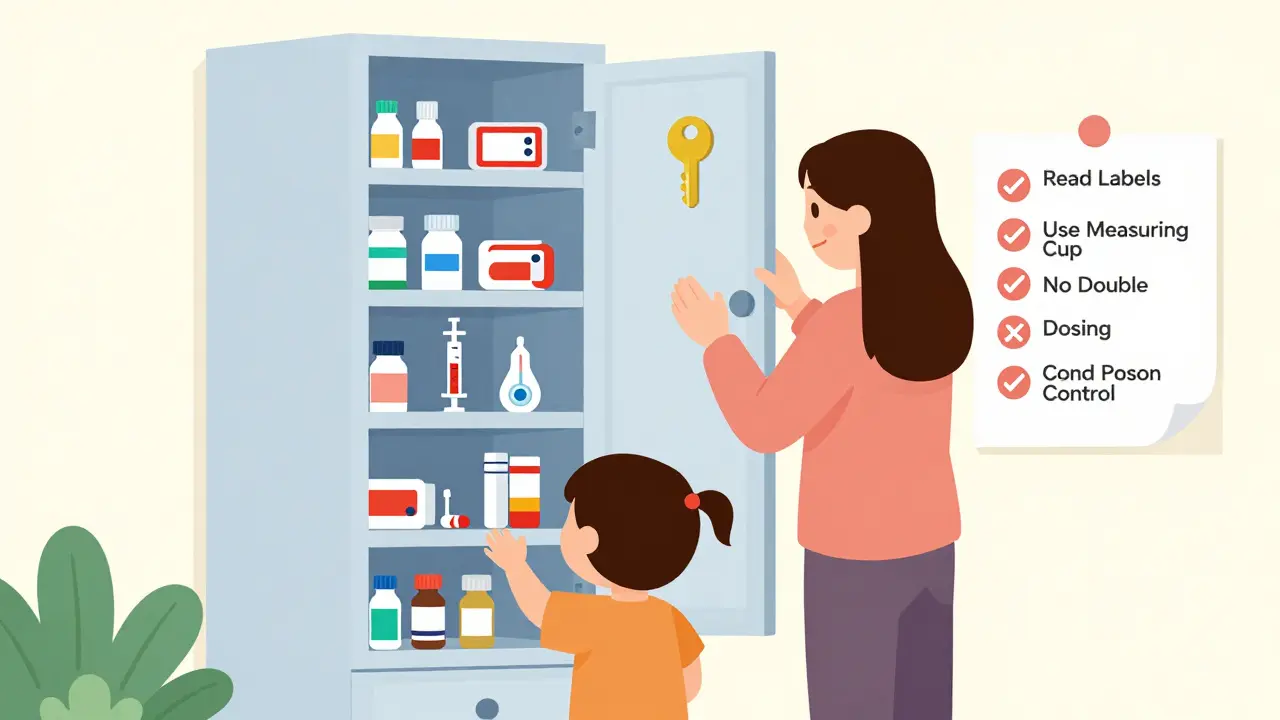
- Store all medications in a locked cabinet - not just out of reach. Kids are smarter than we think.
- Use child-resistant caps correctly. But don’t rely on them. They’re not foolproof.
- Never call medicine “candy.” Even joking about it teaches kids to trust pills.
- Always read labels. Look for the active ingredient. If two medicines have the same one, don’t give both.
- Use the measuring device that comes with the medicine. Don’t use kitchen spoons.
- Keep track of what your child takes. Write it down. Set phone reminders.
Since 2020, the FDA required liquid acetaminophen to come with unit-dose packaging and clearer labels. That alone has cut unintentional overdoses by 19%. But mistakes still happen.
What You Need to Remember
Medication overdose in children isn’t rare. It’s the second leading cause of unintentional injury death for kids ages 1 to 4. Between 2018 and 2022, over 1,500 children died from medication poisoning in the U.S.
But most of these deaths are preventable.
If you suspect your child took too much medicine - call Poison Control at 800-222-1222. Don’t wait. Don’t Google it. Don’t hope they’ll be fine. The window for saving a life is narrow, especially with acetaminophen or opioids.
And if they’re not breathing, unresponsive, or turning blue - call 911 right now. Seconds count.
Keep the Poison Control number saved in your phone. Tell every caregiver who watches your child where it is. Post it on the fridge. Teach your older kids what to do if they find medicine.
You can’t control everything. But you can control how fast you respond.
Frequently Asked Questions
What should I do if my child swallowed a pill but seems fine?
Call Poison Control at 800-222-1222 immediately. Many dangerous overdoses - especially with acetaminophen or opioids - don’t show symptoms right away. Liver damage from too much Tylenol can start silently within hours. Even if your child looks okay, they may need treatment before it’s too late.
Can I wait to see if my child gets sick before calling?
No. Waiting is dangerous. With opioids, breathing can stop suddenly. With acetaminophen, the liver can be damaged before you notice anything. Poison Control experts are trained to assess risk based on the medicine, amount, and your child’s weight - even without symptoms. They’ll tell you if you need to go to the ER or if monitoring at home is safe.
Is it safe to give my child syrup to make them vomit?
Never give syrup to make a child vomit unless Poison Control or a doctor tells you to. For some substances, vomiting can cause more harm - like burning the throat or causing choking. For others, like opioids, vomiting won’t help because the drug is already absorbed. Always follow professional advice.
How do I know if my child took too much Tylenol?
The dose that’s dangerous depends on your child’s weight. For most kids, more than 150 mg per kilogram of body weight is toxic. But symptoms won’t show for 24 hours. That’s why it’s so dangerous. If you think they took more than the label says - even if it’s just one extra tablet - call Poison Control. Blood tests can check liver damage, but treatment works best if started within 8 hours.
Can I use fentanyl test strips to check my child’s medicine?
Fentanyl test strips are designed for adults to check pills they’re using. They’re not reliable for children’s medications and aren’t recommended for home use in pediatric cases. If you suspect a pill your child took might be laced with fentanyl - call 911 immediately. Don’t test it yourself. Get help now.
What if I don’t have the medicine container anymore?
Call Poison Control anyway. Tell them what you think it was - the color, shape, size, or any writing on the pill. Even if you’re not sure, they can help. Bring the packaging if you find it later, but don’t delay the call. Time is critical.
Are child-resistant caps enough to keep kids safe?
No. About 20% of poisonings happen even with child-resistant packaging. Kids as young as 18 months can figure out how to open them. The only reliable way to prevent access is to store all medicines in a locked cabinet, out of sight and reach - even if you think your child isn’t curious enough to try.
Phil Maxwell
January 24, 2026 AT 07:56Now I keep all meds locked up, even the ibuprofen.
Amelia Williams
January 25, 2026 AT 05:45Don’t wait. Call. Even if they look ‘fine.’
Viola Li
January 27, 2026 AT 03:09venkatesh karumanchi
January 28, 2026 AT 17:38Vatsal Patel
January 29, 2026 AT 19:31Kat Peterson
January 30, 2026 AT 17:58Himanshu Singh
January 31, 2026 AT 16:25Izzy Hadala
February 1, 2026 AT 08:18Marlon Mentolaroc
February 2, 2026 AT 21:16Gina Beard
February 4, 2026 AT 13:43siva lingam
February 5, 2026 AT 21:28Karen Conlin
February 6, 2026 AT 17:46Kevin Waters
February 7, 2026 AT 11:27