
SGLT2 Inhibitors and Bone Health: Understanding Fracture Risks
 Apr, 12 2026
SGLT2 Inhibitor Bone Health Risk Screener
This tool provides a general risk assessment based on the clinical evidence provided in the article. It is not a medical diagnosis. Always consult your healthcare provider before making changes to your medication.
Recommended Next Steps:
The concern isn't just a rumor; it started with a specific alarm bell from the FDA back in 2016. While most of these medications are considered safe for bone health, one particular drug sparked a debate that still influences how doctors prescribe them today. If you're taking these medications or considering them, it's important to separate the class-wide benefits from the specific risks associated with individual drugs.
The Canagliflozin Controversy
Not all SGLT2 inhibitors are created equal when it comes to bone health. The primary source of concern is Canagliflozin (known by the brand name Invokana), which is a medication used to improve glycemic control and reduce cardiovascular risk in adults with type 2 diabetes. In 2015, data from the CANVAS trial showed that patients using canagliflozin had a higher rate of fractures-about 15.4 fractures per 1,000 person-years compared to 11.9 for those on a placebo. This led the FDA to issue a specific warning for this drug, noting that fractures could occur as early as 12 weeks after starting treatment.
Interestingly, this risk doesn't seem to apply to the whole family. Other popular drugs in the class, like Empagliflozin (Jardiance) and Dapagliflozin (Farxiga), haven't shown the same red flags. Major trials like EMPA-REG OUTCOME and DECLARE-TIMI 58 found no significant increase in fracture risk. Because of this, the FDA maintains warnings for canagliflozin but not for the others. This has led to a noticeable shift in the market; while canagliflozin prescriptions dipped by about 22% between 2017 and 2022, prescriptions for empagliflozin and dapagliflozin climbed by 38% and 42% respectively.
Why Would a Diabetes Drug Affect Your Bones?
Scientists have spent years trying to figure out why some of these drugs might weaken bones. It isn't just one thing; it's likely a combination of several biological triggers. One theory involves weight loss. SGLT2 inhibitors typically cause a loss of 2 to 4 kg. While losing weight is usually a goal in diabetes care, significant weight loss can correlate with increased bone resorption (the process where the body breaks down bone). However, research from the NIH suggests weight loss only explains about 3% of the variance in bone biomarkers, meaning there's more to the story.
Then there's the chemistry of the kidneys. These drugs increase urinary phosphate reabsorption, which can trigger a response from the parathyroid hormone and fibroblast growth factor 23. In simple terms, this shift in minerals can theoretically degrade bone quality. There's also a hormonal angle: in some trials, women taking a 300 mg dose of canagliflozin saw a 9.2% drop in estradiol levels. Since estrogen is crucial for maintaining bone density, this drop could make bones more susceptible to breaks.
Finally, we can't ignore the "fall factor." Some patients experience postural hypotension-that dizzy feeling you get when standing up too quickly. This occurred in 0.4% to 1.0% of patients in clinical data. If you're dizzy and you fall, you're more likely to break a bone, regardless of whether the bone itself is weaker.
Comparing the Risks Across the Class
If you are choosing a medication with your doctor, it helps to see how these drugs stack up against each other regarding skeletal safety.
| Drug Name | FDA Fracture Warning | Key Trial Evidence | BMD Impact (Hip/Spine) | Recommended Pre-Screening |
|---|---|---|---|---|
| Canagliflozin | Yes | CANVAS (Increased risk) | Significant loss observed | DXA Scan for high-risk |
| Empagliflozin | No | EMPA-REG (No significant risk) | Minimal/Neutral | Standard clinical review |
| Dapagliflozin | No | DECLARE-TIMI 58 (No significant risk) | Minimal/Neutral | Standard clinical review |
Putting the Risk in Perspective
Is the risk high enough to avoid these drugs? For most people, the answer is no. The cardiovascular and renal benefits-like preventing heart failure and slowing kidney disease-are often far more critical than the modest increase in fracture risk. In fact, a 2023 meta-analysis of over 20,000 participants found a pooled relative risk of 1.02, which basically means there is no meaningful correlation between the class of SGLT2 inhibitors and higher fracture rates.
Furthermore, data from JAMA Network Open in 2023 indicated that SGLT2 inhibitors actually have similar or even lower fracture risks than some incretin-based drugs, such as GLP-1 receptor agonists. For the average patient, the risk is minimal. The concern is really focused on a very small group: people who already have severe Osteoporosis, which is a condition characterized by porous and fragile skeletal bones, often measured by a T-score of -2.5 or lower, or those with a history of multiple fragility fractures.
Clinical Guidelines and Practical Steps
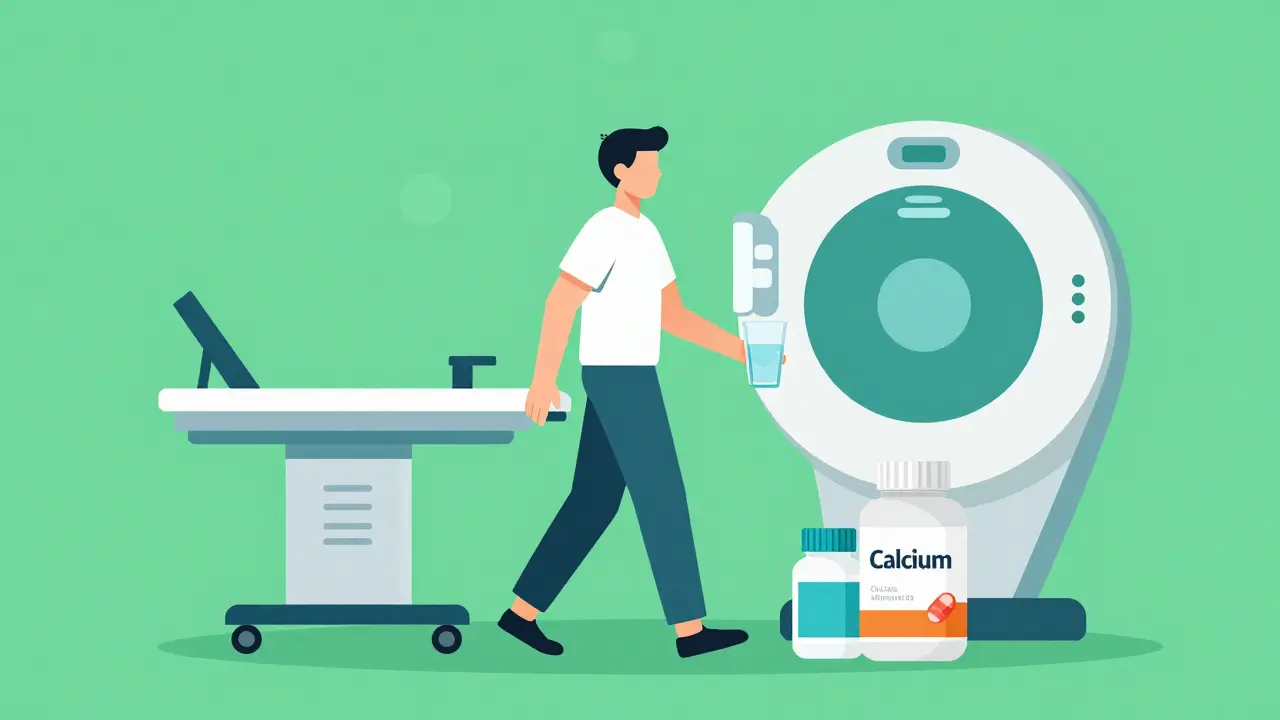
Because of the nuanced risk, professional organizations have developed specific protocols. The American Association of Clinical Endocrinologists (AACE) suggests a cautious approach for canagliflozin. If a patient has a known history of osteoporosis, doctors are encouraged to assess their bone mineral density (BMD) before starting the drug. Specifically, the American College of Endocrinology recommends a Dual-energy X-ray absorptiometry (or DXA scan), a low-dose X-ray that measures bone mineral density, for high-risk patients. If a T-score is below -2.0, your doctor might suggest an alternative medication.
For those already on these medications, the focus shifts to prevention. This includes managing blood pressure to avoid the dizziness that leads to falls and ensuring adequate intake of calcium and vitamin D. The American Diabetes Association's 2023 Fracture Risk Assessment Tool even adds a tiny weight (0.5 points) to the FRAX score specifically for canagliflozin users, but not for others in the class, illustrating just how targeted this concern is.
The Future of Bone Monitoring in Diabetes
As we move toward 2026 and beyond, the consensus is shifting. We are seeing a move away from "class-wide fear" toward "individualized risk." Many experts, including those published in the Journal of Parathyroid Disease, argue that the original fears were overstated. They believe that real-world evidence now shows that for the vast majority of type 2 diabetes patients, these drugs are safe for the skeleton.
However, a few specialists still urge caution. The National Osteoporosis Foundation continues to recommend bone density monitoring for any long-term SGLT2 user who has other risk factors. The goal is to balance the incredible heart and kidney protection these drugs provide with a proactive approach to bone health. If you're elderly or have a history of breaks, a simple conversation with your endocrinologist about your BMD and fall risk can provide peace of mind.
Are all SGLT2 inhibitors risky for my bones?
No. Most evidence suggests that the fracture risk is not a class-wide issue. While canagliflozin has shown a modest increase in fracture risk in some studies, other agents like empagliflozin and dapagliflozin have not demonstrated a significant increase in fractures in major clinical trials.
Should I get a bone density scan before starting these meds?
It depends on your risk profile. If you are starting canagliflozin and already have osteoporosis or a history of fractures, clinical guidelines recommend a DXA scan. For most other patients starting different SGLT2 inhibitors, a standard clinical review of your health history is usually sufficient.
Why is canagliflozin singled out?
Canagliflozin was singled out primarily because of the CANVAS trial, which reported a higher incidence of fractures compared to the placebo group. This led to a specific FDA warning that doesn't apply to its counterparts in the same drug class.
Can these drugs cause dizziness that leads to falls?
Yes, some users experience postural hypotension (a sudden drop in blood pressure upon standing), which can cause dizziness. This occurs in roughly 0.4% to 1.0% of patients and can increase the risk of falling, which in turn increases the risk of a fracture.
What should I do if I'm worried about my bone health while on SGLT2 inhibitors?
First, discuss your specific medication and medical history with your doctor. You can ask about a T-score assessment via a DXA scan if you have high risk factors. Additionally, focusing on fall prevention and maintaining adequate vitamin D and calcium levels can help protect your skeletal health.
Next Steps and Troubleshooting
For Patients with High Fracture Risk: If you have a T-score below -2.0 or a history of fragility fractures, ask your provider about the specific SGLT2 inhibitor they are prescribing. If canagliflozin is being used, ensure you have a baseline BMD scan to monitor changes over time.
For Patients Experiencing Dizziness: If you feel lightheaded when standing up, this could be postural hypotension. Try standing up more slowly and ensure you are staying hydrated, as SGLT2 inhibitors act as diuretics and can increase the risk of dehydration.
For Long-Term Users: Periodic reviews of bone health are a good idea, especially as you age. Mention any new joint pain or a history of