
SGLT2 Inhibitor Side Effects: Dehydration, Dizziness, and Blood Pressure Changes Explained
 Dec, 1 2025
SGLT2 Inhibitor Fluid Loss Calculator
How It Works
This calculator estimates fluid loss from SGLT2 inhibitors based on glucose excretion, identifies dehydration risk factors, and provides personalized hydration recommendations.
Your kidneys excrete approximately 3.4 mL of water for every gram of glucose lost in urine. This tool helps you understand your individual risk.
Fluid Loss Estimate
Calculate your fluid loss by clicking the button above
High Risk Alert
You may be at high risk for dehydration. Consult your healthcare provider immediately.
What to Do
Drink 500-1000mL extra water daily during the first 4 weeks. Monitor for symptoms: dark urine, dizziness, dry mouth. If you experience fainting or no urine for 12+ hours, contact your doctor immediately.
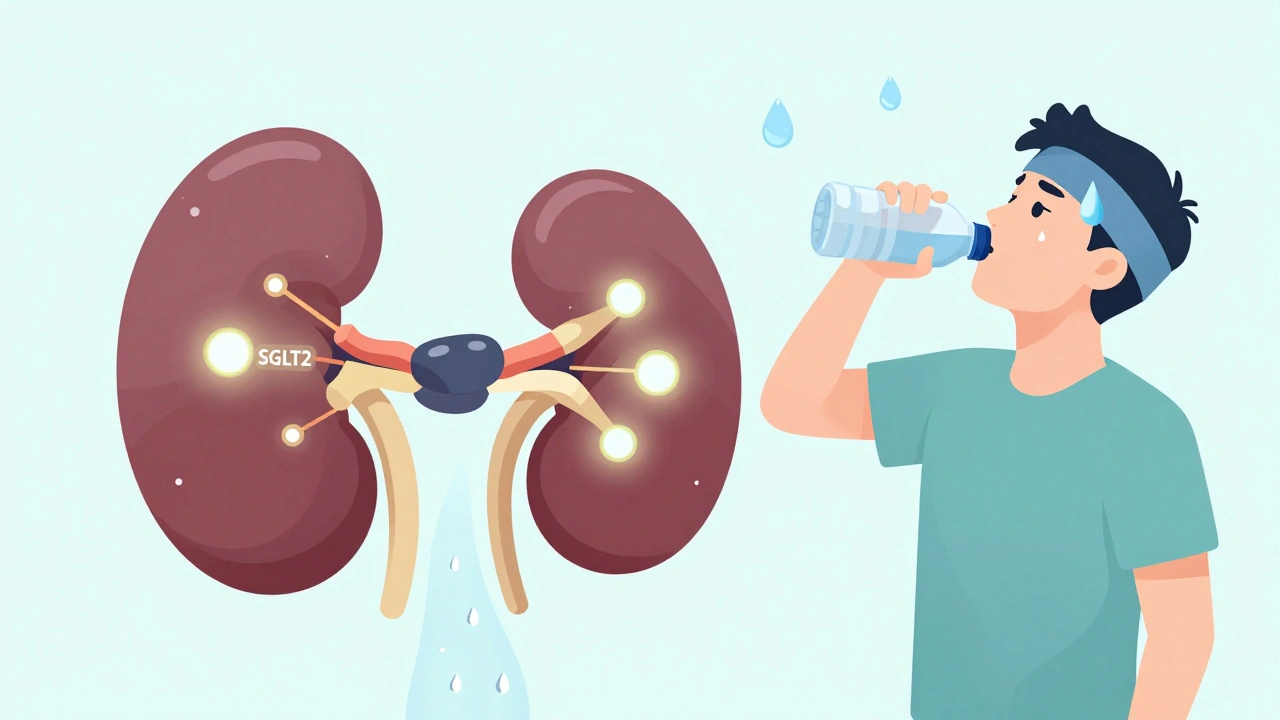
When you start taking an SGLT2 inhibitor for type 2 diabetes, you might not expect to feel dizzy or unusually thirsty. But these aren’t rare side effects-they’re direct results of how the drug works. SGLT2 inhibitors like empagliflozin, dapagliflozin, and canagliflozin don’t just lower blood sugar. They turn your kidneys into natural diuretics, pulling out glucose, sodium, and water. That’s why many people lose 1.5 to 2.5 kilograms in the first week. It’s not fat-it’s fluid. And that fluid loss is behind the three biggest concerns: dehydration, dizziness, and blood pressure drops.
How SGLT2 Inhibitors Work as Diuretics
These drugs block a protein in your kidneys called SGLT2, which normally reabsorbs about 90% of the glucose your body filters. When it’s blocked, glucose spills into your urine. But glucose doesn’t leave alone-it drags sodium and water with it. For every gram of glucose excreted, you lose about 3.4 mL of water. That adds up to 200-300 grams of sugar lost daily, or roughly 700-1,000 extra calories burned. It’s like a slow, steady flush of your system.
This isn’t just a side effect-it’s the main mechanism behind their heart and kidney benefits. By reducing fluid volume, these drugs lower blood pressure. By reducing sodium load in the kidneys, they ease pressure on tiny filtering units called glomeruli, slowing kidney damage. But that same mechanism can backfire if you’re not careful.
Why Dehydration Happens-and Who’s at Risk
Dehydration from SGLT2 inhibitors isn’t the same as forgetting to drink enough water. It’s a physiological response: your body is actively losing more fluid than it’s taking in. In clinical trials, 1.3% to 2.8% of users experienced volume depletion events, compared to under 1% on placebo. For some, it meant hospital visits.
High-risk groups include:
- People over 65, especially those with reduced thirst sensation
- Those with kidney function below 60 mL/min (eGFR)
- Patients already on diuretics like furosemide
- Anyone with systolic blood pressure under 120 mmHg
- People in hot weather or during illness (vomiting, diarrhea, fever)
Canagliflozin carries the highest risk among the class-up to 1.7 times greater than placebo. That’s why doctors often start with the lowest dose (100 mg) instead of 300 mg. If you’re older or have heart failure, your doctor might skip the high dose entirely.
Signs you’re becoming dehydrated: dark yellow urine, dry mouth, fatigue, or feeling lightheaded when standing. If you notice these, drink water. Don’t wait until you’re dizzy. Keep a water bottle handy. A 500-1,000 mL daily increase in fluid intake is often recommended during the first few weeks.
Dizziness: More Than Just a Nuisance
Dizziness isn’t just annoying-it’s a warning sign. About 3.5% to 5.8% of people on SGLT2 inhibitors report it, compared to just 2.5%-3.2% on placebo. That might sound small, but it’s one of the most common reasons people stop taking these drugs.
Here’s why it happens: when you lose fluid, your blood volume drops. Your heart has less to pump. Blood pressure falls, especially when you stand up. That’s called orthostatic hypotension-a sudden drop in systolic pressure of 20 mmHg or more. In studies, 63% of people who felt dizzy had this exact issue.
It’s worst in the first four weeks. That’s when fluid loss peaks. After that, most people adjust. But for some, it doesn’t fade. Risk factors include:
- Age 75 or older (2.4 times higher chance)
- Already taking blood pressure meds, especially diuretics
- Baseline systolic BP under 130 mmHg
On Drugs.com, nearly 40% of empagliflozin users reported dizziness. Most said it was mild and went away. But almost 30% considered quitting because it affected daily life. One Reddit user wrote: “Started Jardiance last week and got dizzy standing up-my doctor said it’s normal for the first month.” It is normal. But it doesn’t mean you have to live with it.

Blood Pressure: The Hidden Benefit and the Hidden Risk
Here’s the twist: SGLT2 inhibitors lower blood pressure-and that’s usually a good thing. In trials, empagliflozin dropped systolic pressure by 4-6 mmHg and diastolic by 1-2 mmHg within two weeks. Dapagliflozin did the same. These changes happen even in people without diabetes.
That’s why these drugs are now recommended for heart failure-even if you don’t have diabetes. Lower blood pressure means less strain on your heart. Less pressure in your kidneys means slower decline in kidney function. The DAPA-HF trial showed dapagliflozin cut cardiovascular death by 17%. That’s 6 lives saved per 100 patients over 18 months.
But if your blood pressure is already low, that drop can be dangerous. Patients with systolic BP under 120 mmHg had over three times the risk of symptomatic hypotension. One study found 12.7% of these patients had orthostatic changes, compared to just 4.1% in those with higher BP.
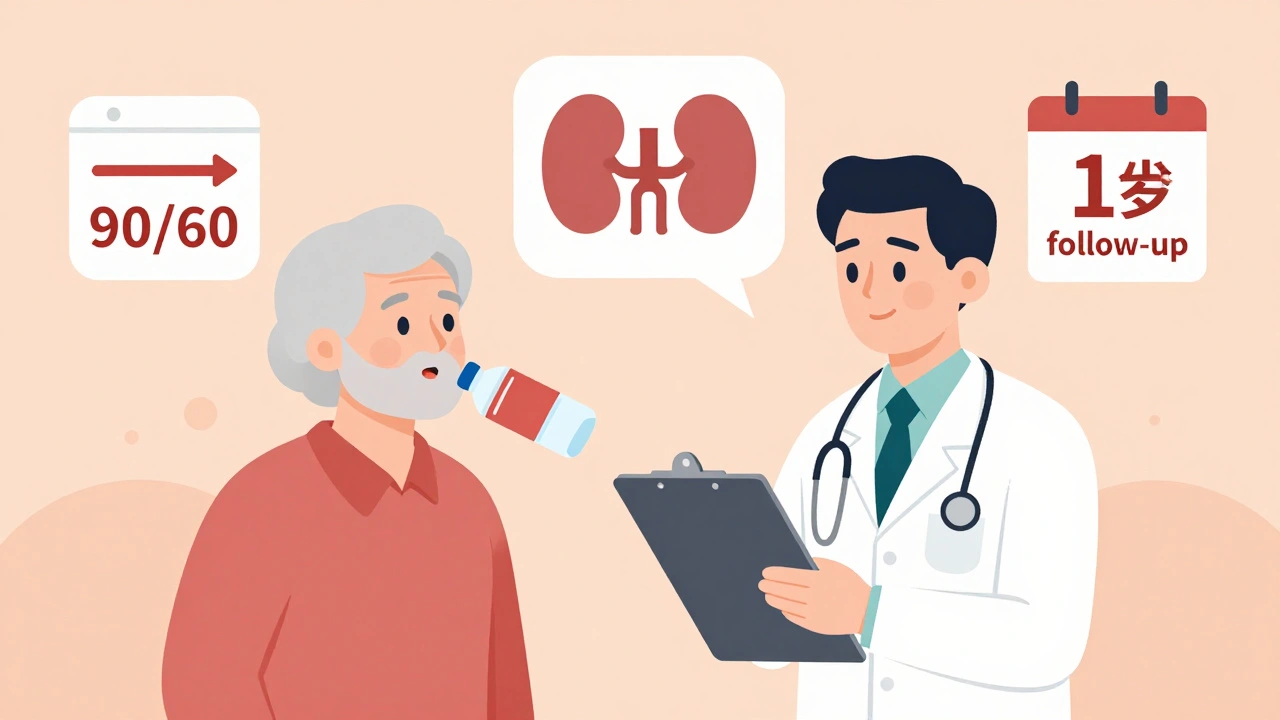
Doctors now check orthostatic blood pressure before starting these drugs and again after one week. If your systolic pressure drops below 90 mmHg, or you feel faint, your doctor may pause the medication temporarily. They might also reduce your other blood pressure meds by 25-50% instead of stopping the SGLT2 inhibitor entirely.
What You Can Do to Stay Safe
You don’t have to avoid SGLT2 inhibitors because of these risks. But you need to manage them. Here’s what works:
- Start low. If you’re over 65, have kidney issues, or are on diuretics, ask for the lowest available dose (e.g., empagliflozin 10 mg, not 25 mg).
- Hydrate. Drink extra water-500-1,000 mL more per day-especially in the first month. Don’t wait until you’re thirsty.
- Watch your weight. A drop of 1.5-2.5 kg in the first week is normal. A drop over 3 kg in a week? Call your doctor.
- Stand up slowly. If you feel dizzy, sit down. Check your blood pressure when standing. If it drops more than 20 mmHg systolic, report it.
- Pause during illness. If you get sick with vomiting, diarrhea, or fever, stop the medication until you’re eating and drinking normally again.
- Follow up. Most endocrinologists check in at one week. Don’t skip it. That’s when side effects peak.
Some patients worry that dizziness means the drug isn’t working. It doesn’t. The blood pressure drop and fluid loss are signs it’s doing exactly what it’s supposed to. The goal isn’t to avoid side effects completely-it’s to manage them so you don’t get hurt.
When to Talk to Your Doctor
Call your doctor if you experience:
- Feeling faint or passing out
- Dark urine or no urine for 12+ hours
- Heart palpitations or chest pain
- Confusion or extreme fatigue
- Weight loss over 3 kg in a week
These aren’t normal. They’re red flags. Your doctor might adjust your dose, hold the medication temporarily, or check your electrolytes. Low sodium or potassium can make dizziness worse.
Don’t stop the drug on your own unless you’re in danger. The cardiovascular and kidney benefits are real-and for many, they outweigh the risks. But only if you’re monitored.
The Bigger Picture: Why These Drugs Are Changing Diabetes Care
SGLT2 inhibitors are no longer just diabetes drugs. They’re heart and kidney protectors. In 2023, the American Heart Association made them first-line for heart failure with reduced ejection fraction-even for people without diabetes. That’s huge.
Generic versions are now available in many countries, making them more affordable. But affordability doesn’t mean they’re risk-free. As more people take them-especially older adults and those with multiple conditions-the need for smart, personalized management grows.
These drugs work because they’re different. They don’t force your body to make more insulin or block sugar absorption in the gut. They let your kidneys do the work. That’s powerful. But power needs respect.
Conor Forde
December 1, 2025 AT 10:32So let me get this straight-your kidneys are basically playing hopscotch with your glucose like it’s a damn party trick, and you’re supposed to be *grateful*? I’ve seen more compassion from a vending machine. This isn’t medicine, it’s a slow-motion eviction notice from your body’s comfort zone. I took this stuff for three weeks and started hallucinating my socks were talking to me. Not kidding. My cat stopped looking at me like I was a disappointment. That’s how bad it got.
patrick sui
December 3, 2025 AT 04:36Interesting breakdown-especially the fluid loss mechanism. SGLT2 inhibition triggers osmotic diuresis, which is physiologically distinct from loop or thiazide diuretics. The key is the natriuresis + glucosuria combo. But what’s often under-discussed is the aldosterone rebound effect after 3–4 weeks, which can mask volume depletion. If you're monitoring BP, also check plasma renin and aldosterone. And yes, the 1.5–2.5kg drop? That’s mostly glycogen-bound water + sodium. Not fat. Ever notice how people ‘lose weight’ on these drugs and then gain it back when they stop? It’s water. Not progress.
Declan O Reilly
December 4, 2025 AT 20:25Man, this hits different when you’re 72 and your knees already scream when you stand up. I started Jardiance last month. First week, I felt like I’d been run over by a truck made of thirst. My wife kept handing me water like I was a cactus in a desert. But here’s the thing-I stopped feeling foggy. My BP dropped from 142/88 to 124/76. I’m not saying it’s easy. I’m saying it’s worth it. You just gotta listen to your body. And drink. Like, a lot. I now have a water bottle glued to my hand. My dog thinks I’m weird. I think I’m alive. 🙏
Matt Dean
December 6, 2025 AT 03:04Of course you’re dizzy. You’re probably one of those people who thinks ‘drink more water’ is a medical intervention. You’re not sick-you’re just lazy. If your body can’t handle losing 2 liters of fluid a week, maybe you shouldn’t be on a drug that’s designed to make your kidneys work harder. Stop blaming the medicine and start blaming your lifestyle. Also, your doctor probably told you to hydrate. You didn’t. That’s on you.
Walker Alvey
December 7, 2025 AT 15:58So the drug makes you pee out sugar like it’s a tax on your carbs and you’re surprised you get dizzy? Wow. Groundbreaking. Next they’ll tell us breathing causes oxygen deprivation. Let me guess-you also think the sun is a lightbulb? This isn’t a side effect. It’s the fucking point. If you can’t handle losing a few pounds of water, maybe you shouldn’t be eating donuts and calling it ‘management.’
Adrian Barnes
December 8, 2025 AT 15:05While the clinical data presented is methodologically sound and statistically significant, it is imperative to recognize the confounding variables associated with patient adherence, baseline hydration status, and concomitant medication regimens. The reported incidence of orthostatic hypotension, while elevated relative to placebo, remains within the bounds of acceptable pharmacovigilance thresholds per FDA guidelines. However, the normalization of subjective symptoms such as dizziness as ‘expected’ constitutes a dangerous precedent in patient education. This represents a systemic erosion of clinical caution.
Declan Flynn Fitness
December 9, 2025 AT 06:04Big fan of SGLT2 inhibitors-used them for my prediabetes last year. Dizzy? Yeah. Thirsty? All the time. Lost 2kg in 5 days-wasn’t fat, was water. But here’s the win: my A1c dropped from 6.1 to 5.5 in 8 weeks. I started carrying a bottle everywhere. Set phone reminders. Now I drink like it’s my job. If you’re scared of dizziness, stand up slower. Sit down if you feel it. It’s not magic. It’s just biology. You got this 💪
Michelle Smyth
December 11, 2025 AT 02:07How quaint. A 1500-word essay on how to survive the side effects of a drug that’s essentially just a fancy diuretic with a marketing team. I suppose we’re supposed to be impressed that Big Pharma has finally figured out how to make kidneys work like a 19th-century spa? The real tragedy isn’t the dizziness-it’s that we’ve reduced metabolic health to a pharmacological hack while ignoring diet, movement, and sleep. But of course, that’s harder to sell in a 30-second ad.
Linda Migdal
December 11, 2025 AT 08:49These drugs are a joke. America’s healthcare system is so broken that we’re prescribing kidney flushes to fix sugar problems instead of teaching people to stop eating sugar. In my country, we don’t medicate laziness. We fix the root cause. You want to avoid dizziness? Stop drinking soda. Stop eating white bread. Stop being a walking insulin spike. This isn’t medicine. It’s American capitalism with a stethoscope.
Lucinda Bresnehan
December 12, 2025 AT 05:25I’m a nurse and I’ve seen so many older patients get scared off these meds because they feel dizzy. But I always tell them: it’s not the drug being mean-it’s your body adjusting. I had a patient, 81, started on dapagliflozin. She was terrified. We set up a water schedule, she stood up slowly, and by week 3, she was walking her dog twice a day without a cane. She cried when she told me she hadn’t felt that good in years. It’s not perfect. But it’s powerful. Please don’t quit because you’re thirsty. Talk to your provider. You’re not alone.
Shannon Gabrielle
December 12, 2025 AT 20:37Oh look, another ‘here’s how to survive the side effects’ guide. What’s next? ‘How to live with your new kidney-shaped hole’? You’re not ‘managing’ anything-you’re just delaying the inevitable. This drug turns your body into a leaky sieve. The ‘benefits’ are just side effects dressed up like a TED Talk. If your heart needs saving, maybe don’t start by draining your blood volume. Just sayin’.
ANN JACOBS
December 14, 2025 AT 19:51As someone who has spent over two decades in endocrinology and clinical research, I must emphasize the profound implications of this pharmacological class. The reduction in cardiovascular mortality observed in the EMPA-REG OUTCOME trial was not merely statistically significant-it was paradigm-shifting. The fact that a glucose-lowering agent demonstrates mortality benefit independent of glycemic control challenges decades of therapeutic dogma. Furthermore, the magnitude of renal protection, particularly in patients with albuminuria, suggests that SGLT2 inhibitors may represent the first true disease-modifying therapy for diabetic nephropathy. The hydration recommendations are not optional-they are foundational to safety and efficacy. To disregard them is to misunderstand the mechanism entirely.
Nnaemeka Kingsley
December 16, 2025 AT 18:40Man, I just started this medicine and I thought I was dying. My head spinning, mouth dry like I ate salt. But my cousin told me drink water like crazy and sit down when dizzy. I did. Now I feel okay. My sugar down. I don’t know all the science words, but I know my body. Water good. Stand slow. Don’t panic. 😊
Kshitij Shah
December 17, 2025 AT 04:45Bro, this is just the Indian version of ‘chai pe kala khana’-you drink sugar tea, your body says ‘nahi’, so now your kidneys have to clean up the mess. SGLT2 inhibitors? They’re just your kidneys going, ‘I quit, I’m taking the glucose with me.’ Dizziness? Yeah, you’re losing fluid. But guess what? So did your great-grandma when she walked 10km to the well. You just need to chill. Drink water. Don’t act like the universe betrayed you.
Sean McCarthy
December 18, 2025 AT 02:56Dehydration risk? 1.3% to 2.8%. Dizziness? 3.5% to 5.8%. Orthostatic hypotension? 63% of affected patients. Weight loss? 1.5–2.5 kg. All documented. All measurable. All preventable. And yet, patients still ignore warnings. And then blame the drug. And then demand a new prescription. And then wonder why their insurance denies coverage. This isn’t a drug problem. This is a compliance problem. A behavioral problem. A human problem. Stop expecting miracles. Start reading the damn pamphlet.