
Provider Cost Awareness: Do Clinicians Know Drug Prices?
 Jan, 20 2026
Doctors prescribe medications every day. But how often do they actually know what those drugs cost?
It’s not a trick question. The answer, based on decades of research, is: not nearly enough. A 2007 review of 29 studies found physicians consistently misestimated drug prices-overestimating cheap generics by 31% and underestimating expensive brand-name drugs by 74%. That’s not a small mistake. It’s a systemic blind spot with real consequences for patients.
Why Does This Matter?
Prescription drug spending in the U.S. hit $621 billion in 2022. That’s nearly 10% of the entire healthcare budget. And 28% of adults skip doses or skip refills because they can’t afford their meds. Meanwhile, 82% of patients say drug prices are unreasonable. Yet most clinicians aren’t equipped to make cost-informed choices.
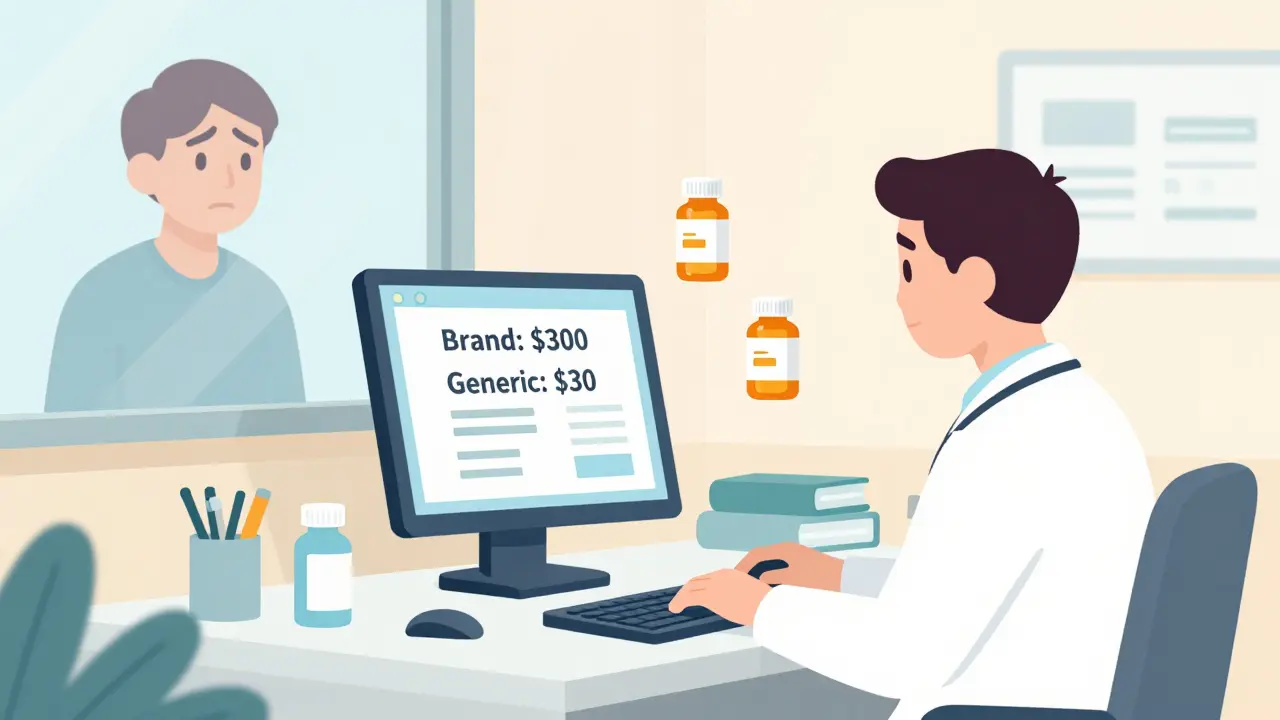
Imagine this: A 68-year-old with diabetes needs a new oral medication. The doctor picks a brand-name drug because it’s familiar. But a generic alternative exists-same efficacy, same safety, and 90% cheaper. If the doctor doesn’t know the price difference, the patient gets stuck with a $300 monthly copay instead of $30. That’s not just a financial burden. It’s a health risk.
The Numbers Don’t Lie
A 2016 study of 254 medical students and doctors revealed shocking gaps:
- Only 5.4% of generic drug prices were estimated within 25% of the actual cost.
- Just 13.7% of brand-name drug prices were accurately estimated.
- Doctors overestimated generic costs 77.5% of the time.
- They underestimated brand-name drug prices 51.4% of the time.
- Only 30% of dispensing costs were correctly recalled.
Even more troubling? Most clinicians thought they were doing fine. The gap between perceived knowledge and reality is wide. And it’s not just new doctors. Even experienced physicians struggle. One study showed that while doctors scored slightly better than students on cost awareness scales (17.81 vs. 15.56 on a 24-point scale), both groups still failed basic pricing tests.
What’s Causing the Gap?
It’s not laziness. It’s not ignorance. It’s structure.
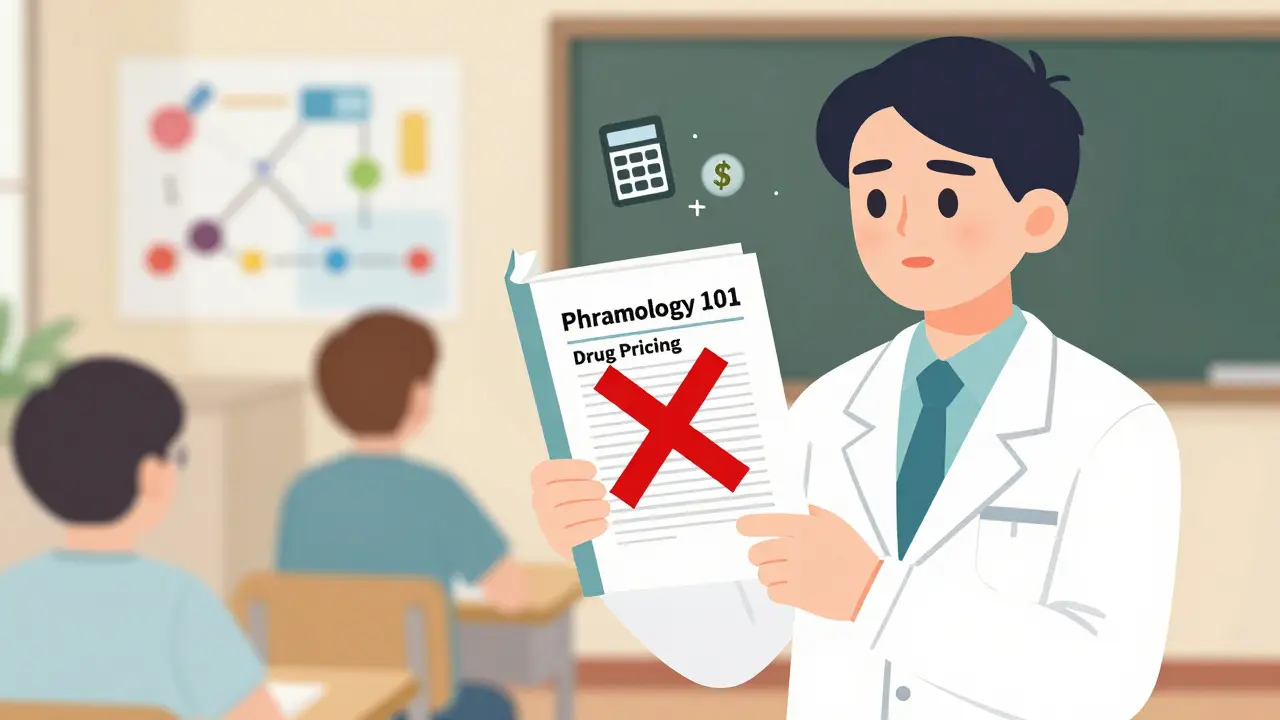
Medical school teaches pharmacology-mechanisms of action, side effects, drug interactions. But almost none teach pricing. A 2021 study found that 56% of U.S. medical schools have no formal curriculum on drug pricing. Students graduate without knowing how a drug’s price is set, why two identical pills cost $15 at one pharmacy and $320 at another, or how insurance formularies work.
And once in practice? The system doesn’t help. Clinicians are overwhelmed. A 2023 Reddit thread from primary care physicians revealed that checking a single drug’s cost can take 3 to 5 minutes. That’s 30+ extra minutes per day just to avoid prescribing something a patient can’t afford. Most don’t have that time.
Even when cost tools exist, they’re unreliable. One resident wrote: “Our Epic system shows insurer-specific pricing, but not patient-specific copays. So the alert says ‘$50,’ but the patient’s copay is $180 because of their deductible.” That’s worse than no info at all-it’s misleading.
Technology Can Help-If It’s Done Right
The biggest breakthrough in recent years? Real-time cost alerts inside electronic health records (EHRs).
A 2021 JAMA Network Open study found that when physicians had access to out-of-pocket cost estimates during prescribing, their accuracy improved dramatically. But it’s not just about showing numbers. It’s about context.
At UCHealth, a system was built that didn’t just show prices. It flagged alternatives and estimated potential savings. The result? One in eight doctors changed their prescription. That number jumped to one in six when potential savings exceeded $20.
That’s powerful. But here’s the catch: only 37% of U.S. health systems have implemented these tools as of late 2024. And even among those that do, adoption varies. Doctors under 40 are 50% more likely to use them than those over 55. Why? Familiarity with tech. But also, younger clinicians are more likely to have been exposed to cost-awareness training during their education.
And it’s not just about saving money. It’s about equity. Early data from a 2024 study presented at AcademyHealth showed that in safety-net clinics serving low-income patients, cost alerts led to 22% more prescription changes than in private practices. That’s not just efficiency-it’s justice.
What About Value, Not Just Price?
Some experts argue that clinicians shouldn’t focus on price at all-they should focus on value. “Is this drug giving the patient meaningful benefit?” they ask. “If a $500 drug extends life by two months, is that worth it?”
That’s a valid perspective. But here’s the problem: most drugs aren’t being chosen for their life-extending power. They’re being chosen because they’re familiar, or because a rep stopped by, or because the patient asked for it. And many of those drugs have equally effective, far cheaper alternatives.
The 2022 Inflation Reduction Act changed the game. For the first time, Medicare can negotiate prices for top-selling drugs. Drugs like Humira saw price hikes of 4.7% in 2023-without new clinical benefits. That’s not value. That’s profit.
Cost awareness isn’t about being cheap. It’s about being smart. It’s about knowing that a $30 generic can do the same job as a $300 brand, and that choosing the cheaper option isn’t compromising care-it’s improving access.
What’s Changing?
Change is slow, but it’s happening.
Medical schools are starting to add pricing modules. The American Medical Association and American College of Physicians have both made cost-conscious prescribing a formal priority since 2015. The CMS now requires drug manufacturers to report out-of-pocket cost estimates. And more health systems are investing in EHR-integrated tools.
At Mayo Clinic, their Drug Cost Resource Guide-updated quarterly-has a 4.7/5 rating from over 1,200 physicians. Compare that to the generic Medicare Part D formulary, which scores a 2.8/5. The difference? Usability. Clarity. Relevance.
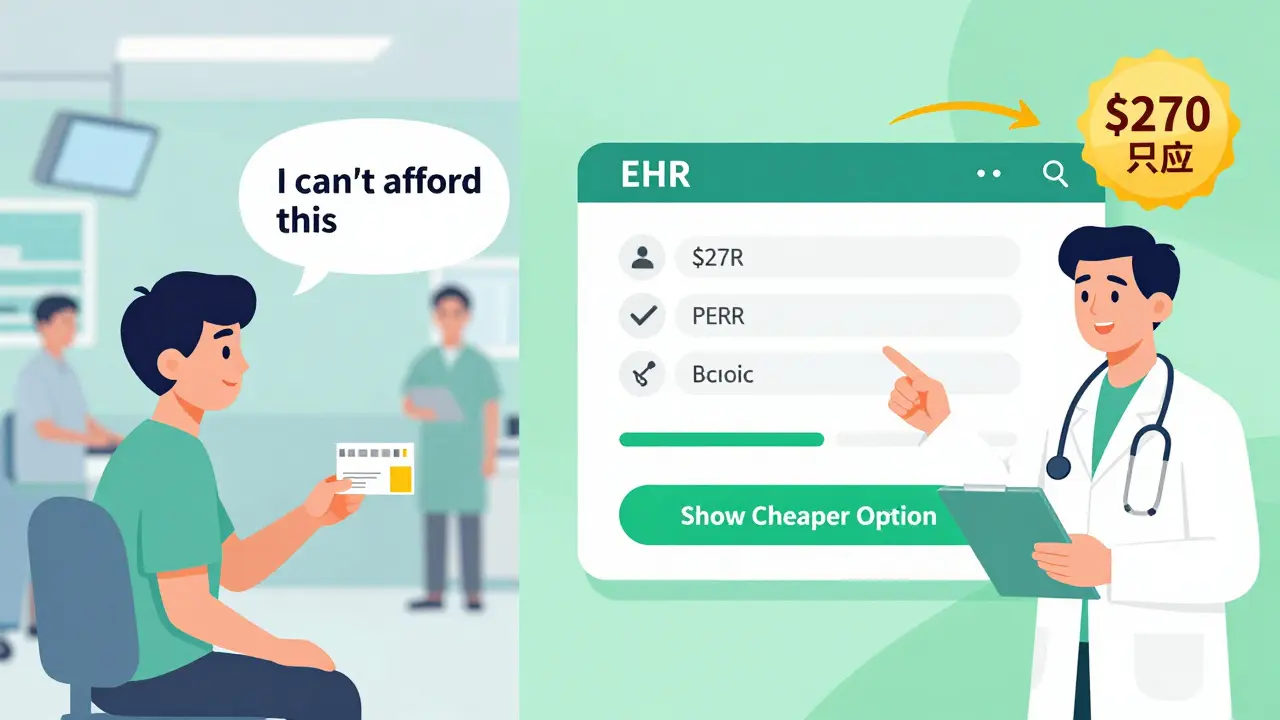
But the biggest driver of change isn’t policy or technology. It’s patients. When someone says, “I can’t afford this,” and the doctor has no answer, it changes everything. That moment-when a patient’s financial reality hits the clinical encounter-is what’s pushing the profession forward.
What Can Be Done?
Here’s what works:
- Integrate real-time cost data into EHRs-not just list prices, but show alternatives and estimated savings.
- Teach drug pricing in medical school-include how prices are set, how insurance works, and how to find affordable options.
- Make tools easy to use-if it takes more than 10 seconds to get an answer, clinicians won’t use it.
- Focus on value, not just cost-train clinicians to ask: “Is this the best option for this patient, considering their budget, adherence risk, and clinical needs?”
- Support safety-net clinics-they serve the most vulnerable. Cost tools there have the biggest impact.
There’s no magic bullet. But the evidence is clear: when clinicians know the cost, they prescribe better. And when they prescribe better, patients take their meds. And when patients take their meds, hospitalizations drop. Costs go down. Lives improve.
This isn’t about cutting corners. It’s about cutting waste-and making sure every prescription is both effective and affordable.
What’s Next?
By 2027, 75% of U.S. health systems are expected to have advanced real-time benefit tools. That’s progress. But it won’t matter unless clinicians are trained to use them-and patients are empowered to ask, “Is there a cheaper option?”
Until then, the gap remains. And patients keep paying the price.
Do most doctors know how much medications cost?
No. Studies show most clinicians significantly misestimate drug prices-overestimating cheap generics and underestimating expensive brand-name drugs. Accuracy rates for generic drugs are as low as 5.4% when measured within a 25% margin of error.
Why don’t doctors know drug prices?
Medical schools rarely teach drug pricing, and EHR systems often don’t show real-time costs. Even when tools exist, they’re often inaccurate, slow to use, or don’t reflect individual patient copays. Most doctors simply don’t have time to look up prices during a busy clinic day.
Can technology help doctors make more cost-aware prescriptions?
Yes. When EHRs include real-time cost alerts with alternative options and estimated savings, doctors change prescriptions up to 12.5% of the time. One study found that when potential savings exceeded $20, the change rate rose to one in six prescriptions.
Are generic drugs always cheaper than brand-name drugs?
Usually, yes-but not always. In some cases, due to insurance formularies or pharmacy pricing, a brand-name drug may cost less than its generic version. That’s why real-time, patient-specific cost data is essential-not just generic vs. brand labels.
How does drug pricing affect patient adherence?
Directly. One in four adults in the U.S. skips doses or doesn’t fill prescriptions because they can’t afford them. When doctors choose a lower-cost, equally effective drug, adherence improves significantly-reducing hospitalizations and long-term health costs.
What’s being done to fix this problem?
Medical schools are slowly adding pricing education. The Inflation Reduction Act lets Medicare negotiate drug prices. Health systems like Mayo Clinic and UCHealth have built cost tools with high user satisfaction. But only 37% of U.S. hospitals have implemented real-time cost alerts, so progress is uneven.
Is cost awareness the same as being cheap with prescriptions?
No. Cost awareness means choosing the most appropriate drug for the patient’s clinical needs and financial situation. It’s about avoiding unnecessary spending on drugs that offer no added benefit, not about cutting corners on care. A $30 generic that works is better than a $300 brand that doesn’t.
Barbara Mahone
January 21, 2026 AT 03:05It’s wild how we train doctors to memorize every side effect but never teach them the cost of the pill they’re writing. I’ve seen patients cry in the waiting room because they couldn’t afford the script - and the doctor had no idea it was 10x more than the generic. No one’s talking about this until it’s too late.
It’s not about being cheap. It’s about being competent.
MARILYN ONEILL
January 21, 2026 AT 14:01Doctors are just lazy. They don’t want to think. Just give them the fancy pill and move on. I bet they don’t even know how much their coffee costs either. It’s all just… whatever.
Coral Bosley
January 23, 2026 AT 04:22I remember my dad skipping his insulin because the copay was $220. He didn’t tell anyone. Just took half doses. He thought it was better than nothing. I cried for weeks. And the doctor? He just nodded and wrote another script. No questions. No cost check. Just… routine.
That’s not medicine. That’s negligence wrapped in a white coat.
Steve Hesketh
January 24, 2026 AT 12:41Listen, I’m from Nigeria - where you pay for medicine out of pocket, and if you don’t have cash, you don’t get it. I came to the U.S. thinking it was a paradise of care. Then I saw people choosing between insulin and groceries.
Doctors here aren’t evil. They’re drowning. They’ve got 12 patients an hour, a broken EHR, and zero training on pricing. This isn’t about blame - it’s about building systems that don’t make heroes out of clinicians just trying to survive their shift.
Let’s fund the tools. Let’s teach the students. Let’s stop pretending this is just a ‘cost issue.’ It’s a moral one.
Philip Williams
January 26, 2026 AT 05:23While the emotional narratives are compelling, the empirical evidence presented in this post is unequivocal. The statistical divergence between perceived and actual drug pricing among clinicians is not merely a behavioral anomaly - it is a systemic failure in medical education and health informatics infrastructure. The 5.4% accuracy rate for generic drug estimation is not a rounding error; it is a diagnostic indicator of a deeper epistemic deficit.
Furthermore, the disparity in adoption rates between clinicians under 40 and those over 55 suggests a generational technological literacy gap, not a moral one. The solution lies not in moralizing but in interoperable, real-time, patient-specific cost data embedded within clinical workflows - a design challenge, not an ethical one.
Uju Megafu
January 26, 2026 AT 18:06Oh wow, so now doctors are victims because they’re too busy? Please. They drive Teslas and eat avocado toast while patients ration insulin. This isn’t about ‘time’ - it’s about priorities. If they cared, they’d learn. If they cared, they’d fight for the tools. But they don’t. They’re part of the machine. And now you want us to feel bad for them?
Save the empathy for the people who die because their meds cost too much. Not the ones who wrote the prescription.
Sangeeta Isaac
January 27, 2026 AT 11:11my dude. i just had my doc prescribe me a $200 pill. i asked if there was a cheaper one. he said ‘uhhh… maybe?’ and then opened his phone to google it. 3 minutes later he said ‘oh wait, we’ve got a coupon for this one.’
we’re all just winging it. the system is a glitch. and the fact that we’re shocked by this? that’s the real tragedy.
Alex Carletti Gouvea
January 29, 2026 AT 08:55Why are we even talking about this? The U.S. spends more on healthcare than any country on Earth. If you can’t afford your meds, you shouldn’t be alive. Get a job. Get insurance. Stop expecting free stuff. This isn’t Europe. We don’t do handouts here.