
Prednisone Mood Swings: How to Cope and Get Support
 Dec, 27 2025
Prednisone Mood Impact Calculator
Track Your Prednisone Mood Effects
Enter your prednisone details to see how your medication might be affecting your mood and get personalized coping strategies.
Your Results
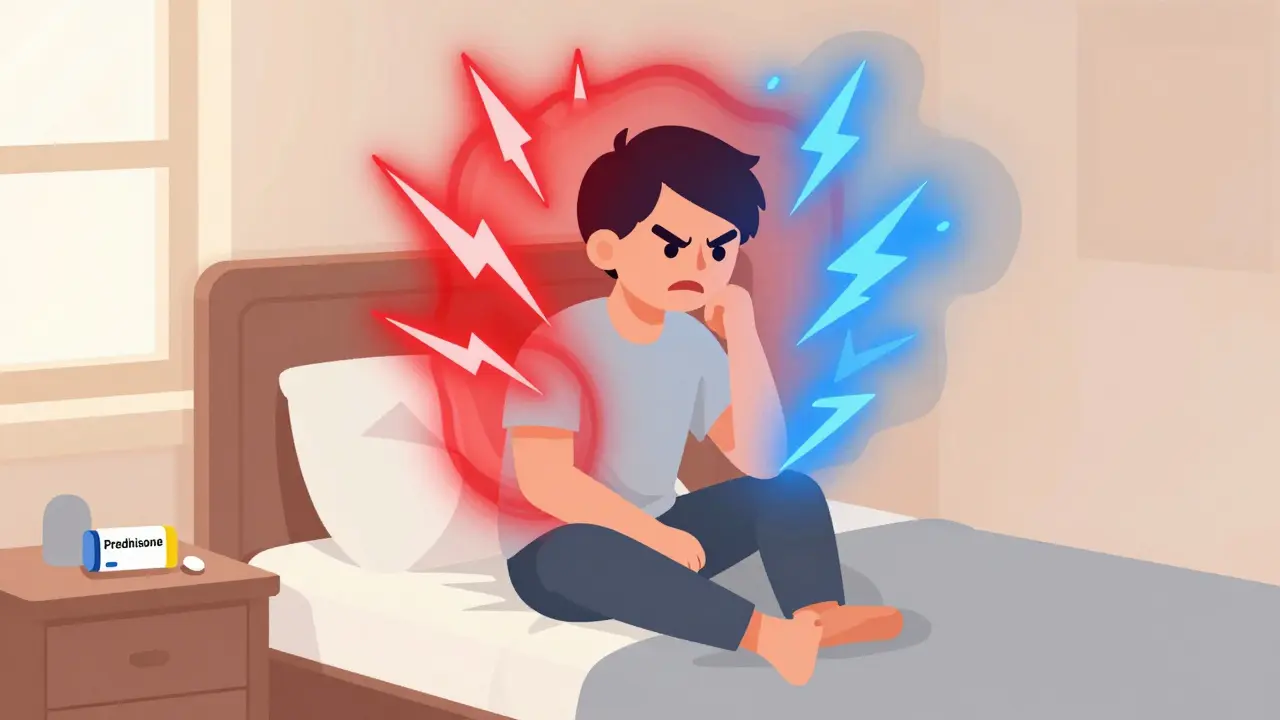
When you start taking prednisone, you might expect swelling, weight gain, or trouble sleeping. But few people warn you about the prednisone mood swings-the sudden anger, crushing anxiety, or feeling like you’re not yourself anymore. If you’ve been on this medication and felt like you’re losing control of your emotions, you’re not alone. Up to 47% of people taking prednisone experience some kind of mood change, according to clinical studies. These aren’t just "bad days." They’re real, measurable neurological reactions caused by how prednisone interacts with your brain.
Why Prednisone Changes Your Mood
Prednisone isn’t just an anti-inflammatory drug. It’s a synthetic version of cortisol, your body’s natural stress hormone. When you take it, it floods your system and crosses the blood-brain barrier within an hour. Once inside the brain, it directly affects the amygdala and prefrontal cortex-the areas that control fear, emotion, and decision-making. This isn’t a side effect you can "will away." It’s a chemical shift.
Studies show that even at low doses (10mg daily), mood changes can appear within 5 to 7 days. At higher doses (40mg or more), the risk jumps more than threefold. People with a history of depression, anxiety, or bipolar disorder are at much higher risk-up to 4.7 times more likely to have severe reactions. But even those with no prior mental health issues can develop sudden panic attacks, irritability, or even suicidal thoughts. One case report described a woman who developed full-blown manic episodes-racing thoughts, sleeping only 3 hours a night, feeling invincible-followed by deep depression and guilt after just two weeks on 20mg daily.
What Prednisone Mood Swings Actually Feel Like
People describe it in different ways, but the patterns are consistent:
- Uncontrollable anger-snapping at loved ones over small things, feeling like you’re on the edge all the time.
- Anxiety that comes out of nowhere-heart racing, shortness of breath, panic attacks even when nothing is wrong.
- Emotional whiplash-crying one minute, laughing the next, then feeling numb.
- False sense of well-being-feeling overly confident, reckless, or disconnected from reality.
- Depression-loss of interest, fatigue, hopelessness, even thoughts of self-harm.
One person on a Crohn’s disease forum wrote: "I’ve never been angrier in my life. I yelled at my kid for spilling juice. I didn’t recognize myself." Another on Reddit said: "I thought I was going crazy. Then I realized it was the steroids. I cried for an hour just because I couldn’t find my keys."
These aren’t personality flaws. They’re biological responses. And they often start before other physical side effects like moon face or weight gain appear. That’s why many doctors miss it-they’re looking for physical changes, not emotional ones.
Why Doctors Don’t Always Warn You
Here’s the hard truth: only about 32% of primary care doctors routinely discuss mood changes when prescribing prednisone. Many assume patients will recognize it as "stress" or "being tired." But the timing is misleading. Mood swings often hit right when you’re already feeling sick, recovering from a flare, or adjusting to a new diagnosis. It’s easy to blame the illness, not the medicine.
The FDA’s official prescribing information lists mood changes as a "very common" side effect-meaning more than 10% of people experience them. Yet patient information leaflets still often bury this in fine print. The European Medicines Agency updated its guidelines in 2023 to require clearer warnings, but many U.S. providers still don’t follow suit. If you’re starting prednisone, don’t wait for your doctor to bring it up. Ask: "What are the mental side effects? How soon might they start? What should I do if I feel off?"
How to Cope: Practical Strategies That Work
There’s no magic fix, but these evidence-backed strategies can help you stay grounded:
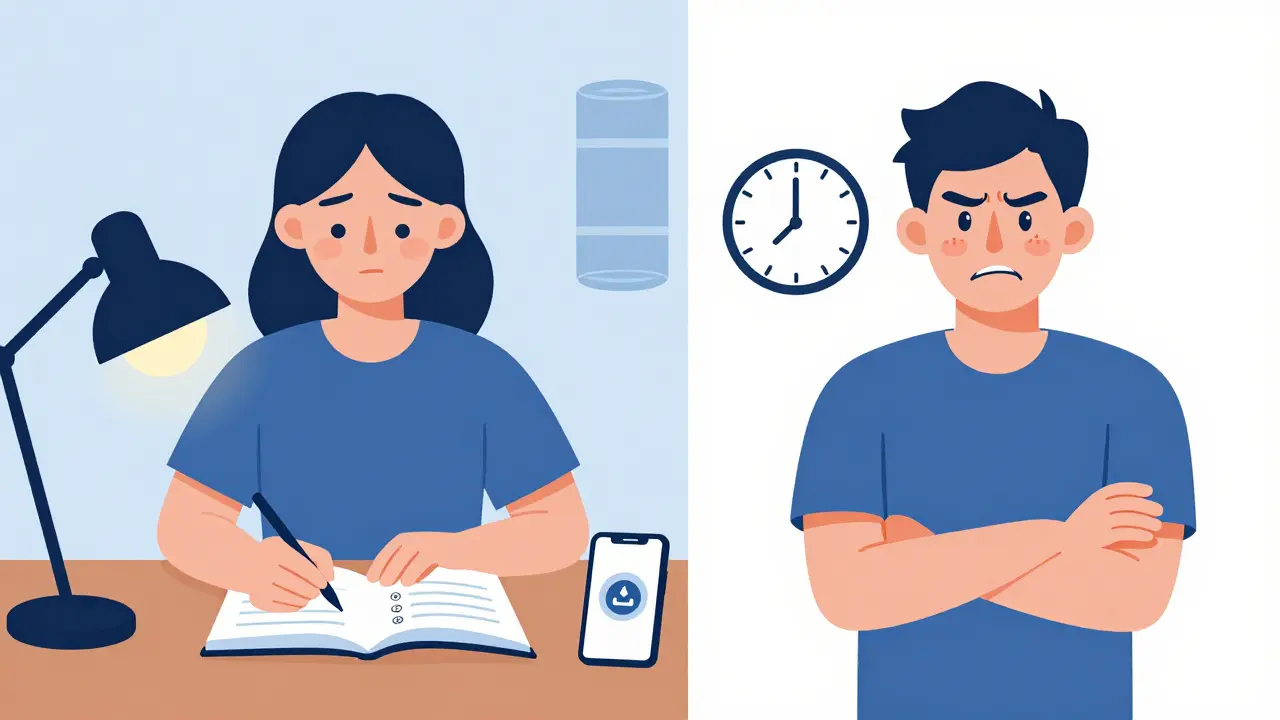
- Track your mood daily. Keep a simple journal: rate your mood from 1 to 10, note sleep, dose time, and any triggers. You’ll start seeing patterns-like how your anger spikes at night or your anxiety peaks after lunch. This helps you anticipate and plan.
- Schedule important conversations for the morning. If you take prednisone once a day, its peak brain effects are usually 4 to 6 hours after ingestion. That means early afternoon is when mood swings are worst. Save difficult talks with family, work, or your doctor for the morning.
- Maintain a strict sleep schedule. Prednisone disrupts melatonin and cortisol rhythms. Even 30 minutes of extra sleep a night can reduce emotional volatility. No screens after 9 p.m. Keep your bedroom cool and dark. If you can’t sleep, get up and read under dim light-don’t lie there frustrated.
- Move your body for 30 minutes a day. Walking, cycling, or gentle yoga reduces cortisol levels by nearly 27%, according to a 2022 study. You don’t need to sweat. Just move. It helps reset your nervous system.
- Practice mindfulness for 15 minutes twice a day. Try free apps like Insight Timer or just sit quietly and focus on your breath. One survey of people on long-term prednisone found that 43% who practiced daily mindfulness saw a clear drop in irritability and anxiety.
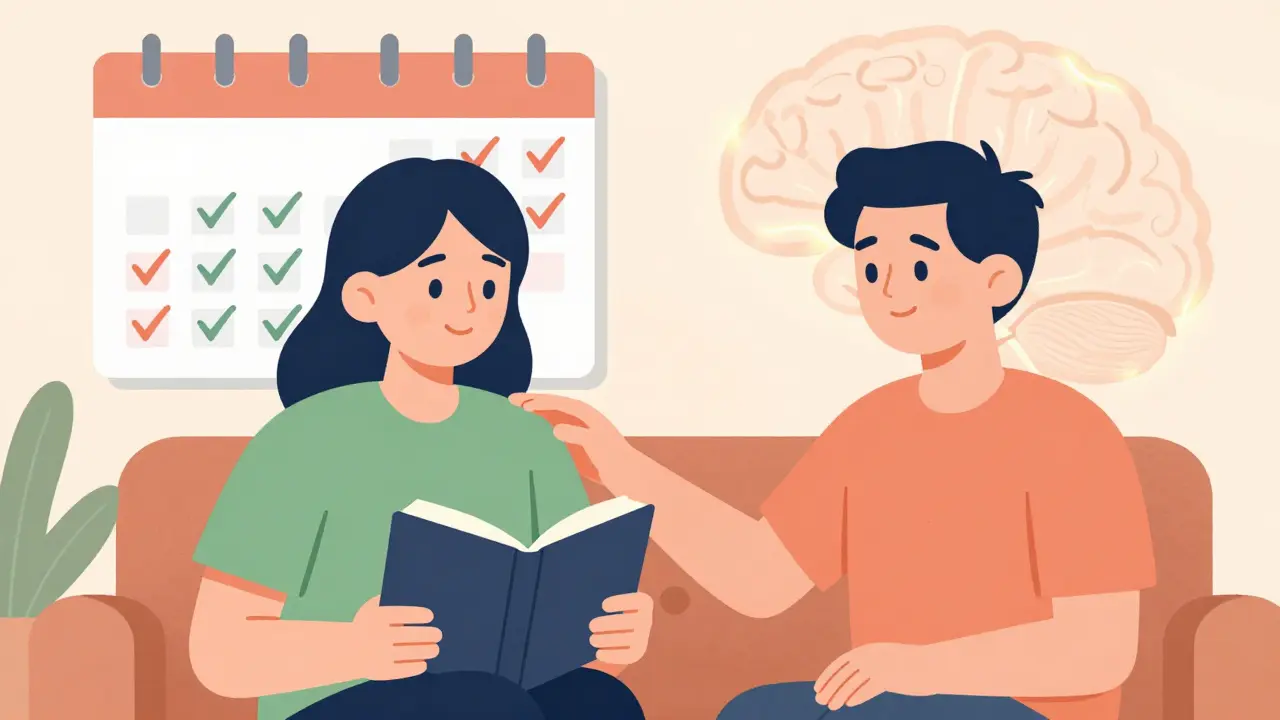
- Talk to someone you trust. Tell your partner, parent, or close friend: "I’m on prednisone, and it might make me irritable or emotional. I’m not myself. Please remind me if I seem off." This removes blame and builds a safety net.
When to Call Your Doctor
Not every mood swing needs emergency care-but some do. Contact your doctor immediately if you experience:
- Thoughts of harming yourself or others
- Delusions or hallucinations
- Extreme agitation or aggression you can’t control
- Manic behavior-racing speech, no need for sleep, reckless spending or risk-taking
- Depression that lasts more than a few days or includes hopelessness
Your doctor might adjust your dose, switch you to a different steroid, or refer you to a psychiatrist. In some cases, especially for long-term users, low-dose SSRIs are being studied as a preventive measure. While not yet FDA-approved for this use, some psychiatrists prescribe them off-label with good results. Don’t self-medicate. But do ask if this option is right for you.
Support Is Out There
You don’t have to go through this alone. Online communities like MyCrohnsAndColitisTeam and Reddit’s r/prednisone have thousands of people sharing their experiences. Reading others’ stories can be a lifeline. You’ll realize: "I’m not crazy. This is the drug. It’s not me."
Also consider talking to a therapist trained in medication-induced mood disorders. Cognitive behavioral therapy (CBT) techniques have been shown to help patients reframe negative thoughts and manage emotional spikes without changing their medication. The American Psychological Association recommends CBT as a first-line support tool for steroid-related anxiety and depression.
The Road Ahead
Prednisone is powerful. It saves lives. But it doesn’t come without cost. The good news? Mood swings usually fade as your dose tapers down. Most people see improvement within 5 to 14 days after stopping the drug. The key is recognizing the signs early, managing them proactively, and not letting shame silence you.
If you’re currently on prednisone and feeling off, don’t wait until it gets worse. Talk to your doctor. Start a mood journal. Reach out to someone. You’re not weak for needing help. You’re smart for asking for it.
How long do prednisone mood swings last?
Mood swings usually start within 5 to 7 days of beginning treatment and can last as long as you’re on the medication. After stopping, symptoms typically improve within 5 to 14 days, but in some cases-especially after high doses-they can linger for up to a month. Delayed reactions, like panic attacks starting days after the last pill, are documented in medical case reports.
Can prednisone cause depression or anxiety?
Yes. Prednisone can trigger both depression and anxiety, even in people with no prior history. It alters brain chemicals like serotonin and dopamine, which regulate mood. Studies show up to 47% of users experience mood disturbances, with anxiety and irritability being the most common. Depression can include feelings of hopelessness, fatigue, and suicidal thoughts-any of these require immediate medical attention.
Is it safe to stop prednisone if I’m having bad mood swings?
No. Stopping prednisone suddenly can cause adrenal crisis, which is life-threatening. Even if your mood is terrible, never cut your dose without talking to your doctor. Instead, ask about tapering faster or adding supportive treatments. Your doctor can adjust your plan safely while monitoring your mental health.
Do all doses of prednisone cause mood swings?
No, but the risk increases with dose. At 10mg daily, about 18% of users report mood changes. At 40mg daily, that number jumps to over 50%. Even low doses (5mg) can affect sensitive individuals, especially those with a history of mental health conditions. There’s no "safe" threshold-only varying levels of risk.
Can therapy help with prednisone-related mood swings?
Yes. Cognitive behavioral therapy (CBT) is recommended by the American Psychological Association for medication-induced mood disorders. It helps you identify thought patterns triggered by the drug, manage emotional spikes, and reduce feelings of guilt or shame. Many patients report improved coping and reduced anxiety after just a few sessions, even while still on prednisone.
Should I avoid prednisone if I have a history of depression?
Not necessarily. Prednisone is often essential for treating serious conditions like autoimmune diseases or severe asthma. But if you have a history of depression, bipolar disorder, or anxiety, your doctor should monitor you more closely. Some patients benefit from starting a low-dose antidepressant before beginning prednisone. Talk to your doctor about your history so they can plan ahead.
What to Do Next
If you’re on prednisone right now:
- Write down how you’ve been feeling over the past week.
- Call your doctor and say: "I’m experiencing mood swings. Can we review my dose and options?"
- Download a free mood tracker app or use a notebook.
- Reach out to one person you trust and tell them what’s happening.
You’re not broken. You’re not weak. You’re reacting to a powerful drug. And with the right support, you can get through it without losing yourself.
Teresa Marzo Lostalé
December 29, 2025 AT 05:12Been on prednisone for 3 months now. Some days I feel like I’m watching myself from outside-like my body’s running on autopilot but my brain’s screaming in a foreign language. I yelled at my cat for sitting on the couch. She just blinked. I cried afterward. It’s not me. It’s the drug. And honestly? Knowing that makes it a little easier to breathe.
Also, the mood journal? Game changer. I started writing "angry at 3pm, cried at 7pm, slept 4 hours" and suddenly it felt less like losing my mind and more like tracking weather patterns. Still sucks, but at least I’m not alone in the storm.
PS: If you’re reading this and feeling crazy? You’re not. You’re just chemically hijacked. ❤️
ANA MARIE VALENZUELA
December 30, 2025 AT 02:51Ugh. People act like this is some new revelation. I’ve been a nurse for 15 years. We see this EVERY WEEK. The real issue? Doctors don’t care until someone tries to punch their own kid. Then suddenly it’s an emergency.
Stop romanticizing it. This isn’t "emotional whiplash"-it’s a chemical siege. And if you’re not getting monitored by a psych consult while on high-dose steroids, your doctor is slacking. Period.
Also, mindfulness? Cute. Try it when you’re 72 hours without sleep and your heart’s pounding like a jackhammer. I’ve seen people hospitalized because they thought "breathing deep" would fix this. It won’t.
Bradly Draper
December 31, 2025 AT 04:47I just wanted to say thank you for writing this. My mom was on prednisone last year and I didn’t understand why she was so angry all the time. I thought she was just being mean. Now I know it wasn’t her. I just wish someone had told me sooner.
I started leaving little notes for her like "I love you" and "this isn’t you" on the fridge. She cried when she saw them. We’re okay now. Just wanted to share that.
Vu L
December 31, 2025 AT 15:02Wow. So prednisone makes you emotional? Shocking. Next you’ll tell me coffee makes people jittery or alcohol makes people say dumb stuff.
People really need to stop treating every side effect like it’s a supernatural curse. You’re taking a steroid. It’s not a spa day. It’s medicine. Toughen up.
Also, mood journal? Sounds like a TikTok trend. Next thing you know, people will be asking for a Spotify playlist for steroid-induced depression.
James Hilton
January 2, 2026 AT 13:05So you’re telling me the same drug that saves your life also turns you into a screaming dumpster fire? Classic. 🤡
At least we get moon face AND emotional chaos. Two-for-one special from Big Pharma.
Pro tip: If you start feeling invincible and decide to buy a motorcycle on credit? That’s the drug talking. Stop. Walk away. Call your mom. She knows.
Ryan Touhill
January 3, 2026 AT 22:53While the anecdotal accounts are compelling, the underlying neuropharmacology requires more rigorous contextualization. Prednisone’s interaction with the HPA axis and glucocorticoid receptor density in the limbic system is not uniformly expressed across populations. The cited 47% statistic lacks stratification by genetic polymorphisms (e.g., NR3C1 variants), socioeconomic status, or baseline cortisol rhythms.
Furthermore, the recommendation to employ mindfulness apps as a primary intervention is dangerously reductionist. Cognitive behavioral therapy, while empirically supported, should be administered by licensed clinicians-not self-guided via mobile notifications.
And yet… I too experienced a 72-hour manic episode after a 60mg dose. I sold my car. Bought three guitars. Cried in a parking lot at 3 a.m. I’m not proud. But I am… scientifically curious.
Julius Hader
January 4, 2026 AT 17:17People need to stop blaming the medicine. Prednisone doesn’t make you angry-it reveals who you really are. If you’re snapping at your kids, maybe you’ve been a jerk all along and this just gave you the courage to admit it.
My uncle was on steroids for years. He never lost control. He just got more honest. Maybe you should ask yourself: Is it the drug… or is it you?
Also, crying over lost keys? That’s not a side effect. That’s a character flaw.
Mimi Bos
January 5, 2026 AT 16:42