
Patent Challenges and Settlements: How Companies Negotiate Entry
 Jan, 24 2026
When two big companies are fighting over a patent, it’s not just about who invented what. It’s about money, market share, and survival. Most people think patent battles end in courtrooms with gavels and lawyers shouting. But here’s the truth: patent settlement happens in quiet conference rooms, not courtrooms. Over 85% of patent disputes never go to trial. Instead, companies negotiate their way out - often after months of back-and-forth, expert analysis, and hard decisions.
Why Companies Choose Settlement Over Court
Going to trial on a patent case costs between $3 million and $5 million on average. That’s not counting the time executives spend away from running their business. For a small company, that kind of expense can kill growth. Even for giants like Apple or Samsung, the risk isn’t just financial - it’s reputational. A public trial can expose trade secrets, delay product launches, and scare off partners. Settlements let companies control the outcome. They can agree to pay a one-time fee, license technology, or even swap patents. In 2021, Ericsson and Samsung settled a years-long dispute over 4G and 5G patents with a $650 million upfront payment and ongoing royalties based on device price. No jury. No appeal. Just a signed contract. The real driver? Timing. Most settlements happen between the Markman hearing - where judges define what the patent claims actually mean - and the summary judgment phase. That’s the sweet spot. By then, both sides have spent hundreds of thousands on experts, analyzed hundreds of patent claims, and know exactly where they stand. Pushing further is expensive. Settling now saves time, money, and stress.The Anatomy of a Patent Settlement
A successful patent settlement isn’t just a handshake. It’s a carefully built structure with four key parts. First, you need to know which patents are really at stake. In high-value disputes, companies usually focus on 3 to 15 key patents out of their entire portfolio. Not every patent matters. Some are weak. Others are outdated. The goal is to isolate the ones that could actually block a product or generate revenue. Second, claim charts are built. These are technical maps showing exactly how one company’s product uses the other’s patented technology. It’s like a blueprint of infringement. Without this, you’re arguing in the dark. Third, validity analysis. Just because a patent was granted doesn’t mean it’s strong. In fact, nearly 38% of patents asserted in litigation get invalidated later during post-grant reviews. Companies spend $150,000 to $300,000 before settlement just to test if their own patents or their opponent’s can survive scrutiny. Fourth, the settlement structure. There are three main types:- Lump-sum payment: One company pays the other a fixed amount. Common in cases where the patent holder doesn’t make products - like non-practicing entities (NPEs).
- Royalty-based licensing: Payments based on sales. For standard-essential patents (like those for Wi-Fi or cellular networks), royalties usually range from 1.5% to 5% of product revenue. Ericsson’s deal with Samsung used tiered royalties from 0.5% to 2.5%.
- High-low settlements: A hybrid model. Both sides agree on a minimum and maximum payout depending on the outcome of a few key legal issues. If the court rules one way, the payment is $2 million. If it rules another way, it’s $8 million. This structure works best between competitors who want to avoid all-out war. Success rate? 78%.
How Cross-Licensing Changes the Game
In industries like semiconductors, telecom, and consumer electronics, companies don’t just settle - they swap. Cross-licensing is when two firms agree to use each other’s patents without paying cash. It’s common in tech, where products rely on hundreds of overlapping patents. Intel’s 2018 settlement with MEDIATEK wasn’t just about money. It led to a joint R&D project on 5G chip technology. Together, they saved over $200 million in development costs. That’s the real win: turning a legal fight into a partnership. But cross-licensing only works if both sides have valuable patents. If one company holds 500 patents and the other has 50, the imbalance can cause resentment. That’s why leading firms use royalty stacking models - calculating how much each patent is worth when combined with others - to avoid overpaying.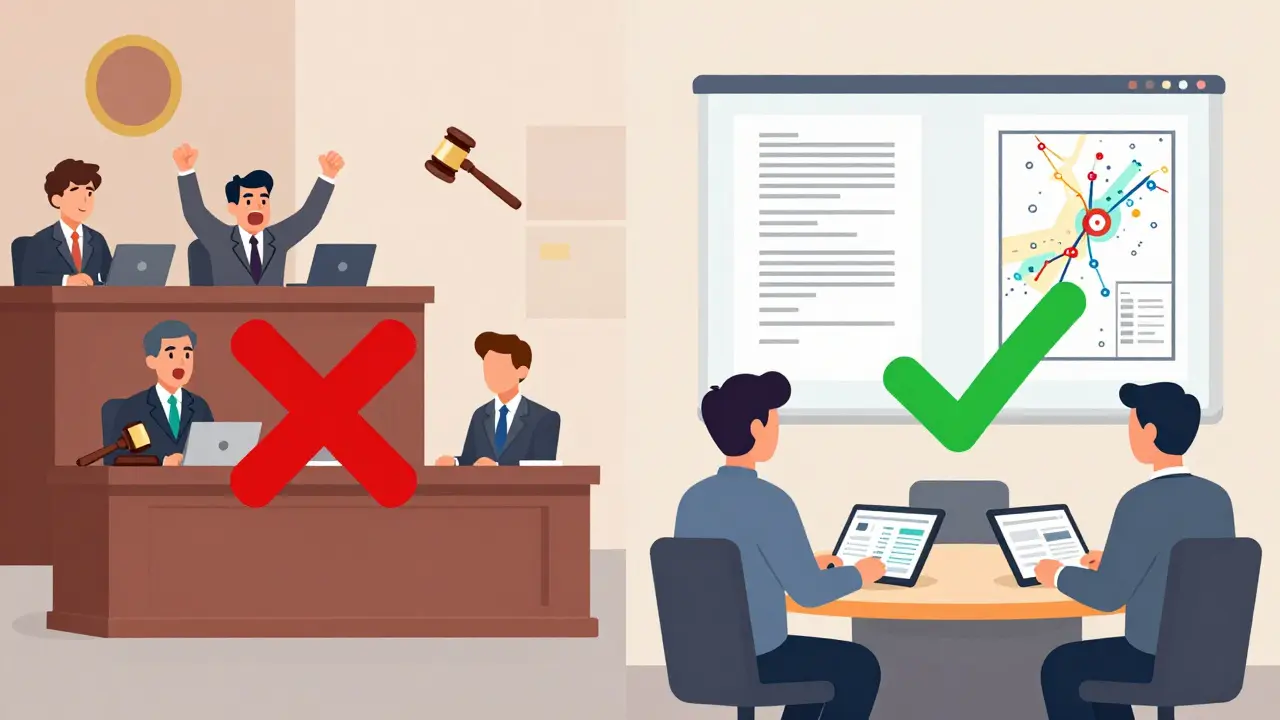
The Hidden Tactics of Successful Negotiators
Most people think patent negotiations are about who has the stronger case. That’s wrong. It’s about who understands the other side’s pain points. One overlooked tactic? Conditional concessions. A company might agree to a lower royalty rate if the other side grants extended licensing rights. Or they might drop a lawsuit over one patent if the opponent agrees to stop challenging their core patent. Another trick? Anchoring. Studies show that plaintiffs who start with an inflated demand - say, 3 times what they actually want - end up with 28% higher settlements. It sounds manipulative, but it’s standard practice. The key is knowing your bottom line before you walk in. And then there’s the mediator. In complex cases, companies hire former judges like Randall Rader, who helped settle the Ericsson-Samsung dispute. Mediators don’t decide. They reframe. They help both sides see the deal they’re too proud to admit they want.What Happens When Settlements Fail
Not every deal sticks. High-low settlements work well between competitors but fail 92% of the time with NPEs - companies that exist only to sue. Their goal isn’t collaboration. It’s cash. And they know most defendants would rather pay than fight. Antitrust rules also block some settlements. The European Commission fined Qualcomm €242 million in 2018 for offering discounts to phone makers who agreed not to challenge its patents. That’s illegal under FRAND rules - the requirement that essential patents be licensed fairly and without discrimination. And then there’s the patent thicket problem. In AI and quantum computing, a single product can touch 500+ patents across different countries. Negotiating all of them? That’s like untangling a knot made of razor wire. According to WIPO, this complexity increases negotiation time by 300% compared to older technologies.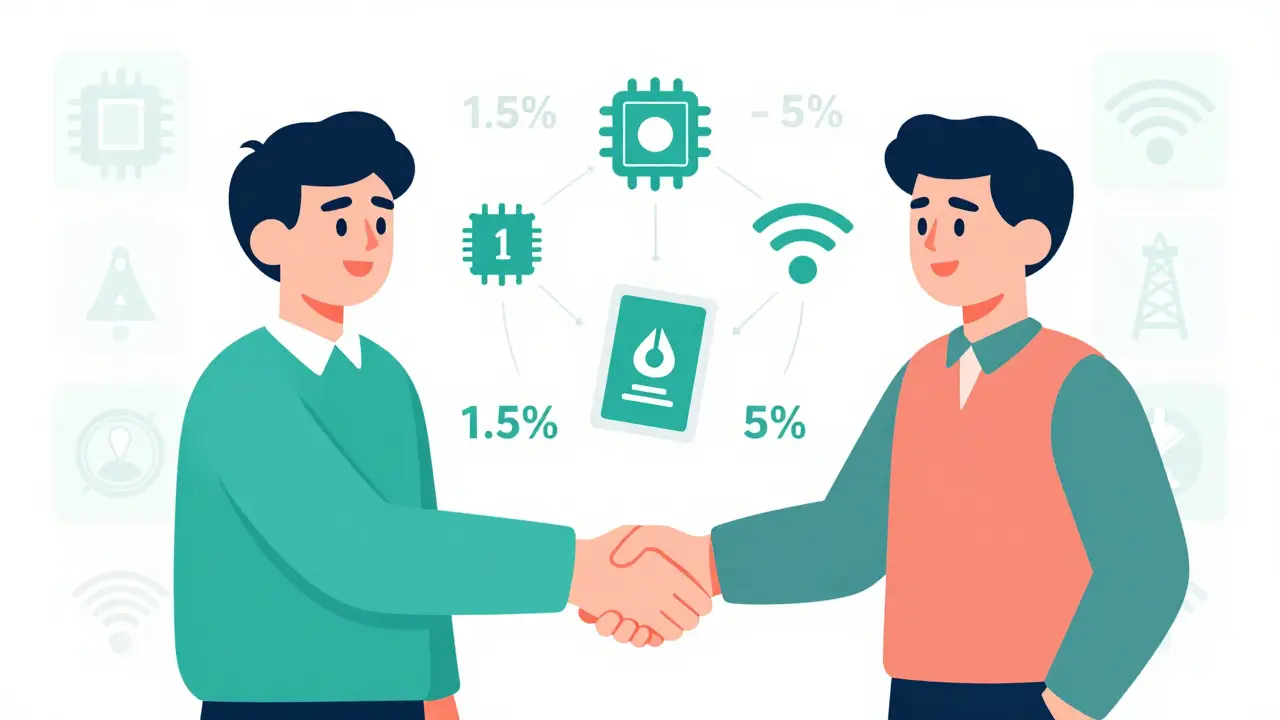
New Tools Changing the Game
Technology is speeding up settlement prep. AI tools like PatentSight’s Freedom-to-Operate analyzer can scan a company’s entire patent portfolio in days instead of weeks. But here’s the catch: AI still misses nearly 19% of key prior art. Human experts are still needed to spot the subtle connections. The USPTO’s new Patent Evaluation Express (PEX) program lets companies get a non-binding validity opinion in weeks for 60% less than a full post-grant review. Already, 17% of new settlements use PEX to test patent strength before negotiating. And soon, smart contracts on blockchain could automate royalty payments. IBM and Microsoft are testing systems that adjust payments in real time based on actual sales data. That could cut post-settlement disputes by up to 40% - no more audits, no more disputes over quarterly reports.Who Wins and Who Loses
Big companies with 1,000+ patents settle 89% of cases. Small firms? Only 63%. Why? Because large companies can afford to wait. They have legal teams, internal experts, and the patience to outlast smaller players. The real winners? Companies that treat patents as business assets, not legal weapons. They don’t just defend. They license. They collaborate. They build ecosystems. The losers? Those who think a patent is a sword. It’s not. It’s a bargaining chip. And if you don’t know how to use it wisely, you’ll end up paying more - in court, in reputation, and in missed opportunities.What You Need to Know Before You Negotiate
If you’re in a company facing a patent challenge, here’s what to do:- Calculate your true cost of litigation - not just legal fees, but lost time, delayed launches, and damaged relationships.
- Identify your weakest patents. Are they likely to be invalidated? If yes, use them as leverage.
- Know your bottom line. What’s the most you’ll pay? What’s the least you’ll accept?
- Consider cross-licensing. Could you trade patents instead of paying cash?
- Use a mediator. A neutral third party can break deadlocks no lawyer can.
What percentage of patent disputes settle before trial?
Over 85% of patent disputes are settled before reaching trial, according to a 2022 Stanford Law School study of 10,000 cases from 2010 to 2020. This high rate is driven by the cost and risk of litigation, with most settlements occurring between the Markman hearing and summary judgment.
How much do patent settlements typically cost?
Settlement values vary widely. For cases involving non-practicing entities (NPEs), the median settlement is around $1.2 million. For disputes between direct competitors, it’s closer to $8.7 million. Licensing deals often include upfront payments plus ongoing royalties, typically between 1.5% and 5% of product revenue.
What’s the difference between a licensing deal and a cross-license?
A licensing deal is one-way: Company A pays Company B to use its patents. A cross-license is mutual: Both companies grant each other rights to use their respective patents, often without cash changing hands. Cross-licensing is common in tech industries like semiconductors and telecom, where products rely on many overlapping technologies.
Can a patent settlement be challenged later?
Generally, no. Once signed, a settlement agreement is legally binding. However, if one party lies about patent ownership or hides critical information, the agreement can be voided. Also, if a patent is later invalidated by the USPTO, royalty obligations tied to that patent may be adjusted - but only if the settlement terms allow it.
Why do some companies use high-low settlements?
High-low settlements create a safety net. Both sides agree on a minimum and maximum payout based on the outcome of a few key legal issues. This reduces risk for both parties and encourages settlement. It works best between competitors who want to avoid full litigation but still need a clear resolution. Success rates are around 78%, but it rarely works with non-practicing entities.
How do antitrust laws affect patent settlements?
Antitrust laws block settlements that unfairly restrict competition. For example, if a company holding standard-essential patents (SEPs) offers discounts only to customers who agree not to challenge the patent, that’s illegal. The European Commission fined Qualcomm €242 million in 2018 for this exact practice. Settlements must follow FRAND principles - fair, reasonable, and non-discriminatory terms.
What’s the role of AI in patent settlement today?
AI tools speed up patent analysis, helping companies assess infringement risk and prior art in days instead of weeks. Tools like PatentSight’s analyzer cut portfolio review time from 3-4 weeks to just 3-5 days. But AI still misses about 18.7% of relevant prior art, so human experts remain essential for final decisions.