
Packaging and Labeling: How to Identify Authorized Generics
 Feb, 10 2026
Have you ever picked up a prescription and noticed the pill looks the same, but the box says a different company made it? That’s not a mistake. It might be an authorized generic - and knowing how to spot one can save you money without sacrificing quality.
Authorized generics aren’t just another type of generic drug. They’re the exact same medication as the brand-name version - same active ingredients, same factory, same formula. The only difference? The packaging and label. And if you don’t know what to look for, you could easily miss out on savings or even get confused about what you’re taking.
What Exactly Is an Authorized Generic?
An authorized generic is a version of a brand-name drug that’s made by the original manufacturer or under their direct supervision. It’s not a copy. It’s the real thing, just sold under a different name or label. This happens when a drug company wants to keep selling its medicine after the patent expires but doesn’t want to compete with other generic makers during the first 180 days of exclusivity.
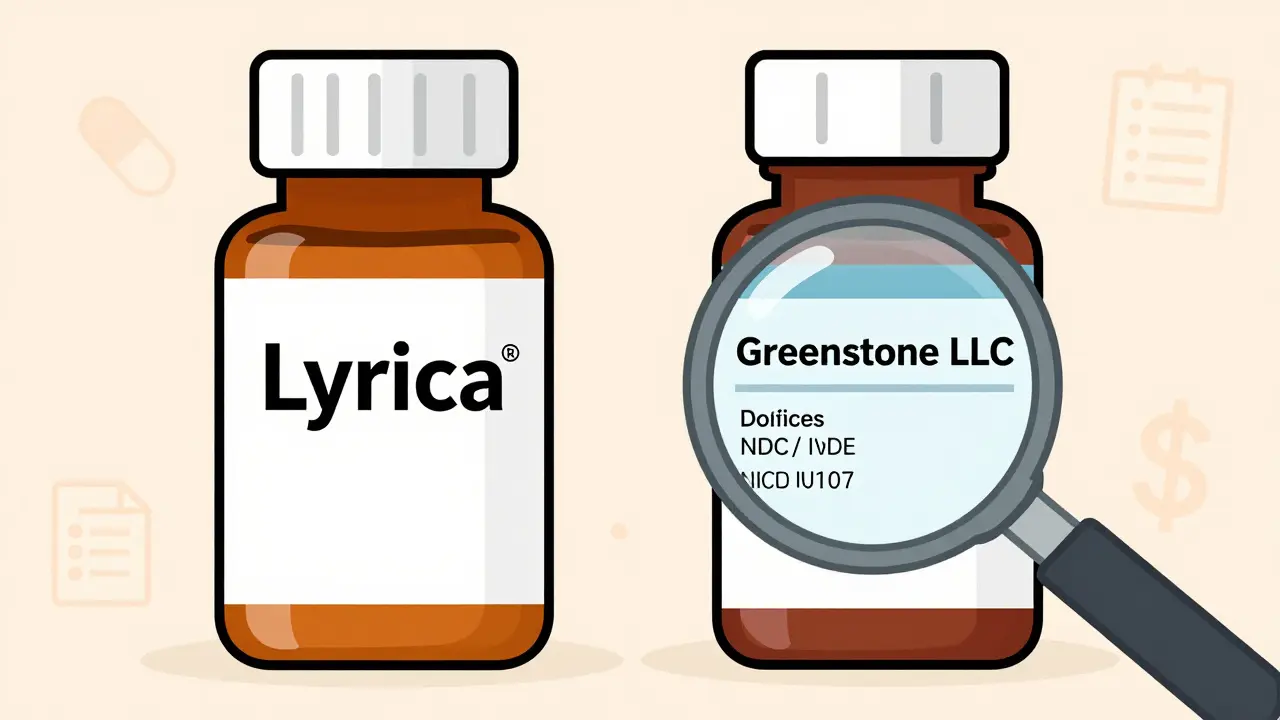
For example, when Pfizer stopped being the only seller of Lyrica (pregabalin), they didn’t just sit back. They launched an authorized generic under the name Greenstone LLC. Same capsules, same dosage, same factory in New Jersey. The only change? The label now says Greenstone instead of Pfizer.
The FDA officially defines authorized generics as drugs approved under the original New Drug Application (NDA), not the Abbreviated New Drug Application (ANDA) used by most generics. That means they don’t have to prove bioequivalence - because they’re not different to begin with.
How to Spot an Authorized Generic by Its Packaging
Here’s the key: look at the label. Not the pill. Not the bottle shape. The words on the box.
Brand-name drugs usually have big logos, trademark symbols (® or ™), and marketing phrases like “The #1 Prescribed Medication for...” or “Trusted by Millions.” Authorized generics strip all that away. What’s left is clean, clinical labeling with only the essentials:
- The drug name (e.g., “Pregabalin”)
- Dosage (e.g., “75 mg”)
- Manufacturer/Distributor name (not the original brand)
- National Drug Code (NDC) number
- Expiration date and lot number
You’ll often see phrases like “Distributed by [Company Name]” or “Manufactured for [Company Name].” That’s a big clue. If it says “Manufactured by Pfizer,” it’s not an authorized generic - it’s the real brand.
And here’s something many people miss: the pill inside might look slightly different. Color? Shape? Markings? That’s normal. U.S. trademark laws prevent generics - even authorized ones - from copying the exact appearance of the brand. But don’t worry. The active ingredient hasn’t changed.
The NDC Code: Your Best Friend
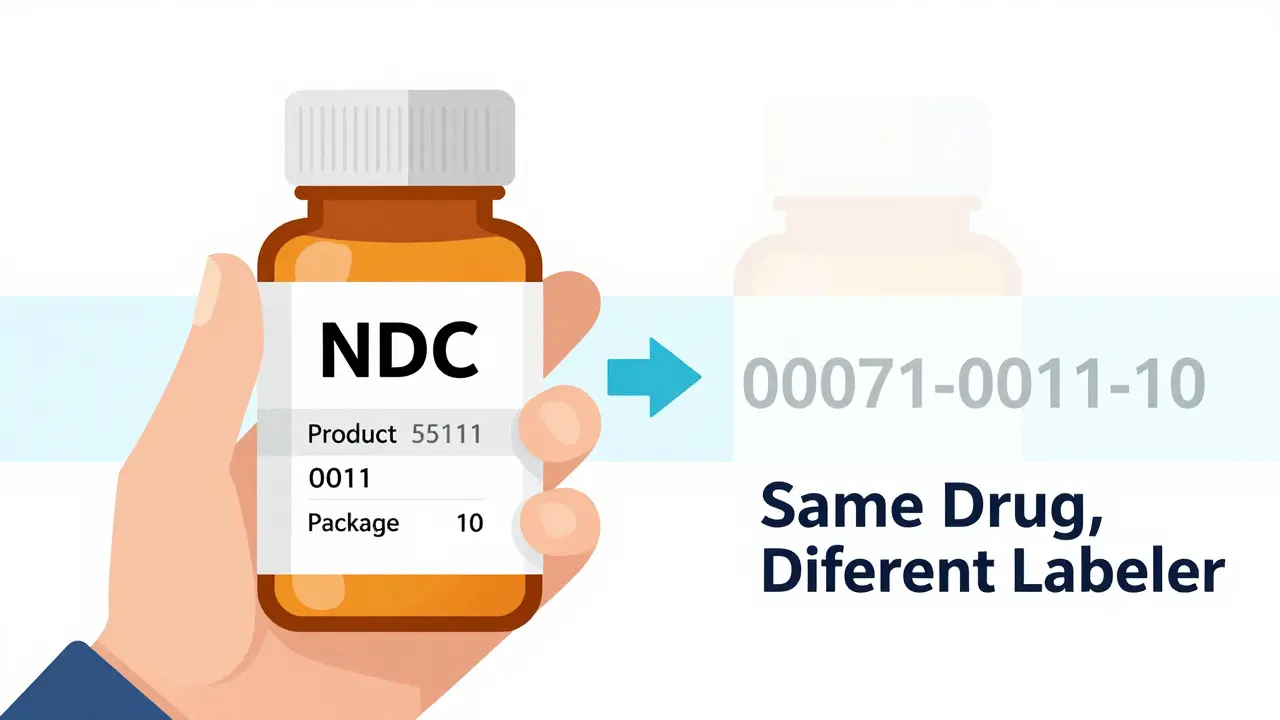
The most reliable way to confirm you’re holding an authorized generic is to check the National Drug Code (NDC). It’s the 10- or 11-digit number printed on the package. It’s divided into three parts:
- Labeler Code - Who makes or distributes it
- Product Code - What the drug is and its strength
- Package Code - How it’s packaged (e.g., 30 tablets, 90 capsules)
Here’s the trick: In an authorized generic, the product code and package code are identical to the brand-name version. Only the labeler code changes.
Take Protonix (pantoprazole). The brand version has an NDC of 00071-0011-10. The authorized generic from Dr. Reddy’s has an NDC of 55111-0011-10. Same product code (0011), same package code (10). Just a different labeler (55111 instead of 00071).
That’s how you know: same drug, same dose, same package size - different distributor.
Why This Matters: Cost and Confidence
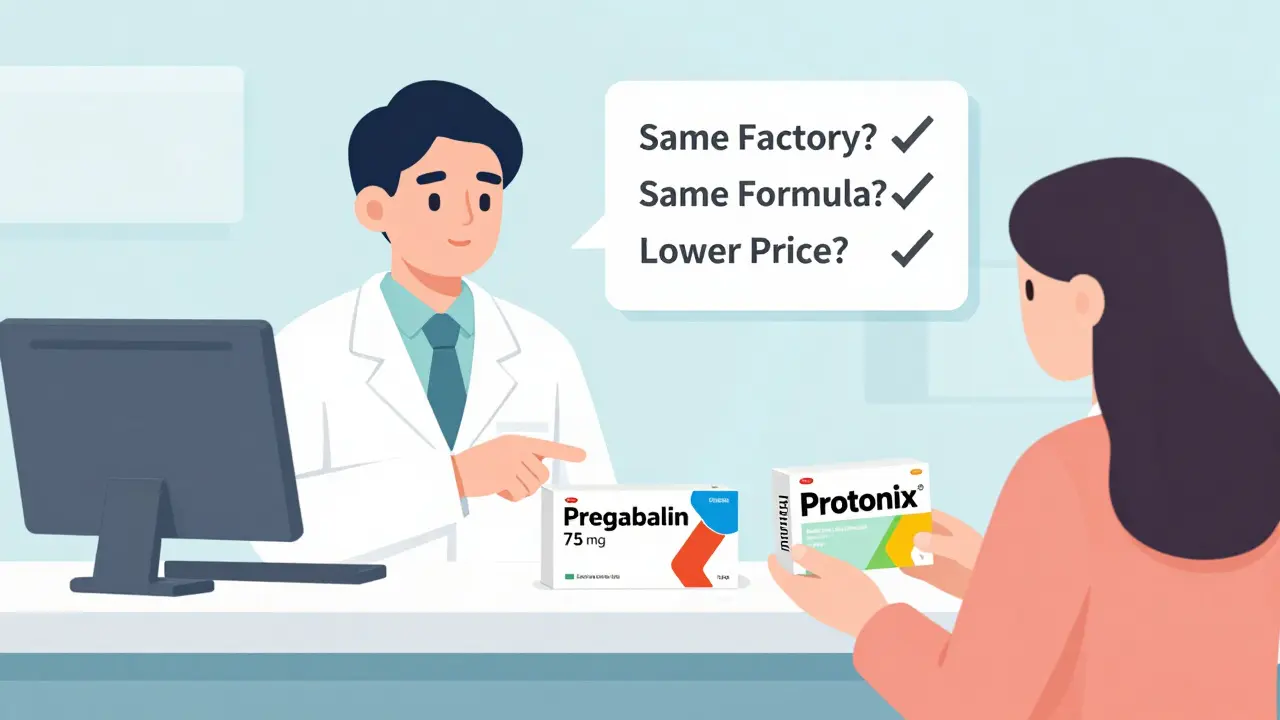
Authorized generics cost 15-25% less than the brand-name drug. But they’re usually 5-15% more than traditional generics. Why? Because they’re made in the same facility with the same equipment. No cost-cutting. No outsourcing. Same quality control.
A 2022 Medscape survey found that 92.6% of patients reported no difference in how they felt between the brand and its authorized generic. No more side effects. No less effectiveness. Just lower prices.
And here’s the scary part: 37% of pharmacists in a 2021 survey couldn’t tell the difference between authorized generics and brand drugs just by looking at the packaging. That’s why knowing how to read the label matters - for you and your pharmacist.
How to Verify an Authorized Generic
Don’t guess. Check. Here’s how:
- Find the NDC number on the package.
- Go to the FDA’s Authorized Generic Drug List (updated quarterly - last update was October 2, 2023). Search by drug name or NDC.
- Compare the labeler code on your package to the one listed. If they match, it’s authorized.
- Look for distributor info - if it’s a company you’ve never heard of (like Greenstone, Amneal, or Aurobindo), it’s likely an authorized generic.
- Check for trademark symbols - if you see “Lyrica®” on the box, it’s not an authorized generic.
Most pharmacies use systems like First Databank or Medi-Span that flag authorized generics automatically. But if you’re unsure, ask your pharmacist: “Is this an authorized generic?” They’ll know.
Common Mistakes and Misconceptions
Many people think “authorized generic” means “brand in disguise.” It doesn’t. It means “brand made under a different label.”
Another myth: “If it looks different, it’s not the same.” But again - trademark laws force this change. A pill can’t look exactly like the brand, even if it’s identical inside.
And don’t confuse authorized generics with “authorized brand” products. Those are traditional generics that look like the brand - often with similar colors and logos. They’re not approved under the NDA. They’re just clever marketing.
Also, don’t assume all generics are equal. A traditional generic might use different inactive ingredients (fillers, dyes, binders). An authorized generic uses the exact same ones. If you’re sensitive to dyes or allergens, that matters.
What to Do If You Can’t Find It on the FDA List
The FDA updates its authorized generic list every three months - January, April, July, October. If you’re checking in February 2026 and don’t see your drug listed, it doesn’t mean it’s not authorized. It might be new, or the update hasn’t been posted yet.
Instead, call your pharmacy. Ask if they have an authorized generic version of your drug. If they do, they’ll have the NDC on file. Ask them to show you the labeler code and compare it to the brand.
Or check your insurance formulary. Many plans now list authorized generics separately because they’re cheaper than the brand but more expensive than standard generics.
Final Tip: Keep Your Packaging
Don’t toss the box. Keep it until you finish the prescription. If you ever need to verify what you took - for insurance, a doctor visit, or a refill - the NDC on the label is your proof. It’s your legal record of what was dispensed.
And if you ever switch from a brand to an authorized generic and feel something’s off - talk to your pharmacist. Not because it’s different - but because you deserve to know exactly what’s in your medicine.
Are authorized generics as safe as brand-name drugs?
Yes. Authorized generics are made in the same facility, with the same equipment, using the exact same formula as the brand-name drug. The FDA inspects these facilities just like it does for the original manufacturer. There’s no difference in safety, effectiveness, or quality.
Can I switch from a brand to an authorized generic without my doctor’s approval?
Yes. Because authorized generics are chemically identical to the brand, pharmacists can substitute them automatically in most cases - just like regular generics. But always check with your pharmacist if you have concerns about inactive ingredients or allergies.
Why do authorized generics cost more than regular generics?
Because they’re made by the original brand manufacturer. Regular generics are often produced by third-party companies that cut costs on packaging, quality control, or facilities. Authorized generics don’t cut corners - so they cost a bit more than standard generics, but still much less than the brand.
Do authorized generics have the same side effects as the brand?
Yes. Since they contain the exact same active and inactive ingredients, side effects are identical. If you had no issues with the brand, you shouldn’t have any with the authorized generic.
How often is the FDA’s authorized generic list updated?
The FDA updates its Authorized Generic Drug List on the first business day of January, April, July, and October each year. As of October 2, 2023, there were 147 authorized generic products listed. Always check the latest version if you’re verifying a drug.
Joanne Tan
February 10, 2026 AT 11:26Also, the pill looks different but same effect. No weird side effects. Just cheaper. Win win.
Reggie McIntyre
February 11, 2026 AT 03:10Pharmacists need to be trained to shout this from the rooftops. We’re leaving money on the table because nobody tells us. This is basically the drug world’s best-kept secret.
Carla McKinney
February 11, 2026 AT 16:53Also, stop calling them 'authorized generics.' That’s marketing fluff. They’re just brand-name drugs sold under a different label. Stop pretending there’s some special designation. It’s not a tier. It’s the same thing.
Ojus Save
February 11, 2026 AT 23:32Jonathan Noe
February 12, 2026 AT 16:36And yeah, the NDC thing? 100% correct. Product code and package code are the dead giveaways. Labeler code is the only thing that changes. If you know how to read it, you’re 90% there.
Vamsi Krishna
February 13, 2026 AT 04:48Meanwhile, real generics from India are cheaper, better regulated, and you can’t even get them here. This whole system is rigged. I’m not buying into this 'authorized' nonsense. It’s just branding with a new name.
Suzette Smith
February 13, 2026 AT 12:10athmaja biju
February 15, 2026 AT 05:58alex clo
February 17, 2026 AT 05:19Also, your point about inactive ingredients is spot-on. I have allergies to dyes, and switching to an authorized generic meant I didn’t have to worry about FD&C Red 40 or other additives that sometimes vary in traditional generics.
Alyssa Williams
February 17, 2026 AT 16:16Pro tip: Keep the box. I printed out the FDA page for my med and taped it to the bottle. Now I never wonder. And if my pharmacist gives me something new? I check the NDC before I leave. No excuses.
Ernie Simsek
February 18, 2026 AT 22:15Like… I cried? Not exaggerating. I’ve been paying $200/month for years. Just found out I could’ve been paying $70. Why didn’t anyone tell me?? 😭💸
Jim Johnson
February 19, 2026 AT 06:09Also, don’t forget: authorized generics often have the same inactive ingredients. If you’re sensitive to lactose or dyes, this matters way more than you think. Real talk - this is one of the few times in pharma where you actually get the exact same thing for less.
Sophia Nelson
February 19, 2026 AT 21:27