
NSAIDs and Heart Failure: How Common Painkillers Increase Fluid Retention and Hospitalization Risk
 Nov, 10 2025
Heart Failure Fluid Retention Risk Calculator
How Long Have You Taken NSAIDs?
- American Heart Association Survey
- Clinical Guidelines
Critical Actions
- Stop NSAIDs immediately if symptoms appear
- Weigh yourself daily and track changes
- Check all medication labels for hidden NSAIDs
- Contact your doctor within 24 hours if risk is medium/high
When you have heart failure, even a simple painkiller like ibuprofen can push your body into crisis. It’s not just about the pain you’re trying to treat-it’s about what that pill does to your heart, kidneys, and fluid balance. For millions of people living with heart failure, taking over-the-counter NSAIDs can mean the difference between staying at home and ending up in the hospital. And it often happens fast-sometimes within just two or three days.
How NSAIDs Trigger Fluid Retention
NSAIDs-like ibuprofen, naproxen, and celecoxib-work by blocking enzymes called COX-1 and COX-2. These enzymes help make prostaglandins, chemicals that play a role in pain and inflammation. But prostaglandins also help your kidneys manage fluid and salt. When NSAIDs shut them down, your kidneys start holding onto sodium and water instead of flushing it out.
This isn’t just a minor side effect. In someone with heart failure, the heart is already struggling to pump blood. Extra fluid in the bloodstream increases the workload on that weakened heart. The result? Swelling in the legs, sudden weight gain, shortness of breath, and fatigue. These are classic signs of heart failure worsening-and they often show up within 24 to 72 hours after taking an NSAID.
Studies show that even healthy kidneys can’t compensate when NSAIDs are taken by someone with heart failure. Renal blood flow drops by 20-30%, and the glomerular filtration rate (GFR), which measures how well your kidneys filter waste, also falls. This isn’t a slow, gradual decline. It’s a sharp drop that can trigger acute decompensation.
Why No NSAID Is Safe for Heart Failure
For years, people thought COX-2 inhibitors like celecoxib were safer for the heart than older NSAIDs like ibuprofen. That turned out to be wrong. The same 2003 review by Bleumink et al. showed that even the so-called “renal-sparing” NSAIDs cause identical fluid retention. Celecoxib, diclofenac, naproxen, and ibuprofen all carry the same risk.
A 2022 study of over 100,000 people in Denmark with type 2 diabetes and heart failure found that any NSAID use-even for just a few days-raised the chance of hospitalization. The highest risk? The first week. People taking celecoxib had an 88% higher chance of being hospitalized for heart failure. Ibuprofen raised the risk by 62%. Naproxen was slightly better, but still risky.
The European Society of Cardiology says it plainly: NSAIDs should be avoided in all heart failure patients. That’s a Class III recommendation-meaning there’s clear proof they cause harm. The U.S. FDA added this warning to all NSAID labels in 2020. The European Medicines Agency did the same years earlier. Yet many patients still don’t know.
Real People, Real Consequences
One Reddit user shared how two 400mg doses of ibuprofen for a headache led to a 10-pound weight gain in 72 hours. Another, a 72-year-old woman with heart failure, went to her doctor for swollen ankles and discovered she’d been taking naproxen every day for her arthritis-unaware it was making her heart worse.
A 2018 American Heart Association survey found that 37% of heart failure patients had taken an NSAID without knowing it was dangerous. Of those, 62% ended up needing urgent medical care. Many didn’t realize that Advil, Aleve, or even topical gels containing NSAIDs could cause harm. Family members often pick up these medications for them, thinking they’re harmless.
Doctors see it regularly: patients come in with sudden shortness of breath, and their weight has jumped 5-10 pounds in a week. When asked, they say, “I just took a couple of pills for my back.” That’s not just a mistake-it’s a medical emergency waiting to happen.

What to Use Instead
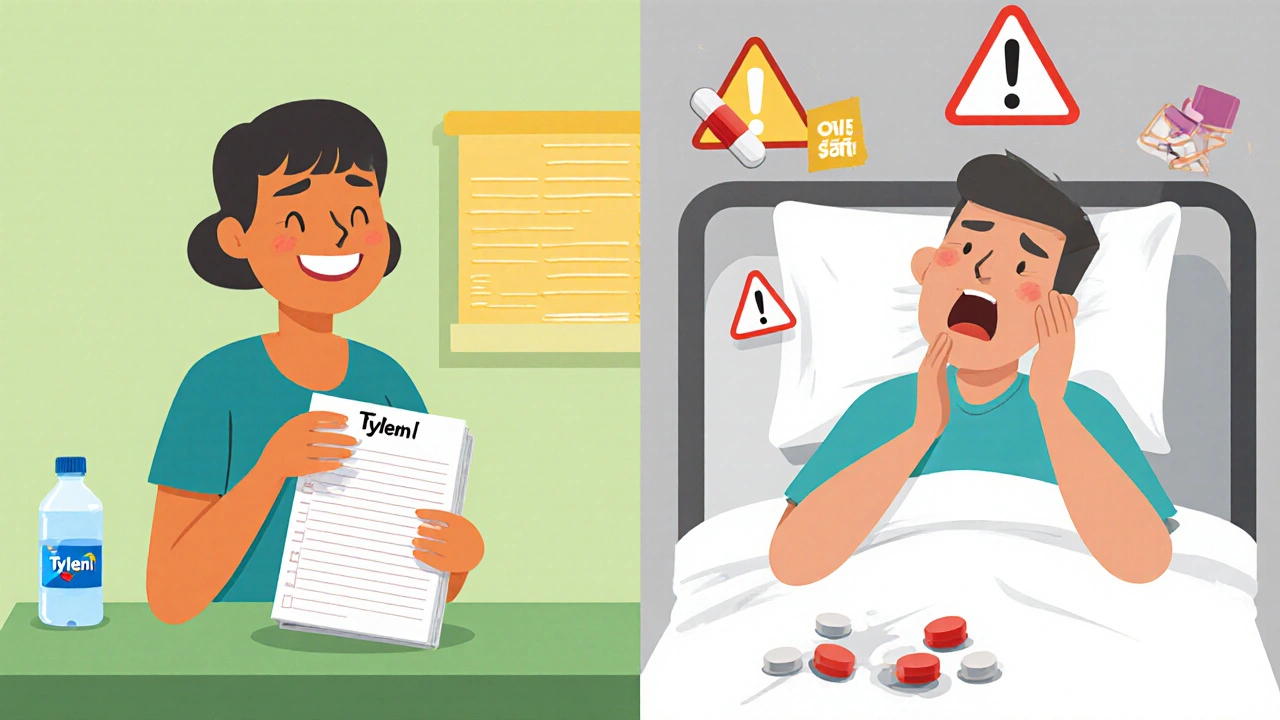
If you have heart failure and need pain relief, acetaminophen (Tylenol) is usually the safest choice. It doesn’t affect kidney function the way NSAIDs do. It won’t reduce inflammation like ibuprofen, but for headaches, muscle aches, or arthritis pain, it’s often enough.
For chronic pain, non-drug options can help: physical therapy, heat packs, gentle stretching, or even acupuncture. Some patients benefit from low-dose antidepressants like amitriptyline, which can ease nerve-related pain without affecting the heart.
Always check with your doctor before trying anything new-even herbal supplements. Some, like willow bark or devil’s claw, contain natural salicylates that act like aspirin and carry the same risks.
How to Protect Yourself
If you have heart failure, here’s what you need to do:
- Never take NSAIDs without talking to your doctor. This includes topical creams and gels.
- Read every medicine label. NSAIDs are hidden in cold and flu remedies, sleep aids, and even some migraine pills.
- Keep a daily weight log. A sudden gain of 2 pounds in a day or 5 pounds in a week is a red flag.
- Ask your pharmacist to review all your meds. They can spot hidden NSAIDs you might miss.
- Teach your family. Your spouse, adult children, or caregivers need to know what to avoid.
Even if you feel fine, your kidneys are still vulnerable. Heart failure doesn’t always cause obvious symptoms until it’s too late. That’s why prevention matters more than ever.
Why Doctors Still Prescribe Them
It’s frustrating, but true: a 2020 study found that nearly 16% of heart failure patients still got NSAID prescriptions within a year of diagnosis. That number jumped to over 22% in patients with preserved ejection fraction-a subgroup often thought to be “less sick.”
Many doctors assume patients will take NSAIDs anyway, so they prescribe them “safely”-low dose, short term. But research shows there’s no safe threshold. The Danish study proved that even 1-3 days of use raises hospitalization risk.
Only 43% of primary care doctors routinely screen heart failure patients for NSAID use during medication reviews. That’s a gap in care that’s costing lives.
The Bigger Picture
The global NSAID market is worth over $11 billion. Most of those sales are over-the-counter. That means billions of pills are sold every year without medical oversight. And for people with heart failure, each one carries risk.
New tools are coming. The American College of Cardiology is developing a mobile app for heart failure patients that will alert them if they try to purchase or scan an NSAID. It’s scheduled for release in mid-2025. Until then, the best protection is knowledge.
Heart failure is manageable. But it’s fragile. What you put in your body matters as much as your meds, your diet, and your salt intake. NSAIDs aren’t just another pill. For someone with heart failure, they’re a trigger. And triggers can be avoided.
Can I take ibuprofen if I have heart failure?
No. Ibuprofen and other NSAIDs can cause fluid retention, raise blood pressure, and worsen heart failure-even in small doses. Studies show they increase the risk of hospitalization by up to 88%. Acetaminophen is a safer alternative for pain relief.
How quickly can NSAIDs cause heart failure to worsen?
Symptoms like swelling, weight gain, and shortness of breath can appear within 24 to 72 hours of taking an NSAID. Some patients gain 5-10 pounds in just a few days. The highest risk is during the first week of use.
Is naproxen safer than ibuprofen for heart failure?
Naproxen may have a slightly lower cardiovascular risk compared to other NSAIDs, but it still causes fluid retention and kidney strain. No NSAID is considered safe for heart failure patients. The European Society of Cardiology recommends avoiding all NSAIDs, regardless of type.
Can topical NSAID creams be used safely?
No. Even topical NSAIDs like diclofenac gel can be absorbed into the bloodstream and affect kidney function. Studies show they carry the same risks as oral forms in heart failure patients. Avoid all forms of NSAIDs unless your doctor specifically approves them.
What should I do if I accidentally took an NSAID?
Monitor your weight and symptoms closely. If you gain more than 2 pounds in a day or notice swelling, shortness of breath, or increased fatigue, contact your doctor immediately. Do not wait for symptoms to worsen. Early intervention can prevent hospitalization.
Are there any NSAIDs that are safe for heart failure?
No. All NSAIDs-including celecoxib, diclofenac, ibuprofen, and naproxen-carry the same risk of fluid retention and heart failure worsening. The European and U.S. guidelines agree: avoid all NSAIDs in heart failure. Acetaminophen is the preferred pain reliever.
Why do some doctors still prescribe NSAIDs to heart failure patients?
Some doctors assume patients will take NSAIDs anyway, so they prescribe them “short-term” or “low-dose.” But research shows even brief use increases hospitalization risk. Many also don’t routinely screen for NSAID use during medication reviews. Only 43% of primary care doctors check for them.
Can I use aspirin if I have heart failure?
Low-dose aspirin (81 mg) used for heart protection is generally considered safe in heart failure patients, as long as it’s prescribed for cardiovascular reasons. But don’t take higher doses for pain-it acts like an NSAID and carries the same risks. Always check with your doctor before using aspirin for anything other than its prescribed purpose.
What Comes Next
Heart failure management is evolving. The 2023 American Heart Association statement now calls NSAIDs “absolutely contraindicated” at all stages of heart failure. That’s stronger than before. And with new tools like risk-alert apps on the way, patients will have more support.
But the most powerful tool is still awareness. If you or someone you care for has heart failure, know this: NSAIDs aren’t harmless. They’re a hidden threat. And avoiding them isn’t just a recommendation-it’s a lifeline.
Nicole M
November 12, 2025 AT 02:40Just took ibuprofen for a headache yesterday. Now I’m panic-checking my scale. Thanks for the scare.
Arpita Shukla
November 13, 2025 AT 00:18India has no regulation on OTC NSAIDs. My aunt took naproxen for 5 years for arthritis, then got hospitalized with fluid overload. No one told her. Doctors here assume you know. You don’t.
Ryan Everhart
November 13, 2025 AT 21:13So let me get this straight-we’ve got a $11B industry selling poison disguised as relief, and the only thing stopping people from dying is… reading labels? Brilliant. Just brilliant.
Benjamin Stöffler
November 15, 2025 AT 20:24It’s not the NSAIDs, it’s the systemic failure of medical education-doctors are trained to treat symptoms, not to interrogate the entire pharmacological ecosystem surrounding a patient. We’ve reduced human beings to a list of contraindications, and then wonder why people end up in ICU after a simple ibuprofen.
The real tragedy? The system rewards prescribing, not preventing. The FDA warning? A legal afterthought. The AHA’s new app? A PR stunt. The truth? We’ve outsourced responsibility to pills, and now we’re surprised when the pills betray us.
Acetaminophen isn’t the answer-it’s a bandage on a hemorrhage. What we need is a cultural reckoning with pain: that it’s not always a problem to be solved, but sometimes a signal to be listened to.
And yet, we reach for the bottle before we reach for the breath.
Samantha Wade
November 17, 2025 AT 11:13As a healthcare professional with over 20 years of clinical experience, I cannot emphasize enough the absolute contraindication of NSAIDs in heart failure. The evidence is unequivocal, reproducible, and clinically devastating. The fact that 37% of patients remain unaware is not a failure of patient education-it is a failure of systemic communication. Every pharmacy counter, every prescription label, every EHR alert must be standardized to flag NSAID risk with the same urgency as warfarin or insulin. This is not a suggestion. It is a medical imperative.
Furthermore, the normalization of "just a little" NSAID use reflects a dangerous cultural misconception about pharmacological safety. There is no safe threshold. There is no "low-dose exception." The kidneys of a heart failure patient are not merely impaired-they are precariously balanced on a knife’s edge. NSAIDs are the blade.
Physicians must be held accountable. Pharmacies must be mandated to counsel. Families must be educated. And patients? They must be treated as partners, not passive recipients of risk.
Elizabeth Buján
November 18, 2025 AT 00:55my grandma used to say "pain is just your body yelling for help"-and she was right. i used to give her ibuprofen for her knees, never thinking it’d make her heart scream louder. now i use heating pads, she does yoga videos on her tablet, and we both breathe easier. no pills needed. sometimes the cure isn’t in a bottle-it’s in a quiet moment, a warm towel, and someone who just sits with you.
also, i told my whole family about this. my cousin just stopped taking her "migraine gel"-turns out it had diclofenac. she’s mad at me, but alive. worth it.
we don’t need more science. we need more talking. more listening. more love.
Mark Rutkowski
November 19, 2025 AT 07:56There’s something profoundly tragic about a society that treats pain like a bug to be eradicated-when the real problem is that we’ve forgotten how to sit with discomfort. We’ve turned our bodies into machines to be fixed, not ecosystems to be tended. NSAIDs are the chemical equivalent of slapping a bandage on a leaking dam.
But here’s the beautiful paradox: the same people who reach for ibuprofen are often the ones who’d sit with a dying friend, who’d cook soup for a neighbor, who’d hold a hand in silence. We are capable of deep tenderness-yet we outsource our compassion to a pill.
Maybe the real medicine isn’t acetaminophen. Maybe it’s the courage to say, "I’m hurting," and let someone else say, "I’m here." And maybe, just maybe, that’s enough.
Renee Ruth
November 20, 2025 AT 01:17So let me get this straight-I’m supposed to feel guilty for taking a pill that helped me function for 15 years, while my doctor quietly scribbled out a new prescription for something that costs $200 a month and makes me feel like a zombie? Yeah, no thanks. I’ll take my 5-pound weight gain and my dignity, thanks.