
Medication Therapy Management Services Explained for Patients
 Mar, 15 2026
If you’re taking multiple medications for chronic conditions like diabetes, high blood pressure, or asthma, you might not realize there’s a free service designed to help you take them safely and effectively. It’s called Medication Therapy Management (MTM), and it’s built into your Medicare Part D plan. This isn’t just another phone call or pamphlet. It’s a personalized, one-on-one session with a pharmacist who looks at every pill, supplement, and over-the-counter drug you’re using - and helps you sort out what works, what doesn’t, and what might be costing you more than it should.
What Exactly Is Medication Therapy Management?
MTM is a service offered by Medicare Part D prescription drug plans to help patients get the most out of their medications. It’s not about filling prescriptions. It’s about making sure those prescriptions are working the way they should. Think of it as a full health check-up - but for your meds.
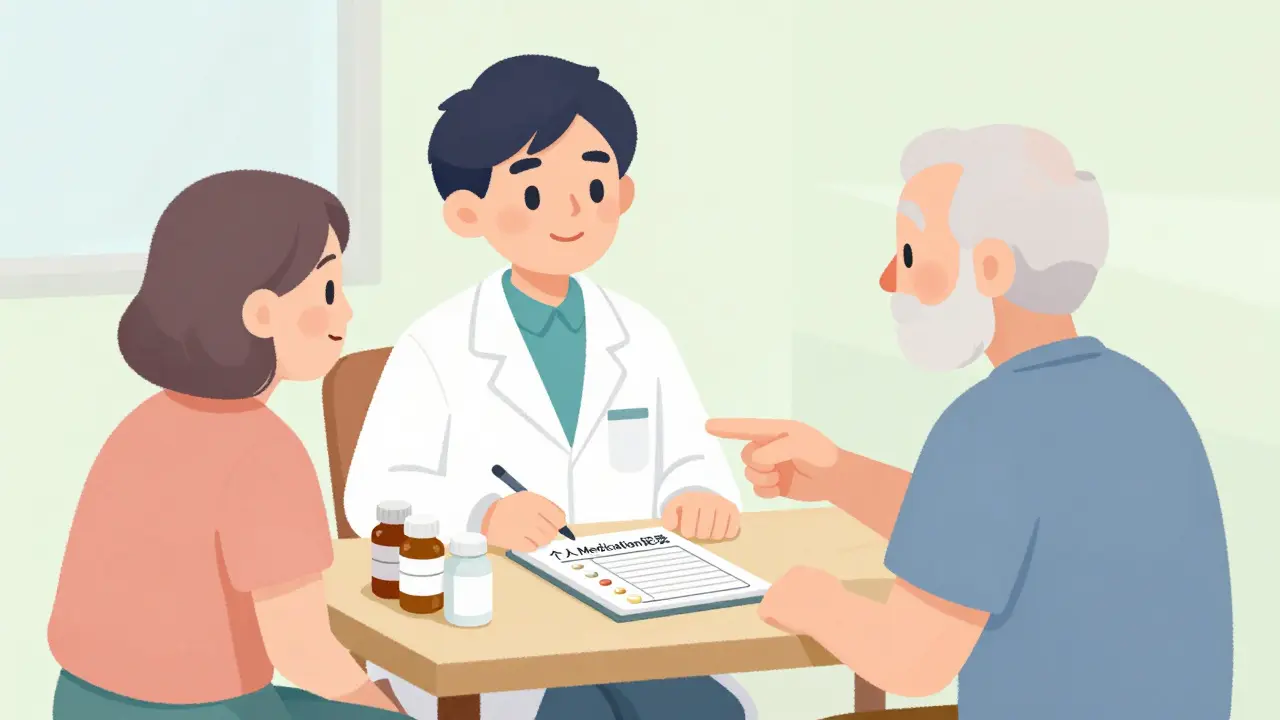
The core of MTM is the Comprehensive Medication Review (CMR). This is a 30- to 60-minute conversation - done in person or over video - with a licensed pharmacist. They’ll ask you about every medication you take: prescription drugs, vitamins, herbal supplements, even pain relievers like ibuprofen or antacids. They’ll check for dangerous interactions, duplicate prescriptions, and whether you’re actually taking your meds as prescribed.
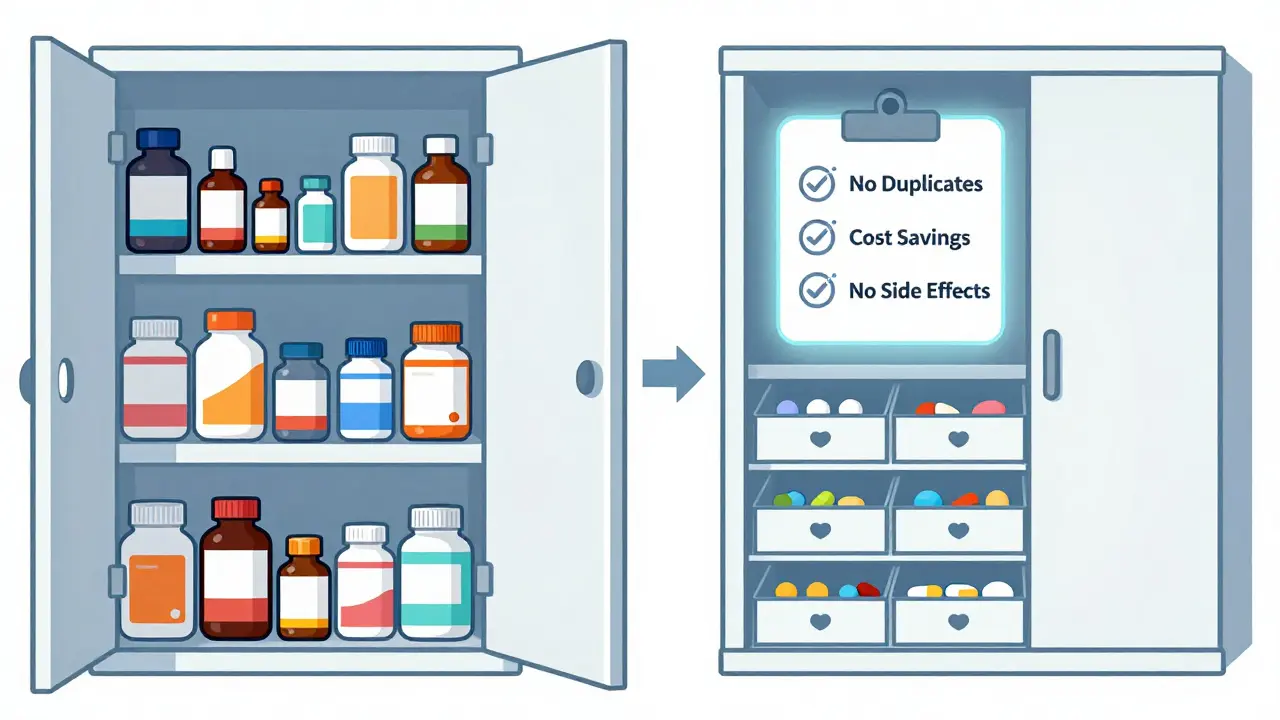
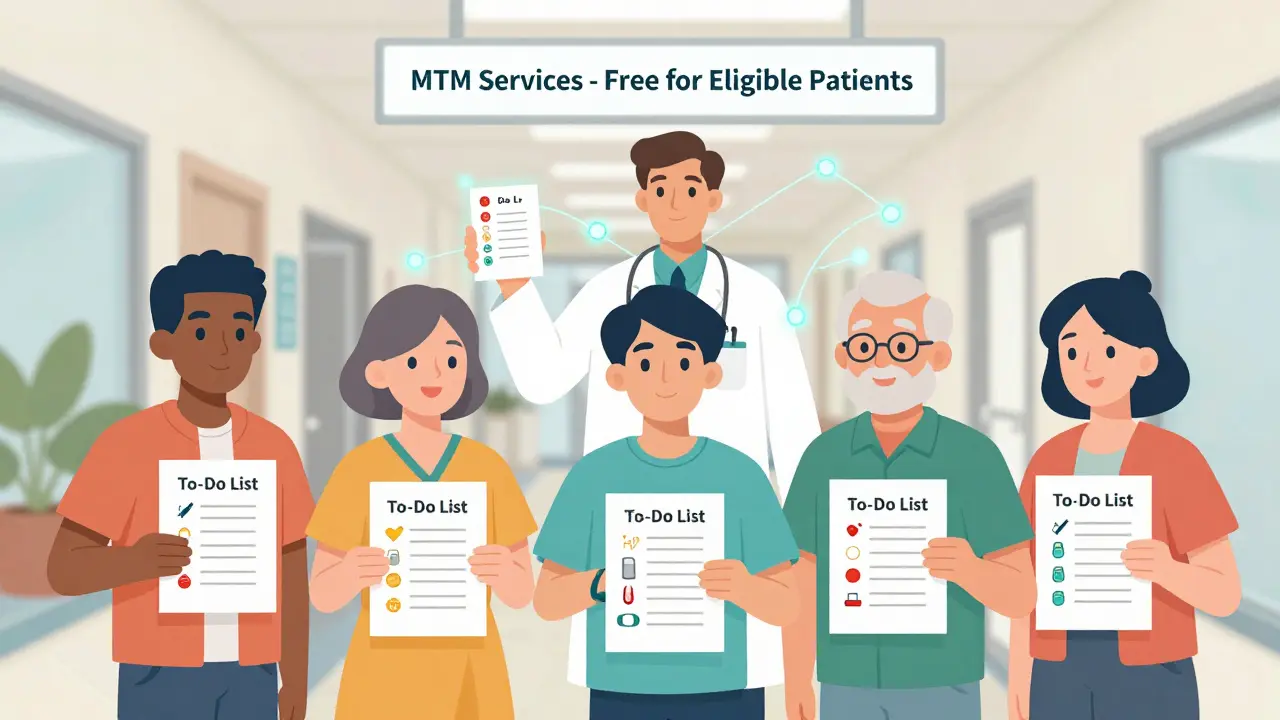
After the review, you get two things for free: a Personal Medication Record (PMR), which is a simple, updated list of everything you’re on, and a To-Do List with clear next steps. Maybe you need to switch to a cheaper version of your blood pressure pill. Maybe you’re taking two drugs that cancel each other out. Maybe you’ve been skipping your insulin because it’s hard to remember. The pharmacist doesn’t judge. They help.
Who Qualifies for MTM Services?
You don’t need to ask for MTM - if you’re eligible, your plan will invite you. To qualify under Medicare Part D in 2026, you must meet all three of these criteria:
- You have three or more chronic conditions - like heart disease, diabetes, COPD, depression, or kidney disease.
- You’re taking eight or more Part D-covered medications (this includes maintenance drugs, not just acute ones).
- Your annual drug costs are over $4,430 (this number is adjusted yearly by CMS).
Most people who meet these criteria are seniors managing multiple health issues. But younger people with complex conditions - like those with HIV, organ transplants, or rare autoimmune diseases - can qualify too. If you’re unsure, call your plan’s member services. They’ll check your records and let you know.
What Happens During a Medication Review?
The session isn’t a lecture. It’s a conversation. Here’s what you can expect:
- They’ll list every medication you take - even the ones you forgot about. Many patients don’t realize their multivitamin or sleep aid could interact with their heart medication.
- They’ll check for duplicates. For example, if you’re on two different pills for high blood pressure that do the same thing, you might be getting too much.
- They’ll look for side effects. Are you dizzy? Tired? Having stomach pain? These might not be “just aging.” They could be drug reactions.
- They’ll talk about cost. Is your insulin costing $500 a month? There might be a generic alternative or a patient assistance program you didn’t know about.
- They’ll help you build a routine. Pill organizers, phone reminders, or even linking doses to daily habits (like brushing your teeth) can make a huge difference.
You’ll also get a written summary. Keep it. Bring it to your doctor. Show it to a family member. It’s your personal medication blueprint.
Why This Matters - Real Impact
Studies show MTM isn’t just helpful - it saves lives and money. Patients who complete a CMR are:
- 30% more likely to take their medications as prescribed.
- 25% less likely to be hospitalized for drug-related problems.
- Save an average of $800 per year on medications due to cost-saving switches.
One real example: A 72-year-old woman in Sydney was taking seven different pills for her conditions. She didn’t know two of them were the same type of blood pressure drug. She was getting double the dose - and getting dizzy every morning. Her pharmacist caught it. Switched her to one pill. Her dizziness disappeared. Her monthly cost dropped from $190 to $85.
Another patient had been skipping his diabetes meds because he thought they made him feel “too low.” He didn’t understand hypoglycemia. After a 40-minute chat, he learned how to recognize the signs, carry glucose tablets, and adjust his diet. His A1C dropped from 9.2 to 7.1 in three months.
What About Follow-Ups?
MTM isn’t a one-time thing. After your annual CMR, you’ll get Targeted Medication Reviews (TMRs) every three months. These are shorter - usually 10 to 15 minutes - and focus on new issues. Did you start a new drug? Did you have a hospital visit? Did your cost go up? The pharmacist will reach out or you can call them. No appointment needed.
These follow-ups are critical. Medications change. Your body changes. Your life changes. What worked last year might not work now.
Who Provides MTM Services?
Pharmacists are the backbone of MTM. They’re not just the people who hand you your pills. They’re medication experts trained to spot problems doctors might miss. A doctor sees you for 10 minutes. A pharmacist sees your entire drug history - across all providers.
They work with your doctors. If they find a problem - like a drug interaction or a missing vaccine - they’ll contact your prescriber directly. You don’t have to chase anyone down.
And if you can’t attend the session yourself? A caregiver, family member, or authorized agent can join on your behalf. They’ll explain everything clearly.
It’s Free. Really.
There’s no copay. No extra fee. No hidden cost. MTM is included in your Medicare Part D plan. You don’t pay a cent. It’s funded by the plan itself - because it saves money in the long run by preventing ER visits and hospitalizations.
Some patients worry it’s a sales pitch. It’s not. Pharmacists aren’t paid to sell you more drugs. They’re paid to make sure you’re using the right ones safely.
What If You Don’t Qualify?
If you don’t meet the Medicare Part D criteria, you might still benefit from MTM. Some private insurers, Medicaid programs (like TennCare in Tennessee), and even community pharmacies now offer similar services - sometimes for a small fee, sometimes free. Ask your local pharmacist. Many offer free med reviews regardless of insurance.
Even if you’re not eligible for formal MTM, you can still ask your pharmacist for a quick med check. Bring in all your bottles. Ask: “Are these safe together? Is there a cheaper option? Am I taking them right?” Most pharmacists are happy to help.
How to Get Started
If you think you might qualify:
- Check your Medicare Part D plan’s website or call the number on your card. Look for “Medication Therapy Management” or “MTM.”
- Wait for a letter or call. You’ll be invited if you meet the criteria.
- Accept the invitation. Don’t delay. The sooner you do it, the sooner you’ll know if you’re on the right meds.
- Bring a list - and your meds. Write down what you take, when, and why. Bring the bottles. Even empty ones.
- Ask questions. No question is too small. “Why am I taking this?” “Can I stop this one?” “Is there a cheaper version?”
Don’t wait for a crisis. If you’re on multiple meds and feel confused, overwhelmed, or just unsure - reach out. MTM exists to take the guesswork out of your health.
Is Medication Therapy Management the same as a pharmacist giving me my pills?
No. Filling your prescription is a dispensing service. MTM is a clinical service. A pharmacist doing MTM doesn’t hand you pills. They sit down with you, review every medication you take, check for interactions, adjust your regimen if needed, and help you understand why you’re taking each one. It’s about your health outcomes - not just getting the drug to you.
Can I get MTM if I’m not on Medicare?
Most MTM services are tied to Medicare Part D, but some private insurers, Medicaid programs, and community pharmacies offer similar reviews. Ask your pharmacist if they provide a free medication review. Even without formal MTM, many pharmacists will take 15 minutes to check your meds for safety and cost - no appointment needed.
Do I need to see my doctor before getting MTM?
No. You don’t need a referral. Your Medicare Part D plan identifies eligible members and contacts you directly. But if the pharmacist finds an issue - like a dangerous interaction or a needed test - they’ll contact your doctor. You don’t have to make the call.
What if I forget to take my meds? Can MTM help?
Yes. One of the biggest reasons people miss doses is confusion or complexity. During MTM, pharmacists help create simple routines - like linking pill-taking to brushing your teeth or using a pill organizer. They’ll also check if your meds are too expensive, too frequent, or too confusing. Often, simplifying the regimen improves adherence more than any reminder app.
How often do I get a medication review?
You get one full Comprehensive Medication Review (CMR) every year. After that, you’ll get Targeted Medication Reviews (TMRs) every three months - especially if you’ve had a hospital stay, started a new drug, or your costs changed. These are shorter and focused on new issues. You can also request a review anytime if something feels off.
Next Steps
If you’re on multiple medications, don’t wait for an invitation. Start by gathering all your pills - prescriptions, vitamins, OTCs - into one place. Write down what each one is for. Call your pharmacy or plan and ask: “Am I eligible for Medication Therapy Management?”
If you’re helping a parent or loved one, offer to go with them to the review. Bring a notebook. Ask questions. Take notes. This service isn’t just about drugs - it’s about clarity, safety, and control over your health.
jerome Reverdy
March 16, 2026 AT 22:50MTM is one of those services that should be advertised like a Netflix subscription - everyone’s got it, but no one knows they’re getting it. I’ve been a pharmacist for 18 years, and I’ve seen patients go from confused to confident after a 45-minute chat. No magic pills, no upsells - just clarity. The fact that it’s free and built into Medicare? That’s the kind of policy we need more of.
And yeah, the CMR isn’t a formality. It’s a lifeline for people juggling five meds, three supplements, and a bottle of melatonin they think ‘helps with digestion.’ We’ve all seen it. The pharmacist doesn’t judge. They just say, ‘Let’s untangle this.’
Nicole Blain
March 16, 2026 AT 23:52OMG YES 😍 I just did my MTM last week and my pharmacist found TWO duplicate BP meds I didn’t even know I was taking. I thought I was being careful - turns out I was just confused. Now I have a little card with everything on it. Like a cheat sheet for my body. Best. Appointment. Ever. 🙌
Kathy Underhill
March 17, 2026 AT 08:43Srividhya Srinivasan
March 19, 2026 AT 07:28Justin Archuletta
March 19, 2026 AT 13:12Sanjana Rajan
March 21, 2026 AT 06:23Kyle Young
March 23, 2026 AT 05:45Aileen Nasywa Shabira
March 24, 2026 AT 10:56Oh wow. A 'free' service that requires you to have THREE chronic conditions, EIGHT meds, and spend over $4,400 a year? So basically, you have to be a walking pharmacy before you get help? Brilliant. Let me guess - the 'personalized review' is just a script read by a pharmacist who’s been trained to say 'you’re doing great' while they’re counting your pills to hit their KPIs.
And let’s not forget - the real reason this exists is because ERs are full of people who took too much lisinopril because they didn’t know they were on two kinds. So now we pay pharmacists to do what doctors should’ve done in the first place. Classic healthcare.
Kendrick Heyward
March 26, 2026 AT 08:50I did MTM last year. My pharmacist cried. No joke. She said, 'I’ve been doing this for 20 years and you’re the first person who actually listened.' I was on a beta-blocker and an SSRI that were making me feel like a zombie. She changed it. Saved me. I’m not crying because I’m emotional - I’m crying because this system is broken and this is the only thing keeping people alive.
So if you’re on meds and you’re not doing this - you’re not being lazy. You’re being ignored. Do it. For yourself. For your mom. For the person who forgot to take their insulin because they didn’t know what it did.
lawanna major
March 28, 2026 AT 07:02Ryan Voeltner
March 29, 2026 AT 17:42