
Medication Reviews: When Seniors Should Stop or Deprescribe Medicines
 Feb, 22 2026
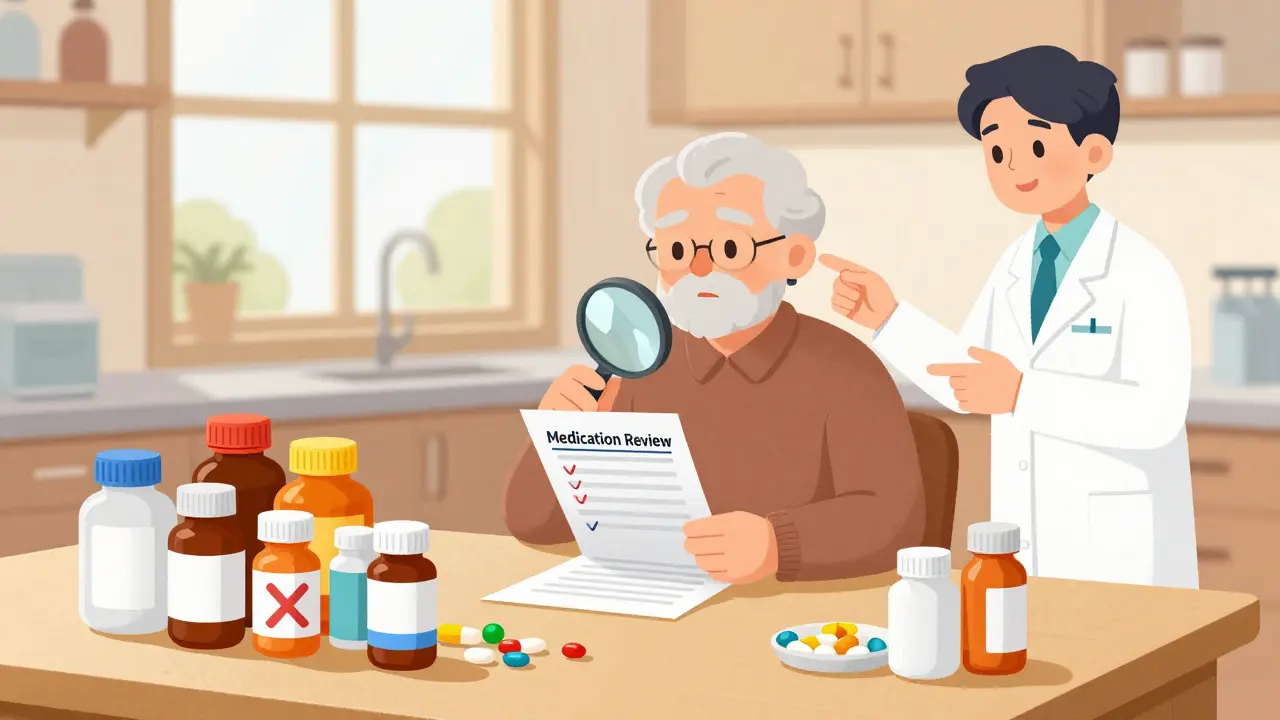
Many older adults take multiple medications every day - sometimes a dozen or more. It’s easy to assume that if a doctor prescribed it, it’s still needed. But that’s not always true. In fact, as people age, their bodies change. What helped last year might now be doing more harm than good. This is where deprescribing comes in - not as a way to cut corners, but as a smart, safe way to simplify care and protect health.
What Is Deprescribing, Really?
Deprescribing isn’t just stopping pills. It’s a careful, step-by-step process of reviewing which medications are still helping - and which are just adding risk. The term was first used in Australia in 2003 by a clinician named Michael Woodward, and since then, it’s become a core part of geriatric care. The idea is simple: if a drug’s risks outweigh its benefits, it’s time to reconsider.
Think of it like this: when you start a new medicine, you don’t take it forever without checking in. You monitor how it works. You watch for side effects. You ask: is this still worth it? Deprescribing applies that same logic to every pill in the medicine cabinet. It’s not about reducing numbers for the sake of it. It’s about matching treatment to what matters most to the person - whether that’s staying independent, avoiding falls, or just feeling better day to day.
Why This Matters So Much Right Now
In Australia, over one in three adults over 65 takes five or more medications. In the U.S., that number jumped from 14% in 1994 to over 42% by 2014. More pills don’t mean better health - they mean more chances for bad reactions. Every extra drug increases the risk of confusion, dizziness, kidney problems, falls, and hospital visits.
One study found that up to 30% of hospital admissions in seniors are caused by medication side effects. Many of those could’ve been avoided. For example, a person on a proton pump inhibitor (PPI) for heartburn for five years might not need it anymore - especially if they’ve changed their diet or lost weight. Yet, doctors often just keep renewing the prescription because no one ever asked if it was still needed.
The financial cost is huge too. In the U.S. alone, over $30 billion a year is spent treating adverse drug events in older adults. That’s money spent on ER visits, hospital stays, and long-term care - all preventable with better medication reviews.
When It’s Time to Talk About Stopping a Medicine
There are clear moments when deprescribing should be on the table. Here are the top four situations where it’s not just okay - it’s essential:
- New symptoms appear - If your loved one started feeling dizzy, confused, or unusually tired after a new drug was added, that’s a red flag. Medications can cause side effects weeks or even months after starting. A medication review can help untangle what’s causing the problem.
- Life goals have changed - If someone has advanced dementia, severe heart failure, or is no longer able to live independently, the focus shifts from long-term prevention to comfort and quality of life. A statin to lower cholesterol might have made sense at 70, but at 88 with limited life expectancy, the benefit is gone. The risk of muscle pain, liver stress, or memory issues remains.
- High-risk drugs are involved - Some medications are especially dangerous for older adults. The Beers Criteria, used by doctors in the U.S. and Australia, lists these. Examples include benzodiazepines (like diazepam) for sleep, anticholinergics (like diphenhydramine in Benadryl) for allergies, and certain painkillers like meperidine. These drugs increase fall risk, confusion, and even dementia over time.
- Preventive meds have no clear short-term benefit - Taking a daily aspirin to prevent a heart attack? Maybe. But if the person hasn’t had one and is now 85 with frailty, the bleeding risk may be higher than the benefit. Same with bone-density drugs like bisphosphonates - after five years, most people don’t need them anymore. These aren’t one-time fixes. They’re ongoing treatments that need regular re-evaluation.
How a Medication Review Actually Works
A good medication review doesn’t happen in five minutes at a doctor’s visit. It takes time, teamwork, and sometimes multiple visits. Here’s how it typically unfolds:
- List every medication - Include prescriptions, over-the-counter pills, vitamins, herbal supplements, and even topical creams. Many seniors forget to mention things like melatonin, calcium supplements, or ibuprofen they take for joint pain.
- Check each drug’s purpose - Why was this started? Is the original condition still present? Has the goal changed? For example, a blood pressure pill started after a stroke might still be needed - but if the person’s blood pressure is now too low, it could be causing fainting spells.
- Use evidence-based tools - Doctors and pharmacists use tools like the Beers Criteria or STOPP (Screening Tool of Older Persons’ Potentially Inappropriate Prescriptions) to spot risky combinations or outdated prescriptions.
- Consider the person’s values - Does the patient want to avoid hospital trips? Stay at home? Reduce pill burden? Their goals matter just as much as clinical data.
- Change one thing at a time - Never stop multiple drugs at once. If you stop two pills and the person feels worse, you won’t know which one caused the problem. Withdrawal should be slow, monitored, and documented.
- Watch and wait - After stopping a drug, check in after two weeks, then four, then eight. Some side effects fade. Some symptoms come back. Both are useful data.
Clinical pharmacists are often the best people to lead this process. In Australia and Canada, pharmacists working in community clinics or hospitals now routinely run these reviews. They don’t just check for drug interactions - they ask questions like: “Do you still feel like you need this?” or “Have you noticed any changes since you started it?”
What Happens When You Stop a Medicine?
People worry about symptoms returning. That’s valid. But here’s the truth: not every symptom comes back. And if it does, you can always restart the medicine. The key is to do it slowly and with support.
For example:
- Stopping a PPI - Some people get rebound heartburn for a few days. That’s normal. It usually passes in under two weeks. A short course of antacids can help during this time.
- Stopping a statin - Cholesterol may rise slightly, but for someone over 80 with no history of heart disease, that small increase doesn’t raise risk enough to justify side effects like muscle pain or liver stress.
- Stopping a sleep aid - Insomnia might return, but often it’s because the drug was masking an underlying issue like pain or anxiety. Addressing the root cause - not just the symptom - is better long-term.
There’s strong evidence that when done right, deprescribing reduces hospital visits by 12-25% and lowers the chance of serious side effects by 17-30%. And in multiple studies, quality of life improved - people felt more alert, had fewer falls, and said they liked having fewer pills to manage.
What Families Can Do
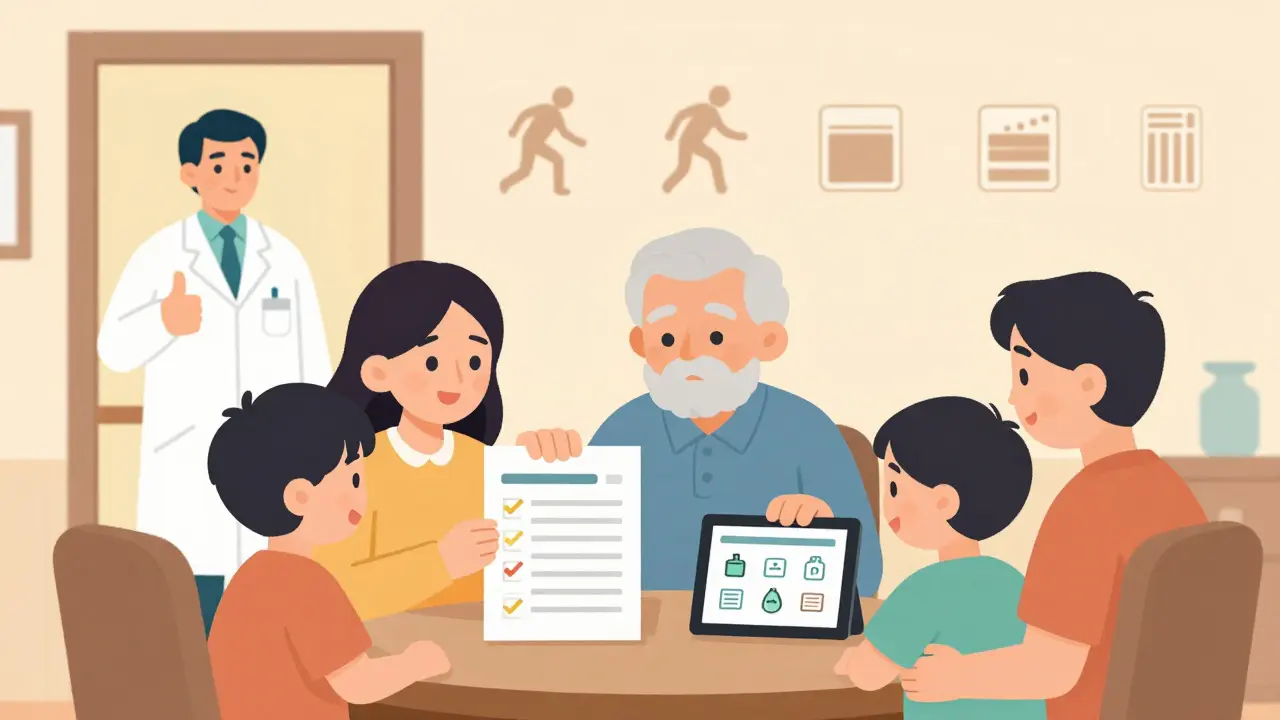
If you’re caring for an older parent or relative, you can be the biggest advocate for a medication review. You’re often the one who notices changes: confusion after a new prescription, a fall, or a refusal to take pills because they’re too many.
Here’s what you can do:
- Bring a full list of all medications to the next doctor’s appointment - written down, not just remembered.
- Ask: “Is this still needed? What would happen if we stopped it?”
- Request a referral to a clinical pharmacist who specializes in geriatric medication reviews.
- Use free resources like deprescribing.org - they offer printable guides, videos, and checklists for common drugs like PPIs, sleep aids, and antipsychotics.
- Track changes after a medication is stopped. Write down how your loved one feels, sleeps, moves - even small improvements matter.
Common Myths About Stopping Medicines
- Myth: “If the doctor prescribed it, it must be necessary.”
Truth: Prescriptions get renewed automatically. No one checks if they’re still needed. - Myth: “Stopping meds will make things worse.”
Truth: Many seniors feel better after reducing unnecessary drugs. Less confusion, more energy, fewer falls. - Myth: “I need to take this forever.”
Truth: Most preventive drugs - like statins, aspirin, or bone drugs - were never meant to be lifelong without review. - Myth: “My doctor won’t listen.”
Truth: Most doctors welcome the conversation. They’re trained to treat, not to question their own prescriptions. But with a clear list and thoughtful questions, you can lead the discussion.
What’s Next for Deprescribing?
Technology is helping. Electronic health records now include alerts when a senior is on five or more drugs. Some clinics use AI tools to flag high-risk combinations. In Sydney, pilot programs are testing AI that analyzes a patient’s history, lab results, and mobility to suggest which drugs might be safe to stop.
The World Health Organization now lists deprescribing as a global priority. Australia’s government has included it in its National Medication Safety Strategy. And more pharmacies are offering free medication reviews.
But the biggest change? It’s happening in living rooms, not hospitals. When families start asking, “Do we really need all these pills?” - that’s when real progress happens.
Can deprescribing be dangerous?
Deprescribing is only dangerous if done without planning. Stopping certain drugs suddenly - like blood pressure pills, antidepressants, or seizure medications - can cause serious reactions. That’s why it’s always done slowly, one drug at a time, with medical supervision. The real danger is continuing unnecessary drugs that increase fall risk, confusion, or kidney damage.
What if symptoms come back after stopping a medicine?
It’s common for some symptoms to return - but not always. If they do, it doesn’t mean the decision was wrong. It means the medicine was still helping. The goal isn’t to stop everything - it’s to stop what’s no longer needed. If a drug is truly necessary, it can be restarted. The key is to monitor closely and adjust based on what the person actually experiences.
Are over-the-counter drugs included in deprescribing?
Yes. Many seniors take OTC meds daily - like ibuprofen for arthritis, antihistamines for allergies, or melatonin for sleep. These can be just as risky as prescriptions. For example, long-term use of NSAIDs (like Advil) increases stomach bleeding risk in older adults. Antihistamines like Benadryl can cause confusion and dizziness. These should be reviewed just like any prescription.
Who should lead a medication review?
The best person to lead a medication review is a clinical pharmacist who specializes in geriatric care. They’re trained to spot drug interactions, unnecessary prescriptions, and risks specific to aging. Your GP can start the conversation, but pharmacists often have more time and tools to do a full review. In Australia, many community pharmacies now offer free medication reviews for seniors.
Is deprescribing only for people in nursing homes?
No. In fact, most seniors live at home and manage their own medications - which makes them more vulnerable to polypharmacy risks. Deprescribing is especially important for people living independently, because they don’t have staff checking their pills every day. The goal is to help them stay safe and strong at home, not just in hospitals.
Final Thought: It’s Not About Taking Less - It’s About Taking What Matters
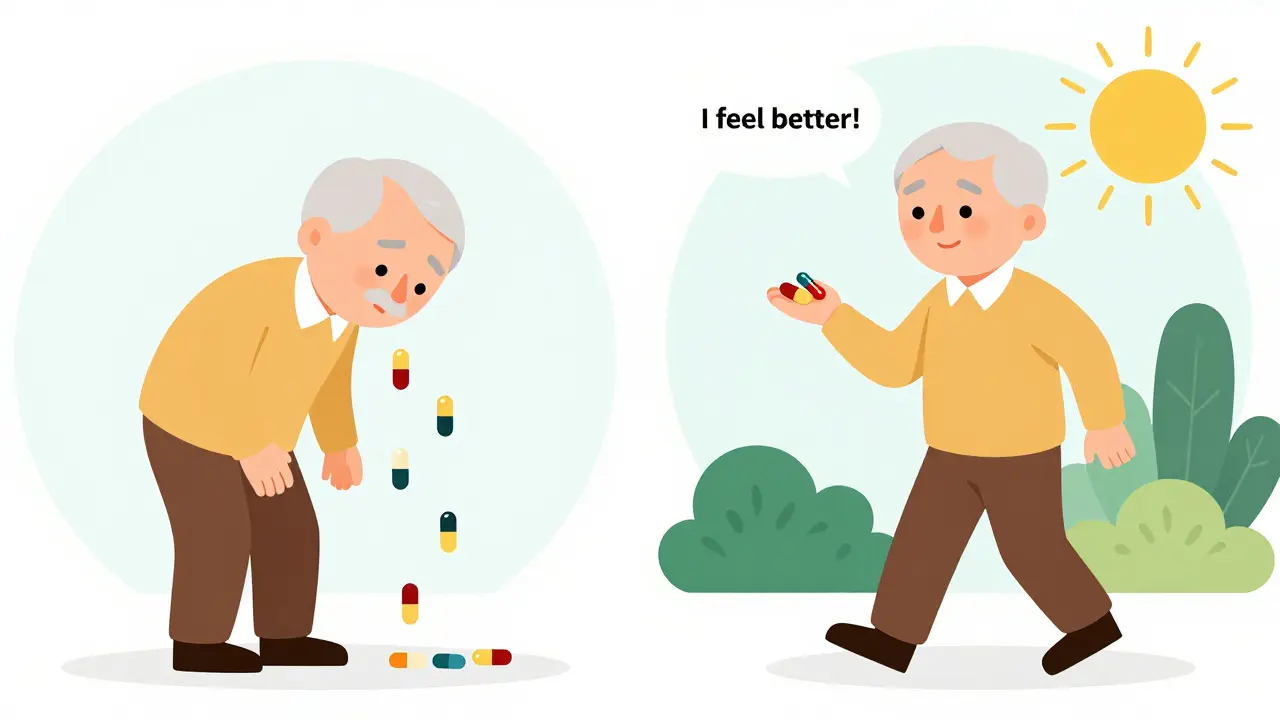
Deprescribing isn’t about cutting pills. It’s about making room for what truly improves life. A person with five unnecessary drugs might be one fall away from a hospital stay. But someone who’s stopped those drugs - and kept only what’s essential - might be walking the garden again, sleeping through the night, or remembering to take their morning tea.
Medication reviews aren’t a sign of giving up. They’re a sign of caring - smart, thoughtful, personalized care. And for seniors who’ve spent decades following doctors’ orders, it’s time to ask: which of these pills are still working for me? And which ones are just taking up space?”
Erin Pinheiro
February 22, 2026 AT 19:09i just read this and thought about my mom-she’s been on 12 pills since 2019 and now she forgets which ones are for what. one day she took FIVE ibuprofen because she ‘forgot’ she already did. i cried. this article is the first time anyone made me feel like it’s okay to ask the doctor to take stuff away. thank you.
Michael FItzpatrick
February 23, 2026 AT 01:17Deprescribing isn’t just smart-it’s revolutionary. We treat aging like a bug to be patched with more pills, when really it’s a symphony that’s been drowned out by noise. Imagine your body as a garden: you don’t keep planting new seeds when the soil’s already choked with weeds. You prune. You nurture. You let the healthy stuff breathe. That’s what deprescribing is: gardening for the soul. And honestly? It’s about time we stopped treating seniors like walking pharmacy catalogs.
Brandice Valentino
February 24, 2026 AT 11:20Oh please. This is just Big Pharma’s new PR stunt disguised as ‘patient care.’ You think doctors don’t know this? They’re just too busy getting paid for each script they write. And don’t get me started on pharmacists-those guys are just coupon-clippers with white coats. Also, ‘Beers Criteria’? Sounds like a beer brand. I’m not surprised they’re still using 2003 guidelines. My cousin’s neurologist told her to stop her statin, and now she’s on life support. Coincidence? I think not.
Larry Zerpa
February 26, 2026 AT 10:25Let’s be brutally honest: deprescribing is a euphemism for cost-cutting disguised as compassion. The U.S. spends $30 billion annually on adverse drug events? That’s not a failure of medicine-it’s a failure of regulation. The real issue isn’t that seniors are on too many pills-it’s that insurance companies won’t cover non-pharmaceutical alternatives. Physical therapy? Nutritionists? Sleep hygiene? Nope. But a $120/month PPI? Covered. And let’s not forget: who benefits from this? Pharmaceutical reps. Geriatricians? They’re paid per prescription. The system is rigged. And this article? It’s a distraction. A pretty, well-written distraction.
Gwen Vincent
February 27, 2026 AT 06:59I’m a nurse who works with elderly patients, and I’ve seen this firsthand. One woman, 87, was on 11 meds-including a sleeping pill, an antihistamine, and a daily aspirin she didn’t need. We tapered her down to three. She started baking again. Said she felt like ‘herself’ for the first time in years. It’s not about taking less. It’s about giving space-for rest, for joy, for quiet mornings. I wish more families knew this was possible.
Nandini Wagh
February 27, 2026 AT 16:43Oh wow, another American article pretending to care about seniors while ignoring the fact that most of them can’t even afford to see a doctor, let alone get a ‘medication review.’ In India, my mom takes three pills a day-two generics, one OTC. She doesn’t have a pharmacist. She doesn’t have a chart. She has a neighbor who brings her meds from the market. If you think deprescribing is a solution, you’re not seeing the real world. Also, ‘free reviews’? In the U.S.? Lol. I’m laughing so hard I cried. 🤣
Holley T
February 28, 2026 AT 22:19Let’s talk about the elephant in the room: most seniors don’t even know what they’re taking. I helped my aunt clean out her medicine cabinet last year. We found three different bottles of the same blood pressure pill, two expired antibiotics from 2017, a jar of ‘memory support’ gummies that were basically sugar, and a bottle of melatonin labeled ‘for dogs.’ She didn’t know any of it was expired. And yet, the system expects her to manage this? Meanwhile, her doctor changes her prescriptions every 3 months without ever asking if she’s still taking them. This isn’t deprescribing-it’s triage by neglect. And the fact that we’re only now talking about this? That’s the real tragedy.
Ashley Johnson
March 1, 2026 AT 02:13THIS IS A GOVERNMENT PLOT. I know someone who stopped her antidepressant after reading something like this. She got worse. Then she got a rash. Then she was hospitalized. I looked it up-there are 47 studies linking deprescribing to increased dementia risk. The CDC knows this. They just don’t want you to know. Also, who funds this website? deprescribing.org? Look up their domain registration. It’s tied to a nonprofit that got money from a pharmaceutical company that makes… wait for it… generic versions of the drugs they want you to STOP taking. They’re not saving lives-they’re selling alternatives. Don’t be fooled.
tia novialiswati
March 2, 2026 AT 07:30Thank you for writing this!! 💖 My grandma just started a med review last week and she’s already sleeping better and not feeling so foggy! I printed the checklist from deprescribing.org and we went through it together. She even laughed and said, ‘I didn’t know I could say no!’ 😊 Keep spreading this message-it changes lives!
Lillian Knezek
March 3, 2026 AT 14:38They’re using this to make us dependent on AI and electronic records. Soon, your pills will be tracked by a chip in your wrist. They’ll decide what you ‘need.’ I’ve seen it in the news-there’s a pilot program in Sydney where AI suggests which meds to cut. What if the algorithm makes a mistake? What if they cut your heart med because your ‘vital signs’ looked off? They’re not trying to help-they’re trying to control. And don’t trust that ‘free review’-it’s a trap. They’ll get your data. Then your insurance. Then your life. 🚨