
Liver Disease and Drug Metabolism: How Reduced Clearance Affects Medication Safety
 Nov, 30 2025
Liver Disease Medication Dose Adjuster
How This Tool Works
Based on your liver disease severity and medication type, this tool estimates appropriate dose adjustments to reduce overdose risk. Always consult your healthcare provider before making dose changes.
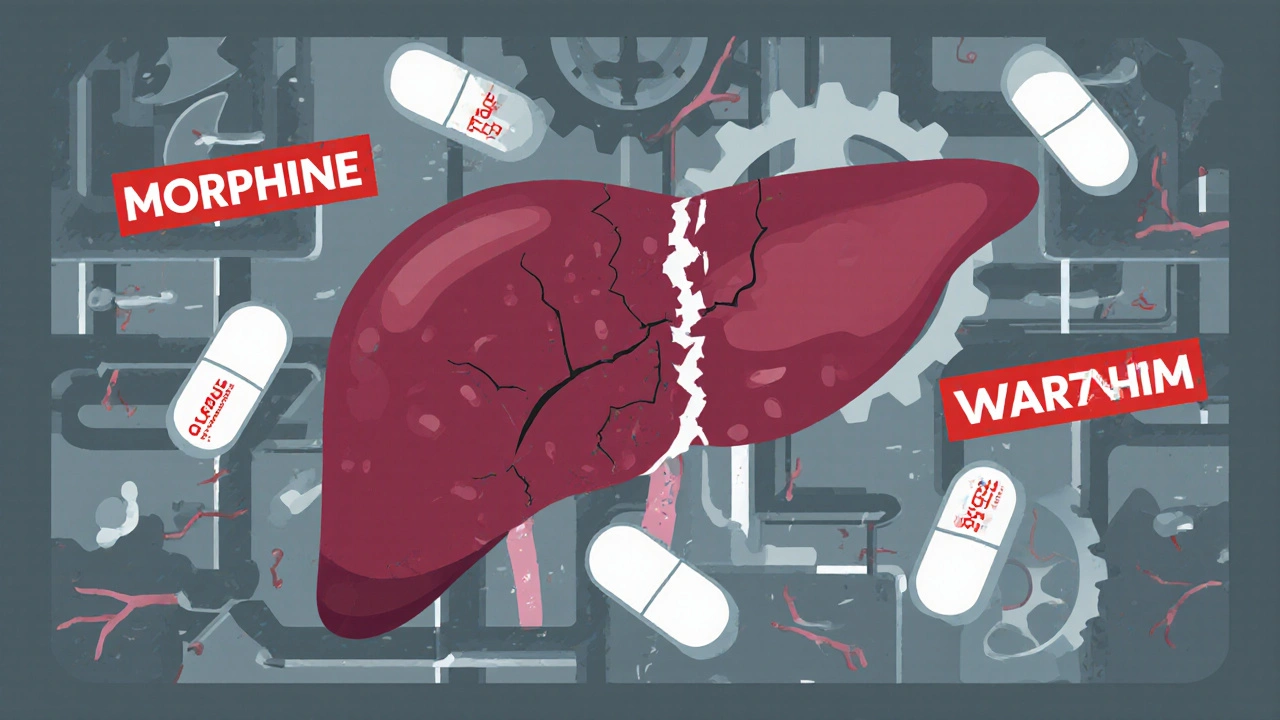
When your liver isn’t working right, even normal doses of common medications can become dangerous. This isn’t theoretical-it’s happening right now to millions of people with chronic liver disease. In the U.S. alone, over 22 million people live with conditions like cirrhosis, fatty liver, or hepatitis, and many are taking medications that their bodies can’t clear properly. The result? Drugs build up in the bloodstream, leading to overdoses, confusion, falls, or even coma-especially with opioids and sedatives. The problem isn’t that these drugs are unsafe. It’s that liver disease changes how your body handles them.
Why the Liver Matters for Drug Clearance
Your liver doesn’t just process alcohol or toxins. It’s the main factory for breaking down most medications. About 70% of commonly prescribed drugs-painkillers, antidepressants, blood thinners, antibiotics-are metabolized by liver enzymes, especially the CYP450 family. When liver disease damages these enzymes, drugs don’t break down the way they should. Instead, they stick around longer, increasing the risk of side effects. The liver also helps move drugs out of the body through bile. In cirrhosis, scar tissue blocks bile ducts, and shunts form that let blood bypass the liver entirely. That means oral drugs like fentanyl or diazepam get absorbed directly into your bloodstream without being filtered first. This is called reduced first-pass metabolism. It’s why someone with cirrhosis might feel dizzy or fall asleep after taking half the normal dose of a sedative.How Liver Disease Slows Down Drug Breakdown
Not all liver damage is the same. The effects on drug metabolism depend on how bad the damage is-and what kind of drug you’re taking. Drugs fall into two main categories based on how they’re cleared:- High-extraction drugs (like morphine, fentanyl, propranolol): Their clearance depends mostly on blood flow through the liver. In cirrhosis, liver blood flow drops by 30-50%. So these drugs stay in your system longer.
- Low-extraction drugs (like diazepam, lorazepam, methadone): These rely on enzyme activity. In advanced liver disease, key enzymes like CYP3A4 and CYP2E1 drop by 30-60%. That means even small doses can build up to toxic levels.
And it’s not just enzymes. Transport proteins that help drugs enter liver cells-like OATP1B1-also drop by 50-70%. That’s why some drugs simply can’t get where they need to go to be processed.
Studies show that in moderate liver disease (Child-Pugh B), drug clearance drops by 25-45%. Half-lives-how long a drug stays active in your body-can stretch 1.5 to 2.5 times longer than normal. For someone with severe cirrhosis (Child-Pugh C), that number can be even higher.
Real-World Examples: Which Drugs Are Riskiest?
Some medications are far more dangerous in liver disease than others.- Warfarin: Used for blood thinning. Clearance drops by 30-50% in cirrhosis. Standard doses can cause dangerous bleeding. Most patients need 25-40% less.
- Benzodiazepines: Diazepam has active metabolites that linger for days. In cirrhosis, dose reductions of 50-70% are needed. Lorazepam, which doesn’t form active metabolites, only needs a 25-40% reduction.
- Opioids: Morphine and oxycodone can trigger hepatic encephalopathy-a brain disorder that causes confusion, drowsiness, and coma. Even small doses can be too much. Fentanyl is especially risky because of reduced first-pass metabolism.
- Ceftriaxone: A common antibiotic. In cirrhosis, peak levels can spike 40-60% higher than normal, increasing side effects like diarrhea and allergic reactions.
- Direct-acting antivirals (for hepatitis C): In advanced liver disease, wrong doses led to treatment failure in over 22% of cases in one major study.
On the flip side, some drugs are safer. Sugammadex, used to reverse muscle relaxants during surgery, is cleared 96% by the kidneys. No dose change is needed in liver disease-even though recovery time is 40% slower, it’s still predictable and manageable.

How Doctors Measure Liver Function to Adjust Doses
You can’t rely on a single blood test. ALT or AST levels? They don’t tell you how well your liver is metabolizing drugs. Even bilirubin and albumin levels alone aren’t enough. The gold standard is the Child-Pugh score, which combines five factors: bilirubin, albumin, INR, ascites, and encephalopathy. It classifies liver disease into three grades:- Class A (mild): Usually no dose changes needed
- Class B (moderate): Reduce doses by 25-50% for high-extraction drugs; 50-70% for low-extraction drugs
- Class C (severe): Reduce doses by 50-75% or avoid the drug entirely
Another tool gaining traction is the MELD score, based on bilirubin, INR, and creatinine. For every 5-point increase in MELD above 10, drug clearance drops by about 15%. This helps predict how a patient will handle medications, especially before surgery or transplant.
But here’s the catch: drug levels don’t always match test results. Two people with the same Child-Pugh score can metabolize the same drug very differently. That’s why therapeutic drug monitoring-measuring actual drug levels in the blood-is critical for medications with narrow safety margins, like warfarin or certain antiseizure drugs.
What’s Changing in Drug Development and Guidelines
The medical world is catching up. In 2023, the FDA issued new guidance requiring all new drugs to be tested in patients with liver disease. That’s up from just 65% of applications in 2018. Now, 92% of new drugs include specific dosing recommendations for hepatic impairment. Regulatory agencies like the EMA and FDA are pushing for model-based dosing using physiologically based pharmacokinetic (PBPK) modeling. These computer models simulate how a drug moves through a diseased liver-factoring in blood flow, enzyme loss, and shunting. In trials, these models predict drug exposure with 85-90% accuracy. Soon, drug labels will likely say things like: “For patients with MELD score >15, reduce dose by 40%.” This replaces vague advice like “use caution” with clear, science-backed numbers. Pharmacists are also stepping up. Between 2020 and 2023, pharmacist-led dose adjustment services for liver disease patients rose by 40%. Hospitals are hiring more clinical pharmacists to review medication lists for patients with cirrhosis-because a single wrong dose can send someone to the ICU.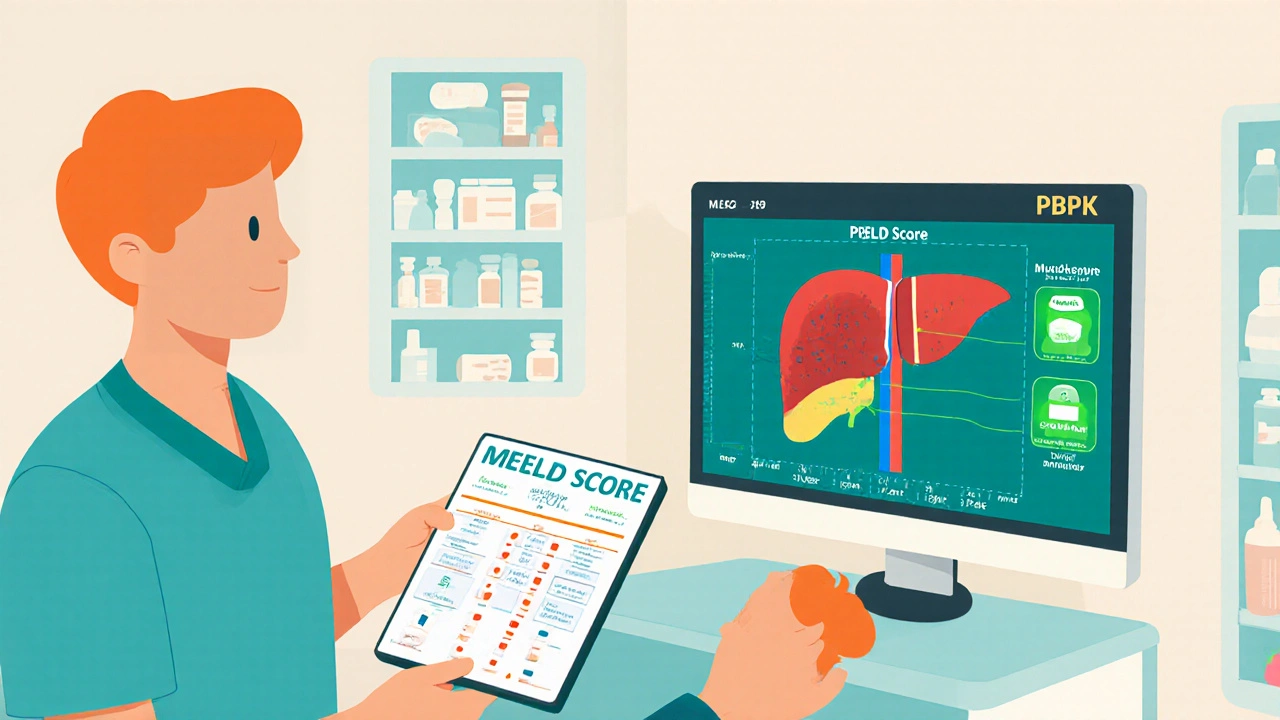
What You Can Do: A Practical Guide
If you or someone you care for has liver disease:- Know your Child-Pugh or MELD score. Ask your doctor. Don’t assume your blood tests tell the full story.
- Review every medication. Even over-the-counter painkillers like acetaminophen can be risky. Many people don’t realize that 2,000 mg of Tylenol a day is too much for advanced liver disease.
- Ask about alternatives. Is there a drug that doesn’t rely on the liver? Lorazepam instead of diazepam? Ceftriaxone instead of vancomycin? These swaps can make a huge difference.
- Watch for signs of toxicity. Confusion, drowsiness, slurred speech, unsteady walking-these aren’t just “getting older.” They could be drug buildup.
- Use a pill organizer and keep a medication list. Share it with every provider, including your pharmacist. Liver disease patients often see multiple specialists. One missed interaction can be deadly.
And remember: just because you feel fine doesn’t mean your liver is handling drugs normally. Many people with cirrhosis have no symptoms until something goes wrong-like an overdose from a routine prescription.
Charlotte Collins
December 1, 2025 AT 04:21The liver doesn't care how 'normal' your dose is. It just sees toxins and tries to survive. When it's failing, your meds become slow-motion poison. This isn't medical jargon-it's survival math. And too many doctors still treat cirrhosis like it's just a bad cholesterol reading.
Margaret Stearns
December 1, 2025 AT 16:17i just had a friend go to the er after taking 1000mg tylenol for a headache. she has fatty liver. they said she was lucky. no one tells you this stuff until its too late.
Scotia Corley
December 2, 2025 AT 04:27While the article presents a clinically accurate overview of hepatic drug metabolism, it fails to address the systemic neglect of pharmacokinetic education in primary care. The disconnect between textbook knowledge and clinical practice remains staggering. Most general practitioners rely on outdated dosing tables, if any at all. The FDA's 2023 guidance is a step forward, but without mandatory CME requirements, it will remain a footnote in the medical literature.
amit kuamr
December 2, 2025 AT 11:20in india we dont even have child pugh scores in small hospitals. doctors just guess. i saw a man die from diazepam overdose because they gave him 10mg. he had hepatitis. no testing. no warning. just pills.
Rachel Stanton
December 3, 2025 AT 10:24This is one of those topics that should be taught in high school biology. Imagine if we all knew that our liver was the gatekeeper for 70% of our meds. People with liver disease aren't 'non-compliant'-they're victims of a system that assumes everyone's physiology is the same. Kudos to the pharmacists stepping up. We need way more of them. And we need to stop treating 'use caution' as a dosing strategy. Real data. Real numbers. Real safety.
Bonnie Youn
December 4, 2025 AT 19:52STOP GIVING OPIOIDS TO LIVER PATIENTS. PERIOD. I work in a clinic and I've seen 3 people in 8 months go into hepatic coma from a single oxycodone. Their doctors didn't even blink. This is preventable. Why are we still letting this happen? We have safer options. Use them. Don't wait for the coma to wake people up.
elizabeth muzichuk
December 5, 2025 AT 18:38They're lying to us. The pharmaceutical companies know this. They know drugs like fentanyl bypass the liver in cirrhosis. But they don't put big red warnings on the bottles because they'd lose too much money. This isn't negligence. It's profit-driven murder. And the FDA? They're in bed with them. Look at the MELD score changes-only pushed through after lawsuits. Wake up.
Debbie Naquin
December 6, 2025 AT 07:34If the liver is the filter, then what does it mean when the filter is broken? Are we not just administering poison to a body that can no longer distinguish medicine from toxin? The deeper question isn't dosage-it's whether we have the right to alter a system we barely understand. We patch biology with chemistry and call it progress. But what if progress is just delayed death with a prescription pad?
Karandeep Singh
December 7, 2025 AT 03:08lol ceftriaxone risky in cirrhosis? i seen 100s of cases. no one cares. give the antibiotic. no dose adjust. they die anyway
Mary Ngo
December 8, 2025 AT 12:41Have you ever wondered why the liver is the only organ that gets ignored in drug labeling? It's not an accident. The entire medical-industrial complex depends on the myth that 'one size fits all.' The truth? Your liver's health is a secret they don't want you to know-because if you knew, you'd demand personalized medicine. And that would break their profit model. This article is a whisper. The real story is a scream.
James Allen
December 9, 2025 AT 18:40My uncle had cirrhosis from drinking. They gave him tramadol for back pain. He was fine for weeks. Then one day he just… didn’t wake up. The coroner said ‘drug toxicity.’ They didn’t even check his liver function before prescribing. This is America. We medicate first, ask questions after. And the worst part? The doctors all had PhDs. But they didn’t read the damn manual.