
How to Understand Authorized Generics and How They Differ from Traditional Generics
 Dec, 22 2025
When you pick up a prescription, you might see a bottle labeled with a name you don’t recognize-something like metformin instead of Glucophage. You assume it’s a generic. But what if it’s not just any generic? What if it’s the exact same pill your doctor prescribed, just without the brand logo? That’s an authorized generic. And it’s not the same as the generics you’ve seen before.
What Exactly Is an Authorized Generic?
An authorized generic is the brand-name drug you already know, but sold under a different label. It’s made by the same company that makes the original brand, or by someone they’ve officially licensed. The active ingredient, the shape, the color, the way it’s made-all of it is identical. The only difference? No brand name on the bottle. The U.S. Food and Drug Administration (FDA) defines it clearly: an authorized generic is a drug approved under the original brand’s New Drug Application (NDA). That means it doesn’t go through the usual generic approval process. It doesn’t need to prove it works the same way-it already does, because it’s the same product. You can think of it like buying a Coca-Cola in a store-branded bottle. Same drink. Different packaging. You’ll find authorized generics for common drugs like Lipitor (atorvastatin), Nexium (esomeprazole), and Adderall (amphetamine/dextroamphetamine). As of September 2023, there were over 1,800 authorized generic products available in the U.S., covering nearly 500 different active ingredients.How Authorized Generics Are Different from Traditional Generics
Traditional generics are cheaper versions of brand-name drugs, but they’re not exact copies. They must contain the same active ingredient, strength, and dosage form-but they can have different inactive ingredients. That’s the catch. Inactive ingredients include fillers, dyes, preservatives, and binders. For most people, that doesn’t matter. But for some, it does. People with allergies, sensitivities, or digestive issues sometimes react to these extra ingredients. A patient might switch from a brand to a generic and suddenly feel nauseous, get a rash, or notice their medication doesn’t seem to work as well. That’s not because the active ingredient changed. It’s because the filler did. Authorized generics avoid this entirely. Since they’re made from the same formula as the brand, they use the exact same inactive ingredients. No surprises. No changes. If your body responds well to the brand, it will respond the same way to the authorized generic. Here’s another big difference: approval. Traditional generics must prove they’re bioequivalent to the brand. That means they have to show they’re absorbed into the bloodstream at the same rate and to the same level. That process takes time, money, and testing. Authorized generics skip all of that. They’re approved under the brand’s original NDA, so they don’t need to submit new data. The FDA doesn’t even list them in the Orange Book-the official directory of approved generics-because they’re not technically generics under the law. They’re the brand, repackaged.Why Do Authorized Generics Exist?
At first glance, it seems odd. Why would a brand-name company sell its own drug under a cheaper label? The answer is competition. When a brand’s patent expires, any company can make a traditional generic. But the first company to file for that generic gets 180 days of exclusive rights to sell it. That’s a huge financial advantage. To prevent that, some brand companies launch their own authorized generic at the same time. It’s not illegal-it’s allowed under the law-but it’s controversial. By doing this, the brand company can undercut the first generic manufacturer. If the authorized generic is priced lower than the traditional generic, patients and insurers may choose it instead. That can wipe out the 180-day exclusivity window before it even starts. Studies show that in nearly 40% of cases, an authorized generic enters the market on the same day as the first traditional generic. Critics say this tactic slows down real competition. It discourages generic manufacturers from challenging patents in the first place, because they know the brand might just flood the market with its own version. Supporters argue it gives patients immediate access to lower prices without waiting. Either way, the result is the same: more affordable options. Authorized generics often cost 15% to 30% less than the brand name. Sometimes, they’re priced the same as traditional generics. But because they’re identical to the brand, they’re preferred by patients who’ve had bad experiences with other generics.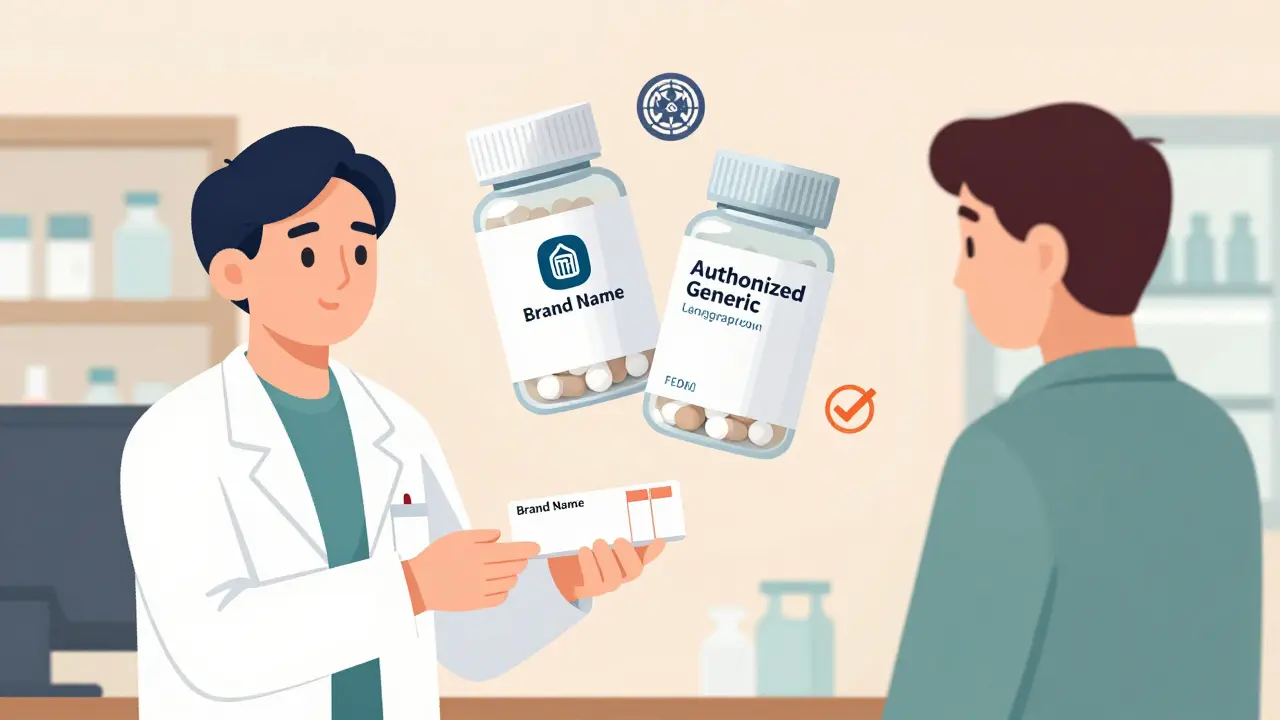
How to Spot an Authorized Generic
You won’t always know you’re getting one. The bottle might say “Authorized Generic” on it, but often, it doesn’t. The label might just list the generic name and the manufacturer. Here’s how to tell:- Check the manufacturer. If it’s the same company that makes the brand (like Pfizer, AbbVie, or Johnson & Johnson), it’s likely an authorized generic.
- Look for companies like Greenstone LLC (a Pfizer subsidiary), Prasco Laboratories, or Patriot Pharmaceuticals. These are the top three distributors of authorized generics in the U.S.
- Ask your pharmacist. They can check the FDA’s official List of Authorized Generic Drugs, updated monthly.
- Don’t rely on the Orange Book. Authorized generics aren’t listed there. If your drug isn’t in the Orange Book but is still cheaper than the brand, it might be an authorized generic.
What Patients Need to Know
A 2022 survey found that 67% of independent pharmacists said patients specifically ask for authorized generics when they’re available. Why? Because they trust them. Patients who’ve had side effects from traditional generics-like bloating, headaches, or changes in how the drug works-often report that switching to an authorized generic solved the problem. One woman with epilepsy told her doctor she felt “off” after switching to a generic levetiracetam. Her seizures became more frequent. When she switched to the authorized generic, her symptoms disappeared. The active ingredient was the same. But the fillers weren’t. The problem? Most people don’t know the difference. A GoodRx study found that 78% of patients couldn’t tell an authorized generic apart from a traditional one just by looking at the pill or bottle. And here’s another issue: insurance. Some pharmacy benefit managers (PBMs) treat authorized generics as brand-name drugs. That means you pay a higher copay-even though the drug is chemically identical to the brand. You might be paying $50 for an authorized generic while a traditional generic costs $10. That’s not fair. It’s not logical. But it happens. If your insurance won’t cover the authorized generic at generic pricing, ask your pharmacist to submit a prior authorization or appeal. You can also ask your doctor to write “Dispense as Written” or “Do Not Substitute” on the prescription. That forces the pharmacy to give you exactly what’s prescribed.
What Pharmacists and Providers Should Do
Healthcare providers need to understand this distinction too. Electronic health records often don’t differentiate between authorized generics and traditional generics. That can cause problems during medication reconciliation. A patient might say they’re taking “metformin,” but if the system doesn’t know whether it’s an authorized generic or a traditional one, it might miss important details. Pharmacists should be trained to explain the difference to patients. If a patient has had issues with generics before, offering the authorized version can make a real difference. It’s not just about cost-it’s about safety and consistency. Also, remember: authorized generics don’t appear in the Orange Book. If you’re checking therapeutic equivalence and don’t see the drug listed, that doesn’t mean it’s not approved. It might be an authorized generic.The Future of Authorized Generics
The market for authorized generics is growing. In 2022, they made up 12.7% of all generic drug dispenses in the U.S. By 2027, that number is expected to jump to 15.3%. Why? Because more drugs are becoming complex-biologics, injectables, inhalers-where even tiny changes in formulation can affect how they work. Patients and doctors are demanding consistency. Congress is watching. The 2022 Consolidated Appropriations Act ordered the FDA to study how authorized generics affect competition. The report is due by December 2024. If findings show they’re harming competition, changes could come. But for now, they’re here to stay. And for patients who need reliability, they’re one of the best options on the market.What You Can Do Today
If you’re taking a brand-name drug and paying a high copay:- Ask your pharmacist: “Is there an authorized generic for this?”
- If yes, ask if your insurance will cover it at generic pricing.
- If your insurance says no, ask for a prior authorization or a formulary exception.
- If you’ve had side effects with other generics, request the authorized version.
- Keep the original bottle. If you notice a change in how the medication works, compare the manufacturer and ingredients.
Are authorized generics the same as brand-name drugs?
Yes. Authorized generics are identical to brand-name drugs in every way-active ingredients, inactive ingredients, dosage, strength, and how they’re made. The only difference is the label and packaging. They’re made by the same company or under license from the brand manufacturer.
Why are authorized generics cheaper than brand-name drugs?
They’re cheaper because they don’t carry the marketing, advertising, and research costs of the brand. Since they’re made by the brand company or its partner, they don’t need to spend money on clinical trials or FDA approval. The savings are passed on to patients, often at 15% to 30% less than the brand price.
Can I trust an authorized generic as much as the brand?
Absolutely. Because they’re the exact same product, authorized generics have the same safety and effectiveness profile as the brand. Many patients who had bad reactions to traditional generics switch to authorized generics and see immediate improvement.
Why aren’t authorized generics listed in the FDA’s Orange Book?
The Orange Book only lists drugs approved through the Abbreviated New Drug Application (ANDA) process. Authorized generics are approved under the original brand’s New Drug Application (NDA), so they’re not included. That doesn’t mean they’re not approved-they are. It just means they’re categorized differently.
Why does my insurance cover a traditional generic but not an authorized generic at the same price?
Some pharmacy benefit managers (PBMs) classify authorized generics as brand-name drugs, even though they’re chemically identical. This is a billing quirk, not a medical one. You can ask your pharmacist to submit a prior authorization or appeal. You can also ask your doctor to write “Dispense as Written” on the prescription to avoid substitution.
How do I find out if an authorized generic is available for my medication?
Ask your pharmacist. They can check the FDA’s official List of Authorized Generic Drugs, which is updated monthly. You can also search online using the drug’s brand name and the term “authorized generic.” Common manufacturers include Greenstone, Prasco, and Patriot Pharmaceuticals.
Diana Alime
December 23, 2025 AT 16:22Jeffrey Frye
December 24, 2025 AT 23:20Dan Gaytan
December 26, 2025 AT 18:07siddharth tiwari
December 27, 2025 AT 13:13Usha Sundar
December 29, 2025 AT 04:54Chris Buchanan
December 30, 2025 AT 14:00Bret Freeman
December 31, 2025 AT 04:52Jillian Angus
January 1, 2026 AT 02:33Gray Dedoiko
January 1, 2026 AT 04:12Ajay Sangani
January 2, 2026 AT 09:21Pankaj Chaudhary IPS
January 3, 2026 AT 10:36Bhargav Patel
January 4, 2026 AT 14:26bharath vinay
January 6, 2026 AT 08:57