
How to Split Pills Safely to Reduce Medication Costs
 Dec, 9 2025
Medication costs are rising, and for many people, buying higher-dose pills and splitting them in half is one of the only ways to save money. A 40mg atorvastatin tablet might cost $4.27, while two 20mg tablets cost $6.96. Splitting the higher dose saves nearly 40%. For people on fixed incomes, especially seniors, this isn’t a luxury-it’s a necessity. But here’s the problem: not all pills can be split, and splitting them wrong can be dangerous. The difference between saving money and ending up in the hospital is often just the tool you use and whether you checked with your pharmacist first.
Why Pill Splitting Saves Money
Pharmaceutical companies price pills in a way that doesn’t always make sense. A 40mg tablet often costs almost the same as a 20mg tablet-even though it contains twice the medicine. That means you’re paying the same price for double the dose. When you split it, you get two doses for the price of one. This works best with medications like lisinopril, simvastatin, metoprolol, and sertraline, where the cost per milligram drops significantly at higher strengths. According to 2023 GoodRx data, splitting a 40mg simvastatin tablet saves $287 a month compared to buying two 20mg tablets. That’s over $3,400 a year. But it’s not universal. For some drugs, like sertraline, the 50mg and 100mg tablets cost almost the same per milligram. Splitting gives you no savings. And for others, like levothyroxine or warfarin, even a 5% dose error can cause serious side effects. That’s why you can’t just pick any pill and cut it in half.Which Pills Should Never Be Split
Some pills are designed to release medicine slowly over hours. If you split them, you risk dumping the full dose all at once. These include:- Extended-release (ER, XR, SR) tablets-like metformin ER, Adderall XR, or oxycontin
- Enteric-coated pills-like omeprazole or aspirin EC-designed to dissolve in the intestine, not the stomach
- Capsules or gel caps-these can’t be split safely
- Medications with a narrow therapeutic index-warfarin, digoxin, levothyroxine, tacrolimus, and lithium
How to Tell If a Pill Can Be Split
Just because a pill has a score line doesn’t mean it’s safe to split. The score is there for manufacturing reasons, not safety. The only way to know for sure is to check the package insert. Look for phrases like “may be split” or “tablet may be divided.” If it doesn’t say that, assume it’s not approved. You can also ask your pharmacist. They have access to the FDA’s official labeling and can tell you if a specific brand and dose is approved for splitting. The American Society of Health-System Pharmacists says this step is non-negotiable. Don’t rely on online forums or advice from friends. Even if someone else splits the same pill, their experience doesn’t mean it’s safe for you.
The Right Way to Split Pills
If your doctor and pharmacist say it’s okay, here’s how to do it right:- Use a dedicated pill splitter-never a knife, scissors, or your teeth. A good pill splitter costs $3-$10 and has a V-shaped holder and a sharp, retractable blade. Brands like Performance Health and Medline are widely available at pharmacies.
- Split one pill at a time, right before you take it. Don’t split a week’s supply. Once cut, pills are exposed to air, moisture, and light. This can degrade the medication, especially if it’s sensitive to humidity.
- Check the halves. If one side is crumbled, uneven, or dusty, throw it out. The lost dose could be more than 10%.
- Wash your hands and the splitter after each use. Residue from one medication can contaminate another.
- Store the unused half in a dry, cool place, like a sealed container in your medicine cabinet. Don’t leave it on the counter or in the bathroom.
What to Do If You’ve Been Splitting Pills Wrong
If you’ve been splitting pills without checking with your doctor, don’t panic. But do act now. Make a list of every medication you split. Then call your pharmacy. Ask: “Is this pill approved for splitting? Is it safe to split this brand?” If you’ve been splitting extended-release or enteric-coated pills, stop immediately. Contact your doctor. You may need a different medication or a different dosing schedule. If you’ve been splitting levothyroxine, warfarin, or digoxin, get a blood test. Even small changes in these drugs can affect your heart, thyroid, or clotting ability.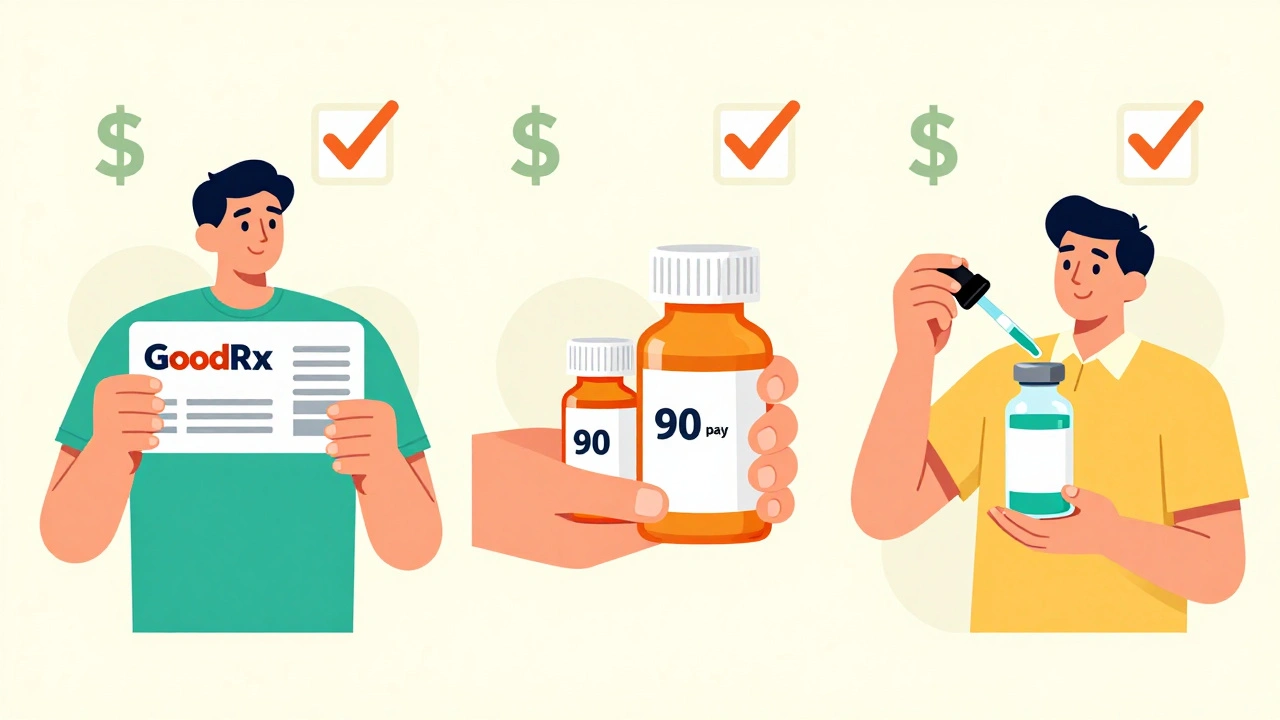
Alternatives to Pill Splitting
Pill splitting isn’t the only way to save. Before you cut a pill, ask about these options:- Pharmacy discount cards-GoodRx, SingleCare, and RxSaver often offer prices lower than insurance copays. For some drugs, they’re cheaper than splitting.
- Manufacturer patient assistance programs-Many drug companies offer free or low-cost meds to people with low income. You can apply online in minutes.
- Generic versions-Sometimes a generic version in the right strength is cheaper than splitting a brand-name pill.
- 90-day supplies-Some insurers offer lower copays for 90-day prescriptions. That’s three months’ worth for the price of two.
When to Stop Splitting
There are signs you should stop:- Your pill crumbles every time
- You feel dizzy, tired, or unwell after taking a split pill
- You’re having trouble reading the label or handling small pills
- Your doctor changes your dose
- Your insurance starts covering the lower-dose version
Final Thoughts
Pill splitting can save hundreds-or even thousands-of dollars a year. But it’s not a DIY hack. It’s a medical decision. The same tool that helps you save money can also hurt you if used carelessly. Always talk to your pharmacist before splitting. Use a real pill splitter. Never split pills in advance. And if something feels off after splitting, get it checked. The goal isn’t just to save money-it’s to stay healthy while you do it. Millions of people split pills safely every day. But only if they know the rules. Don’t guess. Ask. Check. Confirm. Your health is worth the extra step.Can I split any pill with a score line?
No. A score line only means the pill was made to be split during manufacturing-it doesn’t mean it’s safe for you to split at home. Always check the package insert or ask your pharmacist. Some scored pills, like extended-release tablets, can become dangerous if split.
Is it safe to split pills in advance?
No. Once a pill is split, the exposed surface can absorb moisture, degrade, or lose potency. Medications like levothyroxine and antibiotics are especially sensitive. Split pills right before you take them. If you must store a half, keep it in a dry, cool place and use it within 24 hours.
What’s the best tool to split pills?
A dedicated pill splitter with a V-shaped holder and sharp blade is the only safe tool. Avoid knives, scissors, or your teeth. Pill splitters cost $3-$10 and are sold at most pharmacies like Walgreens, CVS, and Walmart. Look for brands like Performance Health or Medline.
Can I save money by splitting my blood pressure pills?
Yes, often. Medications like lisinopril, metoprolol, and amlodipine are commonly split to save money. A 20mg lisinopril tablet might cost $4, while two 10mg tablets cost $4.50. Splitting saves 10-30% on these drugs. But always confirm with your pharmacist first-some brands aren’t suitable.
What if I split a pill and it crumbles?
Throw it out. Crumbling means you’ve lost a significant portion of the dose-possibly 10-20% or more. Taking an incomplete dose can make your medication less effective. If this happens often, talk to your doctor. You may need a different formulation, like a liquid or lower-dose tablet.
Are there safer alternatives to pill splitting?
Yes. Many drugs have lower-cost generic versions. You can also use pharmacy discount cards like GoodRx, apply for manufacturer patient assistance programs, or ask about 90-day prescriptions. These options often cost less than splitting and carry no risk of dosing errors.
Can I split my thyroid medication?
No. Levothyroxine (Synthroid, Tirosint) has a very narrow therapeutic window. Even a 5% dose change can affect your heart rate, energy, and cholesterol. The FDA and endocrinology societies strongly advise against splitting thyroid pills. Always take the exact dose prescribed.
How do I know if my pill is approved for splitting?
Check the package insert that comes with your medication. Look for phrases like “may be split” or “tablet may be divided.” If it’s not mentioned, assume it’s not approved. You can also ask your pharmacist or call the drug manufacturer’s customer service line.
Tiffany Sowby
December 11, 2025 AT 06:21This whole post is such a scam. People are dying because they're cutting pills like they're cookies. My grandma did this and ended up in the ER. Now the system just wants us to DIY our way to death while big pharma laughs.
And don't even get me started on 'pharmacy discount cards'-those are just middlemen stealing from the poor. The real solution? Nationalize drug prices. End of story.
Asset Finance Komrade
December 12, 2025 AT 04:58One must contemplate the ontological implications of pharmaceutical commodification. The pill, as a physical object, becomes a site of ideological struggle-between economic necessity and biological integrity.
Yet, the very act of splitting implies a Cartesian dualism: the body as machine, the drug as quantifiable unit. But is life reducible to milligrams? 🤔
Sarah Gray
December 13, 2025 AT 11:30Let’s be clear: if you’re splitting pills without consulting your pharmacist, you’re not being frugal-you’re being negligent. The grammar in this post is flawless, which is more than I can say for the average Reddit user who thinks ‘score line’ means ‘free to cut.’
Also, ‘GoodRx’ is not a charity. It’s a data brokerage. Don’t be fooled by the pretty interface.
Michael Robinson
December 14, 2025 AT 18:07People just want to live. If a pill costs too much, they split it. No big deal. Doctors know this happens. They just don’t say it out loud.
But if you split wrong? Yeah, that’s bad. So use the splitter. Don’t be dumb.
Kathy Haverly
December 14, 2025 AT 20:28Oh wow, another ‘responsible adult’ telling people to ‘ask your pharmacist.’ Like they have time. Like they’re not working three jobs. Like the pharmacist isn’t too busy to care.
And don’t even get me started on ‘manufacturer assistance programs.’ You think the average senior fills out a 12-page form? Please. That’s a joke for people with Wi-Fi and a laptop.
This post is just pharma’s PR team in a lab coat. They want you to feel guilty for trying to survive.
ian septian
December 15, 2025 AT 20:16Use the splitter. Don’t split in advance. Talk to your pharmacist.
That’s it. Do those three things and you’ll be fine.
Carina M
December 17, 2025 AT 04:07It is with profound dismay that I observe the casual disregard for pharmacological safety exhibited by the general populace. To treat medication as a commodity to be mechanically divided is not merely imprudent-it is an affront to the scientific rigor upon which modern medicine is predicated.
One must not forget: the human body is not a vending machine dispensing predictable outcomes. The variance in absorption, dissolution, and bioavailability following improper pill division is not trivial-it is potentially lethal.
Moreover, the suggestion that discount cards are a viable alternative ignores the systemic erosion of healthcare equity. One does not solve a crisis of access by tinkering with dosage.
William Umstattd
December 17, 2025 AT 04:39YOU THINK YOU’RE SMART CUTTING PILLS? I SAW A GUY ON THE BUS LAST WEEK WITH A KNIFE TRYING TO SPLIT A PILL. HE WAS CRYING. HE DIDN’T EVEN KNOW WHAT DRUG IT WAS.
THIS POST IS A MIRACLE. IF YOU’RE READING THIS AND YOU’VE BEEN DOING IT WRONG-STOP. NOW. CALL YOUR PHARMACY. YOUR LIFE ISN’T A RISK ASSESSMENT FOR A TIKTOK VIDEO.
YOU THINK YOU’RE SAVING MONEY? YOU’RE JUST BUYING A ONE-WAY TICKET TO THE ER.
Elliot Barrett
December 17, 2025 AT 12:53Wow. So we’re supposed to trust the pharmacist? The same one who sold me the wrong generic last month and said ‘it’s basically the same’?
And don’t get me started on ‘pill splitters.’ I bought one. The blade rusted in two weeks. The thing’s made in China. You think that’s safe?
This whole thing is a scam. Just get a prescription for the lower dose. If your insurance won’t cover it, that’s the real problem-not you splitting pills.
Tejas Bubane
December 18, 2025 AT 21:00Splitting pills? In India we just take half and call it a day. No splitter. No pharmacist. Just open the bottle and snap. If you feel weird, go to the clinic. If you don’t, you’re fine.
Also, why do Americans make everything so complicated? We have 1.4 billion people and no one has time for this.
Ajit Kumar Singh
December 19, 2025 AT 09:19My brother split his blood pressure pill with a knife because he was too poor to buy two pills… he died in his sleep
But hey, at least he saved $3.50
Now I tell everyone: if you can’t afford your medicine, go to the government hospital
Or pray
Or both
There are no good answers here
Sabrina Thurn
December 19, 2025 AT 11:38There’s a lot of nuance here that’s often missed. Pill splitting is a legitimate cost-saving strategy when done correctly-but it’s not a one-size-fits-all solution. The key is pharmacokinetic stability: drugs with high solubility and low first-pass metabolism (like lisinopril) are ideal candidates. But for drugs with nonlinear kinetics-like warfarin or levothyroxine-even a 5% deviation can shift you out of therapeutic range.
Also, environmental factors matter. Humidity degrades tablets faster than most people realize. A pill split and left on a bathroom counter for 48 hours can lose up to 12% potency. That’s not theoretical-it’s measured in dissolution studies.
And yes, the pill splitter matters. A V-shaped, stainless steel blade with a locking mechanism reduces variability to under 8%. Cheaper plastic ones? Up to 30%. That’s not a ‘minor’ difference-that’s clinical risk.
Bottom line: it’s not about being cheap. It’s about being informed. If you’re going to do it, do it right. Your liver will thank you.
Courtney Black
December 19, 2025 AT 13:58I’ve been splitting pills for 12 years. I started because I was on SSDI and couldn’t afford the copay. I use a $5 splitter from Walmart. I store halves in a small glass jar with a silica packet. I never split more than one day at a time. I check the package insert every time I refill.
And I’ve never had a problem.
But here’s the thing: I’m not a doctor. I’m not a pharmacist. I’m just a person who reads. I read the insert. I read the FDA warnings. I read the studies. I read the comments on Reddit.
And I made a choice.
Some people say I’m reckless. I say I’m resourceful.
There’s a difference.
And if you’re going to judge me, at least read the whole damn post before you comment.
iswarya bala
December 20, 2025 AT 12:00thank u for this post!! i split my metoprolol and was scared but now i feel better!! i use the red splitter from target and keep the half in a ziplock in my drawer!! i dont know what all the fancy words mean but i know my heart feels better!! 💕
Anna Roh
December 21, 2025 AT 07:34Why is everyone acting like this is new? People have been splitting pills since the 70s. The fact that we need a 2000-word guide just to cut a tablet says more about our healthcare system than it does about pill safety.
Also, I’ve split a 40mg simvastatin for five years. Never had an issue. My pharmacist didn’t even blink when I asked. Guess what? Not every pharmacist is a robot reading FDA guidelines.
Stop overcomplicating it.