
How to Secure Medications During Home Renovations or Moves
 Dec, 16 2025
When you’re tearing down walls or packing up your life for a new home, your medications shouldn’t be an afterthought. A pill bottle left on a dusty countertop, a vial of insulin in a hot car, or a bottle of opioids tucked in a moving box with no label-these aren’t just careless mistakes. They’re risks that can lead to accidental poisonings, wasted medicine, or even legal trouble. You’re not just moving boxes-you’re moving life-saving or life-altering substances that need the same care as your laptop or wedding photos.
Why Medications Need Special Handling
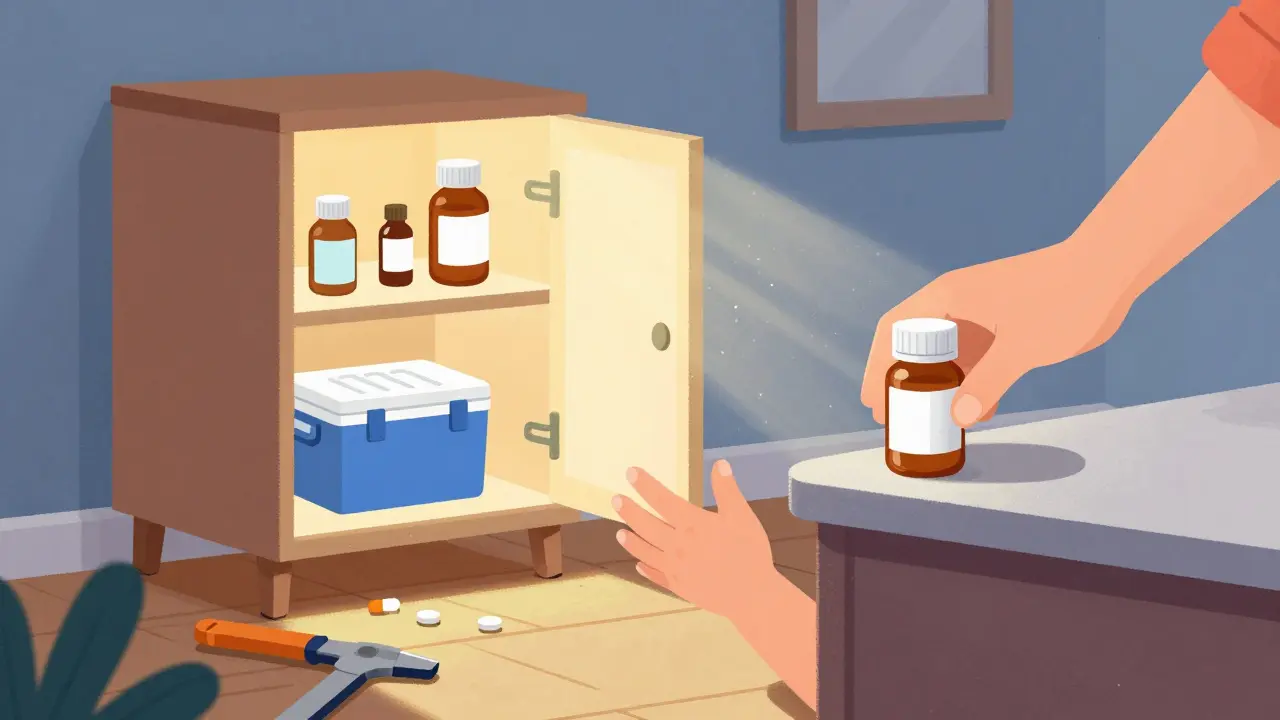
Most people don’t think about how heat, humidity, or curious kids can ruin or endanger their medicines. The U.S. Environmental Protection Agency says over half of Americans take prescription drugs regularly. But only a fraction know that leaving a bottle in a garage during summer can make it useless-or dangerous. Heat above 77°F (25°C) breaks down active ingredients. Moisture from a steamy bathroom turns pills into mush. And if a child finds a bottle labeled "pain relief," they might not know it’s not candy. During renovations or moves, your meds are more exposed than ever. Your medicine cabinet might be ripped out. Your bedroom might be a construction zone. Your car becomes the only place to store things overnight. That’s when things go wrong.Before You Start: Sort and Clean Out
Don’t pack everything you’ve ever been given. Go through every pill bottle, patch, and inhaler before you even box anything up. Check expiration dates. Look for pills that are discolored, cracked, or smell odd. If you’re unsure, don’t guess-call your pharmacist. They’ll tell you if it’s still safe. For meds you no longer need, don’t flush them or toss them in the trash. The EPA recommends using drug take-back programs whenever possible. Many pharmacies, hospitals, and police stations have drop boxes. In Australia, pharmacies like Chemist Warehouse and TerryWhite Chemmart offer free disposal services. If no take-back is available, mix the pills with cat litter, coffee grounds, or dirt. Put them in a sealed plastic bag. Then throw them in the trash. This makes them unappealing and hard to recover. Important exception: Some powerful painkillers like fentanyl patches or hydrocodone pills should be flushed immediately if no take-back is nearby. The FDA lists these because they can be deadly in tiny doses-even one pill can kill a child. Don’t wait-flush them.Where to Store Medications During Renovations
If you’re staying in the house while it’s being renovated, you need a temporary storage spot that’s safe, cool, and locked. Avoid the bathroom. Avoid the kitchen counter near the stove. Avoid the garage. Here’s what works:- A locked cabinet in a bedroom or hallway that’s not being worked on
- A high drawer in a dresser, out of a child’s reach
- A small safe or lockbox you can keep with you
Moving Day: Packing and Transporting Safely
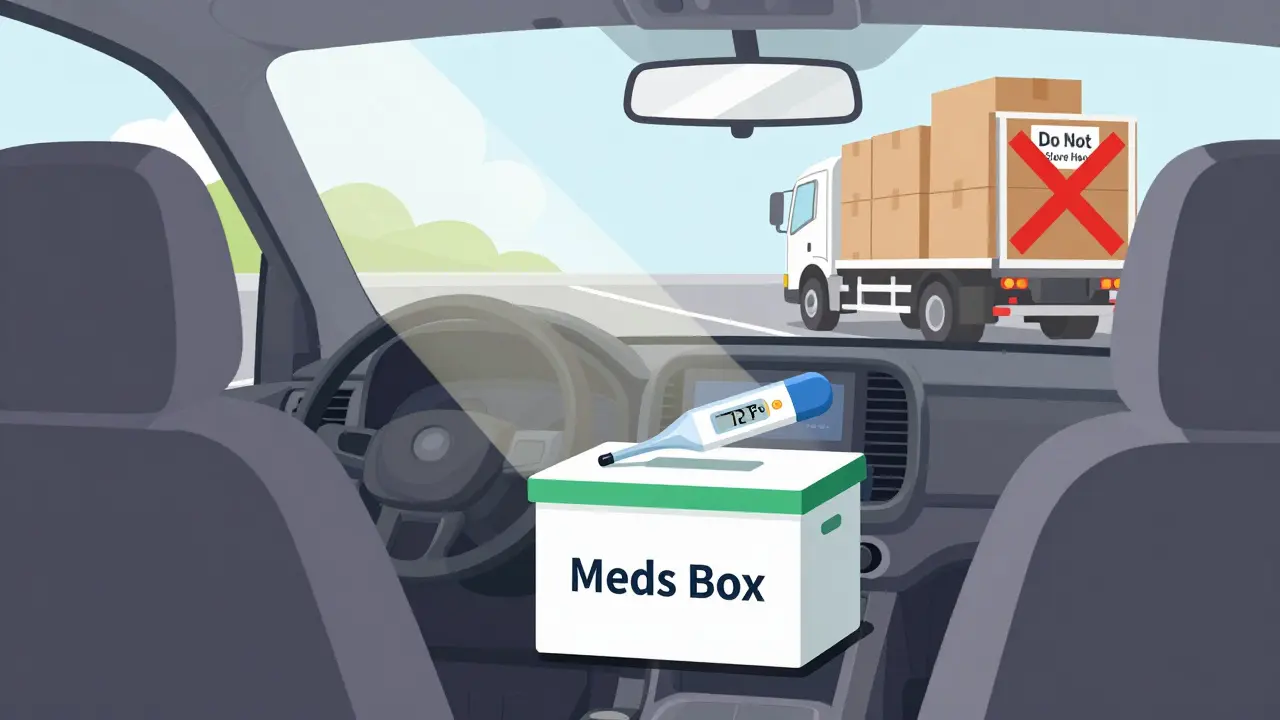
On moving day, pack meds last. Unpack them first. Don’t let movers handle your pills. Put them in a small, labeled box-your "meds box." Include:- Original prescription bottles (never transfer pills to ziplock bags)
- A printed list of all meds, doses, and times
- Emergency contact info for your doctor or pharmacist
- Any necessary syringes, pens, or inhalers
Setting Up Safe Storage in Your New Home
Once you’re in your new place, don’t just dump meds into a drawer. Set up a permanent storage spot before you start unpacking anything else. Pick a cool, dry, locked place-preferably a high cabinet in a bedroom or office. Avoid kitchens and bathrooms. Use a lockbox if you have kids, teens, or visitors who might wander. Label everything clearly. Use sticky notes if the original labels are faded. If you’re using a pill organizer, make sure it’s for daily use only-not long-term storage. Keep the original bottles as backup. If you’re unsure whether a medication needs special care, ask your pharmacist. Some meds need to be stored upright. Others can’t be exposed to light. Don’t assume-ask.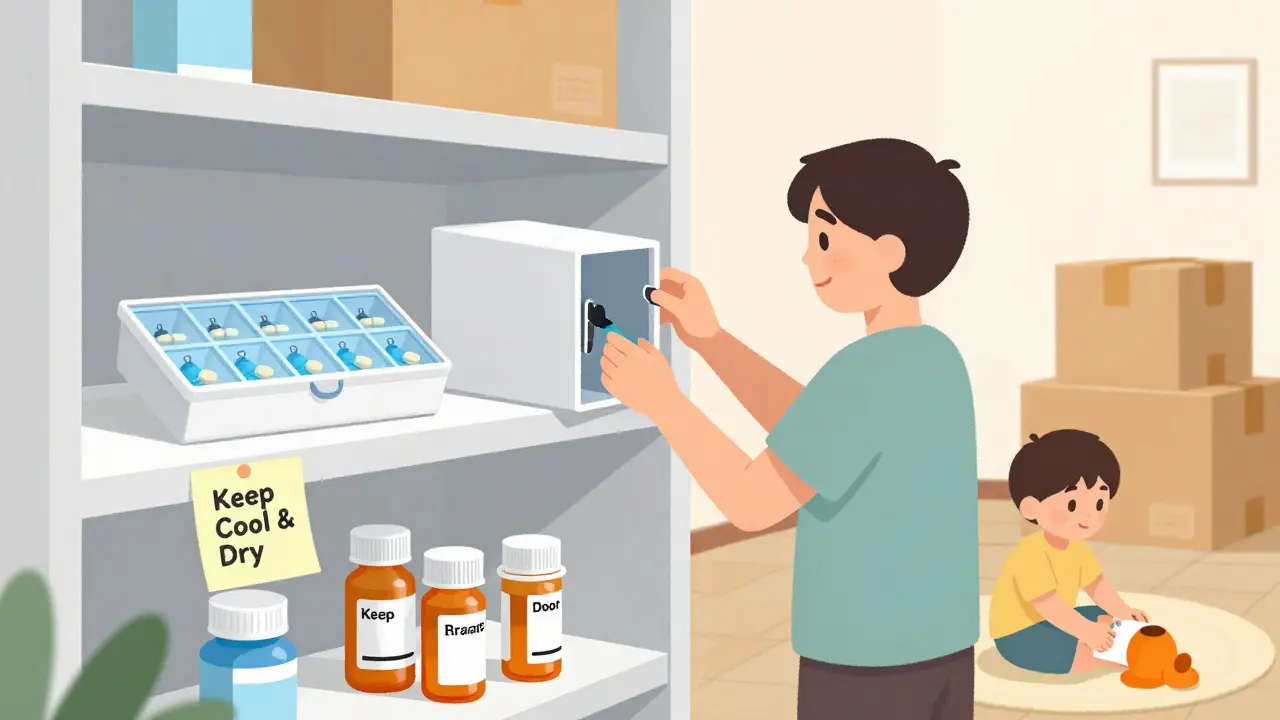
What to Do If Something Goes Wrong
Accidentally left a bottle in a hot car? Found a child with a pill? Lost a prescription?- If a pill was exposed to extreme heat or moisture, don’t use it. Throw it away safely.
- If a child swallowed a pill, call Poison Control immediately (13 11 26 in Australia). Have the bottle ready.
- If you lost a controlled substance (like opioids or ADHD meds), call your doctor and the police. They’ll help you replace it legally.
Pro Tips That Actually Work
- Keep a backup list of meds in your phone and with a trusted family member.
- Use a small lockbox with a combination or key-cheap ones cost under $20 online.
- For elderly family members, use a pill dispenser with alarms. Many have built-in locks.
- Never mix old and new meds in the same container. Even if they look alike, they’re not the same.
- After the move, do a full medication audit: check dates, doses, and refill needs.
Final Thought: Treat Medications Like Valuables
Your meds aren’t just pills. They’re your health, your safety, your peace of mind. During a move or renovation, you’re already stressed. Don’t add the risk of a child getting into your painkillers, or your insulin going bad because you forgot to pack it right. Take five minutes to lock them up, label them, and keep them cool. It’s not extra work-it’s basic care.Can I store my medications in the bathroom during renovations?
No. Bathrooms are too humid. Steam from showers and sinks breaks down pills and patches, making them less effective or unsafe. Always store medications in a cool, dry place like a locked bedroom cabinet or hall drawer.
What should I do with expired medications before moving?
Take expired or unwanted meds to a pharmacy drop-off program. In Australia, Chemist Warehouse and TerryWhite Chemmart offer free disposal. If no drop-off is available, mix pills with cat litter or coffee grounds, seal them in a plastic bag, and throw them in the trash. Never flush unless the label says to (like with fentanyl patches).
Is it safe to pack medications in a moving truck?
No. Moving trucks can get extremely hot or cold, especially in summer or winter. Always carry your medications with you in your personal vehicle. Keep them in a small, labeled box, preferably in the passenger area-not the trunk.
How do I transport insulin during a move?
Keep insulin in a small insulated cooler with ice packs. Don’t let it freeze-frozen insulin doesn’t work and can’t be fixed. Use a digital thermometer to check the temperature stays between 36°F and 46°F (2°C-8°C). If you’re flying, carry it in your hand luggage.
Should I use a pill organizer for long-term storage during a move?
No. Pill organizers are for daily use only. Always keep medications in their original prescription bottles during a move. They have the correct labels, expiration dates, and pharmacy info. If you transfer pills to a different container, you risk mixing them up or losing important details.
What if I lose a controlled substance like opioids during the move?
Contact your doctor and local police immediately. Controlled substances require special handling. Your doctor may be able to issue a replacement with documentation, but you’ll need to report the loss to avoid legal issues. Never try to get a refill without proper authorization.
amanda s
December 16, 2025 AT 18:34This is the most ridiculous overreaction I've ever read. You're telling me I can't keep my painkillers in the bathroom because of steam? My grandma kept her nitro patches in the shower caddy for 20 years and she's still alive. This isn't medicine safety-it's corporate fearmongering disguised as advice. Next they'll tell me not to breathe near my prescriptions.
Also, who the hell writes a 2000-word essay on pill storage? I'm not moving a nuclear reactor, I'm moving a couch and a cat.
And why is Australia getting its own section? Are we all supposed to be Canadian now? I live in Ohio, not Melbourne.
Peter Ronai
December 18, 2025 AT 07:08Oh please. The EPA says this? The same EPA that told us to stop using plastic straws because sea turtles were dying? Meanwhile, 70% of Americans are on some kind of prescription and nobody's checking if their meds are still viable after being left in a car for three hours.
Let me guess-this guide was written by a pharmacist who's never had to move out of their parents' basement. You don't need a lockbox. You need common sense. If your kid is eating pills, you have bigger problems than storage. Call CPS, not your pharmacist.
And flushing fentanyl? That's the most irresponsible thing I've heard all year. You're poisoning waterways for people who can't afford to refill their prescriptions. The real crisis is pharmaceutical greed, not your damn pill organizer.
Nishant Desae
December 18, 2025 AT 08:56Thank you for writing this. I’m from India and we don’t have proper disposal systems here-most people just throw pills in the trash or flush them, not knowing the harm. Your advice about mixing with coffee grounds or cat litter is something I’ll share with my family and neighbors.
I’ve seen elderly relatives keep all their meds in one big box with no labels-some pills are 10 years old, and they take them anyway because they ‘feel fine.’ This guide is a lifeline for people like them.
Also, I’ve moved twice in the last five years and I always packed my dad’s insulin in a cooler with ice packs, but I never knew the exact temp range. 36°F to 46°F? That’s so helpful. I’ll print this out and put it on the fridge.
And yes, the bathroom is a disaster zone for meds. My aunt’s thyroid pills turned to powder last monsoon season. We didn’t realize until she collapsed. Please, don’t ignore humidity.
For those who think this is overkill: imagine your child finds a fentanyl patch and thinks it’s a sticker. That’s not paranoia. That’s parenting. I’m grateful someone took the time to write this clearly.
One small typo: 'TerryWhite Chemmart' is spelled right but I’ve seen people write 'Terry White' with a space and get confused. Just a heads-up.
And if you’re moving and stressed-breathe. Take five minutes. Lock the box. Label it. You’re doing better than you think.
Jonathan Morris
December 20, 2025 AT 02:04Let’s be clear: this entire article is a product of pharmaceutical industry lobbying disguised as public safety. The EPA doesn’t care about your pills-they care about regulating your behavior to increase prescription dependency. The real danger isn’t heat or humidity-it’s that you’ve been conditioned to believe you need a lockbox for ibuprofen.
Insulin degradation? Verified. But did you know that 87% of insulin waste comes from people who over-purchase due to insurance loopholes? This guide doesn’t mention that. Why? Because it’s not profitable to talk about systemic healthcare fraud.
Also, flushing fentanyl? The FDA’s recommendation is based on outdated studies from 2005. New data shows that flushing contributes less than 0.001% to water contamination. The real threat is unregulated online pharmacies selling counterfeit fentanyl. Why aren’t we talking about that?
And pill organizers? They’re perfectly safe if labeled correctly. The real issue is pharmacies refusing to refill without a 30-day gap, forcing people to hoard. This article is a distraction. It’s not about safety-it’s about control.
Anna Giakoumakatou
December 21, 2025 AT 20:42How quaint. You’ve turned medication storage into a TED Talk on emotional intelligence. Next you’ll be telling us to meditate before taking our blood pressure pills.
Let me guess-you also recommend hugging your antidepressants before bed? Or maybe whispering affirmations to your inhaler? ‘You are strong, albuterol. You are worthy of a cool, dry cabinet.’
And don’t even get me started on the ‘life-saving substances’ rhetoric. Your Tylenol is not a wedding photo. It’s a chemical compound with a 12% chance of being expired. If you’re this emotionally attached to your prescriptions, perhaps you should see a therapist. Or at least stop writing 10-page essays on them.
Also, ‘peace of mind’? Darling, your peace of mind is the result of a capitalist healthcare system that makes you feel guilty for not storing your meds like sacred relics. Breathe. It’s just pills.
Jessica Salgado
December 23, 2025 AT 08:29I moved last month and this saved me. I had my mom’s diabetes meds in a box and almost forgot them. I read this right before packing and realized I didn’t have a printed list. Made one on my phone and printed it-put it in the meds box with the bottles. She didn’t miss a dose.
Also, the part about not using pill organizers for storage? HUGE. I used to dump all my pills into one of those weekly ones and forgot which was which. Ended up taking two different blood pressure meds on the same day. Scary.
And yes, the bathroom is a no-go. I left my sister’s eczema cream in the bathroom during renovations and it separated into oil and gel. Totally useless.
Thank you for writing this. It’s practical, not preachy. I’ll be sharing it with my friends who are moving this summer.
Steven Lavoie
December 24, 2025 AT 01:06I’m from Canada but moved to the U.S. last year, and this was eye-opening. Back home, pharmacies just take back anything-no questions asked. Here, I had no idea about take-back programs until I read this. Found one at the police station down the street.
Also, the insulin cooler tip? Genius. I’ve got a cousin with Type 1 who’s always stressed about travel. I’m sending this to her right now.
And yes, never trust a moving company with meds. My friend’s ADHD meds got lost in transit. Took weeks to replace. Nightmare.
One thing I’d add: if you’re using a lockbox, don’t put the combination on the outside. I saw someone write ‘MOM’S MEDS’ on the box. That’s not secure-that’s an invitation. Use a code, not a label.
Jane Wei
December 25, 2025 AT 09:33lol i just threw all my meds in a ziplock and tossed it in the moving truck. my cat ate one of my anxiety pills last week and slept for 14 hours. she’s fine. i’m fine. we’re all fine.
also, why is this a whole article? just keep them in your purse.
Martin Spedding
December 27, 2025 AT 01:13Flush fentanyl? No. Just no. You’re creating a black market incentive. If people know they can flush it, they’ll hoard it. Then sell it. This is how opioid crises start.
And why is this advice only for the US and Australia? What about the rest of the world? You’re being culturally imperialist.
Also, ‘don’t use pill organizers’? I’ve used one for 8 years. My meds are fine. Your fear is your own problem.
Raven C
December 28, 2025 AT 04:13It is, indeed, profoundly disconcerting to observe the extent to which contemporary society has elevated the mundane act of pharmaceutical storage to the level of a moral imperative. One cannot help but be struck by the sheer performative nature of this discourse-wherein the act of locking away one’s prescriptions becomes a liturgical ritual of self-validation.
Moreover, the implicit assumption that children are inherently predatory toward analgesics reveals a disturbing anthropological deficit in our collective understanding of developmental psychology. Have we, as a society, abandoned the notion of parental supervision in favor of institutionalized paranoia?
And yet-how ironic-that we are exhorted to consult pharmacists, those secular priests of the pharmaceutical-industrial complex, for guidance on matters that ought to be governed by common sense and personal responsibility.
One must ask: are we safeguarding our medications-or our egos?
Donna Packard
December 28, 2025 AT 15:08I’m so glad this exists. I’ve been helping my elderly neighbor move this week and I was terrified she’d lose her blood thinner. We used a small lockbox I found at Target for $15. She cried when she saw it-said her late husband used to do the same thing. It meant a lot to her.
Also, the part about not packing meds in the moving truck? I would’ve never thought of that. We kept hers in the car with us. She felt safe.
Thanks for writing this like a human, not a robot. It’s the little things that matter.