
How to Handle Expired Controlled Substances and Narcotics: A Compliance Guide
 Apr, 13 2026
Getting rid of an expired bottle of morphine or a damaged vial of oxycodone isn't as simple as tossing it in the trash or flushing it down the toilet. In fact, doing so could land a healthcare provider in serious legal trouble. When you're dealing with expired controlled substances, you aren't just managing waste; you're managing a high-risk liability. The goal is to make these drugs "non-retrievable," meaning no one can fish them out of a bin or chemically recover them from the soil.
The stakes are high. The DEA doesn't take disposal lightly, and with enforcement actions increasing by over 23% recently, the risk of heavy fines or license suspension is real. Whether you run a small dental clinic, a veterinary practice, or a large research lab, the process requires a strict chain of custody. You need to know exactly where the drug was, who saw it leave, and how it was destroyed.
The Core Rules of Disposal
Everything starts with the Controlled Substances Act, a law established in 1970 that creates the framework for how these drugs are handled. In the U.S., the Drug Enforcement Administration (or DEA) is the primary entity that enforces these rules through the Code of Federal Regulations (specifically 21 CFR Parts 1300-1399).
The most important distinction you need to understand is the difference between "inventory disposal" and "wastage." If you have a full bottle of expired pills, that's inventory disposal. If you have a small amount left in a syringe after a dose, that's wastage. The rules for each are very different:
- Inventory Disposal: Requires the drugs to be rendered completely non-retrievable. This almost always means professional incineration.
- Wastage: Deals with small quantities that don't necessarily need to be rendered non-retrievable but still require a witness and a paper trail.
Step-by-Step Guide to Handling Expired Narcotics
If you've found a stash of expired narcotics in your secure storage, don't panic, but do act systematically. Following a structured process reduces the chance of a compliance error during an audit.
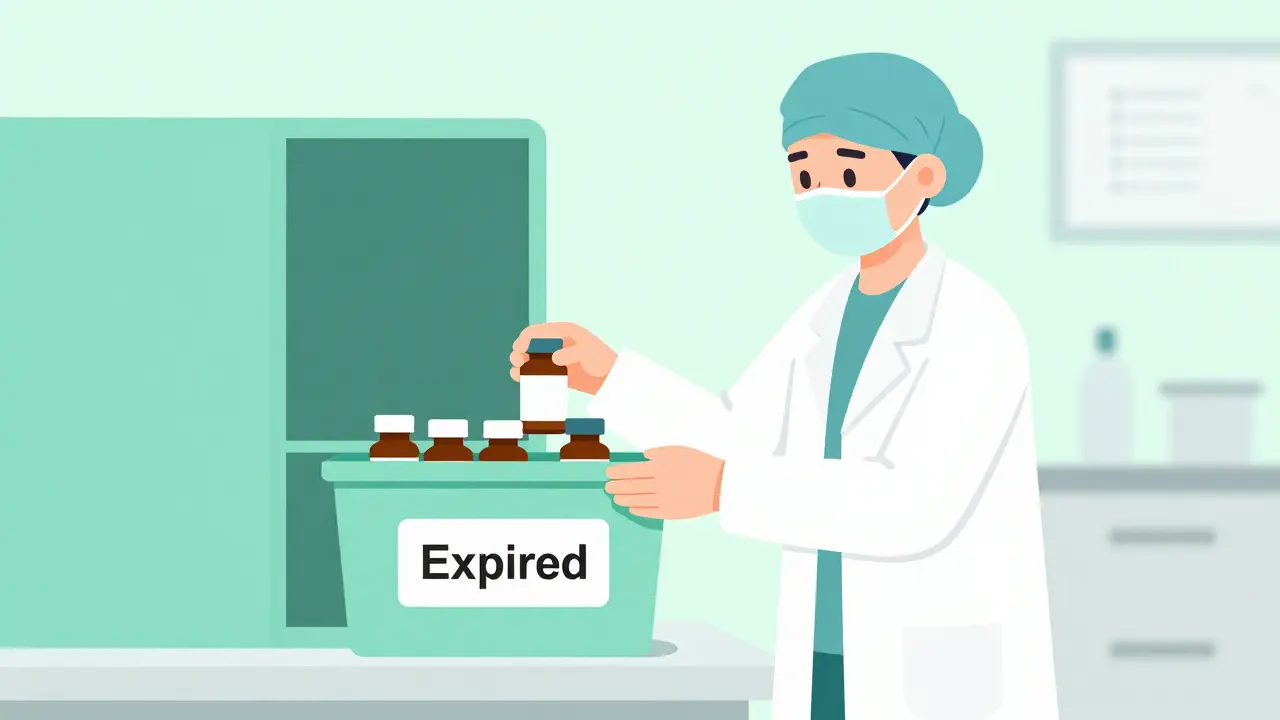
- Label and Isolate: Immediately mark the substances as "Expired" or "Do Not Use." Move them into a separate, secure area of your storage-don't just leave them on the shelf next to active stock.
- Determine the Schedule: Check if the drug is Schedule I or II (highest potential for abuse) or Schedule III-V. This determines which forms you need.
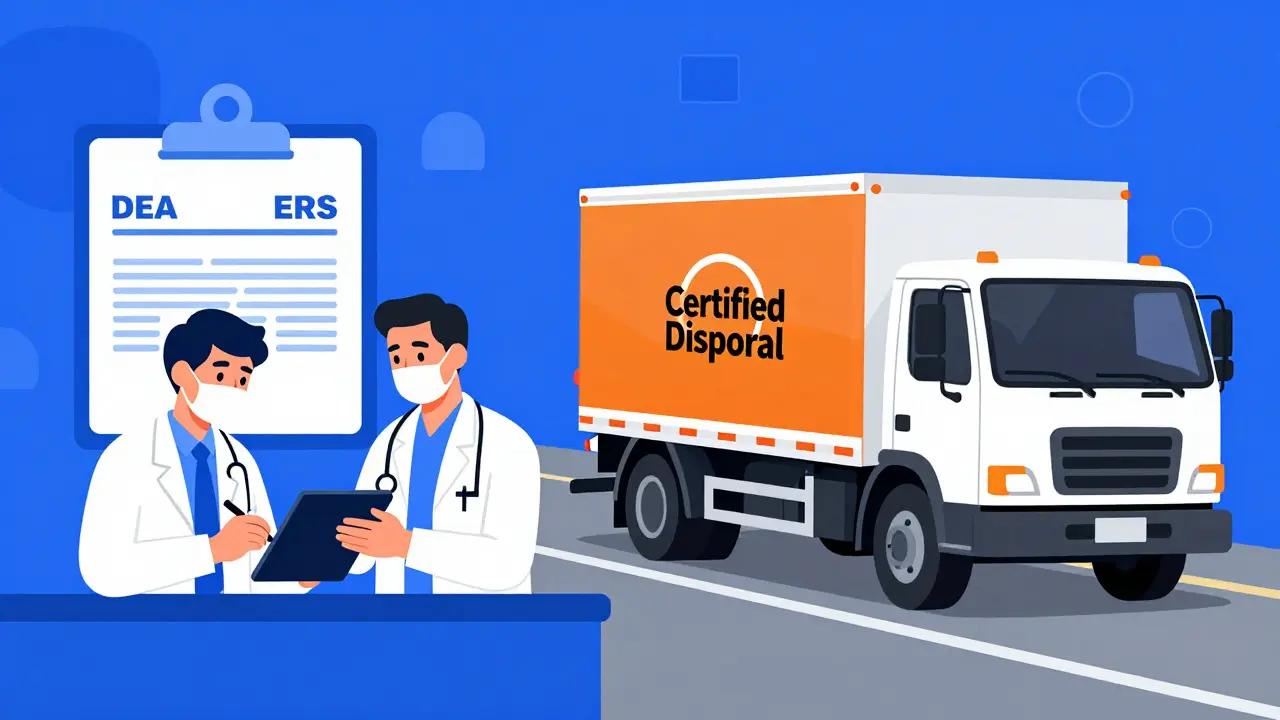
- Contact a Reverse Distributor: For inventory disposal, you can't just call any waste company. You need a Reverse Distributor, which is a licensed entity that takes controlled substances from practitioners and ensures they are destroyed.
- Complete the Paperwork: For Schedule II drugs, you must use DEA Form 222. Since 2023, the Electronic Registration System (ERS) has made this much faster, cutting processing times from over a week down to about a day.
- Log the Exit: Record the date, the quantity, and the recipient's address. Zero out the balance in your inventory log so your records match your physical stock.
Comparing Disposal Pathways by Substance Schedule
Not all controlled substances are treated the same. A Schedule II narcotic requires far more scrutiny than a Schedule IV sedative. The following table breaks down the key differences in how you handle them.
| Attribute | Schedule I & II | Schedule III-V |
|---|---|---|
| Required Documentation | DEA Form 222 (Electronic or Paper) | Internal Disposal Log / DEA Form 41 |
| Primary Disposal Method | Reverse Distributor & Incineration | Reverse Distributor or Approved In-house Waste |
| Witness Requirement | Mandatory (Two authorized persons) | Mandatory for wastage |
| Regulatory Strictness | Highest - Zero tolerance for error | Moderate - Flexible pathways allowed |
Common Mistakes and Pitfalls to Avoid
Many practices fall into a few common traps that lead to DEA warning letters. One of the biggest mistakes is using "home remedies" for disposal. You might see suggestions for general medications to mix drugs with coffee grounds or kitty litter. Do not do this with controlled substances. The DEA and academic medical centers like UCSF have explicitly stated that mixing narcotics with absorbent materials does not meet the "non-retrievable" standard.
Other dangerous mistakes include:
- The "Single-Sign-Off": Having only one person witness a disposal. You need two DEA-licensed individuals to sign off on the process to prevent internal diversion.
- Poor Record Retention: Throwing away logs after a few months. You are required to keep all disposal records for at least two years.
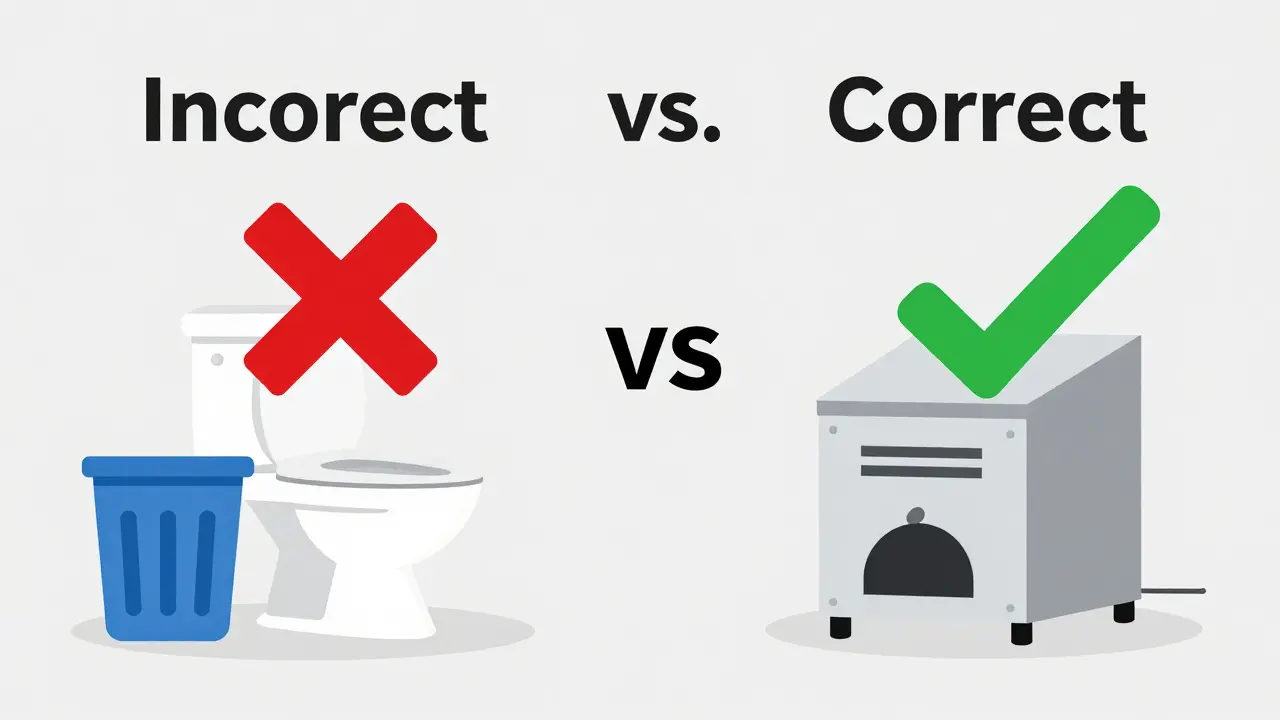
- Flushing: The FDA has clarified that flushing controlled substances is never recommended. It contaminates water systems and doesn't legally satisfy the requirement for secure destruction.
- Using Sharps Containers for Pills: Dropping expired narcotics into a sharps container is not an acceptable disposal method for non-significant recoverable amounts.
The Cost and Logistics of Professional Disposal
Let's be honest: professional disposal is a pain and it's expensive. If you use a reverse distributor, you're likely looking at pickup fees ranging from $250 to $500 per visit. For a small veterinary clinic or a solo dental practice, this can feel like a steep price for a few expired vials.
Wait times can also be frustrating. Some facilities report waiting nearly two weeks for a distributor to arrive. However, the alternative-a DEA audit that finds missing narcotics-is far more expensive. Fines can reach millions of dollars, and the loss of your DEA registration is a business-ending event.
To streamline this, many larger institutions have moved to digital systems like the Research Inventory Online (RIO) system, which allows for real-time tracking and faster scheduling. If you're still using a paper-based log, be aware that audits show these systems have an error rate of nearly 19%, significantly higher than digital alternatives.
Can I just use a local pharmacy's take-back program?
Generally, no. Professional healthcare registrants must follow DEA protocols for their business inventory. While the DEA's National Take Back Day is great for the general public to clear out home medicine cabinets, businesses must use reverse distributors or approved destruction methods to maintain a legal chain of custody.
What happens if I lose a DEA Form 222?
Losing a Form 222 is a serious compliance issue. You should immediately notify the DEA. This is why the shift toward the Electronic Registration System (ERS) is so critical-it eliminates the risk of lost paper forms and drastically speeds up the transfer process to reverse distributors.
Is crushing pills into powder and dissolving them in water an acceptable method?
No. This is a common misconception. Policies from major health systems, including UCSF, explicitly forbid disintegrating or dissolving controlled substances for disposal. The only method currently viewed as truly "non-retrievable" by the DEA is professional incineration.
How long do I need to keep my disposal records?
You must retain all records of controlled substance disposal for a minimum of two years. This includes the date of disposal, the quantity, the manner of disposal, and the signatures of the witnesses.
What is a "non-significant recoverable amount"?
This refers to a quantity of a drug that is so small that the effort required to recover it is impractical. While these can sometimes be handled as "wastage" (with a witness), you should always verify the specific drug's classification and your local DEA office's interpretation to avoid a violation.
Next Steps for Compliance
If you are unsure about your current process, start by conducting a full inventory audit. Identify every single expired or damaged controlled substance in your facility. If you don't have a relationship with a reverse distributor, use the DEA's online disposal locator tool to find one in your area.
For those in larger organizations, transition from paper logs to a digital inventory management system. It reduces errors and makes the inevitable DEA inspection a much less stressful experience. Finally, schedule a brief refresher training for all staff-even those who don't directly handle the drugs-so they know the "do not flush" and "do not trash" rules by heart.