
How to Discuss Cost and Coverage before Filling a Prescription
 Mar, 16 2026
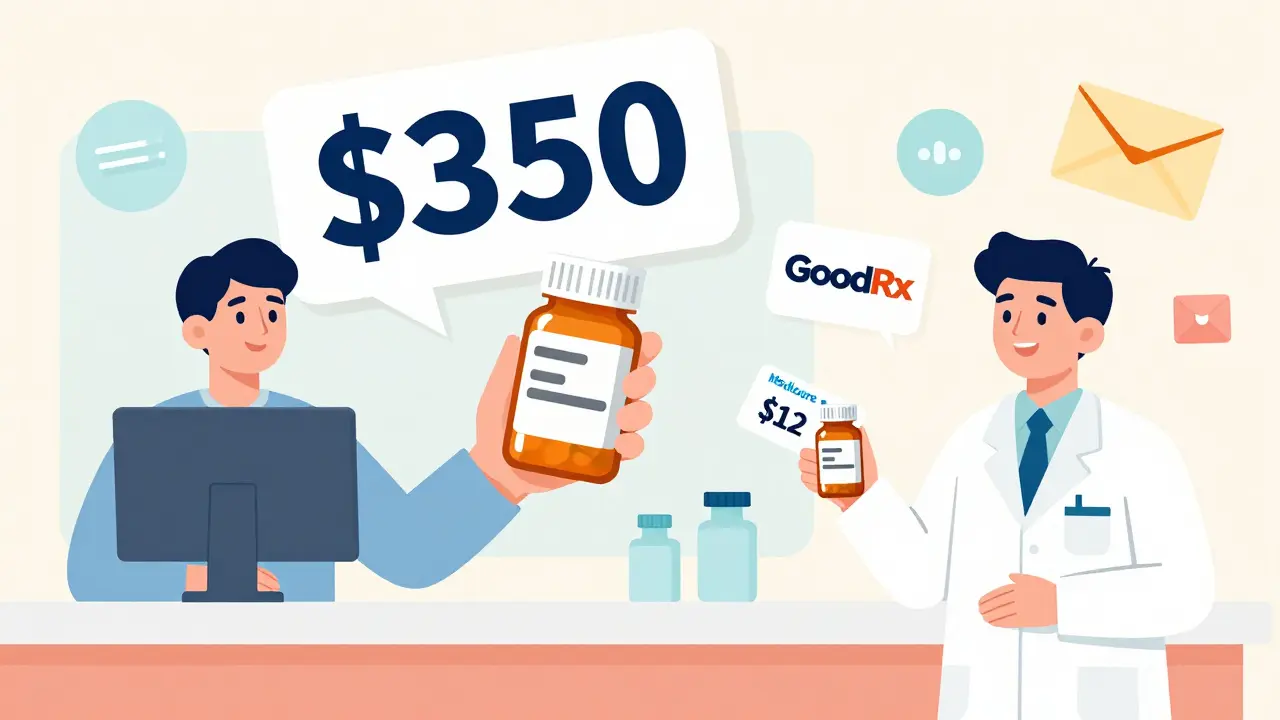
Imagine this: your doctor prescribes a medication that could change your health for the better. You leave the office feeling hopeful-until you get to the pharmacy and see the price tag. $350 for one month’s supply. You didn’t know it would cost this much. You walk out empty-handed. This happens to 22% of people who get a new prescription, according to 2023 GoodRx research. But it doesn’t have to happen to you.
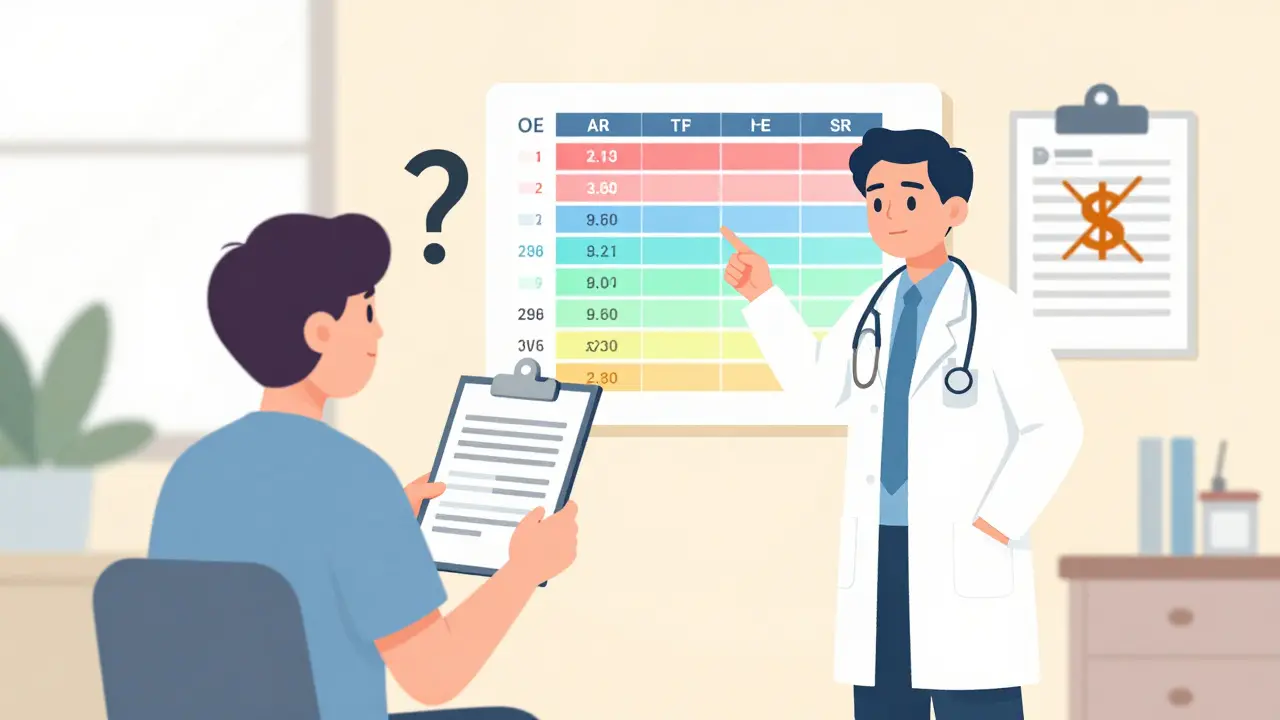
The key is simple: talk about cost before you leave the doctor’s office. Not after. Not at the pharmacy counter. Before the prescription is written. This isn’t just a smart move-it’s becoming standard care. The American Medical Association has recommended it since 2018, and Medicare now requires cost transparency tools from all Part D plans by 2024. You have more power than you think to avoid surprise bills.
Why Cost Talks Matter Before You Get the Script
Most people assume their insurance will cover the cost of a new medication. But formularies-lists of drugs your plan covers-are complicated. A drug might be covered, but only if you’ve tried two cheaper ones first. Or it might be on a specialty tier where you pay 33% of the full price. Without checking, you could be looking at $200, $500, or even $1,200 a month.
Here’s the real problem: when patients don’t know the cost upfront, they skip doses, split pills, or stop taking the medication entirely. A 2022 study in the Journal of General Internal Medicine found that patients who talked about cost with their provider were 37% less likely to skip doses because of money.
And it’s not just about affordability. It’s about control. If you know the price ahead of time, you can ask for a generic, switch to a different drug, or even get help from a patient assistance program. You’re not stuck with whatever your doctor hands you.
What to Ask Your Doctor Before They Write the Prescription
Don’t wait for your doctor to bring it up. Bring it up yourself. Use these exact phrases-they’re clear, direct, and work every time:
- “Is there a generic version of this drug?” Generics are just as effective and often cost 80% less. In 2023, 90% of prescriptions filled were for generics.
- “What’s my out-of-pocket cost with my insurance?” This is the most important question. Don’t settle for “it should be covered.” Ask for a number.
- “Are there other medications that work the same way but cost less?” Sometimes, a different drug in the same class can save you hundreds.
- “Do you have samples or a coupon I can use?” Many doctors keep samples on hand. Even if they don’t, they can often send a coupon through Surescripts.
- “Can I get this through mail order?” Many plans offer lower copays for 90-day supplies delivered to your home.
One patient, ‘MedicareMom2023’ on Reddit, avoided a $1,200 monthly bill by asking these questions before her appointment. Her doctor switched her from a brand-name drug to a generic alternative covered under Tier 1. Her new monthly cost: $12.
Know Your Insurance Plan Before You Go
Your insurance plan has a formulary-a list of drugs it covers and how much you pay for each. These are divided into tiers:
- Tier 1 (Generic): $5-$15 copay
- Tier 2 (Preferred Brand): $25-$50
- Tier 3 (Non-Preferred Brand): $50-$100
- Specialty Tier: 25-33% coinsurance-sometimes over $100 per fill
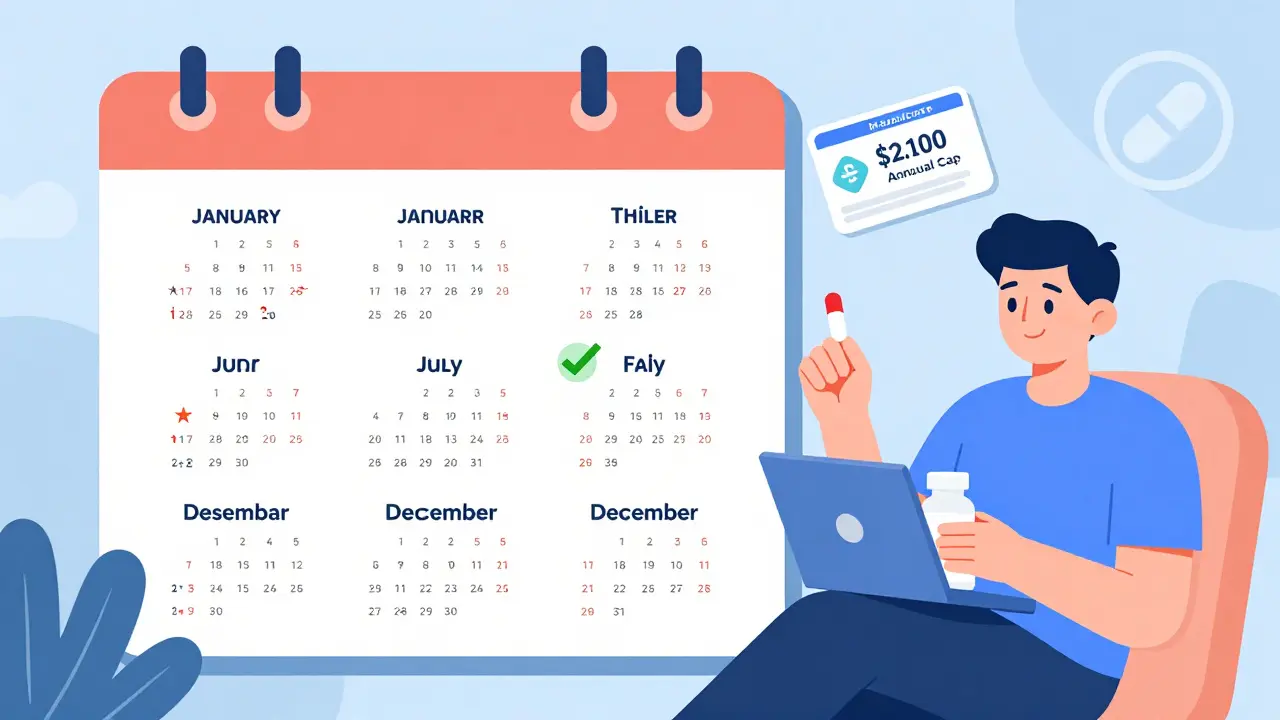
Commercial plans (through employers or Healthcare.gov) have no hard cap on out-of-pocket spending. That means if you take a specialty drug, you could pay thousands in a year. Medicare Part D changed that. Starting in 2025, beneficiaries pay no more than $2,100 per year out-of-pocket for all prescriptions. That’s a huge shift.
Also, insulin now costs no more than $35 per month for Medicare users-since 2023. If you’re on insulin, this alone could save you hundreds.
Check your plan’s website. Look for a “Drug Formulary” or “Drug List.” Search for your medication. Note the tier and copay. Bring that info to your appointment.
Use Tools That Actually Work
You don’t have to guess. There are tools built for this exact purpose.
Medicare.gov Plan Finder lets you compare costs across all Part D plans. It’s updated every October for the next year. If you’re on Medicare, use it during Annual Enrollment (October 15-December 7). You can plug in all your medications and see which plan saves you the most.
GoodRx and SingleCare show cash prices at nearby pharmacies. Sometimes, paying cash with a coupon is cheaper than using insurance-especially if you haven’t met your deductible yet. One user saved $287 on blood pressure meds by showing the pharmacist a GoodRx coupon alongside their insurance.
CVS Caremark’s Check Drug Cost & Coverage tool lets you enter your drug name, pharmacy, and insurance plan to get instant pricing. It also suggests generics and alternatives.
If you’re unsure, call your insurer. Have your NDC number (found on the drug label) ready. They can tell you exactly what you’ll pay. Average wait time? About 15 minutes. But it’s worth it.
Timing Matters-Especially Early in the Year
If you get a new prescription in January or February, you’re probably still working toward your deductible. That means you pay the full price until you hit your deductible threshold.
In 2023, the average individual marketplace plan had a $480 deductible. If you’re on a $500 drug and haven’t met your deductible, you pay $500. But if you wait until July, you’ve likely already paid your deductible-and now you’re paying only the copay: $25.
For people with high-deductible plans, timing your prescriptions can save hundreds. Ask your doctor if you can delay starting the medication until after you’ve met your deductible. If it’s not urgent, this can be a real game-changer.
What If Your Drug Isn’t Covered?
It happens. 43% of prescription cost issues come from drugs not being on the formulary, according to the Patient Advocate Foundation.
Your doctor can request a prior authorization. This is a formal request asking your insurance to cover the drug anyway. Often, they’ll approve it if:
- You tried other drugs and they didn’t work
- The drug is medically necessary
- You have documentation from your doctor
Many pharmacies now use Surescripts’ Real-Time Prescription Benefit (RTPB) tool. It shows your doctor, right in the EHR system, whether a drug is covered and how much you’ll pay. If your doctor uses this system, they’ll see the issue before they even write the script.
If they don’t, ask them to call the pharmacy or your insurer. They can often get a waiver or switch you to a covered drug on the spot.
What About Medicare’s New Payment Plan?
Starting in 2025, Medicare Part D beneficiaries can enroll in the Prescription Payment Plan. This lets you pay your drug costs in monthly installments instead of one big bill at the pharmacy.
For example: if your total drug cost for the year is $1,800, you’d pay $150 per month. No surprise bills. No max out-of-pocket until you hit $2,100.
But here’s the catch: you can’t enroll after September. If you wait until October or later, you won’t have enough months left in the year to spread the payments evenly. If you’re on Medicare and take multiple medications, sign up early.
Bottom Line: Don’t Leave Without Answers
Prescription costs are no longer something you just accept. You have tools, rights, and resources to fight for affordability. The system is changing. Medicare now caps costs. Pharmacies offer coupons. Doctors can switch drugs in seconds.
Next time you’re at the doctor’s office, don’t just say, “I’ll take it.” Say, “What’s the cost? What are my options?”
It’s not rude. It’s necessary. And it could save you hundreds-or even thousands-this year.
What should I do if my insurance says a drug is covered but the pharmacy says it’s not?
This happens when insurance and pharmacy systems don’t sync. First, ask the pharmacist to check again with your insurer using your NDC number. If it still doesn’t match, call your insurance company directly. Ask for a case number and request a written explanation. Your doctor can also file a prior authorization appeal. Most issues are resolved within 48 hours.
Can I use GoodRx even if I have insurance?
Yes. Always compare. Sometimes, the GoodRx price is lower than your insurance copay-especially if you haven’t met your deductible. The pharmacy can’t combine both, so you choose the better deal. Many people use GoodRx for non-covered drugs or when insurance requires prior authorization that takes weeks.
Do all doctors know about cost-saving alternatives?
Not all. A 2023 study in Health Affairs found 63% of physicians struggle to predict patient-specific drug costs. But most are willing to help if you ask. Bring your own research-mention what you found on GoodRx or your plan’s formulary. That gives them a starting point.
Is there help if I can’t afford my medication even after discussing options?
Yes. Many drug manufacturers offer patient assistance programs that give free or low-cost meds to those who qualify. Organizations like NeedyMeds and RxAssist list these programs. Your pharmacist or doctor’s office can often help you apply. Nonprofits like the Patient Advocate Foundation also offer financial aid for medication costs.
Why does my cost change from one pharmacy to another?
Pharmacies negotiate different prices with insurers and manufacturers. A drug might cost $45 at CVS but $28 at Walmart. Always check prices at multiple locations. Use GoodRx or SingleCare to compare. Mail-order pharmacies often have the lowest prices for long-term prescriptions.
Justin Archuletta
March 16, 2026 AT 13:04Sanjana Rajan
March 16, 2026 AT 22:46Kyle Young
March 18, 2026 AT 04:45Aileen Nasywa Shabira
March 18, 2026 AT 13:40Kendrick Heyward
March 18, 2026 AT 13:40lawanna major
March 19, 2026 AT 11:25Paul Ratliff
March 21, 2026 AT 06:24SNEHA GUPTA
March 21, 2026 AT 19:10Gaurav Kumar
March 23, 2026 AT 15:02David Robinson
March 25, 2026 AT 00:32Jeremy Van Veelen
March 26, 2026 AT 08:15Laura Gabel
March 26, 2026 AT 17:25jerome Reverdy
March 27, 2026 AT 00:15Andrew Mamone
March 27, 2026 AT 21:04