
How Food Affects Your Medication Side Effects: Simple Rules for Patients
 Dec, 29 2025
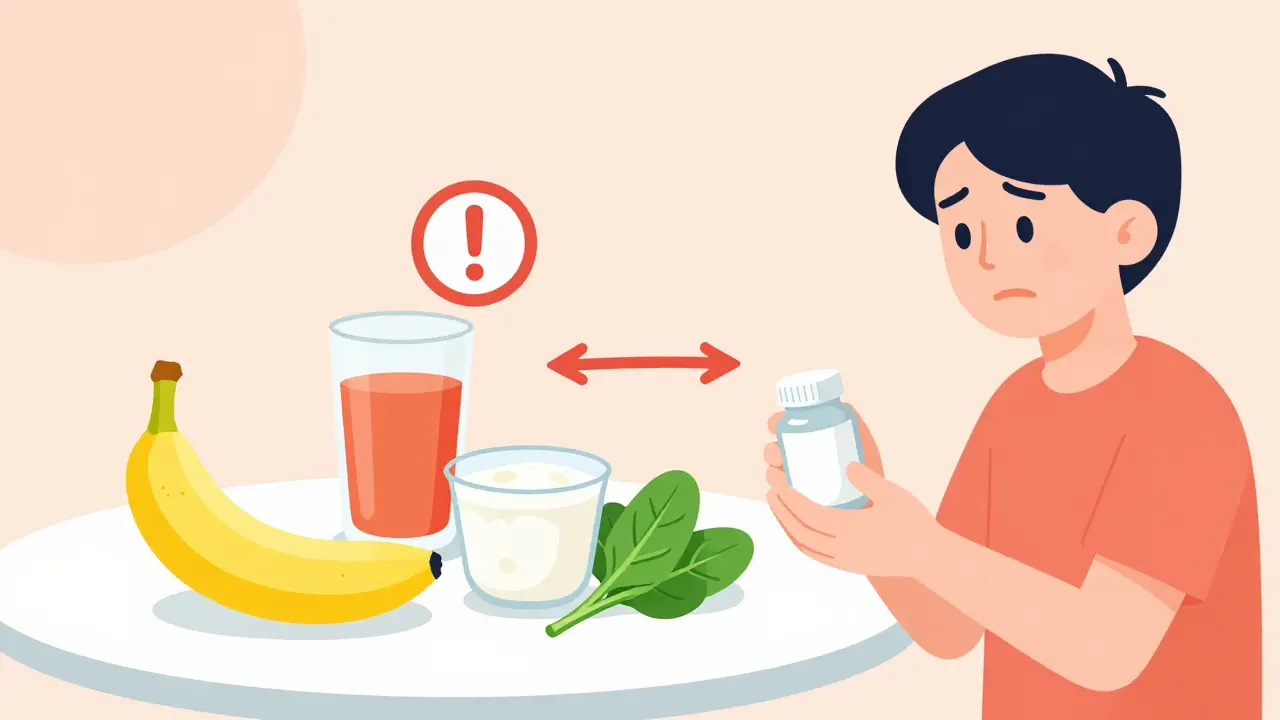
When you take a pill, you might think it’s just about the medicine and your body. But what you eat - or drink - can change everything. A banana, a glass of grapefruit juice, or even a bowl of yogurt can make your medication work worse, cause nasty side effects, or even land you in the hospital. This isn’t rare. About 30% of all bad reactions to medicines come from what you eat or drink with them.
Why Food Changes How Medicines Work
Food doesn’t just fill your stomach. It changes how your body absorbs, breaks down, and gets rid of drugs. There are three main ways this happens:- Absorption problems: Food can block your body from absorbing the medicine. For example, calcium in dairy products binds to antibiotics like tetracycline, cutting their absorption by half.
- Metabolism changes: Some foods mess with liver enzymes that break down drugs. Grapefruit juice is the most famous example - it stops your body from breaking down statins like simvastatin, causing blood levels to spike by 330%. That’s not just stronger effects - it’s dangerous.
- Opposite effects: Some foods directly cancel out what your medicine does. Vitamin K in spinach, kale, and broccoli fights against warfarin, a blood thinner. If you eat a lot of greens one day and almost none the next, your blood can clot or bleed too much.
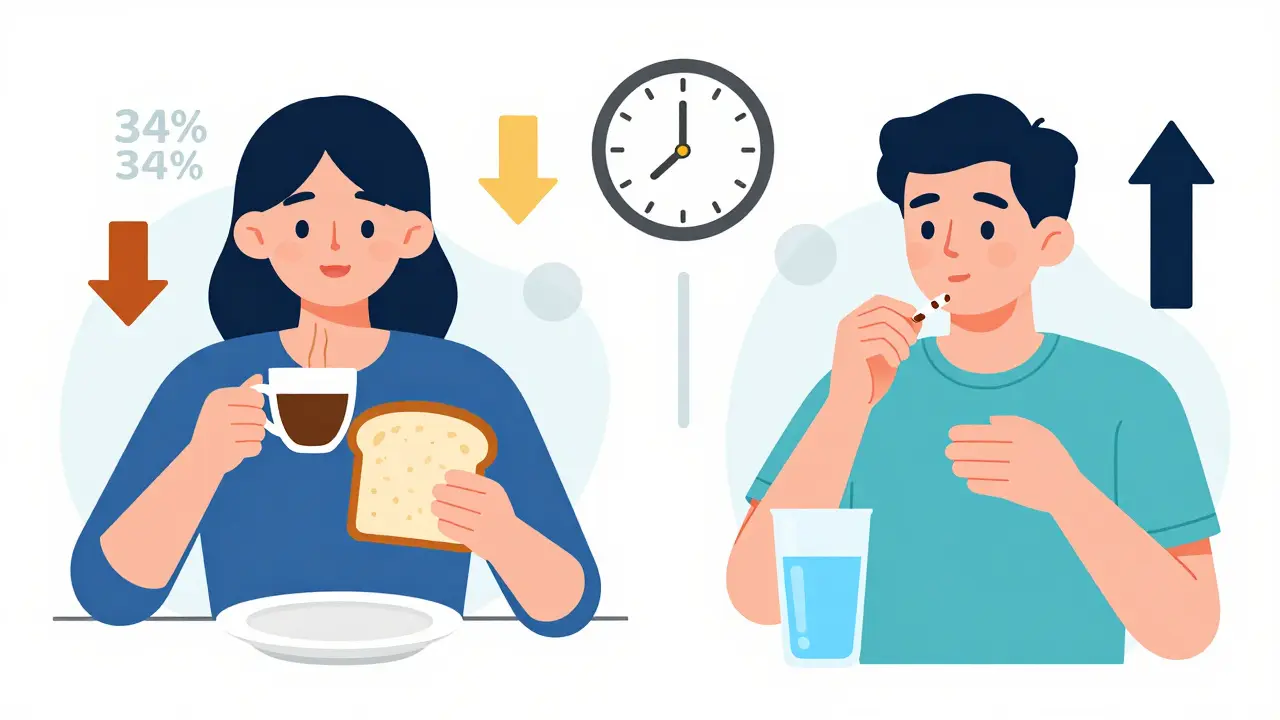
These aren’t guesses. They’re proven by clinical studies. The University of Connecticut found that fat-soluble drugs like diazepam are absorbed 25-35% better when taken with a fatty meal. Meanwhile, levothyroxine - the thyroid hormone pill - loses 34% of its effectiveness if taken with breakfast. Timing matters just as much as what you eat.
Medicines That Are Especially Sensitive to Food
Not all drugs react the same. Some are fine with food. Others need strict rules.Antibiotics: Fluoroquinolones like ciprofloxacin drop in absorption by 75-90% if taken with milk, yogurt, or calcium supplements. Amoxicillin? It’s mostly unaffected. Always check the label.
Heart medications: Warfarin is the king of food sensitivity. It has 17 documented food interactions. Apixaban, a newer blood thinner, has only three. That makes warfarin over five times more likely to be affected by your diet. Patients who keep their vitamin K intake steady - eating the same amount of leafy greens every day - have 32% fewer dangerous INR swings.
Stomach acid reducers: Omeprazole (Prilosec) needs to be taken 30-60 minutes before eating to block acid properly. Famotidine (Pepcid) doesn’t care when you eat. Mixing them up can mean your heartburn comes back.
MAO inhibitors: These older antidepressants are the most dangerous. Eating aged cheese, cured meats, or tap beer can cause a sudden, deadly spike in blood pressure. One serving of blue cheese can contain 100-400 mg of tyramine - enough to trigger a hypertensive crisis.
NSAIDs: Ibuprofen and naproxen hurt your stomach lining when taken on an empty stomach. Taking them with food cuts the risk of ulcers from 15% down to 4%. Here, food helps - it’s the only class where eating with the pill is usually a good idea.
Timing Matters More Than You Think
“Take on an empty stomach” doesn’t mean “right before you eat.” It means one hour before or two hours after a meal. A University of Connecticut study showed that taking a drug 30 minutes before breakfast gave you 22% less absorption than waiting a full hour.Levothyroxine is the classic example. If you take it with your coffee and toast, you’re not getting the full dose. You’re risking fatigue, weight gain, and even heart problems. The same goes for antibiotics like doxycycline and bisphosphonates like alendronate (Fosamax). Take them with a full glass of water, then wait at least 30 minutes before eating.
For drugs that need food - like griseofulvin or certain HIV meds - eat a meal with healthy fats. A slice of avocado, a spoon of peanut butter, or a few nuts can boost absorption by 25-35%. Don’t just grab a cracker. You need real fat to make it work.
The Grapefruit Trap
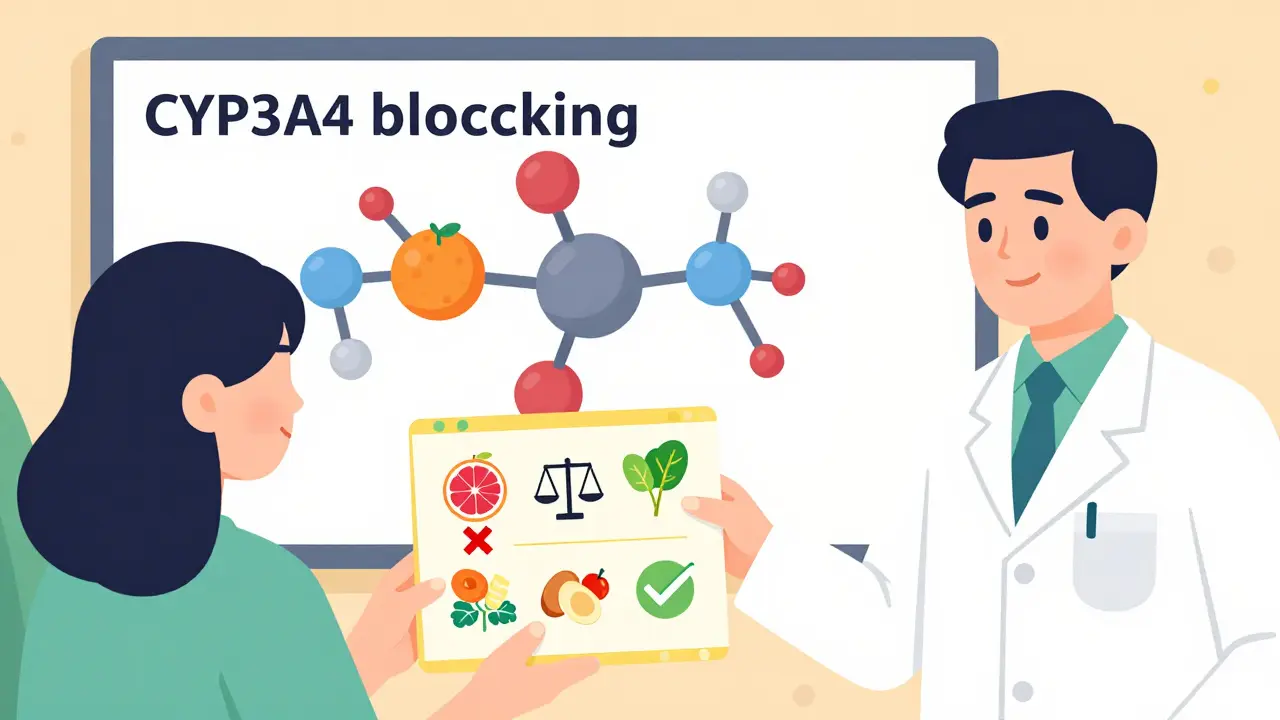
Grapefruit juice is the most dangerous food-drug interaction most people don’t know about. It’s not just grapefruit - it’s also pomelo, Seville oranges, and some tangelos. The juice blocks an enzyme in your gut called CYP3A4. That enzyme normally breaks down over 50 drugs, including:- Statins: simvastatin, atorvastatin, lovastatin
- Blood pressure meds: felodipine, nifedipine
- Immunosuppressants: cyclosporine, tacrolimus
- Anti-anxiety drugs: buspirone
One glass of grapefruit juice can affect your body for up to 72 hours. Even if you take your statin at night and drink grapefruit juice in the morning, the risk stays. The FDA says grapefruit interactions cause over 1,100 emergency room visits each year in the U.S. alone.
If you take any of these drugs, skip grapefruit completely. Orange juice? Most types are safe - except Seville. Stick to regular sweet oranges or apple juice.
What You Should Do Right Now
You don’t need to become a nutritionist. But you do need to be smart about your meds. Here’s what works:- Read the label. Look for “take on empty stomach,” “avoid dairy,” or “do not take with grapefruit.” If it’s not clear, ask your pharmacist.
- Keep a food and med log. Write down what you eat and when you take each pill. This helps spot patterns. Patients using food diaries for warfarin have 28% fewer INR issues.
- Ask your pharmacist. They’re trained to catch these interactions. Most don’t even charge for it. Bring your pill bottles or a list of everything you take - including vitamins and supplements.
- Use a medication app. MyMedSchedule, developed by the NIH, creates personalized schedules based on your meals. In a 2023 trial, users had 35% fewer interactions.
- Don’t assume “with food” means “with anything.” A candy bar won’t help your antibiotic absorb. You need real food - especially fat - when it’s required.
Why Most People Get It Wrong
The American Pharmacists Association found three big mistakes:- 68% of patients don’t understand “take on empty stomach.” They think it means “before breakfast,” not “one hour before.”
- 54% have never heard that grapefruit can interfere with meds.
- 41% believe all pills should be taken with food to avoid stomach upset - even when it’s dangerous.
It’s not your fault. Labels are confusing. Doctors are rushed. But the risk is real. In elderly patients, inconsistent timing with meals affects 63% - leading to falls, confusion, and hospital stays.
What’s Changing in 2025
The system is catching up. Starting January 1, 2025, Medicare Part D requires pharmacists to counsel seniors on food-drug interactions when they start high-risk drugs. That’s 12.7 million people getting clearer guidance.Drug labels are also getting smarter. The FDA now requires all new medications to include precise food interaction warnings - not just “avoid grapefruit,” but “do not consume grapefruit or pomelo within 4 hours of taking this medication.”
And some hospitals now test patients for CYP3A4 gene variants before prescribing statins. If you’re a slow metabolizer, you might be told to avoid grapefruit entirely - even if you’ve never had a problem before.
These aren’t just policies. They’re saving lives.
Final Rule: When in Doubt, Wait
If you’re not sure whether to take your pill with food or without, wait. Take it with water, then wait an hour before eating. It’s safer than guessing.Your medicine is powerful. Food isn’t just fuel - it’s a player in the game. Get the timing right, avoid the traps, and you’ll get the full benefit without the side effects.
Can I take my medication with coffee?
It depends. Coffee can slow down how fast some drugs are absorbed, especially thyroid meds like levothyroxine. For most other pills, it’s usually fine - unless the label says to avoid caffeine. If you’re unsure, take your pill with water and wait 30 minutes before drinking coffee.
Is it okay to take medicine with milk?
No, not for many antibiotics like tetracycline, doxycycline, or ciprofloxacin. The calcium in milk binds to these drugs and stops your body from absorbing them. You’ll get less than half the dose. Wait at least two hours after taking the medicine before drinking milk or eating cheese.
Does alcohol interact with medications?
Yes, and it’s often dangerous. Alcohol can increase drowsiness with sleep aids, painkillers, and antidepressants. It can damage your liver when taken with acetaminophen. With warfarin, it can raise your risk of bleeding. Even one drink can be risky. Always check with your doctor or pharmacist before drinking while on meds.
Why does grapefruit affect some drugs and not others?
Grapefruit blocks an enzyme called CYP3A4, which is found in your gut and liver. Only drugs that rely on this enzyme to break down are affected. Statins, blood pressure meds, and some anti-anxiety drugs do. Others, like lisinopril or metformin, don’t use this pathway - so grapefruit won’t touch them. Always check the list of drugs known to interact with grapefruit.
What if I forget and eat grapefruit with my statin?
If you accidentally eat grapefruit or drink the juice with your statin, don’t panic - but don’t repeat it. One time won’t cause a crisis, but it can raise your drug levels enough to increase side effects like muscle pain or liver stress. Skip grapefruit for the rest of the week, and talk to your doctor if you notice unusual fatigue, muscle weakness, or dark urine.
Can vitamins and supplements cause food-drug interactions?
Absolutely. Vitamin K reduces warfarin’s effect. Calcium and iron can block antibiotics. St. John’s Wort can make birth control, antidepressants, and transplant drugs less effective. Always tell your pharmacist everything you’re taking - even if you think it’s “natural” or “harmless.”
What to Do Next
Start today. Grab your pill bottles. Look at the instructions. Write down any that say “take on empty stomach,” “avoid dairy,” or “do not take with grapefruit.” Then, ask your pharmacist to review your full list. Most offer this for free.If you take warfarin, start a simple food log - just note how many servings of leafy greens you eat each day. Keep it steady. That’s the single biggest thing you can do to avoid hospital visits.
Medications save lives. But they need help from you - not just to take them, but to take them right. The food on your plate can make your medicine work better, worse, or dangerously. Know the rules. Follow them. Your body will thank you.
Glendon Cone
December 30, 2025 AT 00:39srishti Jain
December 30, 2025 AT 16:59Kelly Gerrard
December 31, 2025 AT 11:07Hayley Ash
January 1, 2026 AT 22:24Aayush Khandelwal
January 3, 2026 AT 21:20Sandeep Mishra
January 4, 2026 AT 00:24Joseph Corry
January 5, 2026 AT 05:12Henry Ward
January 6, 2026 AT 22:21Shae Chapman
January 7, 2026 AT 03:23Colin L
January 8, 2026 AT 13:21Cheyenne Sims
January 8, 2026 AT 16:07kelly tracy
January 10, 2026 AT 01:12