
Hepatitis A: What It Is, How to Prevent It, and How Long Recovery Takes
 Dec, 2 2025
Most people think of hepatitis as something that lasts forever - a lifelong condition you’re stuck with. But hepatitis A is different. It doesn’t stick around. It doesn’t turn chronic. And for most people, it’s a tough but temporary illness that clears up on its own. The problem? It spreads easily, hits hard, and often catches people off guard. If you’ve ever felt sick after eating at a restaurant, traveled overseas, or cared for someone who was ill, you might be wondering: Could this be hepatitis A? How long will it last? And how do you keep from getting it - or spreading it?
What Hepatitis A Actually Does to Your Body
How You Catch It - And Why It Spreads So Fast
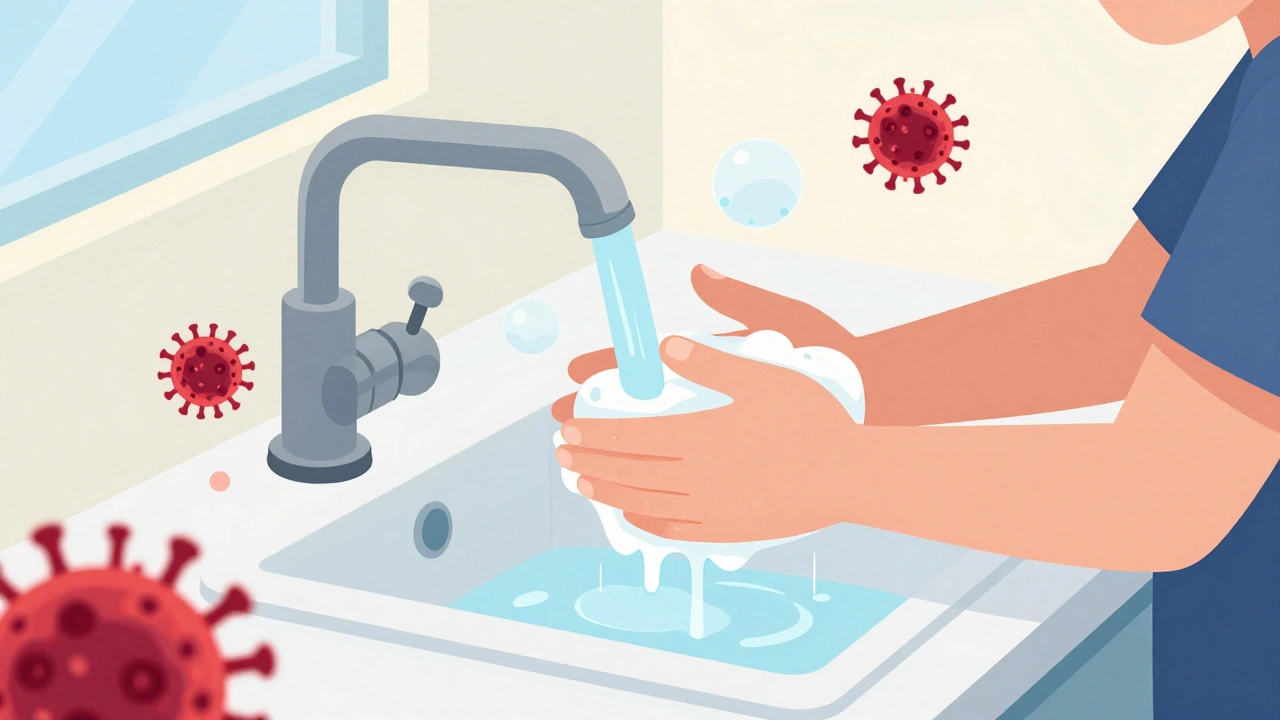
You don’t need to share needles or have unprotected sex to get hepatitis A. It’s not that kind of virus. It’s spread through something as simple as a contaminated hand. If someone with hepatitis A doesn’t wash their hands after using the bathroom and then touches a doorknob, a food item, or even a child’s toy, the virus can live there for days - sometimes up to 30 days. If you touch that surface and then touch your mouth, you’re at risk.
This is why outbreaks often happen in restaurants, daycare centers, or places where hygiene is inconsistent. The FDA tracked 17 foodborne outbreaks in 2022, mostly tied to produce handled by infected workers. In places with poor sanitation, contaminated water is the biggest source. But even in places like Australia or the U.S., where clean water is standard, outbreaks still happen - especially among people who use drugs, are homeless, or travel to areas with lower vaccination rates.
What’s scary is how contagious it is before you even know you’re sick. The virus peaks in your stool two weeks before jaundice shows up. That means you can be spreading it without knowing it. By the time your skin turns yellow and you feel awful, you’re already past your most infectious window.
What the Symptoms Really Look Like - And When to Worry
Symptoms don’t always come the same way. In kids under 6, 70% show no signs at all. They might act a little tired or lose their appetite, but no fever, no yellow eyes, no vomiting. That’s why hepatitis A spreads quietly in schools and childcare centers.
In adults, it hits harder. About 70-80% develop jaundice - that yellowing of the skin and eyes. Dark urine? That’s common. Fatigue? Nearly everyone reports it. One Reddit survey found 82% of adults said exhaustion was the worst part - lasting over six weeks on average. Loss of appetite, nausea, vomiting, fever, and abdominal pain are all typical. Some people get clay-colored stools or joint pain.
But here’s what most people don’t realize: symptoms don’t just go away in a week. The CDC says the median time to feel normal again is eight weeks. About 85-90% recover fully within two months. But 10-15% - mostly adults over 50 - have symptoms that come and go for up to six months. Relapses are real. One study showed 68% of adults had a second wave of tiredness or nausea after they thought they were getting better.
Acute liver failure is rare - less than 1% of cases - but it’s more likely if you’re over 50 or already have liver disease. That’s why it’s not something to ignore. If you’re vomiting nonstop, confused, or your skin is turning bright yellow, go to the hospital. Dehydration and liver stress can escalate fast.
How Long Does Recovery Actually Take?
There’s no magic cure. Your body fights off hepatitis A on its own. But how long you’re out of commission depends on your age, health, and how your liver responds.
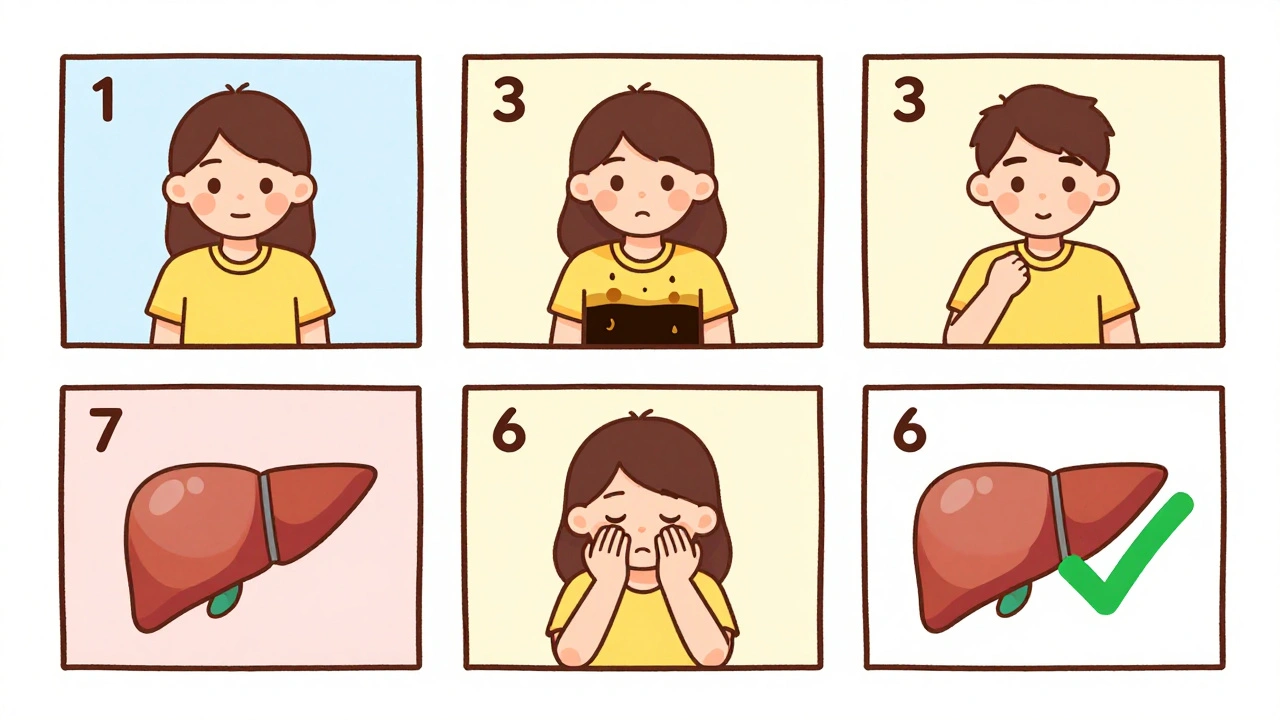
- Weeks 1-2: You feel flu-like - fatigue, nausea, low fever. You might think it’s food poisoning.
- Weeks 3-4: Jaundice appears. Your urine turns dark. Your appetite vanishes. This is when most people finally get tested.
- Weeks 5-8: Symptoms start fading. But fatigue lingers. You might feel okay in the morning, then crash by afternoon. This is normal.
- Weeks 9-12: Liver enzymes begin to normalize. Most people can return to work or school by now, as long as they’re not vomiting or dizzy.
- Months 3-6: For 10-15% of adults, symptoms bounce back. One study found relapses lasted 7-14 days each. Full recovery - including normal blood work - takes up to six months for 95% of people.
Don’t rush back. The American College of Gastroenterology recommends avoiding alcohol completely until your liver enzymes return to normal. Even light drinking can delay healing. And don’t take more than 2,000 mg of acetaminophen a day - it’s hard on your liver when it’s already stressed.
How to Prevent Hepatitis A - The Proven Ways
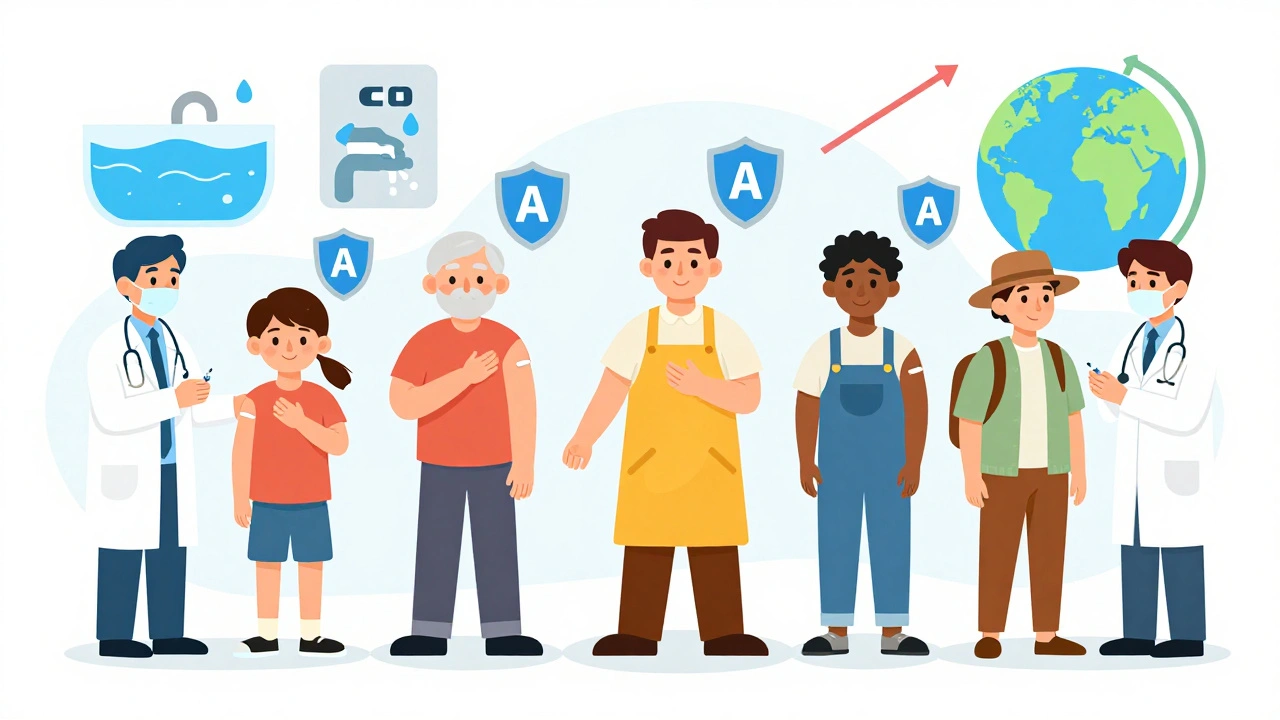
The best way to avoid hepatitis A? Get vaccinated. The hepatitis A vaccine is one of the most effective vaccines out there. After the first shot, you’re 95% protected within four weeks. After the second - given 6 to 18 months later - protection jumps to nearly 100%.
The CDC recommends all children get the vaccine between 12 and 23 months. But adults need it too - especially if you travel, work in healthcare, use drugs, or live in an area with recent outbreaks. In the U.S., vaccination has cut cases by 95% since 1995. That’s not a coincidence.
If you’ve been exposed and haven’t been vaccinated, you still have a window. If you get the vaccine or immune globulin within two weeks of exposure, you’re 85-90% likely to avoid infection. That’s why public health teams rush to vaccinate people after an outbreak at a restaurant or school.
Handwashing works. Not just any washing - soap and water for at least 20 seconds, especially after using the bathroom, changing diapers, or before cooking. Alcohol-based sanitizers don’t kill hepatitis A. Only soap and water do. The FDA says proper handwashing can reduce transmission by 30-50%.
And if someone in your house has it? Clean surfaces with bleach. Mix 5-10 tablespoons of bleach per gallon of water. Spray it on doorknobs, toilet handles, countertops. Let it sit for two minutes. The virus doesn’t stand a chance.
What Happens After You Recover?
Good news: once you’ve had hepatitis A, you’re immune for life. Your body makes antibodies that block the virus forever. No more shots. No more worry. You can’t get it again.
But you might still need follow-up. Liver enzymes can take months to return to normal. Your doctor might check your ALT and AST levels at 3 and 6 months. If they’re still high, it doesn’t mean you’re still infected - it just means your liver is healing slowly. Rest, good nutrition, and no alcohol are still key.
And don’t assume you’re out of the woods just because you feel fine. One Mayo Clinic survey found 41% of patients were first misdiagnosed as having gastroenteritis. That delay meant they didn’t get proper advice on avoiding others or resting their liver. If you’ve had unexplained fatigue, nausea, or jaundice, ask for a hepatitis A test - it’s a simple blood check.
Who’s Most at Risk - And What to Do
Children under 6? Often asymptomatic. They’re silent spreaders.
Adults over 50? Higher risk of severe illness. Fatality rates jump from 0.1% in kids to 2.6% in older adults.
People who use drugs, are homeless, or travel to countries with poor sanitation? Highest exposure risk. In 2019, the CDC reported a 350% spike in cases linked to these groups.
If you’re in any of these groups, talk to your doctor about the vaccine. It’s safe, effective, and often covered by insurance. In Australia, it’s free for children and certain high-risk adults under the National Immunisation Program.
And if you’re a food handler, caregiver, or work in healthcare? Get vaccinated. It’s not just about you - it’s about protecting the people you serve.
Can you get hepatitis A more than once?
No. Once you recover from hepatitis A, your body develops lifelong immunity. You won’t get infected again, even if you’re exposed to the virus later. This is why the vaccine works so well - it tricks your body into thinking it’s had the real thing, so it builds the same protection.
Is hepatitis A the same as hepatitis B or C?
No. Hepatitis A is completely different. It doesn’t become chronic, doesn’t cause liver cancer, and doesn’t require long-term treatment. Hepatitis B and C can live in your body for years, damage your liver silently, and need antiviral drugs. Hepatitis A is a short, sharp illness that your body clears on its own.
How long should I stay home if I have hepatitis A?
You’re most contagious before symptoms start and during the first week after jaundice appears. Most health departments say you can return to work or school one week after jaundice begins - as long as you’re no longer vomiting or having diarrhea. Always check with your doctor or local health authority for clearance, especially if you work with food or care for others.
Can I drink alcohol after recovering from hepatitis A?
Wait until your liver enzymes return to normal - usually 3 to 6 months after symptoms start. Even small amounts of alcohol can slow healing. Your doctor can check a blood test to confirm your liver is fully recovered before you resume drinking.
Does the hepatitis A vaccine have side effects?
Very few. In a study of 45,000 vaccinated children, 99.8% had no serious side effects. The most common reaction is mild soreness at the injection site, lasting less than 48 hours. Fever or fatigue is rare. The vaccine is safe for adults, pregnant women, and people with chronic conditions.
Can you get hepatitis A from food in Australia?
Yes - but it’s rare. Outbreaks are usually linked to imported food or infected food workers. In 2022, the FDA reported 17 outbreaks tied to contaminated produce. In Australia, strict hygiene rules and vaccination programs keep cases low. Still, always wash fresh produce and avoid eating raw shellfish from unknown sources.
Erik van Hees
December 4, 2025 AT 10:23Let me break this down real simple: hepatitis A is basically the ultimate party crasher that shows up uninvited, makes a mess, and leaves after a few weeks. No lifelong damage, no chronic crap. The real kicker? You can be spreading it while you think you’re just hungover from last night’s tacos. Hand sanitizer? Useless. Only soap and water kills it. And yeah, if you work in a kitchen or daycare, get the shot. It’s not optional anymore.
Ethan McIvor
December 6, 2025 AT 06:26Man, this hit different. I had it back in college after eating at that sketchy taco truck. Thought I had food poisoning for weeks. The fatigue? Brutal. Like, ‘can’t-get-out-of-bed-even-when-I’m-not-sick’ fatigue. And nobody talks about how the relapses sneak up on you. One day you’re fine, next day you’re curled up on the couch again. 😔
Mindy Bilotta
December 8, 2025 AT 03:18sooo i had hep a in 2020 and honestly the worst part was not the jaundice or vomitin… it was the fact that i couldnt eat ANYTHING for like 3 weeks. my mom made chicken soup and i just stared at it like it was poison. and then when i finally felt better i ate a bag of chips and got sick again. lol. also bleach wipes are life. 🙏
Colin Mitchell
December 9, 2025 AT 16:40Hey everyone, just wanted to add something real quick - if you’re reading this and you’re over 50 or have liver issues, please don’t wait until you feel awful to get tested. I had a friend who ignored the fatigue and nausea for months, thought it was stress. Turned out he was in the 10% with the six-month rollercoaster. Got vaccinated after, now he’s fine. Don’t be like him. Your liver will thank you. 🙌
Chad Kennedy
December 10, 2025 AT 09:19Ugh. Another ‘get the vaccine’ post. Like, I’ve had hepatitis A. I survived. Why should I get a shot for something that goes away on its own? Also, handwashing? In 2024? People still think soap is magic? 😒
Siddharth Notani
December 11, 2025 AT 15:34It is imperative to note that hepatitis A is a self-limiting disease with a remarkable recovery rate. The virus is transmitted via the fecal-oral route, and its stability in the environment is well-documented. Vaccination remains the most efficacious public health intervention. In India, we have witnessed a 78% decline in cases since the inclusion of the vaccine in the universal immunization program. Hygiene and sanitation are non-negotiable. 🙏
Cyndy Gregoria
December 11, 2025 AT 16:31You got this. Seriously. I was out for 10 weeks after mine. You’re not lazy. You’re healing. Drink water. Eat bananas. No alcohol. No acetaminophen. And if someone says ‘it’s just a stomach bug’ - tell them to read this thread. You’re not overreacting. Your body is doing hard work. I’m proud of you. 💪
Akash Sharma
December 12, 2025 AT 19:13Interesting how the article mentions that 68% of adults experience relapses, but doesn’t really go into why that happens. I’ve been reading some immunology papers, and it seems like the immune system’s response to the virus causes temporary inflammation in the liver even after viral clearance, which explains the recurring fatigue and nausea. Also, the liver’s regenerative capacity varies by age and metabolic health - so people with insulin resistance or fatty liver might have longer recovery times. I wonder if there’s any research on nutritional support during recovery - like NAC or milk thistle? Maybe that’s worth a follow-up study.
Justin Hampton
December 13, 2025 AT 07:20Everyone’s acting like this is some big secret. It’s not. It’s just a glorified stomach bug. The CDC is overhyping it. I’ve been to 3 countries, ate street food, never got sick. You’re just weak. Also, vaccines are for sheep. I don’t trust big pharma. And bleach? Please. I use Windex. Works fine.
Pooja Surnar
December 13, 2025 AT 13:09People who don't get the vaccine are selfish. You think you're 'choosing freedom'? Nah. You're choosing to poison kids in daycare. You're choosing to make nurses sick. You're choosing to make old people die. And then you sit there on your phone and act like you're a hero? Wake up. Your laziness has consequences. Get the shot. Or stay home. 🤦♀️