
Generic Medications: How They Save Patients Money Without Compromising Care
 Jan, 7 2026
When you fill a prescription, you might see two options: the brand-name drug you’ve heard of, or a cheaper version with a long chemical name. Most people assume the brand-name one is better. But here’s the truth: generic medications work the same way, cost far less, and are held to the exact same safety standards. For millions of patients, switching to generics isn’t just a smart financial move-it’s how they stay on their meds without choosing between rent and refills.
What Exactly Are Generic Medications?
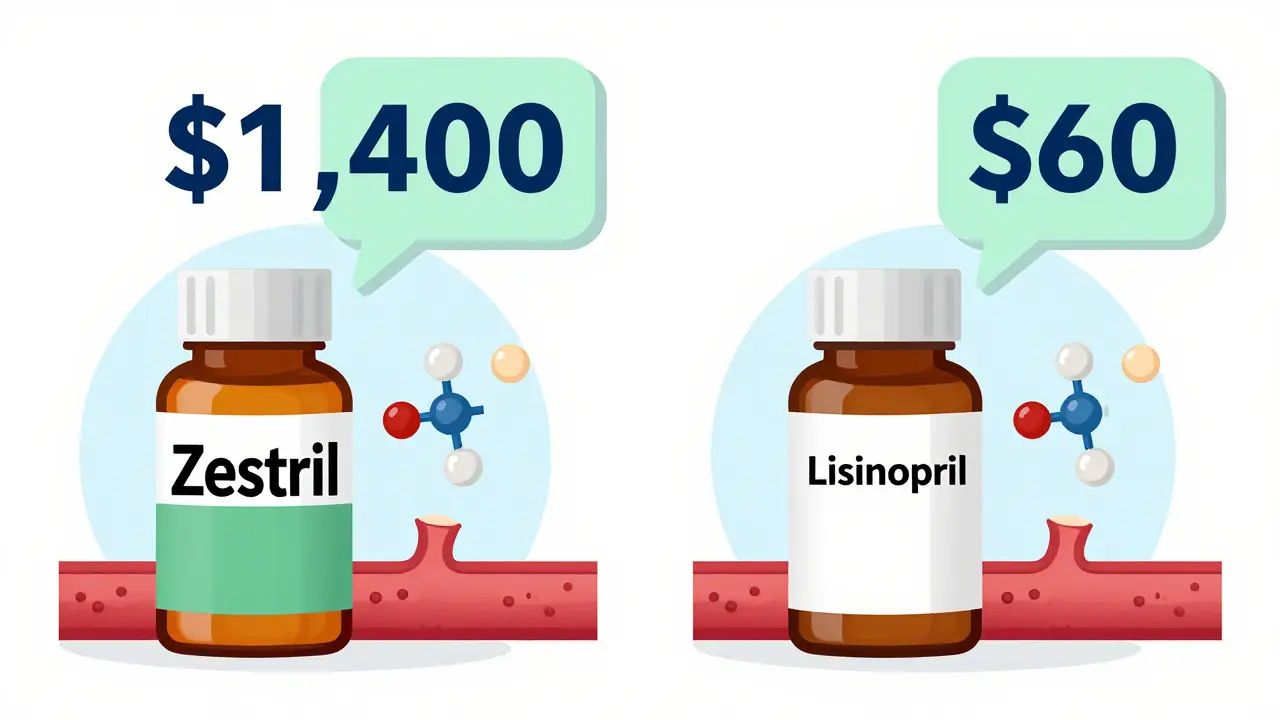
Generic medications contain the same active ingredient as their brand-name counterparts. That means if you’re taking lisinopril for high blood pressure, the generic version has the exact same molecule working in your body as the brand-name Zestril. The FDA requires generics to deliver the same amount of that active ingredient into your bloodstream at the same speed as the original. This is called bioequivalence-and it’s not a suggestion. It’s a legal requirement.The only differences? The shape, color, flavor, or inactive ingredients like fillers or dyes. These don’t affect how the drug works. You might notice your pill looks different after switching, but that’s just because the manufacturer changed the coating or added a different binder. The medicine inside? Identical.
Generics are sold under their chemical names-like metformin instead of Glucophage, or atorvastatin instead of Lipitor. They’re not knockoffs. They’re approved, tested, and monitored just like the brand-name versions. In fact, many brand-name companies even make their own generic versions after their patent expires.
How Much Money Can You Actually Save?
The savings aren’t small. They’re massive. On average, generic medications cost 85% less than the brand-name drugs they replace. That’s not a guess-it’s what the FDA reports based on real-world pricing data.Take a common cholesterol drug: in 2022, one brand-name version cost about $1,400 for a 30-day supply. The generic? Under $60. Another example: a medication priced at $88 per milliliter dropped to less than $10 after generics entered the market. That’s a 90% price drop. For patients taking multiple prescriptions, that adds up fast.
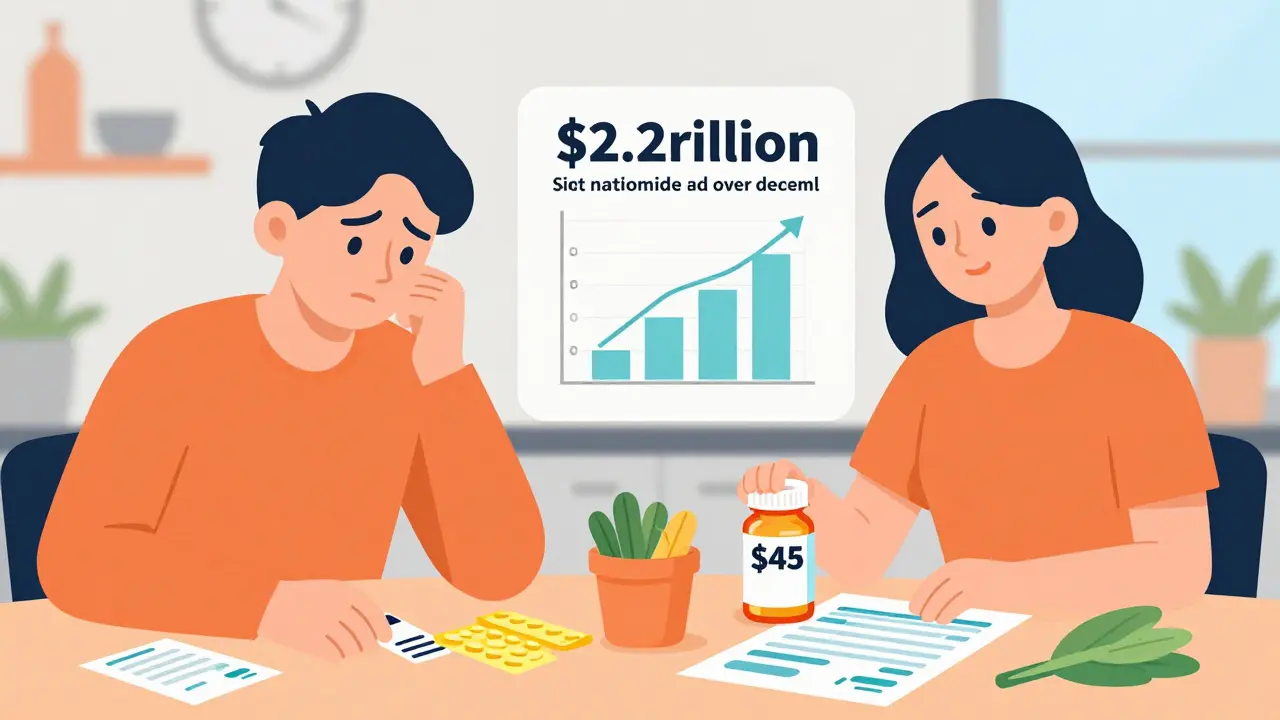
Over the last decade, generic drugs saved U.S. patients more than $2.2 trillion. That’s not a typo. That’s trillions. And it’s not just about the uninsured. Even people with insurance save big. Between 2010 and 2020, out-of-pocket costs for generics dropped by about half, while total prescription costs (including what insurers paid) fell nearly 80%.
At pharmacies like Costco, 90% of the most commonly prescribed generic drugs cost less than $20 for a 30-day supply. Medicare Part D beneficiaries often pay under $5 per generic prescription. Some people report saving $200-$300 a month just by switching their maintenance medications to generics. One Reddit user shared that his monthly prescription bill dropped from $450 to $45 after switching to generics. That’s $5,000 a year saved.
Are Generic Medications Really as Effective?
Yes. And the science backs it up.The FDA doesn’t approve generics based on trust. They require manufacturers to prove their product performs the same as the brand-name drug in the body. That means the amount absorbed, how fast it enters the bloodstream, and how long it stays active-all must be within strict limits (80-125% of the brand-name drug). If it doesn’t meet those numbers, it doesn’t get approved.
Doctors and researchers have studied this for decades. A 2023 review in JAMA Health Forum looked at over 100 studies comparing generics and brand-name drugs. The conclusion? No clinically meaningful difference in effectiveness or safety. The same results. Same side effects. Same outcomes.
Some patients report feeling different after switching-like their thyroid medication isn’t working as well. That’s often not because the generic is weaker. It’s because tiny variations in inactive ingredients can affect how the pill dissolves in the stomach. For drugs with a narrow therapeutic index-like levothyroxine, warfarin, or phenytoin-doctors may prefer to stick with one version to avoid small fluctuations. But even then, switching between generics is usually safe. The key? Don’t jump between multiple brands every month. Pick one and stick with it.
How Do You Actually Get Generic Medications?
It’s easier than you think. In most states, pharmacists are legally allowed to substitute a generic for a brand-name drug unless the doctor specifically writes “dispense as written” or “no substitution.” That means if your doctor prescribes “metoprolol,” the pharmacist will likely give you the generic unless you say otherwise.But here’s what most people don’t know: you can always ask. If you’re handed a brand-name pill and you’re not sure why, ask: “Is there a generic available?” Pharmacists are trained to answer this. They’ll check your insurance formulary and tell you what’s covered and how much each option costs.
Some insurance plans have tiered copays: $5 for generics, $40 for brand-name. If your plan doesn’t cover the brand-name version at all, you’ll pay full price-and that could be hundreds. Always compare cash prices too. Sometimes, paying cash at Walmart, Costco, or through the Mark Cuban Cost Plus Drug Company is cheaper than using your insurance. In 2023, uninsured patients saved a median of $6.08 per prescription using these direct-to-consumer models.
Don’t assume your insurance will automatically choose the cheapest option. Call your pharmacy. Check your plan’s formulary online. Ask your doctor if they’ll write for the generic. It takes two minutes-and could save you hundreds.
When Might You Need to Stick With Brand-Name?
Most of the time, generics are the clear winner. But there are exceptions.Biologic drugs-like those used for rheumatoid arthritis, Crohn’s disease, or certain cancers-are complex molecules made from living cells. Their generic versions are called biosimilars, and they’re harder to produce and approve. While biosimilars are still much cheaper than the original biologics, they’re not as straightforward as traditional generics. But they’re getting better, faster, and more common.
For some patients with chronic conditions, switching between different generic manufacturers can cause minor fluctuations in how the drug works. That’s why doctors sometimes recommend staying on one brand of generic, especially for drugs like seizure medications or blood thinners. But again, this is rare. Most people switch without issue.
If you feel worse after switching, talk to your doctor. Don’t assume it’s the generic. It could be stress, diet, sleep, or another medication interacting. But if it’s really the drug, your doctor can request the brand-name version. Insurance might still cover it if you have a documented medical reason.
What’s Changing Right Now?
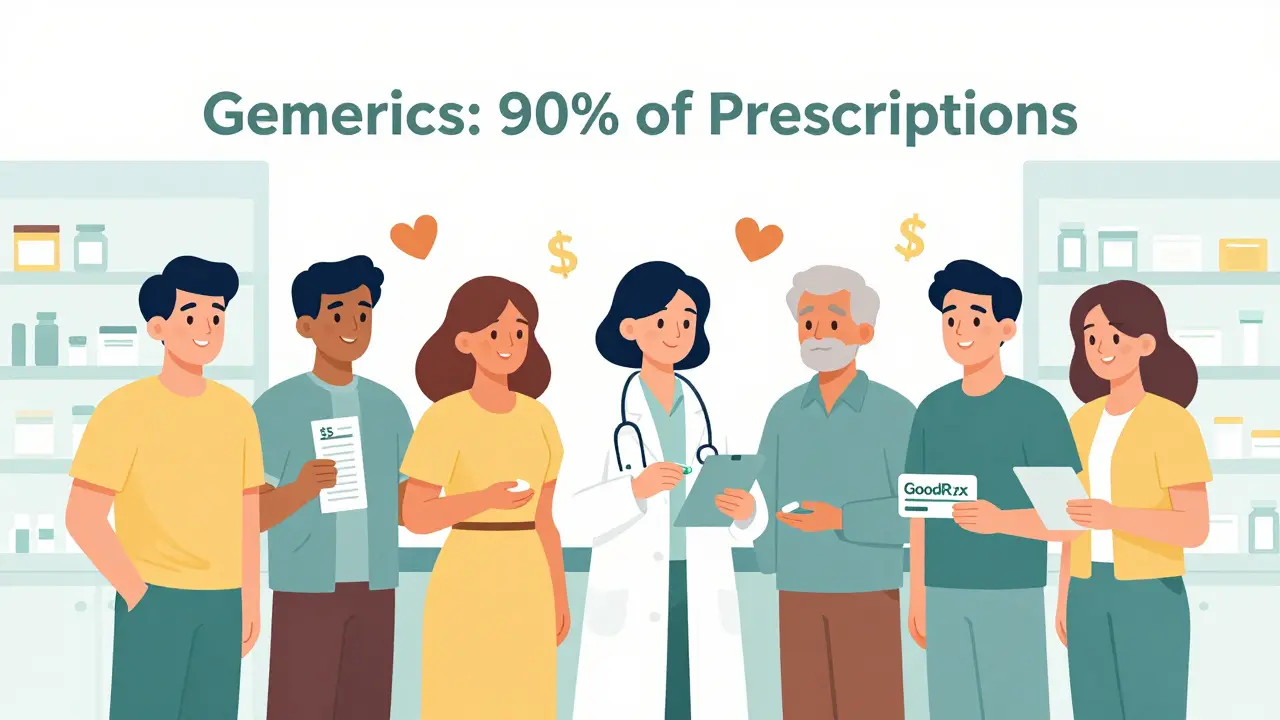
The generic drug market is growing. More than 90% of all prescriptions filled in the U.S. are now for generics. That’s up from 78% in 2010. The FDA approved hundreds of new generics in 2023 alone, and more blockbuster drugs are losing patent protection every year.New players are entering the market too. The Mark Cuban Cost Plus Drug Company, launched in 2022, cuts out middlemen and sells generics at transparent prices-often 50-80% lower than traditional pharmacies. Other discount programs, like GoodRx, let you compare prices across pharmacies and print coupons that beat insurance copays.
There’s still a backlog of generic applications at the FDA, and some low-margin generics are disappearing because manufacturers can’t make a profit. But overall, competition is increasing, not decreasing. Analysts predict generic drugs will continue to save the U.S. healthcare system $100-200 billion annually over the next five years.
Final Thought: It’s Not About Cheap-It’s About Access
Generic medications aren’t just a budget hack. They’re a public health win. They let people with diabetes, high blood pressure, asthma, and depression afford their daily treatment. They prevent hospitalizations caused by skipped doses. They keep families from choosing between medicine and groceries.Switching to generics doesn’t mean lowering your standards. It means making smarter choices with the same quality. You’re not sacrificing safety. You’re gaining freedom-from high bills, from financial stress, from the fear that your next refill might break the bank.
Next time you get a prescription, ask: Is there a generic? The answer might just change your life.
Are generic medications as safe as brand-name drugs?
Yes. The FDA requires generic drugs to meet the same strict standards for quality, strength, purity, and stability as brand-name drugs. They’re made in the same type of facilities, inspected the same way, and tested to prove they work identically in the body. There’s no difference in safety.
Why do generic pills look different from brand-name ones?
By law, generic manufacturers can’t make their pills look exactly like the brand-name version. That’s to avoid confusion. So they change the color, shape, or size. These differences are only in the inactive ingredients-like dyes or fillers-which don’t affect how the drug works. The active ingredient is identical.
Can I switch from a brand-name drug to a generic without talking to my doctor?
In most cases, yes. Pharmacists can legally substitute a generic unless your doctor specifically says “dispense as written.” But it’s still a good idea to tell your doctor you’re switching, especially if you’re on a medication with a narrow therapeutic index like thyroid medicine or blood thinners. They can monitor you to make sure everything stays stable.
Is it cheaper to buy generics with insurance or pay cash?
Sometimes cash is cheaper. Many generics cost under $20 at pharmacies like Walmart or Costco-even if your insurance copay is higher. Use tools like GoodRx or check the Mark Cuban Cost Plus Drug Company website to compare cash prices before using your insurance. Always ask your pharmacist: “What’s the cash price?”
Do generic medications take longer to work?
No. The FDA requires generics to be bioequivalent, meaning they enter your bloodstream at the same rate and in the same amount as the brand-name drug. You’ll feel the effects at the same time. If you notice a delay, it’s likely due to other factors-like food intake, hydration, or stress-not the medication itself.
Donny Airlangga
January 8, 2026 AT 01:17I switched my mom to generic lisinopril last year after she was struggling to afford it. She was terrified it wouldn’t work, but after a month, her BP was better than ever. No side effects, no weird feelings. Just cheaper, same results. She calls it her ‘financial miracle pill’ now.
Molly Silvernale
January 8, 2026 AT 20:23Generics aren’t ‘cheap’-they’re *corrective*-a systemic correction to pharmaceutical greed wrapped in plastic and patent law. The brand-name drug isn’t ‘better’-it’s just been marketed harder, priced higher, and sold with a halo of placebo-powered prestige. The molecule doesn’t care about your logo. It only cares about your bioavailability-and the FDA makes sure it delivers. We’ve been conditioned to equate price with quality. That’s not science. That’s capitalism with a stethoscope.
Aubrey Mallory
January 10, 2026 AT 15:31If you’re still paying full price for a brand-name drug when a generic exists, you’re not being loyal-you’re being exploited. Pharmacies don’t push generics because they care about you. They push them because they make more money. But guess what? So do you. Stop letting corporate marketing decide your health. Ask for the generic. Every. Single. Time. And if your doctor hesitates? Ask them why. Their job is to keep you alive-not to uphold brand loyalty.
christy lianto
January 12, 2026 AT 02:44My dad’s on warfarin. We were nervous about switching. But we did it-same generic, same pharmacy, same dose. His INR stayed perfect. He saved $217 a month. That’s a whole extra grocery run. Or a new pair of shoes. Or a weekend trip to see his grandkids. That’s what generics do-they give you back your life. Not just your money. Your life. And if you’re still scared? Talk to your pharmacist. They’re the real heroes here. Not the ads.
swati Thounaojam
January 12, 2026 AT 07:07in india generics r life saver. i pay 50 rs for metformin instead of 1500 rs for glucophage. no diff in how i feel. just more money for chai.
Manish Kumar
January 13, 2026 AT 11:48You know what’s funny? The same people who scream about ‘natural remedies’ and ‘chemicals in food’ are the first to pay $1,200 for a brand-name pill that’s chemically identical to the $40 version. There’s a cognitive dissonance here, a kind of pharmaceutical romanticism. We worship the brand like it’s a sacred artifact, when in reality, it’s just a patent-protected version of a molecule that nature didn’t invent. The active ingredient doesn’t come with a logo. It doesn’t have a marketing budget. It just… works. And that’s the real revolution here-not the pill, but the realization that we’ve been paying for branding, not biology.
Dave Old-Wolf
January 15, 2026 AT 07:34I had no idea generics were this cheap. I thought they were just ‘kinda similar.’ Turns out they’re legally required to be the same. So why do I keep getting the brand name? I guess I just never asked. Dumb move. I’m switching everything next refill.
Prakash Sharma
January 16, 2026 AT 03:00USA spends more on drugs than any country on earth. Why? Because we let corporations rip us off. India makes 60% of the world’s generics. We should be importing them, not paying 20x more. Shame on us.
Kristina Felixita
January 16, 2026 AT 13:47just switched my anxiety med to generic-was scared at first, but now i feel like a genius 😊 i saved $180/month. that’s like 3 months of yoga classes. also, my pill is blue now. i like blue pills. they feel calmer.
Joanna Brancewicz
January 18, 2026 AT 03:48Bioequivalence thresholds: 80–125% AUC and Cmax. FDA’s 2023 guidance reaffirms this for narrow-therapeutic-index drugs. Switching between generics is clinically acceptable when monitored. Avoid polypharmacy substitutions.
Evan Smith
January 19, 2026 AT 09:43So let me get this straight: I’ve been paying $300 a month for a pill that’s basically a $12 version with a different color? And the company that made the original makes the generic too? That’s not capitalism. That’s a magic trick with a lab coat.
Lois Li
January 20, 2026 AT 14:17I’ve been telling my patients this for years. The only time I don’t push generics is if they’ve had a bad reaction to a specific manufacturer’s version. But even then, it’s not the generic-it’s the filler. One brand. Stick with it. And if they’re still worried? I hand them the FDA’s generic drug fact sheet. Most of them cry. Not from sadness-from relief.