
Generic Drug Labeling Requirements: What the FDA Mandates
 Dec, 31 2025
When you pick up a generic prescription, you expect it to work just like the brand-name version. But what you might not realize is that the labeling on that bottle isn’t just a suggestion-it’s legally required to match the brand drug exactly, with very few exceptions. The U.S. Food and Drug Administration (FDA) enforces this rule tightly, and failing to follow it can lead to warning letters, product recalls, or even legal action. For pharmacies, patients, and manufacturers alike, understanding these labeling rules isn’t just about compliance-it’s about safety.
Why Generic Drug Labels Must Match the Brand
Under Section 505(j)(2)(A)(v) of the Federal Food, Drug, and Cosmetic Act, generic drugs must have labeling that is identical to their Reference Listed Drug (RLD). This means every section-from warnings and side effects to dosage instructions and contraindications-must be the same. The goal? To ensure that patients, doctors, and pharmacists get the same critical information regardless of whether they’re using the brand or the generic version. This isn’t just about consistency. It’s about preventing dangerous confusion. Imagine a patient switching from a brand-name blood pressure medication to its generic. If the label on the generic didn’t mention a rare but serious interaction with grapefruit juice-while the brand’s label did-the patient could end up in the hospital. That’s why the FDA demands exact alignment.What Exactly Must Be Identical?
The FDA’s requirements are detailed in 21 CFR 314.94(a)(8). Here’s what must match exactly:- Active ingredient
- Dosage form (tablet, capsule, injection, etc.)
- Route of administration (oral, topical, IV)
- Strength
- Indications and usage
- Contraindications
- Warnings and precautions
- Adverse reactions
- Clinical pharmacology
- Drug interactions
- Use in specific populations (pregnancy, elderly, children)
- Manufacturer name and address
- National Drug Code (NDC) number
- Minor formatting changes due to packaging constraints
The Physician Labeling Rule (PLR) and Standardized Format
Since 2006, all new prescription drug labels must follow the Physician Labeling Rule (PLR). This rule forces all labeling-brand and generic alike-into a strict, easy-to-read format. The PLR breaks down the label into 24 standardized sections, including:- Highlights of Prescribing Information (a quick-reference summary)
- Recent Major Changes
- Indications and Usage
- Dosage and Administration
- Contraindications
- Warnings and Precautions
- Adverse Reactions
- Drug Interactions
- Use in Specific Populations
- Drug Abuse and Dependence
- Overdosage
- How Supplied/Storage and Handling
How Generic Manufacturers Track Label Changes
Keeping up with labeling updates is a full-time job. The FDA doesn’t notify generic companies when the RLD changes. It’s up to the manufacturer to monitor the Drugs@FDA database, which contains approved labeling for all reference drugs. As of January 2025, there were 2,850 RLDs listed there, with updates posted every Tuesday. Leading generic drug companies assign 3 to 5 full-time regulatory staff to track labeling changes for every 50 products. Many subscribe to CDER’s email alerts, which notify them when labeling updates occur in specific therapeutic areas like diabetes, hypertension, or antidepressants. According to an FDA survey, 82% of manufacturers rely on these alerts as their primary monitoring tool. But it’s not foolproof. A 2024 FDA audit found that 17% of RLD entries in the Orange Book had temporary mismatches with Drugs@FDA during transition periods. That means manufacturers sometimes have to cross-check multiple sources to make sure they’re using the most current label.
The Big Problem: Delayed Safety Updates
Here’s where the system breaks down. Brand-name drug manufacturers can update their labels to include new safety information using a “Changes Being Effected” (CBE) supplement. That means they can change the label and start selling the updated version while the FDA reviews it-usually within 30 days. Generic manufacturers can’t do that. They must wait for the brand to update its label, then wait for the FDA to approve the change to the RLD, then update their own label to match. This process can take 6 to 12 months. A 2024 study in JAMA Internal Medicine found this delay affects 9,400 generic drugs-89% of all prescriptions filled in the U.S. That means patients are often taking medications with outdated safety warnings while the brand’s label has already been updated. The 2022 valsartan recall is a chilling example. Contamination risks were identified in the brand-name version, and its label was quickly updated. But generic manufacturers couldn’t update their labels until months later, leaving patients unaware of the danger.What’s Being Done to Fix It?
The FDA recognizes this gap. In 2023, it proposed a rule that would allow generic manufacturers to update their labels independently when new safety information emerges-similar to how brand companies do it. As of January 2025, that rule is still pending. The 2020 MODERN Labeling Act was a step forward. It gave the FDA authority to require updates for generic drugs even when the original RLD has been discontinued. Before this law, if the brand drug was pulled from the market, the generic could be stuck with outdated, unusable labeling. Now, under the draft guidance “Updating ANDA Labeling After the Marketing Application for the Reference Listed Drug Has Been Withdrawn,” the FDA can designate a new reference point for labeling. This affects over 1,200 discontinued RLDs and 3,500 generic products.What Happens If You Don’t Comply?
Labeling errors are the #1 reason the FDA issues complete response letters to ANDA applications. In fiscal year 2024, 37% of those letters cited labeling issues. Between January 2023 and December 2024, the FDA issued 47 warning letters specifically for labeling discrepancies in generic drugs. These aren’t small mistakes. They’re failures to update critical safety information, incorrect dosage instructions, or missing boxed warnings. The consequences? Product seizures, import alerts, or even suspension of manufacturing. For a small generic company, that can mean bankruptcy.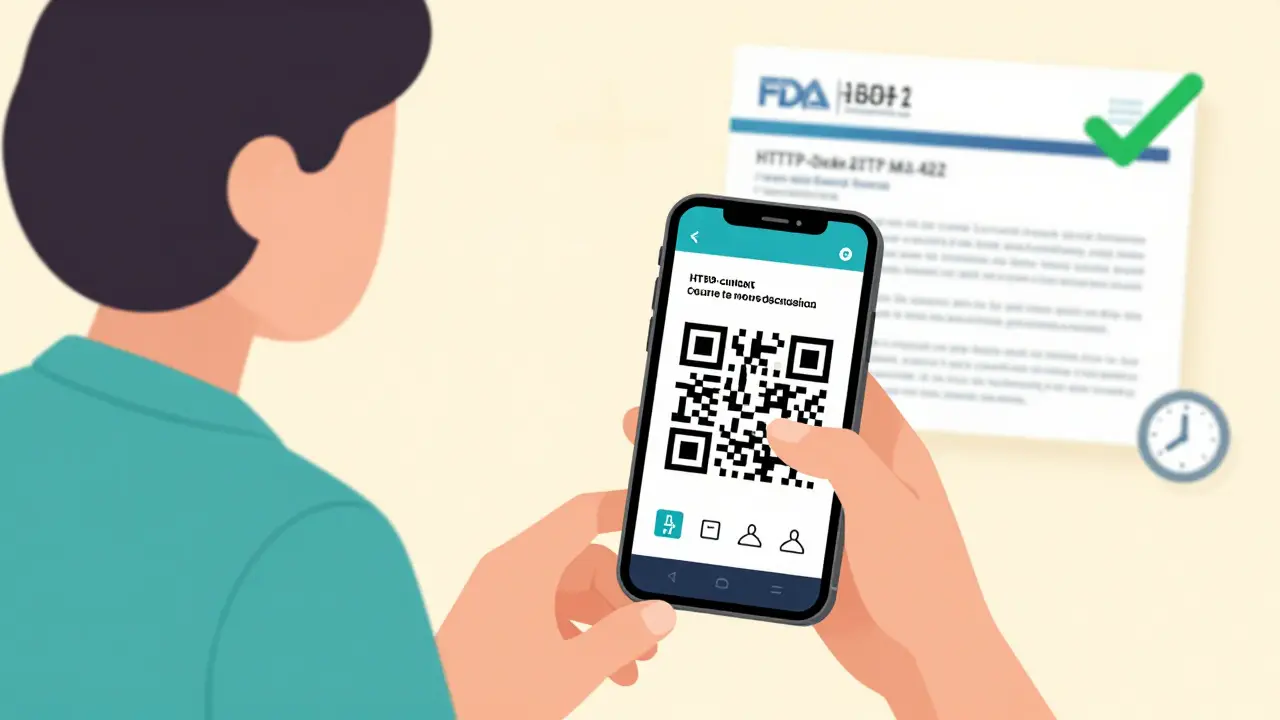
What’s Coming Next?
The FDA is building a new system called the Next Generation Generic Drug Labeling System, set to launch in Q3 2025. It will use AI to automatically detect labeling changes in RLDs and notify generic manufacturers in real time. Beta testing began in April 2025 with 15 major manufacturers. The system will also require electronic labeling distribution. Instead of printing lengthy medication guides, manufacturers must now include a URL or QR code on the packaging that links directly to the current FDA-approved label in PDF format. The link must use HTTPS and be secure. Industry analysts predict labeling compliance costs will rise 25-30% over the next five years. Generic manufacturers are expected to spend $2.8 billion total on labeling infrastructure by 2029.What Patients Should Know
If you’re taking a generic drug, don’t assume the label is always up to date. If you hear about a new safety alert for a brand-name drug, check if your generic has the same warning. Ask your pharmacist. You can also look up the current label yourself on Drugs@FDA. The system is designed for safety-but it’s not perfect. Being informed is your best protection.Key Takeaways
- Generic drug labels must be identical to the brand’s RLD in all clinical content.
- Only manufacturer name, address, and NDC number can differ.
- All labels must follow the FDA’s Physician Labeling Rule format.
- Generic manufacturers cannot update labels independently-they must wait for the brand’s update.
- This delay can leave patients exposed to outdated safety information for up to a year.
- Labeling errors are the top reason for FDA rejection of generic drug applications.
- AI-powered labeling updates and electronic links are coming in 2025.
Aaron Bales
December 31, 2025 AT 17:34Generic labels matching brand drugs isn’t just bureaucracy-it’s life-or-death. I’ve seen pharmacists scramble when a label misses a grapefruit warning. The system works… until it doesn’t.
Lawver Stanton
January 2, 2026 AT 04:15Let’s be real-this whole system is a glorified game of telephone where the last person gets the wrong message. The FDA acts like generics are just clones, but they’re not! The companies are underfunded, overworked, and stuck waiting for Big Pharma to update their damn labels. Meanwhile, grandma’s taking a pill that says ‘no interaction’ while the brand’s label screams ‘HEART ATTACK RISK’ in bold red. And we wonder why people don’t trust the system? It’s not conspiracy-it’s incompetence wrapped in regulation.
Sara Stinnett
January 3, 2026 AT 04:32How delightfully Orwellian-identical labeling, yet only the brand gets to speak first. The FDA’s insistence on parity is a façade for institutionalized delay. The generic manufacturer is not a co-conspirator in safety-they’re a footnote, forced to mimic a moving target while patients become collateral. This isn’t regulation; it’s a performance of control, where the illusion of equivalence masks the reality of vulnerability. And let’s not pretend the ‘CBE’ loophole for brand firms is anything but corporate privilege dressed in white coats.
linda permata sari
January 4, 2026 AT 18:27In Indonesia, we don’t have this problem-generic drugs are labeled in Bahasa, and the info is always updated by the local health ministry. I know it’s different here, but why does the U.S. need 24 sections and AI systems to do what other countries do with one clear pamphlet? Maybe we over-engineer safety because we’ve lost trust in each other.
Brandon Boyd
January 5, 2026 AT 03:35Hey, if you’re on a generic med, don’t just assume it’s safe-ask your pharmacist! Seriously, it takes 30 seconds. And if you see a new alert on the brand? Google the drug + ‘FDA label update’-you’ll find the latest PDF in minutes. You’re your own best advocate. Small steps save lives.
Chandreson Chandreas
January 6, 2026 AT 19:50Life’s like a generic drug-same effect, different packaging. But when the warning label lags? That’s when the universe whispers, ‘Hey, you’re on your own.’ 🌱💊
Darren Pearson
January 7, 2026 AT 06:11One must acknowledge the structural integrity of the ANDA framework-it is, after all, the cornerstone of modern pharmaceutical equity. The FDA’s adherence to labeling parity is not merely regulatory dogma but a principled safeguard against therapeutic fragmentation. To permit differential labeling would introduce epistemic instability into clinical decision-making, a prospect both scientifically untenable and ethically indefensible.
Jenny Salmingo
January 9, 2026 AT 01:24My mom takes blood pressure meds. She never checks the label. I printed out the Drugs@FDA page for her and put it in her pillbox. She says it’s ‘too much paperwork.’ But I keep doing it. Because someone has to.
Branden Temew
January 9, 2026 AT 05:13So the FDA lets brand companies update safety info in 30 days… but generics wait a year? Wow. So if I get a new warning on my brand-name drug, I’m supposed to trust that my $3 generic is still safe? That’s not science. That’s a punchline written by a bureaucrat who’s never held a pill bottle in their hand. At least the AI system coming in 2025 will be faster than the people running this circus.