
Future Role of Authorized Generics: Market Outlook
 Jan, 3 2026
When a brand-name drug loses its patent, you’d expect prices to drop fast-thanks to generic competitors stepping in. But what if the brand company itself starts selling the same drug at a lower price, under a generic label? That’s an authorized generic. It’s not a knockoff. It’s the exact same pill, same factory, same packaging-just without the brand name. And in the coming years, these products will play a bigger, more complex role in shaping drug prices, competition, and patient access.
What Exactly Are Authorized Generics?
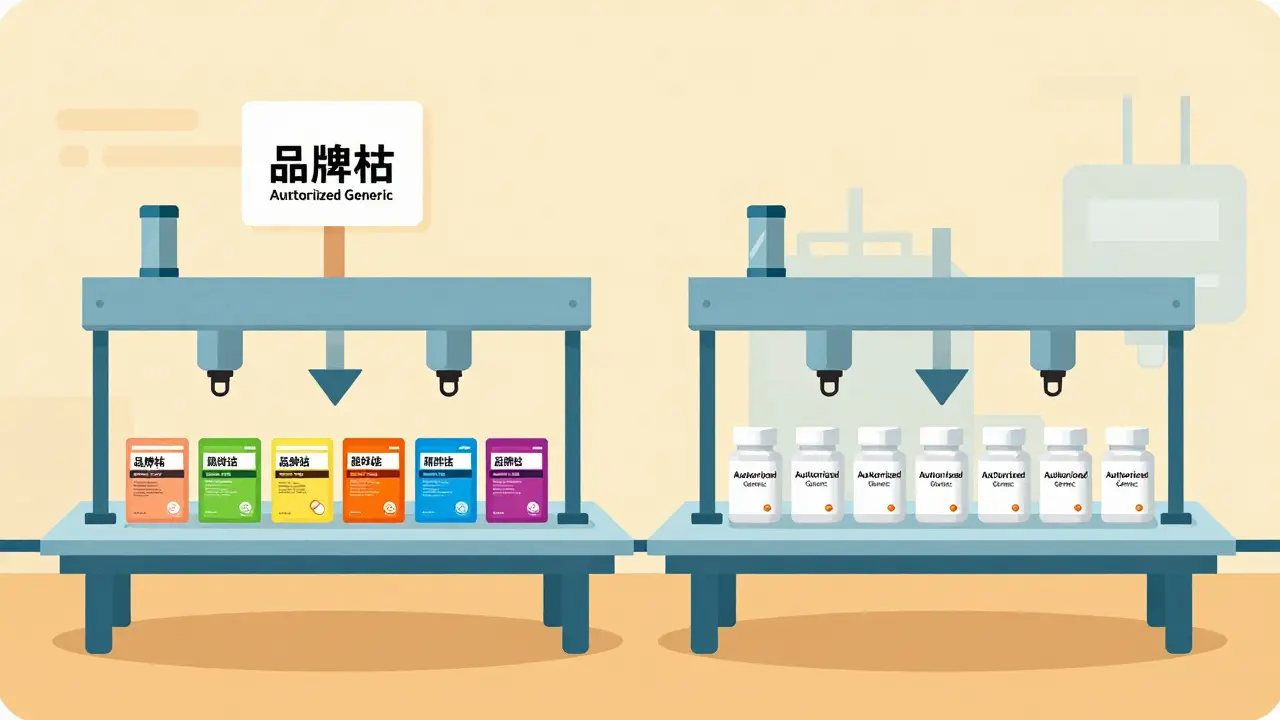
An authorized generic is a version of a brand-name drug sold by the original manufacturer under a generic label. It’s approved through the same FDA process as traditional generics, but it doesn’t go through an Abbreviated New Drug Application (ANDA) filed by a separate company. Instead, the brand manufacturer licenses its own product to itself-or to a subsidiary-and sells it as a generic. This means the active ingredient, dosage, strength, and even the manufacturing line are identical to the branded version.
Unlike traditional generics, which enter the market after a patent expires, authorized generics can launch at any time. That flexibility gives brand companies a powerful tool: they can undercut their own brand price before a generic competitor even hits shelves. Between 2010 and 2019, there were 854 authorized generic launches in the U.S., according to Health Affairs. Most of them came after the first traditional generic was approved, not before. That timing wasn’t random-it was strategic.
Why Do Brand Companies Use Them?
It’s not charity. It’s business. When a blockbuster drug like imatinib or celecoxib loses patent protection, sales can drop 80% or more within a year. That’s a massive revenue hit. Instead of letting a third-party generic company capture all that market share, brand manufacturers sometimes launch their own authorized generic. They keep control of production, distribution, and pricing. They still make money-just less per pill.
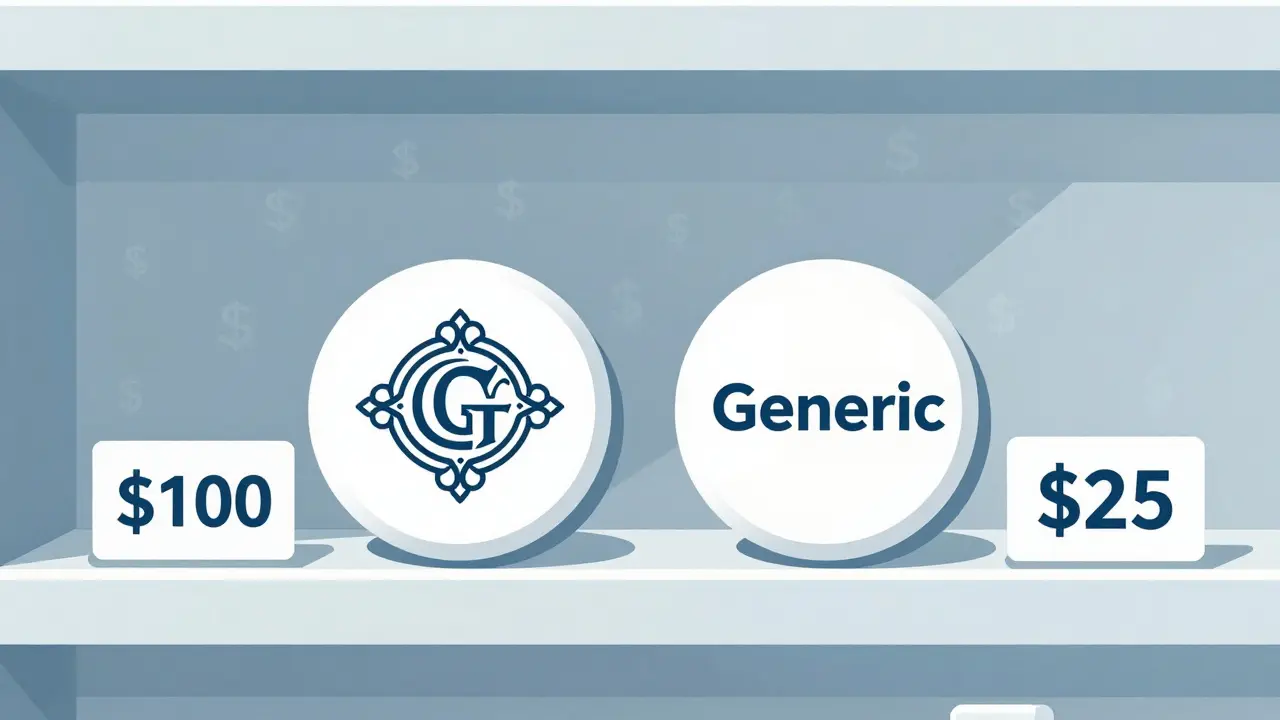
Here’s how it works in practice: Say a brand drug sells for $100 a month. The first generic hits at $30. The brand company responds by launching its own authorized generic at $25. Now, pharmacies and insurers have two nearly identical options: the original brand at $100 and the authorized generic at $25. The brand version loses almost all its market share. But the company still earns revenue from the authorized version, instead of losing everything to a competitor.
And it gets even smarter. In markets where a generic company gets 180 days of exclusivity (a reward for being first to challenge a patent), about 70% of authorized generics launch before or during that window. That means the brand company isn’t just competing-it’s blocking. They’re using their own product to squeeze out the very competitors they’re supposed to encourage.
Where Are They Most Common?
Authorized generics aren’t spread evenly across all drugs. They’re heavily concentrated in oral solid dosage forms-tablets and capsules. Why? Because those are the easiest and cheapest to copy. Complex biologics, injectables, or inhalers? Much harder. That’s why you’ll see authorized generics for common drugs like lisinopril, metformin, or atorvastatin-but rarely for insulin or cancer infusions.
Therapeutic areas with high-volume, high-revenue drugs are the main targets. Think cardiovascular, diabetes, mental health, and pain management. These are the markets where generics can steal billions in sales overnight. And that’s exactly where brand companies deploy their authorized generics most aggressively.
How Is the Market Changing?
The use of authorized generics isn’t static. In fact, it’s shifting. According to RAPS in June 2025, the practice of delaying authorized generic launches to protect brand sales is declining. That’s a big deal. For years, companies would wait until the last possible moment to release their own generic version-hoping to milk the brand name as long as possible. Now, they’re launching earlier.
Why? Two reasons. First, regulators and lawmakers are watching closer. There’s growing pressure to prevent anti-competitive behavior. Second, the market is changing. With over $200 billion in brand-name drugs set to lose exclusivity between 2025 and 2030, companies can’t afford to play games. They need predictable revenue streams. Launching an authorized generic early helps them transition smoothly.
Also, the FDA’s October 2025 pilot program is changing the game. The agency now prioritizes ANDA reviews for generic drugs made entirely in the U.S.-from active ingredients to final packaging. That means faster approvals for domestic production. Brand manufacturers who’ve been outsourcing manufacturing overseas are now reconsidering. If they can get their authorized generic approved quicker by making it in America, they’ll do it. That could lead to more authorized generics made on U.S. soil, with better supply chain control.
What’s the Bigger Picture?
The U.S. generic drug market is growing fast. It hit $138 billion in 2024 and is projected to reach nearly $200 billion by 2034. That growth isn’t just from traditional generics-it’s also from authorized ones. And it’s not just about pills. Biosimilars (generic versions of biologic drugs) are starting to take off. Drugs like ustekinumab and vedolizumab, which treat autoimmune diseases, are losing patent protection in 2025. The market for their biosimilars could be worth $25 billion by 2029.
That’s where authorized generics might evolve next. Could brand manufacturers start offering their own biosimilars? It’s possible. They already have the infrastructure, the data, and the regulatory experience. If they do, it could mean more competition, but also more control over pricing and access.
Are Authorized Generics Good or Bad for Patients?
It depends. On one hand, they drive down prices. An authorized generic often costs less than the brand, and sometimes even less than the first traditional generic. That’s a win for patients and insurers. In 2024 alone, generic and biosimilar drugs saved the U.S. healthcare system $467 billion. That’s money back in people’s pockets and in public budgets.
On the other hand, they can delay real competition. When a brand company launches its own generic, it reduces the incentive for other companies to enter the market. Fewer competitors mean less pressure to lower prices further. Studies from JAMA Health Forum show that when authorized generics are used to extend market control, they can cost commercial insurers and Medicare over $2 billion in extra spending over three years.
So they’re not purely good or bad. They’re a tool. Used well, they can speed up access to affordable drugs. Used poorly, they can lock out competition and keep prices artificially high.
What’s Next for Authorized Generics?
The future of authorized generics is tied to three forces: regulation, manufacturing, and market pressure.
Regulation is tightening. Lawmakers are pushing to limit patent extensions and shorten exclusivity periods. The FDA’s new pilot program for U.S.-made generics is just the beginning. Expect more policies that favor transparency, domestic production, and faster entry of affordable drugs.
Manufacturing is shifting. More companies are bringing production back to the U.S. because of supply chain risks and new incentives. That means authorized generics could become more reliable, more traceable, and possibly cheaper to produce.
Market pressure is growing. With hundreds of billion-dollar drugs losing patents in the next five years, brand companies can’t afford to sit still. They need to manage the transition. Authorized generics give them a way to do that without losing control.
In the end, authorized generics won’t disappear. But their role will change. They’ll become less of a weapon to block competitors and more of a bridge to affordable care. The goal won’t be to protect profits-it’ll be to keep patients covered, and the system running.
What This Means for You
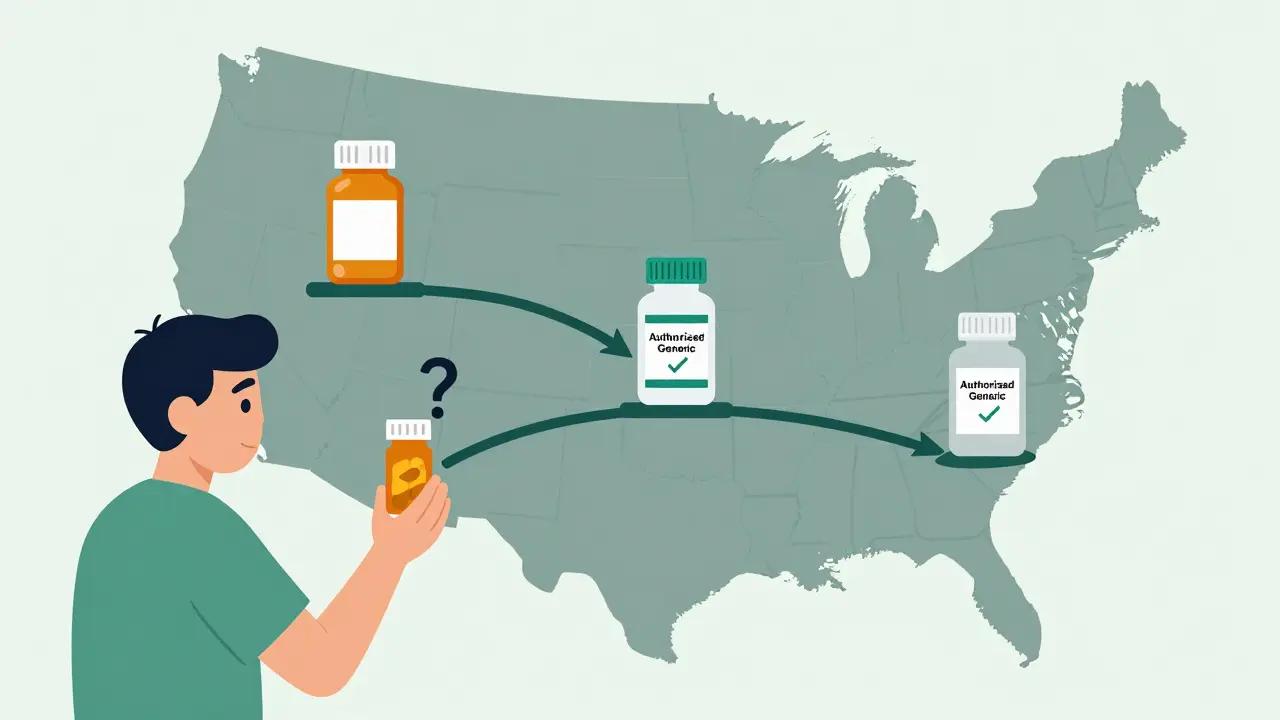
If you’re a patient, ask your pharmacist: Is this the brand, the generic, or an authorized generic? They’re often priced the same, but the authorized version might be the same exact drug you’ve been taking-just without the brand name. You might be paying less without even knowing it.
If you’re a provider or payer, track authorized generics in your formularies. They’re not always labeled clearly. But they’re there-and they’re affecting your costs.
And if you’re watching the drug market, pay attention to patent expirations. Every time a big drug loses protection, watch what happens next. Is the brand company launching its own generic? That’s a signal-of competition, of strategy, and of where prices are headed.
Cassie Tynan
January 4, 2026 AT 15:21So let me get this straight - the pharma giants are like, ‘Hey, we’ll sell our own drug cheaper… but only if you stop buying the real generic.’ That’s not competition, that’s a magic trick where the rabbit is also the magician. 🤡
And we’re supposed to cheer because the price dropped? Nah. We’re just being played by the same people who priced insulin at $300 a vial last year. This ain’t patient care - it’s corporate yoga.
Rory Corrigan
January 5, 2026 AT 10:36Authorized generics = corporate FOMO 😅
Brand company sees a generic coming → panics → slaps ‘generic’ label on their own pill → pretends they’re the hero.
Meanwhile, patients are just trying to afford their meds without needing a second job. #PharmaLogic
Roshan Aryal
January 5, 2026 AT 12:31This is what happens when Americans think capitalism means ‘let the rich invent new ways to screw the poor.’ In India, generics are made by real companies - not subsidiaries of the same corporations that invented the monopoly. Here, it’s not about access, it’s about control. The FDA’s ‘pilot program’? Just a PR stunt while Big Pharma quietly owns every pharmacy shelf. The U.S. healthcare system isn’t broken - it’s designed this way.
Uzoamaka Nwankpa
January 6, 2026 AT 19:32I just read this and started crying. Not because I’m sad - because I’m tired. Tired of being told ‘this is good for you’ while the people who make the drugs laugh all the way to the bank. I take metformin. I don’t care if it’s branded or authorized - I just need it to be affordable. Why does everything have to be a game? Why can’t they just… help?
Oluwapelumi Yakubu
January 7, 2026 AT 22:30Let’s be real - authorized generics are the pharma equivalent of a guy who steals your girlfriend, then buys her flowers and calls it ‘making things right.’
The system is rigged. They own the patents, the factories, the distribution, the FDA’s ear, and now the ‘generic’ label too. It’s not market competition - it’s monopoly theater. And the only ones who win are the shareholders who never set foot in a pharmacy.
Meanwhile, your grandma’s insulin co-pay went up 12% last year. Coincidence? Nah. It’s a feature, not a bug.
Terri Gladden
January 9, 2026 AT 10:24ok so i just read this whole thing and like… i’m confused??
so the company sells the same pill but without the name?? but then it’s cheaper?? but then they’re blocking other companies??
wait so is it a generic or not??
and why does my pharmacy not tell me which one i’m getting??
someone please explain this to me like i’m 5?? i just want my pills to not cost my rent
Jennifer Glass
January 11, 2026 AT 05:00This is actually a really nuanced issue. On one hand, authorized generics do lower prices and increase access - especially when they’re priced below the first generic. But the timing and strategy behind them are deeply problematic.
It’s not that they’re inherently bad - it’s that they’re weaponized. The fact that 70% launch during the 180-day exclusivity window? That’s not innovation. That’s market sabotage.
What we need isn’t to ban them, but to regulate their launch timing and require full transparency in labeling. Patients deserve to know if their ‘generic’ is actually made by the same company that charged them $500 last year.
Joseph Snow
January 13, 2026 AT 01:53It’s all part of the Great Pharmaceutical Control Agenda. The FDA’s ‘pilot program’? A distraction. The real goal is to consolidate manufacturing under a handful of U.S.-based subsidiaries that are all owned by the same 5 conglomerates. This isn’t about ‘domestic production’ - it’s about creating a regulated oligopoly under the guise of ‘national security.’
They want you to believe that making pills in Ohio is ‘patriotic,’ while quietly eliminating any real competition. The next step? Mandatory ‘authorized generic only’ formularies. Watch for it.
John Wilmerding
January 14, 2026 AT 23:23As a pharmacist with 22 years in community practice, I can confirm: authorized generics are a double-edged sword. They often reduce out-of-pocket costs for patients, especially when insurers favor them over branded versions.
However, the lack of clear labeling is a systemic failure. Patients frequently assume ‘generic’ means ‘different manufacturer,’ when in fact, it’s the same pill from the same facility. We need standardized labeling - perhaps a small ‘Authorized Generic - Manufactured by [Brand Name]’ on the bottle.
Transparency is not just ethical - it’s essential for trust in the healthcare system.
Peyton Feuer
January 15, 2026 AT 15:29so like… if i’m taking atorvastatin and my pharmacy gives me the ‘generic’ but it’s actually made by pfizer… is that weird??
i mean i dont care if it’s the same thing but… why do they hide that??
also why does my insurance only cover the ‘generic’ version if it’s literally the same pill??
confused but also kinda mad??
Siobhan Goggin
January 15, 2026 AT 15:39It’s frustrating, but I’m hopeful. The fact that regulators are paying attention and companies are shifting toward earlier launches means change is possible. We’re not there yet - but if we keep pushing for transparency and fair pricing, we can turn these tools into real solutions for patients. Keep speaking up - your voice matters.
Jay Tejada
January 16, 2026 AT 10:01Look, in India we call this ‘copycat capitalism’ - same product, same factory, same profit, just a new label. The U.S. calls it ‘innovation.’
It’s funny how the same thing is ‘smart business’ in one country and ‘corporate greed’ in another. But hey, at least your grandma gets her pills cheaper. I guess that’s something.
Allen Ye
January 17, 2026 AT 02:36Let’s zoom out. The authorized generic is not merely a pricing tactic - it’s a philosophical statement about ownership in healthcare. Who owns a molecule after patent expiration? The public? The innovator? The manufacturer? The patient?
Historically, patents were meant to incentivize innovation, then release knowledge to the commons. But now, the innovator retains control through legal and logistical sleight-of-hand - the authorized generic is the ultimate expression of that: the illusion of competition while maintaining monopoly.
This isn’t capitalism. It’s feudalism with FDA approval. And until we reframe drug access as a human right - not a market commodity - we’ll keep playing this game, where the rules are written by those who profit from the pain.
mark etang
January 18, 2026 AT 04:09It is imperative to acknowledge that the strategic deployment of authorized generics constitutes a paradigmatic evolution in pharmaceutical market dynamics. The transition from brand exclusivity to controlled generic penetration reflects a sophisticated alignment of regulatory compliance, supply chain optimization, and shareholder value preservation. One must not conflate market efficiency with moral imperatives. The system, though complex, functions as designed.