
COVID-19: Current Symptoms, Dominant Variants, Vaccines, and Treatment Options in 2026
 Jan, 16 2026
It’s January 2026, and COVID-19 isn’t gone-it’s changed. The virus that once shut down the world is now part of the background noise of public health. But that doesn’t mean it’s harmless. Every week, thousands of people still end up in hospitals. Thousands more stay home for days with a cough that won’t quit. The rules have changed. The variants have changed. And so have the vaccines. If you’re wondering what’s real right now, here’s what you actually need to know.
What COVID-19 Feels Like Today
If you think COVID-19 still means losing your sense of smell or spending a week in bed, you’re thinking of 2020. Today’s symptoms look a lot like a bad cold-with a few sharp twists.
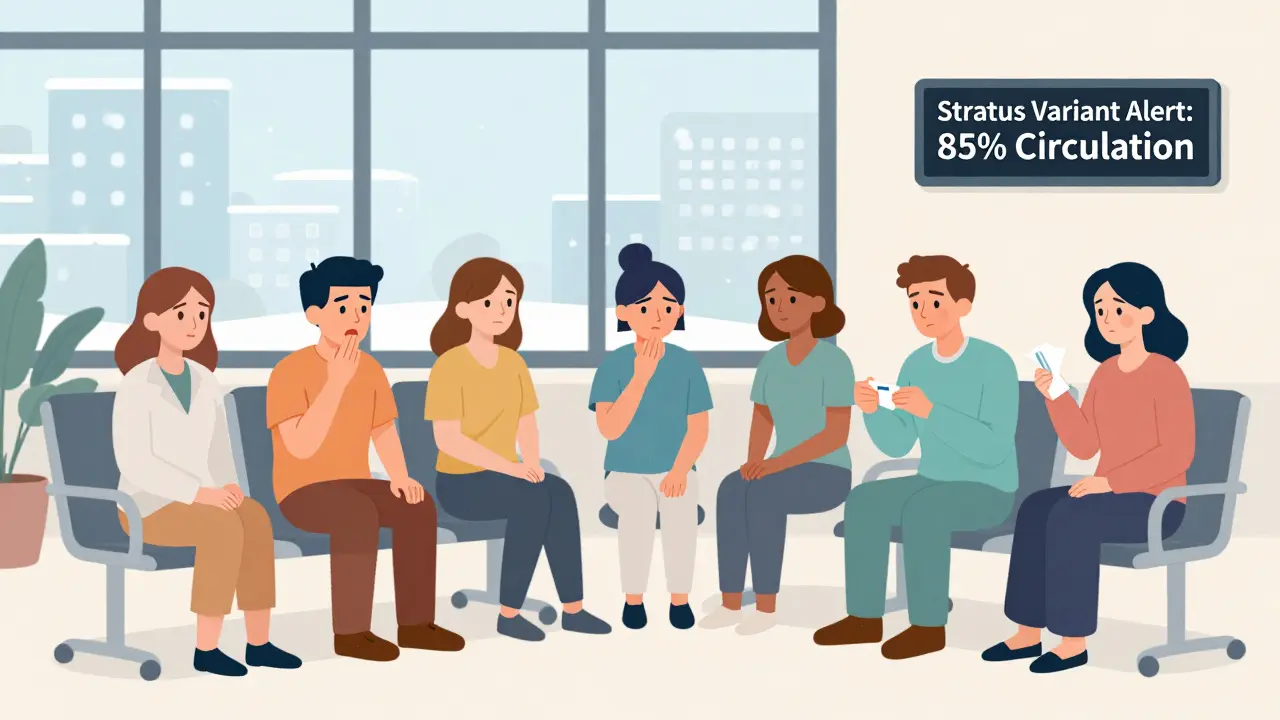
The most common signs right now are congestion, sore throat, cough, fever, headache, and muscle aches. But there’s one symptom that keeps popping up in doctor’s offices and Reddit threads alike: a sharp, stabbing sore throat. That’s the hallmark of the Nimbus variant, which still circulates even though it’s not the main player anymore.
The dominant strain as of late 2025 is XFG, also called Stratus. It’s responsible for about 85% of cases. People who get it report feeling wiped out for 5 to 10 days. Some have GI issues-nausea, diarrhea. Others get brain fog or trouble sleeping. It’s not the same as the Delta wave, where people struggled to breathe. But it’s not harmless either. Unvaccinated people still end up in the hospital. Older adults and those with chronic conditions are still at higher risk.
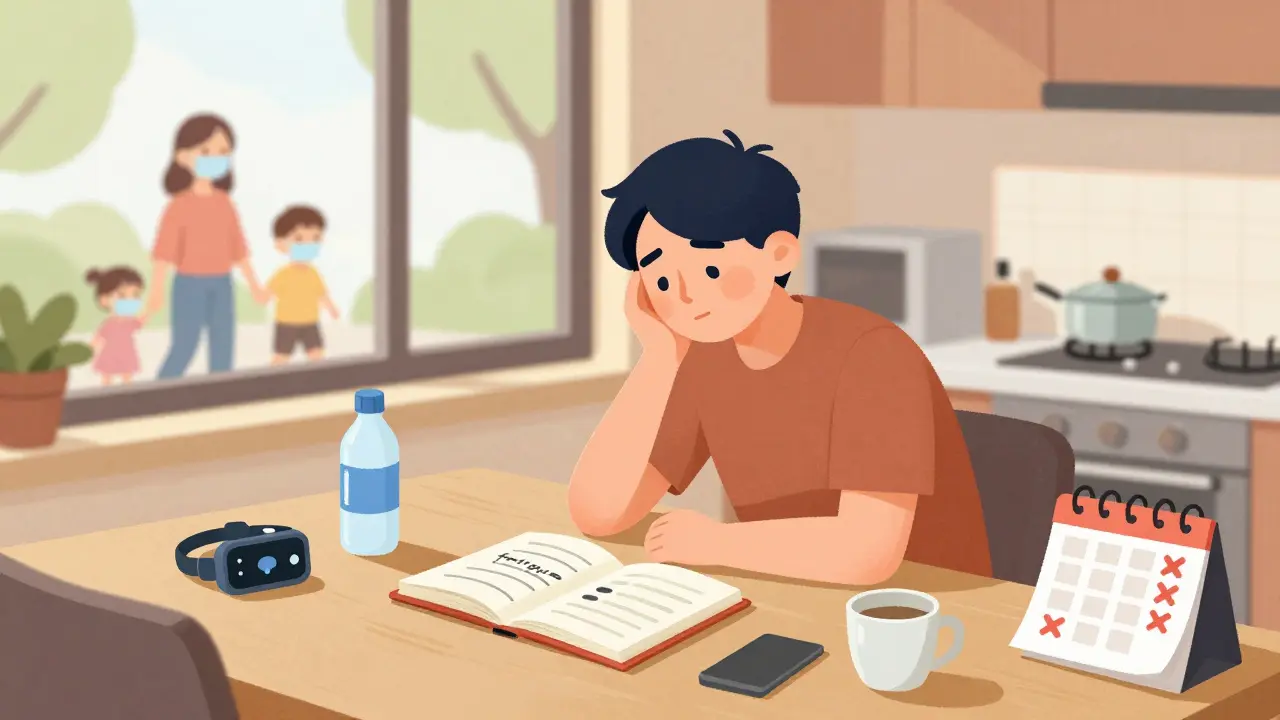
And here’s something many don’t talk about: long COVID isn’t disappearing. A June 2025 study in the Journal of Medical Virology found that 20% of people who had COVID-19 still had symptoms three years later. Fatigue. Shortness of breath. Trouble focusing. Insomnia. Loss of taste or smell. It’s not rare. It’s not just in the elderly. It’s in people in their 30s and 40s who thought they’d bounced back.
The Variants: What’s Actually Circulating
The virus keeps evolving. The original Omicron? Gone. BA.5? Gone. Even the XBB variants from 2023? Mostly replaced.
As of October 2025, the top three strains are:
- XFG (Stratus) - 85% of cases. Fast-spreading, causes cold-like symptoms. High transmission, lower severity than Delta-but still hospitalizes people.
- NB.1.8.1 - 7% of cases. Similar profile to Stratus, slightly more respiratory.
- NW.1 - 3% of cases. Less common, but shows up in clusters.
Other variants like XEC, XDV.1, and LF.7 are still around but fading. The CDC and WHO track these through genomic sequencing labs in the U.S., Europe, and Australia. They’re not just watching-they’re predicting. The models used to pick this year’s vaccine were accurate to within 85-90% of what’s actually circulating.
Stratus doesn’t just spread faster. It also sneaks past immunity better than older strains. That’s why even people who got boosted last year are still getting infected. But here’s the key: infection doesn’t mean hospitalization. Vaccination still works-just not the way it did in 2021.
Vaccines in 2026: What’s Updated, What’s Working
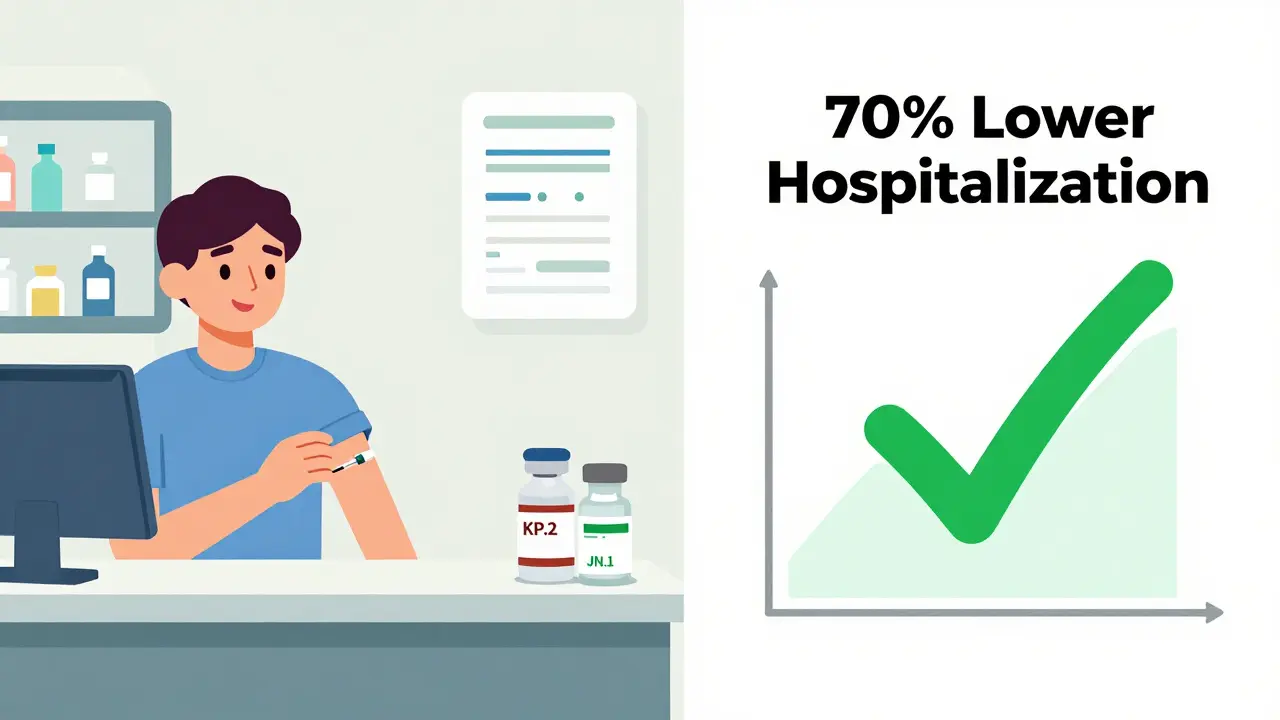
The vaccines aren’t the same as they were in 2021. They’ve been redesigned every year since. The 2024-2025 shots targeted KP.2 (Pfizer and Moderna) and JN.1 (Novavax). For 2025-2026, the FDA approved a new formula in May 2025 based on the strains that dominated the spring and summer.
Here’s what’s in the current shots:
- Pfizer and Moderna: Target KP.2, the strain that spiked in early 2024. They’re still the most widely used.
- Novavax: Targets JN.1, but lab tests show it also triggers antibodies against KP.2 and KP.3. That’s important-it means broader protection even if the match isn’t perfect.
The CDC says everyone 6 months and older should get an updated shot every year. The best time? Early fall. That gives your body time to build immunity before winter surges.
And here’s what the data says about effectiveness:
- Protection against infection drops after 3 months. That’s normal. No vaccine stops every single infection.
- Protection against hospitalization stays strong for 6 months or more.
- People who are up to date are 4 to 5 times less likely to be hospitalized than those who aren’t vaccinated.
Side effects? Most people report nothing. Of the 1,245 people surveyed in June 2025, 87% said they had mild or no side effects. The most common: sore arm (28%), fatigue (32%), headache (19%). No one reported serious allergic reactions.
And yes, you can still get COVID after the shot. But as one Reddit user put it: “I caught Stratus in December. My neighbor, unvaccinated, ended up on oxygen. I had a stuffy nose for a week.” That’s the new reality.
Treatment Options: What Actually Helps
If you test positive, here’s what your doctor will likely recommend:
- Rest and fluids - Still the foundation. Don’t rush back to work.
- Over-the-counter meds - Acetaminophen or ibuprofen for fever and aches. Decongestants for nasal stuffiness.
- Antivirals - Paxlovid (nirmatrelvir/ritonavir) and Remdesivir are still first-line for high-risk people. They must be started within 5 days of symptoms. They cut hospitalization risk by 70% in people over 65 or with conditions like diabetes or heart disease.
- Monoclonal antibodies - These are mostly gone now. The last ones that worked against older variants lost effectiveness as the virus changed. The FDA hasn’t approved any new ones for 2026 because the variants evolved too fast.
There’s no magic pill. Antibiotics don’t work. Ivermectin doesn’t work. Hydroxychloroquine doesn’t work. Stick to what’s been tested and approved.
For people who develop long COVID, treatment is symptom-based: physical therapy for fatigue, sleep aids for insomnia, counseling for anxiety. There’s no cure yet-but doctors are getting better at managing it.
Who Needs to Be Extra Careful?
Not everyone is at the same risk. Here’s who should take extra steps:
- People over 65
- Those with heart disease, lung disease, or diabetes
- People with weakened immune systems (cancer patients, organ transplant recipients)
- Pregnant women
- People living in nursing homes or long-term care facilities
If you’re in one of these groups, the CDC recommends getting the updated vaccine as soon as it’s available. Also, consider wearing a high-quality mask (N95 or KN95) in crowded indoor spaces-especially during winter.
For everyone else? The advice is simple: stay up to date on vaccines. If you feel sick, test yourself. If it’s positive, stay home for at least 5 days. Wash your hands. Ventilate your space. These aren’t outdated rules-they’re still the best tools we have.
Why Vaccines Still Matter, Even If You’ve Had It
A lot of people think, “I got COVID last year. I’m good.” That’s a dangerous myth.
Immunity from infection fades. And the virus changes too fast for natural immunity to keep up. A person who had Omicron BA.5 in 2022 has almost no protection against XFG in 2026.
Studies show that people who are both vaccinated and previously infected have the strongest protection. It’s called hybrid immunity. It’s not perfect-but it’s the best we’ve got.
And here’s the bottom line: vaccines don’t just protect you. They protect your parents, your coworkers, your neighbors. Hospitalizations are down from the peak-but they’re still higher than they were before the pandemic. Every vaccinated person helps keep the system from getting overwhelmed.
What’s Next?
Experts agree: COVID-19 is becoming seasonal. Like the flu. It won’t vanish. But it won’t shut down cities either.
The CDC is already planning next year’s vaccine formula based on strains circulating in early 2026. The goal is to get 85-90% accuracy in matching the virus. That’s a huge leap from 2020.
Drug companies are testing next-gen vaccines that target multiple variants at once. Some are even exploring nasal sprays that might block infection at the source-the nose and throat-instead of just in the bloodstream.
For now, the message is clear: stay informed. Stay updated. Don’t panic. But don’t ignore it either.
Can I still get COVID-19 even if I’m fully vaccinated?
Yes, you can still get infected. The current vaccines don’t block every infection, especially with newer variants like Stratus. But they’re still very good at preventing severe illness, hospitalization, and death. Most vaccinated people who get infected have mild symptoms-like a cold-and recover in a few days.
Which vaccine should I get in 2026?
The CDC recommends any updated 2025-2026 vaccine for everyone 6 months and older. Pfizer and Moderna target KP.2. Novavax targets JN.1 but offers broad protection against other strains too. You don’t need to wait for a specific brand-get whichever is available. All are effective at preventing serious outcomes.
Do I need a booster if I had COVID recently?
Yes, but wait. If you had a recent infection, wait at least 3 months after your symptoms started (or after your positive test if you were asymptomatic) before getting the next vaccine dose. This gives your immune system time to respond fully and helps avoid unnecessary side effects.
Is long COVID still a real concern?
Yes. About 20% of people who’ve had COVID-19 report symptoms lasting three years or more. Common issues include fatigue, brain fog, shortness of breath, insomnia, and anxiety. It can happen even after mild cases. If you’re still feeling off months after infection, talk to your doctor. There’s no cure yet, but managing symptoms with therapy, pacing, and mental health support can help.
Are masks still useful against current variants?
Yes, especially in crowded indoor spaces during peak season. High-quality masks like N95 or KN95 reduce your risk of catching or spreading the virus. They’re not needed everywhere-but if you’re around high-risk people, or if cases are surging in your area, wearing one is a smart, simple step.
What to Do Next
If you’re not up to date on your COVID-19 vaccine, make an appointment now. Pharmacies, clinics, and community centers still offer the updated shots for free. No prescription needed.
If you’re feeling sick, test yourself. Don’t wait for a doctor’s note. Rapid tests are still widely available.
If you’re at higher risk, talk to your doctor about antiviral options like Paxlovid. Don’t wait until you’re struggling to breathe.
COVID-19 isn’t over. But it’s manageable. You don’t need to live in fear. You just need to stay informed-and stay protected.
Samyak Shertok
January 18, 2026 AT 01:05Stephen Tulloch
January 19, 2026 AT 13:46vivek kumar
January 20, 2026 AT 11:48Henry Ip
January 20, 2026 AT 21:59Isabella Reid
January 21, 2026 AT 16:52kanchan tiwari
January 22, 2026 AT 08:09Bobbi-Marie Nova
January 22, 2026 AT 20:45Allen Davidson
January 23, 2026 AT 19:31john Mccoskey
January 25, 2026 AT 04:04Joie Cregin
January 25, 2026 AT 13:58Rob Deneke
January 27, 2026 AT 00:31Chelsea Harton
January 28, 2026 AT 10:05