
Corticosteroid Injections for Joint Pain: What They Do, How They Work, and When to Avoid Them
 Nov, 28 2025
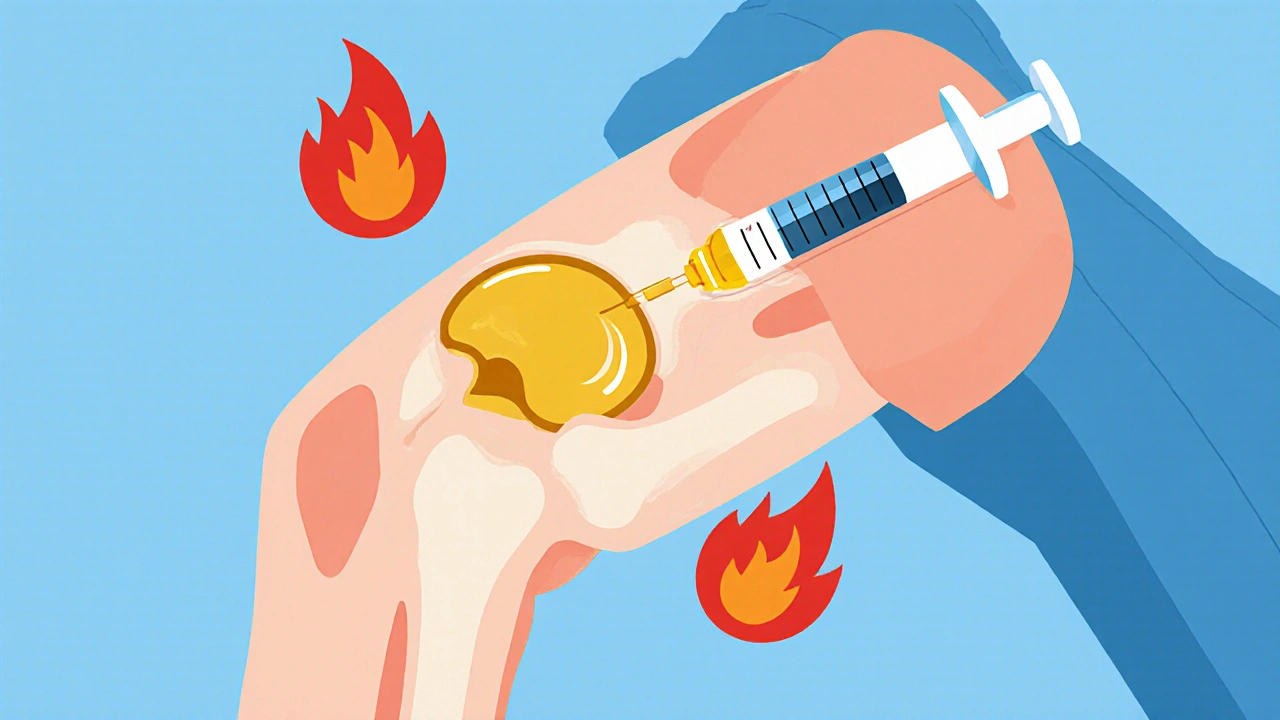
When your knee, shoulder, or hip suddenly locks up with sharp, burning pain, and even walking feels impossible, you might hear your doctor suggest a corticosteroid injection. It’s not magic, but for many people, it’s the fastest way to get back on their feet. These shots, often called cortisone injections, don’t fix the root cause of joint damage - but they can silence the inflammation that makes everyday life unbearable.
How Corticosteroid Injections Actually Work
Corticosteroids are synthetic versions of cortisol, a hormone your body naturally makes to handle stress and inflammation. When injected directly into a swollen joint, they don’t just mask pain - they shut down the inflammatory process at the cellular level.
Here’s how it happens: the corticosteroid enters the synovial fluid, binds to receptors inside cells, and flips a genetic switch that turns off the production of key inflammatory chemicals like interleukin-1, tumor necrosis factor-alpha, and prostaglandins. These are the same molecules that cause heat, redness, swelling, and pain. By reducing them, the joint calms down. At the same time, the injection often includes a local anesthetic like lidocaine, which gives immediate - though temporary - relief within minutes.
It’s not just about pain. Inflammation also thickens synovial fluid, making movement stiff and awkward. Corticosteroids help restore normal viscosity, which is why many patients report not just less pain, but smoother motion after the shot.
What Conditions Are These Injections Used For?
These aren’t one-size-fits-all shots. They’re most effective for conditions where inflammation is the main driver - not wear and tear alone.
- Acute gout flares: A single injection can resolve swelling and pain in days, often faster than oral meds.
- Tendinitis and bursitis: Think tennis elbow, shoulder bursitis, or Achilles tendinitis. When inflammation wraps around a tendon or bursa, a targeted shot can be a game-changer.
- Rheumatoid arthritis flares: For people with autoimmune joint disease, these injections help control sudden, painful flare-ups between systemic medication adjustments.
- Osteoarthritis: This is where things get tricky. While they help with pain during active inflammation, they don’t repair cartilage. Their use here is for symptom control, not disease modification.
They’re rarely used for end-stage osteoarthritis with bone-on-bone damage. The American College of Rheumatology specifically advises against it in these cases - there’s no benefit beyond six weeks, and repeated shots may speed up joint breakdown.
What’s in the Syringe? Doses and Types
Not all corticosteroid injections are the same. The choice depends on the joint size, the condition, and how long the doctor wants the effect to last.
Common types include:
- Triamcinolone acetonide: Lasts 3-6 weeks. Often used for knees, shoulders, and hips. Typical dose: 40-80 mg for large joints, 10-20 mg for wrists or fingers.
- Methylprednisolone acetate: Similar duration. Commonly used in spine and large joint injections.
- Betamethasone: Slightly faster onset, sometimes preferred for acute flares.
Each is mixed with a local anesthetic - usually lidocaine or bupivacaine - to provide instant relief while the steroid takes effect over the next 24-72 hours.
Ultrasound guidance is now standard in most clinics. Blind injections (done by feel) are accurate only about 70% of the time. With ultrasound, accuracy jumps to 95%. That means the medication goes exactly where it needs to - not into surrounding tissue, fat, or tendon.
How Fast Does It Work? Realistic Expectations
Many patients expect instant relief - but that’s not how it works.
The anesthetic wears off in a few hours. Then comes the waiting game. The steroid needs time to enter cells, bind to receptors, and suppress inflammation. Most people feel the first real difference between day 2 and day 4. By day 7, the full effect is usually in place.
How long does it last? On average, 2-4 weeks. Some get relief for 8-12 weeks. A few get 6 months. But according to a 2023 meta-analysis of 15 studies, there’s no significant benefit after 6 weeks - and by 24 weeks, it’s no better than a placebo.
One patient in Sydney, 58, with hip bursitis told me: "The first shot let me play golf again. The second gave me 10 weeks. The third? Only 3 weeks - and I had a flare-up for three days after. I stopped after that."
That’s not unusual. About 41% of users report pain returning within 4-6 weeks. And with repeated use, the effect often fades faster.
Who Should Avoid These Injections?
They’re not safe for everyone. Here are the red flags:
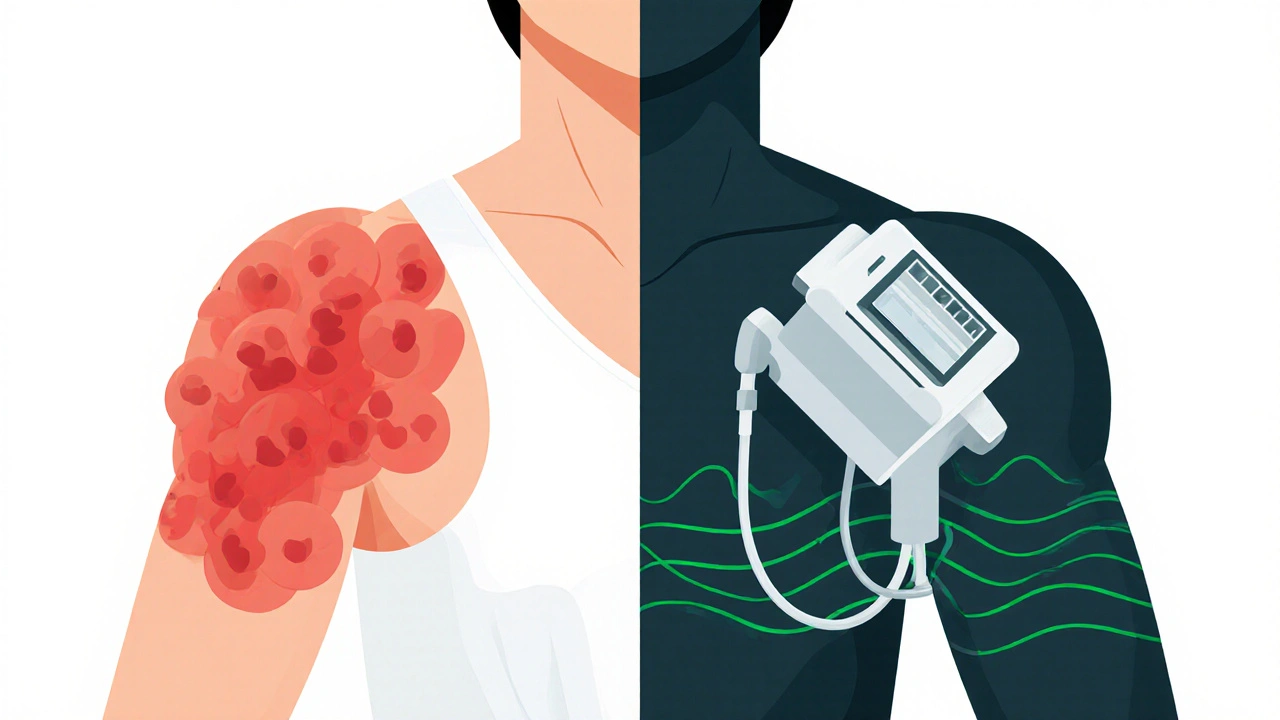
- Diabetics: Corticosteroids can spike blood sugar for up to 72 hours. Diabetic patients need to monitor glucose closely after the shot. Some doctors avoid injections altogether in poorly controlled diabetes.
- People with active infections: Injecting into an infected joint can spread the infection deeper. Even a skin infection near the injection site is a no-go.
- Those with bleeding disorders or on blood thinners: Risk of hematoma or internal bleeding. Doctors may pause anticoagulants temporarily or use ultrasound to avoid blood vessels.
- Patients planning joint replacement surgery: A 2023 study found people who had a corticosteroid injection within 3 months before knee or hip replacement had more than double the risk of post-surgery joint infection.
- People with severe osteoarthritis: If X-rays show bone-on-bone, injections won’t help long-term and may accelerate damage.
How Many Is Too Many?
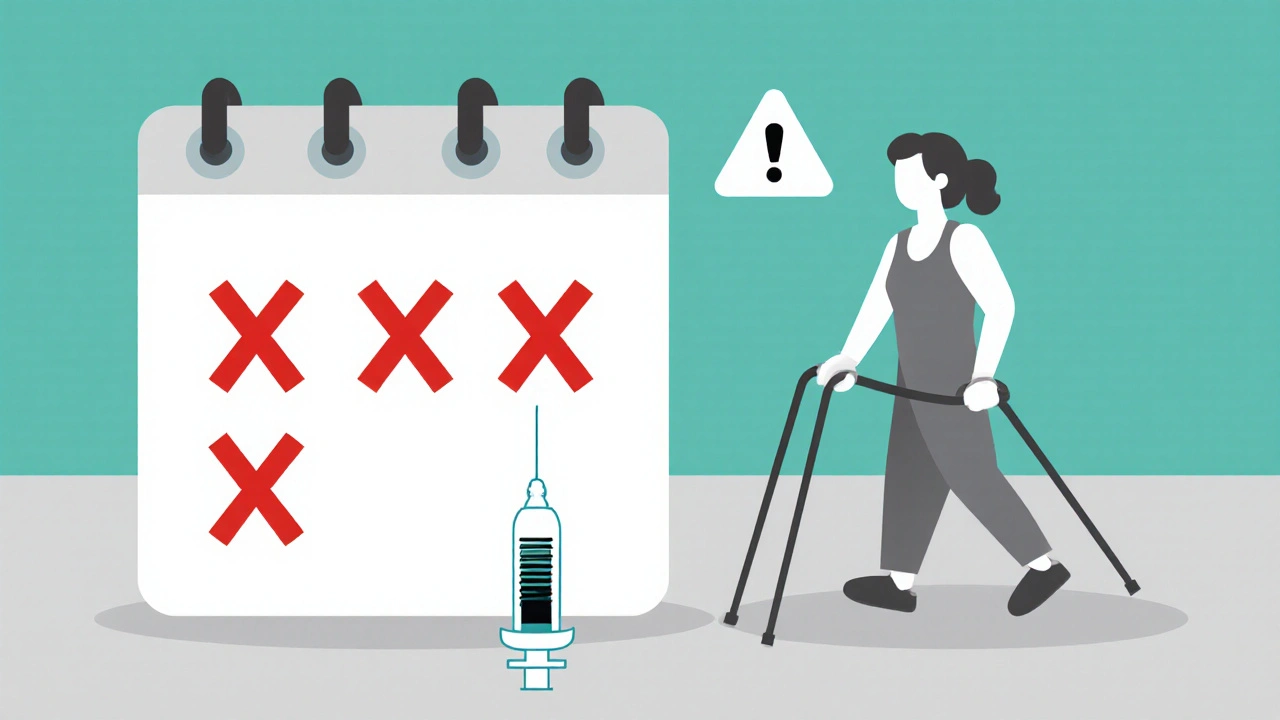
There’s no hard rule, but most guidelines agree: 3-4 injections per joint per year is the safe limit. More than that increases the risk of tissue damage.
Why? Corticosteroids suppress collagen production - the very stuff that holds tendons and cartilage together. Repeated injections can weaken tendons, making them prone to rupture. In the shoulder, rotator cuff tears have been linked to frequent cortisone shots. In the Achilles, it’s a known risk.
Dr. Benjamin Domb of the American Hip Institute puts it simply: "It’s safe every three months. But if you need one every six weeks, you’re not treating the problem - you’re masking it."
That’s why doctors often pair injections with physical therapy. The injection buys time - but rehab rebuilds strength. Without rehab, you’re just delaying the inevitable.
Side Effects: What No One Tells You
Most people have no major side effects. But here’s what can happen:
- Post-injection flare: 2-8% of patients get a short-term spike in pain and swelling within 24-48 hours. It’s caused by crystal irritation from the steroid. Ice and NSAIDs usually fix it.
- Skin thinning or depigmentation: Especially in thin-skinned areas like the knuckles or ankles. White spots can appear - sometimes permanent.
- Facial flushing: A brief redness or warmth in the face, common after shoulder or knee injections. Goes away in hours.
- Temporary mood changes: Rare, but some report anxiety or insomnia for a day or two.
- Accelerated joint degeneration: Research from the Osteoarthritis Initiative shows patients receiving repeated knee injections had 3.2 times higher odds of cartilage loss over time. For those getting shots every 3 months? The risk jumps to 4.67 times higher.
These aren’t common - but they’re real. That’s why the FDA updated labeling in 2021 to include warnings about tendon rupture, osteonecrosis, and accelerated arthritis.
Cost and Alternatives
Without insurance, a corticosteroid injection costs $100-$300. That’s a fraction of the price of alternatives:
- Viscosupplementation (hyaluronic acid): $500-$1,000 per injection. Studies show it’s no better than placebo for most people.
- PRP (platelet-rich plasma): $500-$1,500. Works better for chronic tendinopathy, but slower and less predictable.
- Stem cell injections: $2,000-$5,000. No strong evidence yet for joint repair in humans.
Corticosteroids still win for speed, cost, and proven short-term results. But they’re not the endgame. They’re a bridge.
The Future: Extended-Release and Combination Therapies
In 2023, the FDA approved Zilretta - an extended-release form of triamcinolone acetonide. It’s designed to slowly release over 12 weeks. In trials, 45% of osteoarthritis patients had pain relief for 3 months - double the rate of standard shots.
Right now, 27 clinical trials are testing corticosteroid-PRP combinations. The idea? Use the steroid to calm inflammation fast, then let PRP kickstart healing. Early results are promising, but long-term data isn’t in yet.
For now, the best use of corticosteroid injections remains simple: targeted, infrequent, and paired with movement. They’re not a cure. But when used right, they’re one of the most effective tools we have to get people back to their lives - without surgery.
How long does it take for a cortisone shot to work?
Most people feel the full effect between 2 and 7 days after the injection. The local anesthetic in the shot gives immediate relief, but that fades within hours. The corticosteroid takes time to reduce inflammation at the cellular level. Don’t expect instant results - patience is key.
Can cortisone shots make joint pain worse?
Yes - but temporarily. About 2-8% of patients experience a "post-injection flare," where pain and swelling increase for 1-3 days. This is caused by crystals in the steroid irritating the joint. Ice, rest, and over-the-counter anti-inflammatories usually help. If pain lasts longer than 72 hours or gets worse, contact your doctor - it could signal infection or misplacement.
How often can you get cortisone injections in the same joint?
Most doctors recommend no more than 3-4 injections per joint per year. More frequent use increases the risk of tendon weakening, cartilage damage, and accelerated arthritis. If you need injections every few months, it’s a sign the underlying issue isn’t being addressed - physical therapy or other treatments may be needed.
Do cortisone shots cure arthritis?
No. Cortisone injections reduce inflammation and pain, but they don’t repair damaged cartilage or stop arthritis from progressing. They’re a symptom management tool, not a cure. For osteoarthritis, they’re best used sparingly during flare-ups, not as a long-term solution.
Are cortisone shots safe if I have diabetes?
They can be, but with caution. Corticosteroids raise blood sugar levels, sometimes significantly, for up to 72 hours after the shot. Diabetic patients should monitor glucose closely during this time and may need to adjust insulin or oral meds. Some doctors avoid injections in patients with poorly controlled diabetes. Always inform your provider about your diabetes before the procedure.
What should I avoid after a cortisone injection?
For the first 48 hours, avoid heavy lifting, intense exercise, or putting pressure on the injected joint. This helps prevent the steroid from migrating or causing extra irritation. If you had a knee injection, use crutches or a cane if needed. Don’t soak in hot tubs or saunas - heat can increase swelling. Stick to light movement and ice if there’s discomfort.
Sachin Agnihotri
November 30, 2025 AT 00:31Man, I got a cortisone shot in my knee last year after a bad hike-felt like a miracle by day 3. But then, three months later, it was back worse than before. Now I do yoga and ice baths instead. Not as fast, but at least I’m not risking my tendons for a few weeks of relief.
Rosy Wilkens
November 30, 2025 AT 07:53Let me guess-the pharmaceutical industry paid your doctor to push these injections. Did you know corticosteroids were originally developed by the CIA as part of MKUltra to induce temporary psychosis? The FDA warning? A cover-up. They don’t want you to know these shots accelerate joint decay because it keeps people coming back for more. And don’t get me started on ultrasound-guided injections-those machines are rigged to overbill Medicare.
Andrea Jones
November 30, 2025 AT 16:58Okay, Rosy, breathe. 😅 But seriously-this post is *so* well-researched. I love how it breaks down the timeline. I had a shoulder injection last spring, and I swear, day 2 was agony, day 4 was ‘wait, can I reach the top shelf again?’ and by day 7? I was back to gardening like nothing happened. But I only did it once-paired it with PT. Smart move. You’re not replacing your body’s repair system-you’re buying time to fix it.
Justina Maynard
December 1, 2025 AT 14:54It’s fascinating how the molecular mechanism-binding to glucocorticoid receptors, suppressing NF-kB signaling, downregulating COX-2 and IL-1β-is so precisely documented, yet the public discourse remains dangerously oversimplified. I’ve seen patients receive four injections in six months, then blame ‘bad luck’ when their rotator cuff ruptures. The science is clear: collagen suppression is dose- and frequency-dependent. And yes, the 3.2x cartilage loss statistic? It’s from the OAI dataset-peer-reviewed, longitudinal. Stop treating symptoms like solutions.
Evelyn Salazar Garcia
December 2, 2025 AT 14:19USA got ripped off. In Germany, they only do this if you’re 70+ and done with PT. Here? They’ll inject your cat if it whines.
Olivia Currie
December 3, 2025 AT 01:14OMG I JUST GOT ONE THIS WEEK AND I’M CRYING I CAN WALK AGAIN 😭😭😭 My hip was screaming like a banshee-now I’m dancing in my kitchen to 2008 pop songs. It’s not magic, it’s science, and I’m so grateful. But I’m doing PT next week-no way I’m letting this be my only fix. This shot? It’s my superhero cape. PT? My training montage.
Curtis Ryan
December 4, 2025 AT 01:15just got my 3rd shot in my knee this year… i think im doin it wrong? my doc says 3 max per year but i feel like i need one every 6 wks. my buddy says its like smoking-feels good now but your joints turn to dust. hmm… maybe i should try that new yoga app? or is that just a scam? 😅
Rajiv Vyas
December 4, 2025 AT 08:52Who says inflammation is bad? Maybe your body’s trying to heal itself and these shots are just suppressing the truth. Ever heard of the immune system? It’s not some broken machine that needs a chemical hammer. I stopped all my shots after reading about how they mess with your mitochondria. Now I eat turmeric and stare at the sun. My pain? Still there. But at least my soul feels free.
farhiya jama
December 5, 2025 AT 04:06I got one last month. Didn’t work. Wasted my time and insurance deductible. Now I’m just waiting for my hip to give out so I can get the ‘real’ fix-surgery. These shots are just corporate junk science. I’m done.
Astro Service
December 5, 2025 AT 05:40Why are we letting foreigners decide how we treat pain? In America, we fix things with strength, not chemicals. My grandpa worked on a farm his whole life with arthritic knees-he didn’t need no shot. He just gritted his teeth. We’ve gotten soft. These injections are weak. Let people suffer. Builds character.
DENIS GOLD
December 5, 2025 AT 18:45Oh so now we’re giving people steroids and calling it ‘medicine’? Next they’ll inject Adderall into your knee so you can run faster. This is how they control the masses-make you dependent on temporary fixes so you never question the system. Wake up.
Ifeoma Ezeokoli
December 6, 2025 AT 01:35As a physical therapist in Lagos, I’ve seen people come in after 5 cortisone shots-tendons frayed, cartilage gone, scared to move. I tell them: ‘Your body is trying to tell you something.’ We start with gentle movement, breathing, water therapy. No needles. No fear. Just patience. It takes months. But when they walk without pain? That’s real healing. You don’t need a shot to live well-you need to listen.