
Common Pharmacy Dispensing Errors and How to Prevent Them
 Jan, 19 2026
Every year, millions of people receive the wrong medication, wrong dose, or a drug that interacts dangerously with something they’re already taking. These aren’t hypothetical risks-they happen in pharmacies every day. In Australia, the U.S., and across the globe, pharmacy dispensing errors are one of the most common causes of preventable harm in healthcare. A 2023 global review found that about 1.6% of all prescriptions filled contain some kind of error. That might sound small, but it translates to hundreds of thousands of mistakes annually. And behind each one is a patient who could have been seriously hurt-or worse.
What Are the Most Common Pharmacy Dispensing Errors?
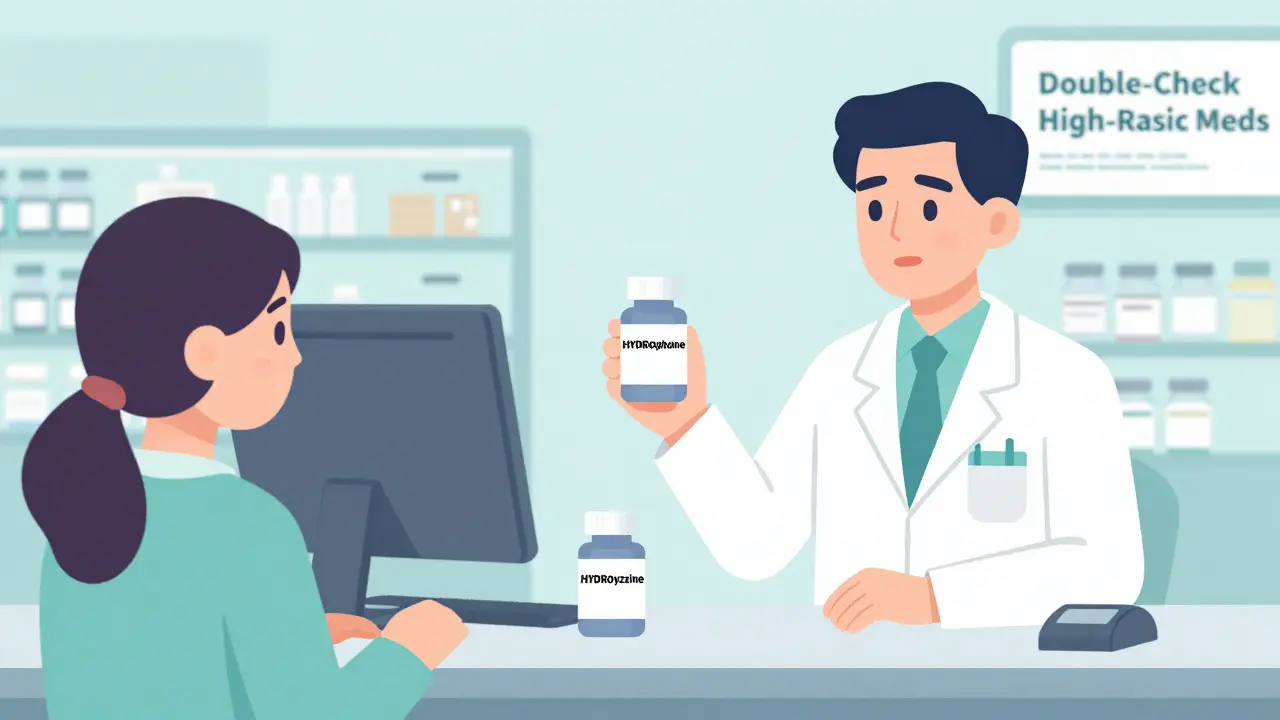
Pharmacy errors don’t always look like a pharmacist handing you the wrong bottle. Sometimes, they’re subtle. A pill that looks right but has the wrong strength. A liquid that’s mixed with the wrong diluent. A dose that’s calculated for a 70kg patient but given to someone who weighs 45kg. Here are the top five errors you’re most likely to encounter:- Wrong medication: Giving you drug A when drug B was prescribed. This often happens with similar-sounding names like hydralazine and hydroxyzine, or celecoxib and clonazepam.
- Wrong dose or strength: A 10mg tablet instead of a 5mg. A 500mg capsule instead of 250mg. This is especially dangerous with blood thinners, insulin, or seizure medications.
- Wrong dosage form: Giving a tablet when the prescription called for a liquid. Crushing a time-release pill that shouldn’t be crushed. This can cause overdose or render the drug useless.
- Missed drug interactions: Failing to spot that your new antibiotic clashes with your heart medication. Or that your new antidepressant increases your risk of bleeding when taken with warfarin.
- Incorrect duration: Dispensing a 30-day supply when the doctor ordered 14 days. Or worse-giving you a month’s supply of a high-risk drug like opioids without a follow-up plan.
Anticoagulants like warfarin, opioids like oxycodone, and antibiotics like vancomycin are the top three drugs involved in serious errors. Why? Because small mistakes with these drugs can lead to hospitalization, internal bleeding, respiratory failure, or death.
Why Do These Errors Happen?
It’s easy to blame the pharmacist. But the truth is, most errors aren’t caused by carelessness. They’re caused by systems that don’t account for how humans actually work.- Workload pressure: Pharmacists in community pharmacies often fill 200-300 prescriptions a day. That’s one every 2-3 minutes. When you’re rushing, your brain skips steps.
- Similar-looking or sounding drugs: Names like propranolol and propafenone look almost identical on paper. Verbal prescriptions over the phone make this worse-lunesta and luxat sound the same.
- Interruptions: A phone rings. A patient asks a question. A technician needs help. Each interruption increases the chance of an error by nearly 13%.
- Illegible handwriting: Even in 2026, some doctors still write prescriptions by hand. A sloppy “5” can look like a “9.” A missing decimal turns 0.5mg into 5mg.
- Missing patient info: No record of your kidney function? No known allergies? No list of other meds? That’s a recipe for disaster.
A 2022 study in U.S. community pharmacies found that pharmacists who experienced more than three interruptions per prescription were 22% more likely to make an error. That’s not luck. That’s a broken system.
How Can You Protect Yourself?
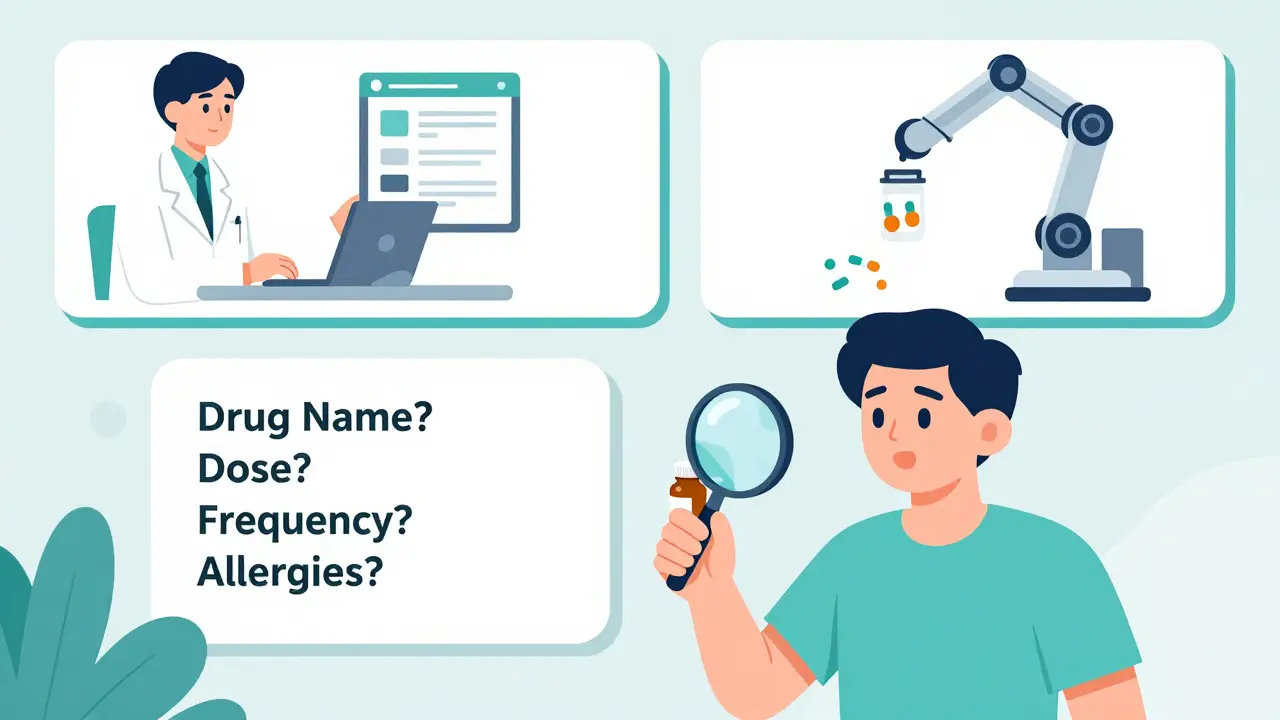
You don’t have to wait for the pharmacy to fix everything. You can be your own safety net.- Always check the label: Does the drug name match what your doctor told you? Is the dose right? Is the number of pills correct? Don’t assume it’s right just because it came from the pharmacy.
- Ask about interactions: If you’re on more than three medications, say: “Could this new one interact with anything I’m already taking?” Most pharmacists will walk you through it.
- Know your allergies: Don’t just say “I’m allergic to penicillin.” Say: “I had a rash and swelling after taking amoxicillin in 2021.” Specifics matter.
- Use one pharmacy: If you use multiple pharmacies, your full med list isn’t in one place. That means no one can spot dangerous combinations.
- Take photos of your prescriptions: Keep a digital copy of your doctor’s handwritten script. If there’s a dispute, you have proof.
One patient in Sydney told me she caught a dangerous error because she remembered her doctor said “take one tablet at bedtime.” The pharmacy gave her a bottle labeled “take one tablet twice daily.” She asked. They apologized. They corrected it. That’s how simple prevention can be.
What Pharmacies Are Doing Right
The best pharmacies aren’t relying on memory or hustle. They’re using systems that catch mistakes before they reach you.- Barcode scanning: Every bottle or vial has a barcode. The pharmacist scans it. The system checks it against the prescription. If it doesn’t match? An alarm sounds. Hospitals using this system cut wrong-drug errors by over 50%.
- Double-checks for high-risk drugs: Insulin, heparin, morphine, and warfarin are flagged. Two people verify the dose before it leaves the counter. One hospital reported a 78% drop in errors after implementing this.
- Tall Man lettering: Drugs that sound alike are labeled differently. HYDROmorphone vs. HYDROxyzine. The capital letters make the difference obvious.
- Electronic prescribing (e-prescribing): No more handwriting. No more misread numbers. Prescriptions go straight from doctor to pharmacy. Studies show this cuts errors by 30-50%.
- Automated dispensing systems: Robots in hospital pharmacies pull pills, count them, and package them. One facility saw a 63% drop in dispensing errors after installing one.
But technology isn’t perfect. Some pharmacists say alert fatigue from too many pop-up warnings in computer systems causes them to ignore real dangers. That’s why the best systems combine tech with human checks.
What Needs to Change?
We can’t fix this by asking pharmacists to work harder. We need to fix the systems they work in.- Standardize error reporting: Right now, every pharmacy reports errors differently. Some call a wrong dose a “dose error.” Others call it a “strength error.” Until we have one global language for errors, we can’t learn from them.
- Improve access to patient data: Pharmacists need real-time access to lab results, allergies, and other meds-not just what the patient remembers.
- Reduce workload: Pharmacists shouldn’t be expected to fill 300 prescriptions a day. Support staff, like pharmacy technicians, should handle more routine tasks so pharmacists can focus on safety checks.
- Train for human factors: Pharmacy schools need to teach not just drug knowledge, but how distractions, fatigue, and pressure affect decision-making.
The World Health Organization says standardized global reporting could cut error rates by 35%. That’s not a dream. It’s a plan-and it’s already being tested in 17 countries.
Final Thought: Safety Is a Team Sport
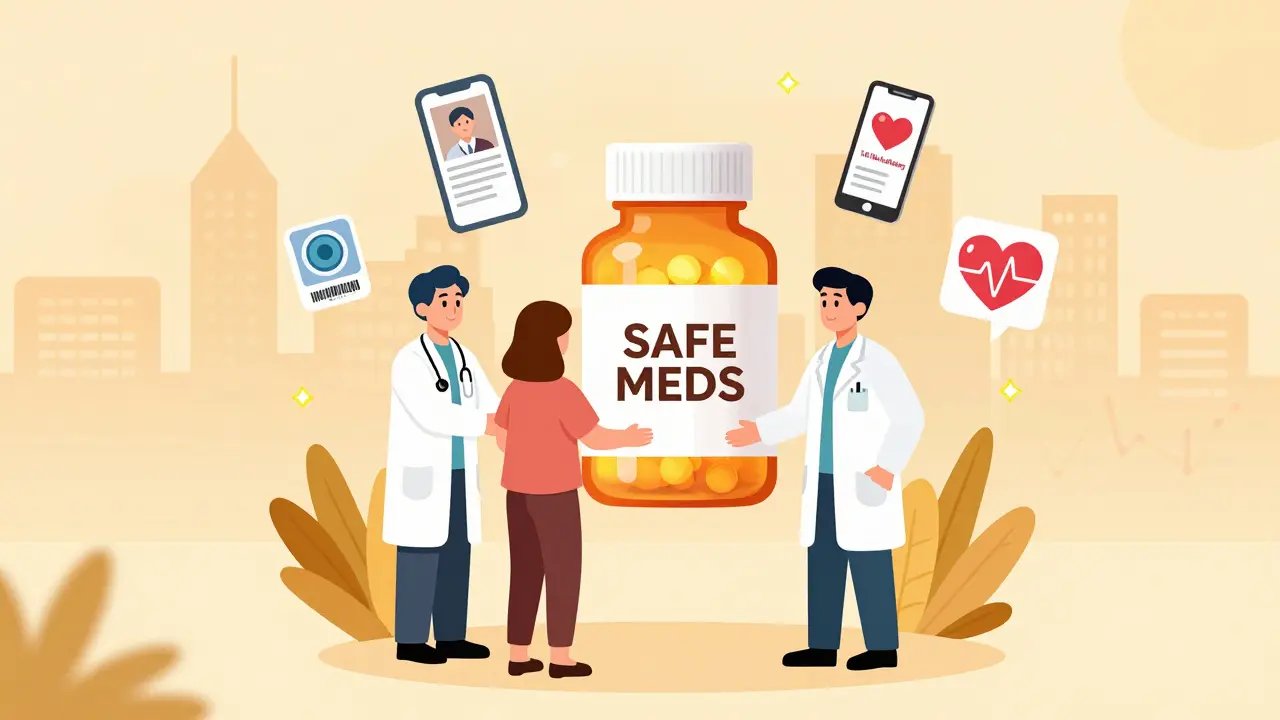
Pharmacists aren’t the enemy. They’re the last line of defense in a system that’s often broken. The best outcomes happen when patients, doctors, and pharmacists work together. You don’t need to be a medical expert to help prevent a mistake. You just need to ask questions. Check the label. Speak up.That bottle of medicine in your hand? It should be safe. It should be right. And with a little awareness, it can be.
What is the most common pharmacy dispensing error?
The most common dispensing error is giving the wrong medication, dosage strength, or dosage form-accounting for about 32% of all errors. This includes handing out the wrong drug entirely, the wrong strength (like 10mg instead of 5mg), or the wrong form (a tablet instead of a liquid). Similar-sounding or similar-looking drug names are often to blame.
How often do pharmacy errors happen?
Globally, about 1.6% of all prescriptions filled contain a dispensing error, according to a 2023 meta-analysis of 62 studies. That means roughly 1 in every 60 prescriptions has a mistake. Rates vary widely-from 0% to over 30%-depending on the setting, workload, and systems in place. Hospital pharmacies report higher volumes, but community pharmacies see more errors due to higher patient volume and less support.
Can technology really reduce pharmacy errors?
Yes. Barcode scanning systems have reduced wrong-drug errors by over 50% and wrong-dose errors by nearly 50% in hospitals. Electronic prescribing cuts errors by 30-50% by eliminating handwriting mistakes. Robotic dispensing systems have cut errors by 63% in some facilities. But technology alone isn’t enough-alert fatigue and poor system design can create new problems. The best results come from combining tech with human verification.
Which medications are most often involved in dispensing errors?
Anticoagulants (like warfarin), opioids (like oxycodone), and antimicrobials (like vancomycin) are the top three drugs involved in serious dispensing errors. These drugs have narrow safety margins-small mistakes can lead to life-threatening outcomes. Insulin, seizure medications, and high-dose antibiotics are also high-risk.
What should I do if I think I got the wrong medication?
Don’t take it. Call the pharmacy immediately and ask them to verify the prescription with your doctor. Bring the bottle with you if you go in person. Keep the original label and packaging. If you’ve already taken the medication and feel unwell, contact your doctor or go to the nearest emergency department. Never assume the pharmacy made a mistake-you might be right, but you also need to act fast to stay safe.
Amber Lane
January 20, 2026 AT 03:30I once got a pill that looked like my usual blood pressure med, but the label said something totally different. I didn't take it. Called the pharmacy. They fixed it in 10 minutes. Just check the label. It's that simple.
Alex Carletti Gouvea
January 22, 2026 AT 03:00Why are we even talking about this? Pharmacies are fine. It's the patients who don't read the instructions. Stop blaming the system. Take responsibility.
Rod Wheatley
January 23, 2026 AT 06:53Listen-I’ve worked in a pharmacy for 18 years, and I’ve seen everything. The system is broken, not the people. Pharmacists are drowning in prescriptions, getting interrupted every 90 seconds, and still expected to catch every tiny mistake. We need more tech, more staff, and less pressure. Barcode scanning? Mandatory. Double-checks? Non-negotiable. And please, for the love of God, stop handwriting prescriptions. I’ve seen a ‘5’ become a ‘9’ and a patient almost die. It’s not hype-it’s horror. We can fix this, but we need to stop pretending it’s just ‘human error.’ It’s systemic failure.
Jerry Rodrigues
January 24, 2026 AT 01:43Been there. Seen it. Didn’t say anything at first. Then I did. Turned out I was right. Simple stuff. Doesn’t make you a hero. Just makes you careful.
Samuel Mendoza
January 24, 2026 AT 17:101.6% error rate? That’s a success. You people act like pharmacies are magic. They’re not. If you can’t read a label, that’s your problem.
shubham rathee
January 26, 2026 AT 13:34Did you know the FDA and Big Pharma secretly collude to keep errors high so people keep buying more meds? They profit from confusion. They don’t want barcode scanners everywhere. They want you confused and dependent. I’ve seen the documents. It’s all connected. Your pharmacy is a pawn. The real enemy is the algorithm that decides what you get. They don’t care if you live or die. Only if you keep paying.
MAHENDRA MEGHWAL
January 27, 2026 AT 10:30It is with profound respect for the professional integrity of pharmacists that I acknowledge the immense pressures under which they operate. The systemic deficiencies outlined in this post are not reflective of individual negligence, but rather institutional neglect. I respectfully urge policymakers to implement standardized reporting protocols and to allocate sufficient human resources to ensure patient safety is prioritized above throughput metrics.
Kevin Narvaes
January 28, 2026 AT 22:20bro like… why do we even have pharmacies? why not just let ai do it? or maybe we should all just grow our own meds? i mean… i feel like the whole system is just a scam. also i think the pharmacist who gave me my zoloft last time was kinda vibes with the devil. i could feel it. 🤡
Dee Monroe
January 30, 2026 AT 19:09It’s funny, isn’t it? We live in a world where we can track a package across the globe in real time, order groceries with a voice command, and stream every movie ever made in 8K-but we still hand people life-altering drugs based on a scribble on a piece of paper and hope someone remembers to check the name on the bottle. We treat medicine like it’s a puzzle we solve by luck instead of a science we design with care. We don’t need more heroes. We need better systems. We need to stop glorifying burnout as dedication. We need to stop asking people to be perfect in broken environments. The real tragedy isn’t the error-it’s that we’ve normalized it. And until we stop saying, ‘It’s just one in sixty,’ and start saying, ‘One is too many,’ we’re not fixing anything. We’re just getting better at ignoring the blood on the floor.