
Celiac Disease and Liver Abnormalities: What Links Them
 Dec, 5 2025
When you’re diagnosed with celiac disease, the focus is usually on your gut - bloating, diarrhea, weight loss. But what if your liver is also sending warning signs? Many people don’t realize that celiac disease doesn’t just mess with the small intestine. It can quietly affect the liver, too. In fact, up to 40% of people with untreated celiac disease show abnormal liver enzyme levels before they even know they have the condition. And here’s the surprising part: for most, the fix isn’t a pill. It’s removing gluten.
Why Does Celiac Disease Affect the Liver?
The link between celiac disease and liver problems isn’t random. It’s biological. When someone with celiac eats gluten, their immune system attacks the lining of the small intestine. But that immune response doesn’t stay confined. It can cross-react with liver tissue, especially in people who carry certain genetic markers like HLA-DQ2 homozygosity - which doubles the risk of liver complications.
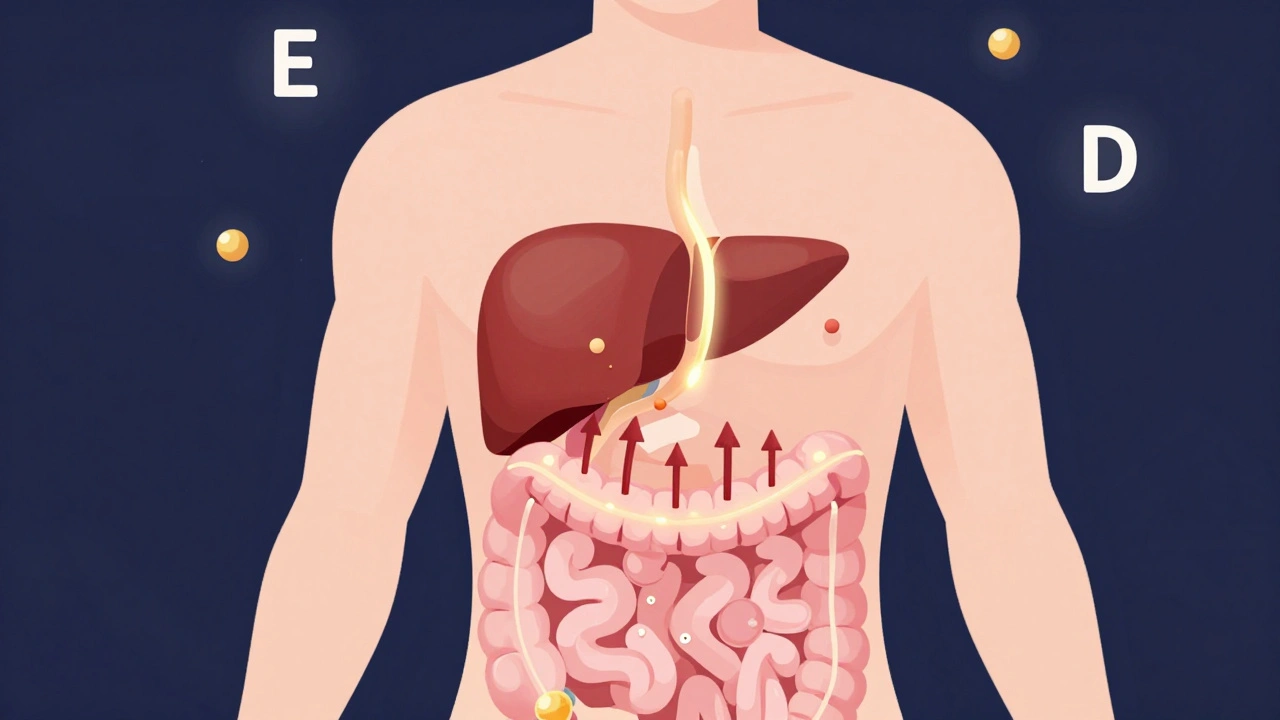
Another major player is gut permeability. A damaged intestine lets toxins, bacteria, and undigested food particles leak into the bloodstream. These travel straight to the liver via the portal vein. The liver, trying to clean up the mess, gets inflamed. Over time, this can lead to fatty buildup, scarring, or even autoimmune liver diseases like autoimmune hepatitis.
Malabsorption plays a role too. Celiac disease damages the villi - tiny finger-like projections that absorb nutrients. Without them, the body can’t absorb fat-soluble vitamins like E and D, which protect the liver. Low levels of these vitamins leave the liver more vulnerable to damage.
What Do Liver Abnormalities Look Like in Celiac Patients?
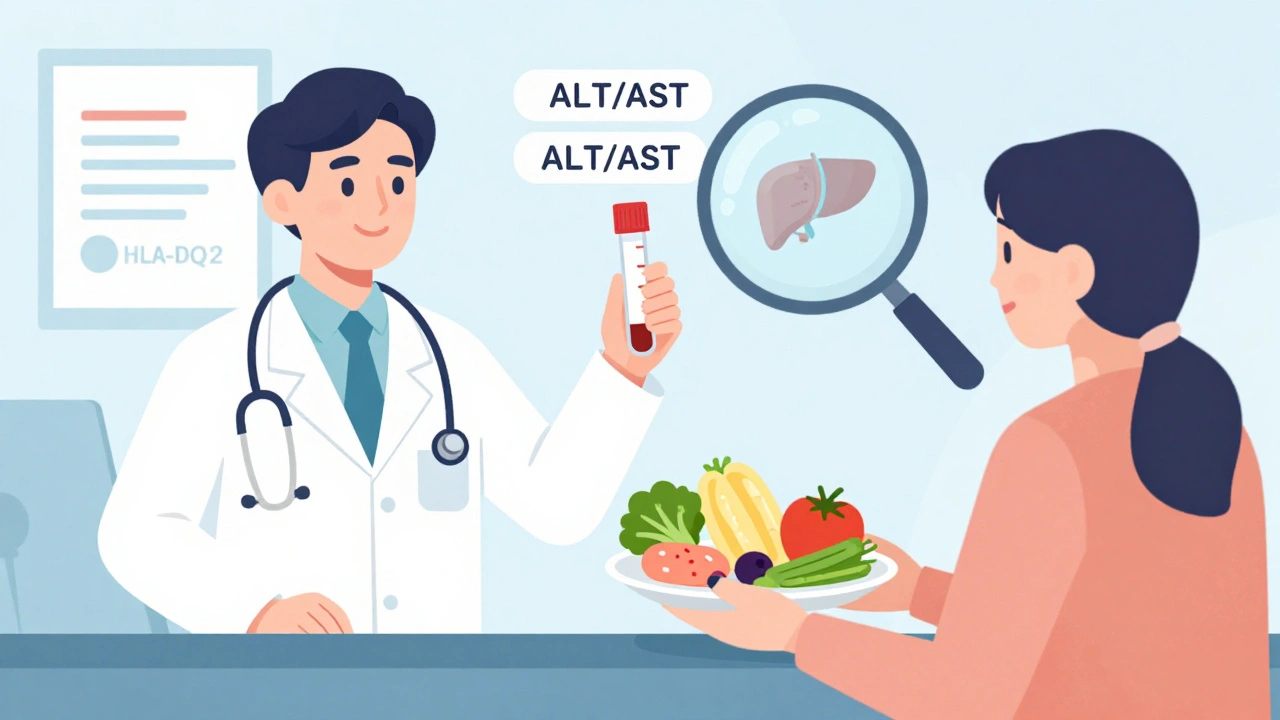
The most common sign is elevated liver enzymes - specifically ALT and AST. In one study of 67 biopsy-proven celiac patients, 70% had both ALT and AST higher than normal. About 21% had only ALT elevated, and 9% had only AST. These levels are usually mild to moderate - often 2 to 5 times above the upper limit of normal. That’s not high enough to trigger panic, but it’s high enough to be ignored… until it’s not.
The liver conditions most often linked to celiac disease include:
- Non-alcoholic fatty liver disease (now called MASLD) - found in 25% to 50% of untreated celiac patients
- Autoimmune hepatitis - about 4% to 6.4% of people with autoimmune hepatitis also have celiac disease
- Primary biliary cholangitis and primary sclerosing cholangitis - rarer, but strongly associated
Even more telling: about 10% to 15% of celiac patients show early signs of liver fibrosis on biopsy. That’s scarring. Left unchecked, it can lead to cirrhosis.
How Common Is This? The Numbers Don’t Lie
A 2025 meta-analysis compared siblings - one with celiac, one without. The results were stark: celiac patients had double the risk of chronic liver disease. Even more surprising, 4.7% of people diagnosed with cryptogenic cirrhosis (liver failure with no clear cause) turned out to have undiagnosed celiac disease. That’s not a coincidence. It’s a red flag.
And the trend is growing. Since 2023, when MASLD replaced NAFLD as the official term, researchers have found a stronger connection between metabolic dysfunction and celiac disease. Why? Because many people with celiac gain weight after going gluten-free - not from eating healthier, but from swapping bread and pasta for processed gluten-free snacks packed with sugar and unhealthy fats. That’s a recipe for fatty liver.

Can You Fix It? Yes - But Only If You Act Fast
The good news? For most people, the liver damage caused by celiac disease is reversible. A 2015 study by Dr. Daniel Leffler tracked 100 celiac patients with elevated liver enzymes. After 18 months on a strict gluten-free diet, 79% saw their liver enzymes return to normal. That’s nearly 8 out of 10 people - no medication needed.
But timing matters. The longer you wait, the harder it gets. Patients who start the gluten-free diet within six months of diagnosis normalize their enzymes 30% faster than those who delay. And if enzymes haven’t improved after a year? That’s a signal to dig deeper. You might have another condition - like autoimmune hepatitis - that needs separate treatment.
Here’s what the guidelines recommend:
- Check liver enzymes at diagnosis - not optional, standard practice now
- Repeat tests every 3 to 6 months until levels normalize
- If enzymes stay high after 12 months, test for autoimmune liver diseases
And here’s the catch: many doctors still don’t check liver enzymes when diagnosing celiac. In 2015, only 65% of clinics did. By 2024, that number jumped to 92%. Progress - but not universal. If your doctor doesn’t mention it, ask.
Gluten-Free Doesn’t Mean Healthy - The MASLD Trap
This is where things get tricky. Going gluten-free often means eating more packaged foods - gluten-free crackers, cookies, pasta, bread. These are usually high in refined carbs, sugar, and unhealthy fats. For someone with celiac, this can trigger MASLD - fatty liver - even if they’re avoiding gluten.
One patient on Reddit shared: "My ALT was 142 when I was diagnosed. My doctor said it was fatty liver. I went gluten-free, ate all the gluten-free snacks, and my weight went up. My ALT didn’t drop - it got worse."
That’s the paradox. The treatment for celiac can cause the very problem it’s supposed to fix.
The solution? Eat real food. Focus on:
- Fruits and vegetables
- Lean meats, fish, eggs
- Gluten-free whole grains like quinoa, buckwheat, brown rice
- Healthy fats - avocado, olive oil, nuts
Work with a dietitian who specializes in celiac disease. Studies show patients who do this normalize liver enzymes faster and avoid weight gain.
What If Your Liver Doesn’t Improve?
If your enzymes stay high after 12 months on a strict gluten-free diet, it’s time to suspect another condition. Autoimmune hepatitis is the most common culprit - and it’s treatable, but not with diet alone. You’ll need medication like steroids or immunosuppressants.
Other possibilities: primary biliary cholangitis, viral hepatitis, or even undiagnosed alcohol use. Your doctor should order:
- Autoantibody tests (ANA, SMA, AMA)
- Ultrasound or FibroScan to check for liver stiffness
- Possible liver biopsy if needed
Don’t assume it’s just "celiac liver." Rule out the rest.
What’s Changing in 2025?
Research is accelerating. The European Association for the Study of the Liver now recommends screening all patients with cryptogenic cirrhosis for celiac disease. That’s huge. It means if your liver fails and no one can explain why, they’ll test you for gluten sensitivity.
Researchers at the University of Helsinki are tracking 500 celiac patients over 10 years to see if how long you ate gluten before diagnosis predicts liver damage. Early data suggests the longer you go undiagnosed, the higher your risk.
And there’s new hope on the horizon. Takeda Pharmaceutical’s Phase II trial, completed in late 2023, tested an enzyme therapy that breaks down gluten in the gut before it triggers an immune response. If it works, it could reduce liver inflammation in celiac patients who accidentally ingest gluten.
Genetic research is also moving forward. People with two copies of the HLA-DQ2 gene (homozygous) are 2.3 times more likely to develop liver abnormalities than those with one copy. That could one day help doctors identify high-risk patients before damage starts.
What Should You Do?
If you have celiac disease:
- Get your liver enzymes checked at diagnosis - and every 3 to 6 months after
- Follow a whole-food, nutrient-dense gluten-free diet - not the processed kind
- Work with a celiac-specialized dietitian to avoid MASLD
- If enzymes don’t drop after a year, push for autoimmune liver testing
- Don’t ignore fatigue or nausea - they can be signs of liver stress
If you have unexplained liver problems - especially fatty liver or cryptogenic cirrhosis - ask: Could this be celiac? A simple blood test for tTG antibodies could change everything.
The liver doesn’t scream. It whispers. But if you’re listening - and you’re gluten-free - it can heal.
Can celiac disease cause permanent liver damage?
In most cases, no. Liver enzyme elevations and even early fibrosis caused by celiac disease often reverse completely after 12 to 18 months on a strict gluten-free diet. However, if the condition goes undiagnosed for many years - or if another liver disease like autoimmune hepatitis develops - permanent damage like cirrhosis can occur. Early diagnosis and diet adherence are critical to prevent this.
Do all celiac patients have liver problems?
No. Only about 15% to 40% of untreated celiac patients show elevated liver enzymes. Many have no symptoms at all. But because the liver can be affected without obvious signs, testing is recommended for everyone diagnosed with celiac disease - even if they feel fine.
Can a gluten-free diet cause fatty liver?
Yes - but only if the diet is unhealthy. Processed gluten-free foods are often high in sugar, refined carbs, and fats. These can lead to weight gain and MASLD (metabolic dysfunction-associated steatotic liver disease). The key is choosing whole foods like vegetables, lean proteins, and whole gluten-free grains instead of packaged snacks.
How long does it take for liver enzymes to normalize after going gluten-free?
Most people see improvement within 3 to 6 months. By 12 months, about 85% of patients have normal liver enzymes. For some, especially those with severe damage or coexisting conditions, it can take up to 18 months. Consistency matters - even small gluten exposures can delay recovery.
Should I get tested for celiac disease if I have fatty liver?
If your fatty liver has no clear cause - you’re not overweight, don’t drink alcohol, and have no diabetes - then yes. About 4.7% of people with cryptogenic cirrhosis have undiagnosed celiac disease. A simple blood test for tTG antibodies can rule it in or out. It’s quick, cheap, and could change your treatment plan entirely.
Are liver problems more common in adults or children with celiac disease?
Liver enzyme abnormalities are more commonly detected in adults, but children with celiac disease also show them - often at higher rates than previously thought. In fact, some pediatric studies report up to 35% of children with untreated celiac have elevated liver enzymes. The good news: children tend to recover faster after starting a gluten-free diet.
Gwyneth Agnes
December 5, 2025 AT 15:38Gluten-free snacks are a scam. If your liver doesn’t improve, you’re eating junk disguised as health.
Ashish Vazirani
December 7, 2025 AT 00:34India has known this for centuries-our ancestors ate millet, rice, lentils-no wheat, no poison! Now Westerners eat gluten-free cookies and wonder why their liver fails... pathetic. The real cure? Return to real food. Not this processed nonsense.
Mansi Bansal
December 7, 2025 AT 04:23It is imperative to underscore that the pathophysiological nexus between celiac disease and hepatic dysfunction is not merely correlative, but causally mediated by immune-mediated cross-reactivity and intestinal permeability. The elevation of transaminases, while often mild, constitutes a biomarker of systemic autoimmunity, necessitating a multidisciplinary approach involving gastroenterology, hepatology, and nutritional science. Failure to intervene promptly may precipitate irreversible fibrotic remodeling.
Kay Jolie
December 7, 2025 AT 09:42OMG. I just realized my gluten-free sourdough was made with tapioca starch and cane sugar. My ALT was 110. I thought I was healing. Turns out I was just feeding my liver a sugar coma. I’ve switched to quinoa bowls and avocado toast. My liver enzymes dropped 40% in 3 months. I’m basically a wellness guru now. #GlutenFreeButNotStupid
Max Manoles
December 8, 2025 AT 07:59Study data from Leffler 2015 is robust, but it’s critical to note that normalization rates assume strict adherence. Even trace gluten from cross-contamination can delay recovery. Many patients assume they’re compliant, but shared kitchen utensils, restaurant sauces, or oat contamination can sabotage results. Testing for gluten peptides in stool or urine might be worth considering for non-responders.
Katie O'Connell
December 10, 2025 AT 00:49The term MASLD is a linguistic obfuscation designed to depoliticize metabolic disease. It replaces NAFLD, which at least named the culprit: fat. Now we’re left with a bureaucratic acronym that implies nothing. The real issue isn’t nomenclature-it’s the food industry’s exploitation of gluten-free as a marketing ploy for hyperprocessed, high-glycemic products. The science is clear. The policy? Not so much.
Clare Fox
December 11, 2025 AT 10:08weird how the body just… stops screaming when you stop eating the thing that’s breaking it. like your liver was holding its breath for years and finally got to exhale. no magic pills. just… stop eating the poison. and eat real food. it’s so simple it feels like a trick.
Akash Takyar
December 12, 2025 AT 11:32Dear fellow travelers on this gluten-free journey-your liver is not your enemy. It is your silent protector. If enzymes remain elevated after 12 months, do not despair. Consult a specialist. Seek a dietitian. Your body is still healing. Every step forward counts. You are not alone. Keep going.
Arjun Deva
December 12, 2025 AT 19:30Who funds this research? Big Pharma? Gluten-free food giants? Did you know that the liver enzyme tests they push are overpriced and often inaccurate? The real reason they want you to believe gluten causes liver damage is so you’ll keep buying their expensive supplements and gluten-free bread… which is just sugar in disguise. Wake up. It’s all a scam.
Inna Borovik
December 13, 2025 AT 12:04Let’s be real: 40% of celiac patients have liver issues? That’s not a coincidence-it’s a diagnostic blind spot. Why aren’t we screening everyone with elevated ALT/AST for celiac? It’s cheaper than a liver biopsy. And yet, doctors still treat it like a metabolic mystery. That’s not medicine. That’s negligence.