
Bisphosphonates and Calcium Supplements: How to Avoid Absorption Problems
 Dec, 11 2025
Bisphosphonate-Calcium Timing Calculator
How This Works
Bisphosphonates need at least 30-60 minutes on an empty stomach before taking calcium or other minerals. This calculator helps you determine when you can safely take calcium after your bisphosphonate dose.
Key Timing Rules
- Take bisphosphonate on empty stomach with plain water
- Wait 30-60 minutes before eating or taking anything else
- Take calcium at a separate meal (not with bisphosphonate)
- Calcium type doesn't matter - both carbonate and citrate block absorption
- Never take calcium within 30 minutes of bisphosphonate
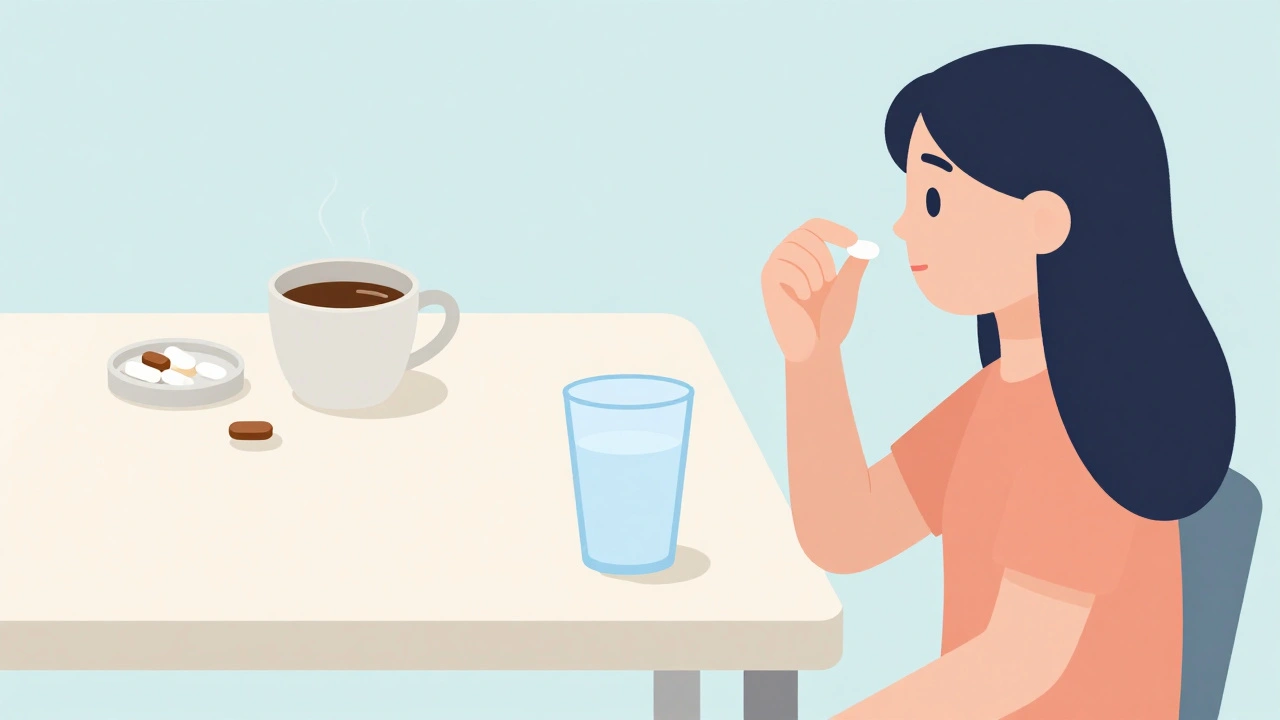
Take your bisphosphonate at 5 a.m. Eat breakfast at 7 a.m. That’s the rule millions of people with osteoporosis live by. But here’s the problem: if you take calcium even 15 minutes after your pill, you might as well have tossed it in the trash. This isn’t hype. It’s chemistry. And it’s why so many people on these drugs aren’t getting the protection they paid for.
Why Bisphosphonates Are So Picky
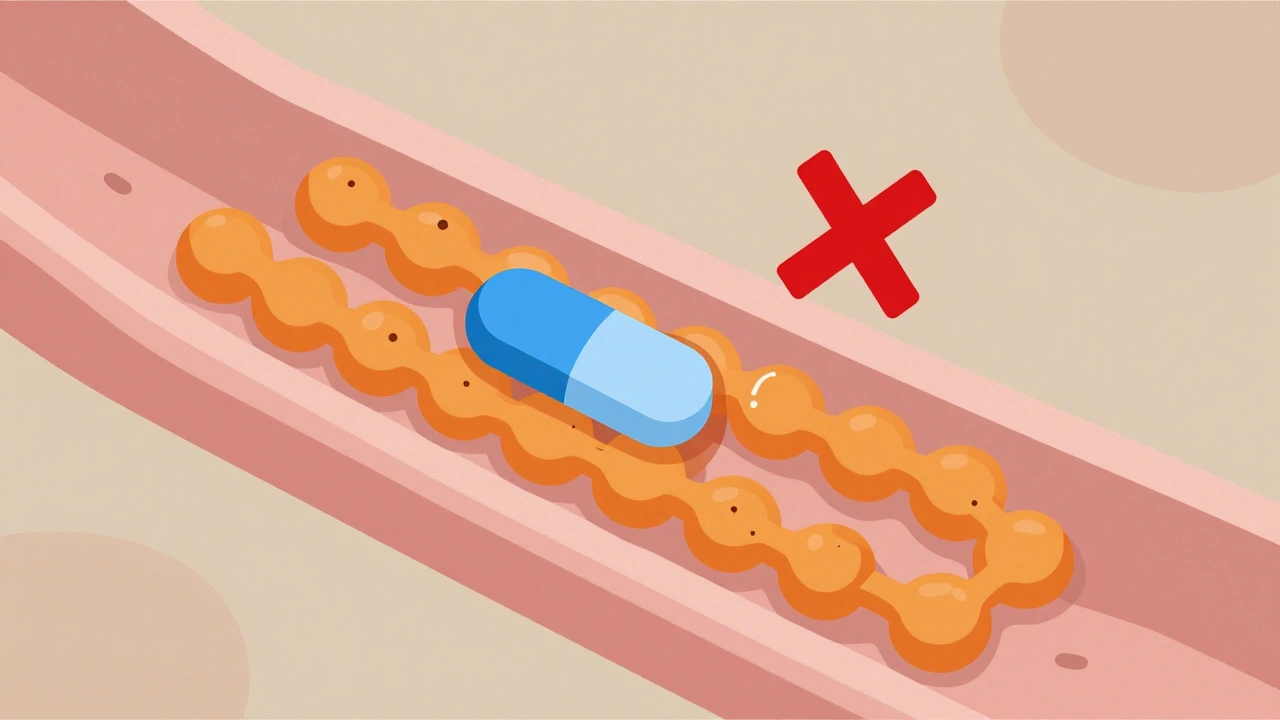
Bisphosphonates-like alendronate, risedronate, and zoledronic acid-are designed to stick to bone. That’s their job. They latch onto areas where bone is breaking down and tell the cells that do the breaking (osteoclasts) to shut down. That’s how they stop fractures. But to do that, they have to get into your bloodstream first. And that’s where things go wrong.Less than 1% of an oral bisphosphonate dose actually makes it into your blood. That’s not a typo. You take a 70 mg pill, and maybe 0.7 mg gets absorbed. The rest? Gone. And what kills that tiny sliver of absorption? Calcium. Magnesium. Iron. Even antacids. These minerals bind to the bisphosphonate like glue, forming a compound your gut can’t absorb. It’s like trying to drink a smoothie through a straw plugged with sand.
The FDA and major medical societies agree: you need to take these pills on an empty stomach, with just plain water, and wait 30 to 60 minutes before eating or taking anything else. That’s not a suggestion. It’s a requirement backed by dozens of clinical studies. One 2008 study showed calcium cuts absorption by 90-100%. Another found that taking bisphosphonates with milk or orange juice reduced absorption by over 95%.
Calcium Supplements: The Silent Saboteur
Calcium supplements are everywhere. Doctors recommend them for bone health. You see them on pharmacy shelves, in multivitamins, in fortified foods. But if you’re on a bisphosphonate, your calcium timing is everything.There’s a myth that calcium citrate is safer than calcium carbonate. It’s not. Both bind just as tightly to bisphosphonates. One study showed calcium citrate gives you 27% more calcium in your blood-but only if you take it on its own. Take it with your bisphosphonate? You get zero benefit from the drug.
Patients often think, “I’ll just take my calcium at night.” That sounds smart. But if you take your bisphosphonate in the morning and your calcium at bedtime, you’re still at risk. What if you eat a snack at 10 p.m.? What if you take an antacid for heartburn? One slip-up, and your whole day’s dose is wasted.
Real-world data shows the problem is huge. A 2023 survey on the Bone Smart forum found 68% of users accidentally took calcium with their bisphosphonate at least once. Over 40% blamed gastrointestinal upset on the mistake-not realizing the real issue was the drug failing to work.
The Real-World Cost of Getting It Wrong
This isn’t just about inconvenience. It’s about broken bones.Studies show nearly half of all patients on oral bisphosphonates don’t get the full benefit because of poor timing. That’s why fracture rates stay high even among people who are “taking their meds.” The National Osteoporosis Foundation estimates that half of treatment failures are due to improper administration-not because the drug doesn’t work, but because people don’t take it right.
And it’s not just patients. Doctors often don’t explain it well. A 2022 study found that only 31% of primary care providers spent more than 10 minutes teaching patients how to take these pills. Pharmacists do better-but even then, only 1 in 4 patients get a full counseling session.
What happens when the drug doesn’t work? Your bone density keeps dropping. You might not feel it. But your risk of hip fracture, spine fracture, or wrist fracture goes up. And once you break a hip after 70, your chance of dying within a year jumps by 20-30%.
How to Get It Right: A Simple System
You don’t need to be a scientist to get this right. You just need a routine.Here’s what works for thousands of people:
- Take your bisphosphonate first thing in the morning. Right after you wake up. Before coffee, before brushing your teeth, before anything.
- Drink 6-8 ounces of plain water. No juice. No milk. No sparkling water. Just plain.
- Stay upright for 30-60 minutes. Walk around. Sit up. Don’t lie down. This helps the pill reach your stomach and avoids esophageal irritation.
- Wait at least 30 minutes before eating or taking anything else. That includes vitamins, antacids, iron pills, or even oatmeal.
- Take your calcium supplement at lunch or dinner. Pick one meal. Stick to it. Always.
Some people set alarms. Others leave their calcium bottle next to their dinner plate. One patient on Reddit took her bisphosphonate at 5 a.m. and her calcium at 6:30 a.m. That’s tight-but she’s been doing it for five years with zero mistakes.
The key is consistency. Don’t switch days. Don’t skip the rule because you’re in a rush. One missed dose isn’t a disaster. But if you do it wrong twice a week, you’re essentially taking a placebo.
What If You Mess Up?
You took your calcium with your bisphosphonate? Don’t panic. Don’t double up. Just wait.If you realize the mistake within 15 minutes, drink a full glass of water and wait two hours before taking your calcium. If it’s been longer than 30 minutes? Skip the calcium for the day. Don’t take it later. It won’t help. Just get back on schedule tomorrow.
Never take a second bisphosphonate to “make up” for it. That can cause serious stomach irritation or even esophageal ulcers. The drug doesn’t build up in your system. You get one shot per dose. If you mess up, you miss the window.
Alternatives: When the Timing Is Too Much
If this system feels impossible, you’re not alone. One in two patients over 65 gives up on daily bisphosphonates because of the timing.There are better options:
- Once-yearly IV zoledronic acid. You get it in a doctor’s office once a year. No fasting. No waiting. No calcium conflicts. Adherence jumps from 52% to 78%.
- Once-monthly or once-weekly pills. These are easier than daily, but still need the same timing rules.
- Denosumab (Prolia). An injection every six months. No food restrictions. No calcium timing. It works differently-blocks a different bone-breaking signal.
- Romosozumab (Evenity). A monthly injection for up to a year. Builds bone faster than bisphosphonates. But it’s expensive-about $1,850 a month.
IV options are especially good for older adults, people with memory issues, or those who can’t manage daily routines. Medicare and many private insurers cover them for high-risk patients.
The Bigger Picture: Vitamin D Matters Too
You can time your pills perfectly, but if your vitamin D is low, your bisphosphonate still won’t work well.Vitamin D helps your body absorb calcium from food. Without it, your bones can’t mineralize properly. The Endocrine Society says your vitamin D level should be at least 30 ng/mL before starting bisphosphonates. Many people are below that-especially in winter, or if they don’t get sunlight.
Get tested. If you’re low, take a daily 1,000-2,000 IU supplement. But take it with food-not with your bisphosphonate. Vitamin D doesn’t interfere with absorption, but calcium does. So keep them separate.
What’s Changing? The Future of Osteoporosis Drugs
Scientists are working on better versions of bisphosphonates. One new drug in trials, RAY121, uses a special formula that lets 15% of the drug get absorbed-15 times better than current pills. It’s still experimental, but it could be a game-changer.Another idea? A pill that separates the bisphosphonate and calcium into two layers, releasing them at different times. It sounds like sci-fi, but six clinical trials are testing this right now.
For now, though, the best tool we have is education. Patients who get clear, repeated instructions-written down, demonstrated, and reviewed-have 68% fewer mistakes.
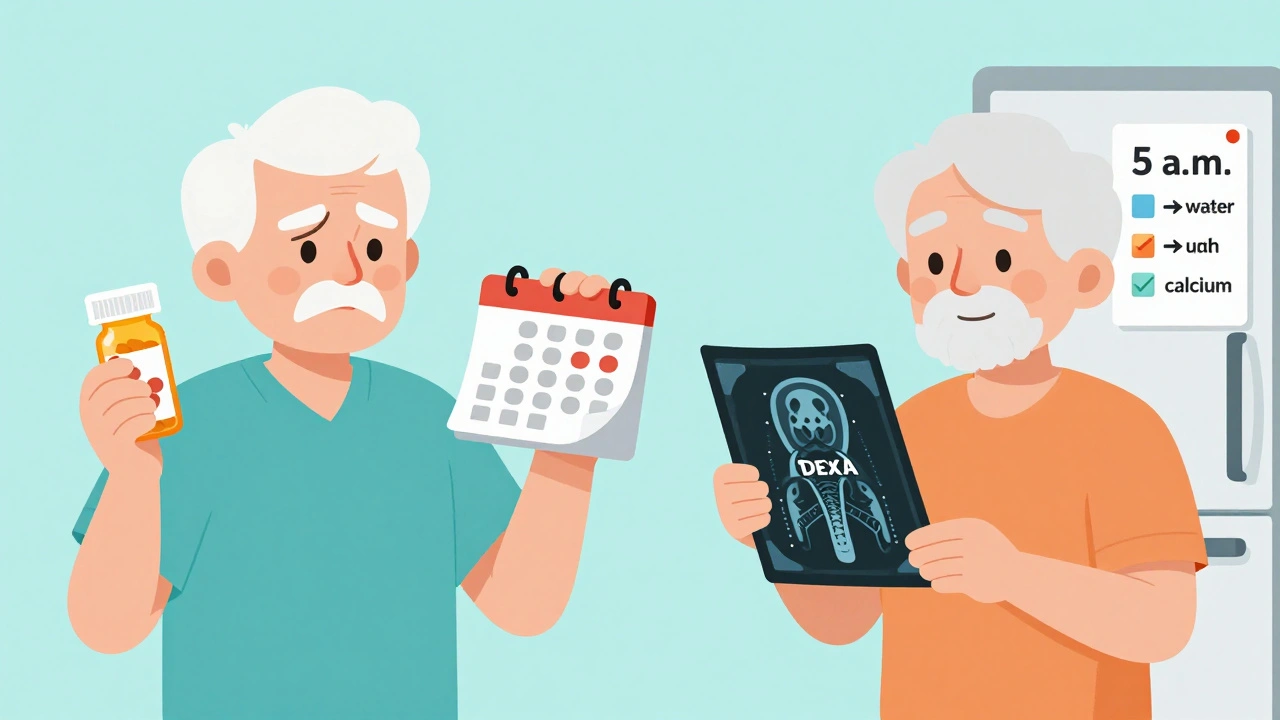
If you’re on a bisphosphonate, ask your pharmacist to walk you through the steps. Write it down. Stick it on your fridge. Set two alarms: one for the pill, one for the calcium. Your bones will thank you.
Can I take calcium and bisphosphonates at the same time if I wait a few hours?
No. Even if you wait several hours, bisphosphonates bind to calcium in your gut for up to 24 hours after taking them. The only safe approach is to take your bisphosphonate on an empty stomach with water, wait 30-60 minutes, then take calcium at a separate meal. Never take them together, even hours apart.
Does it matter what kind of calcium I take?
No. Calcium carbonate and calcium citrate both block bisphosphonate absorption equally. Calcium citrate is better absorbed when taken with food, but that doesn’t make it safer with bisphosphonates. The key is timing-not the type.
Can I take my bisphosphonate at night instead of in the morning?
The guidelines recommend morning dosing because it’s easier to ensure an empty stomach. But if you can’t do that, taking it at night after fasting for at least 8 hours is acceptable. The critical part is no food, no supplements, and staying upright for 30-60 minutes afterward. Night dosing works only if you’re truly fasting and won’t eat or drink anything else until after the waiting period.
Why do I need to stay upright after taking the pill?
Bisphosphonates can irritate your esophagus if they sit there too long. Staying upright helps the pill move quickly into your stomach. Lying down increases the risk of esophageal ulcers, a known side effect. Walk around or sit up-don’t lie back on the couch.
What if I forget to take my bisphosphonate one day?
If you miss your daily dose, skip it and wait until the next scheduled day. Don’t double up. For weekly pills, if you miss your day, take it the next day and then return to your original schedule. Never take two doses in one day.
Are there any foods I should avoid besides calcium?
Yes. Avoid coffee, tea, orange juice, mineral water, and antacids for at least 30 minutes after taking your bisphosphonate. These contain magnesium, iron, aluminum, or other minerals that also block absorption. Stick to plain water only during the waiting period.
How do I know if my bisphosphonate is working?
Your doctor will check your bone density with a DEXA scan every 1-2 years. But the real sign of success is not breaking a bone. If you’ve been taking your pills correctly for 2-3 years and haven’t had a fracture, the drug is working. If your bone density is improving, even slightly, that’s also a good sign.
Emily Haworth
December 11, 2025 AT 22:51Tom Zerkoff
December 13, 2025 AT 21:22Yatendra S
December 14, 2025 AT 23:29Himmat Singh
December 16, 2025 AT 10:41kevin moranga
December 17, 2025 AT 14:25Lara Tobin
December 18, 2025 AT 15:33Scott Butler
December 19, 2025 AT 16:02Emma Sbarge
December 21, 2025 AT 06:45Deborah Andrich
December 22, 2025 AT 18:46Donna Hammond
December 23, 2025 AT 07:03