
Alcoholic Liver Disease: Understanding the Stages from Fatty Liver to Cirrhosis
 Dec, 23 2025
Most people don’t realize their drinking is slowly destroying their liver until it’s too late. The liver doesn’t scream. It doesn’t hurt until damage is deep and widespread. By the time jaundice shows up or your belly swells with fluid, the disease has already moved past the point where simple changes can fix it. But here’s the truth: alcoholic liver disease doesn’t appear overnight. It creeps in, stage by stage, and each stage offers a chance to stop it - if you know what to look for.
Stage 1: Fatty Liver (Hepatic Steatosis)
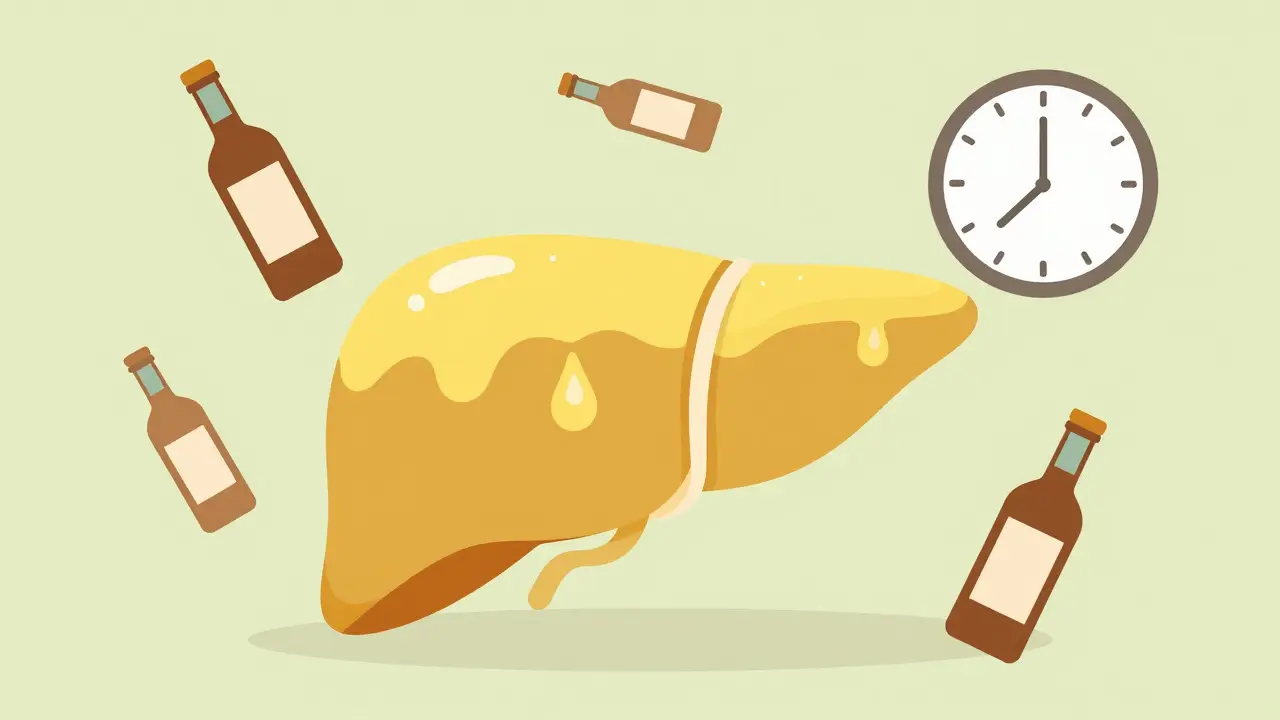
This is the earliest and most common stage. It’s not a diagnosis you usually hear from your doctor unless you get blood work done for another reason. About 90% of people who drink more than 3-4 standard drinks a day develop fatty liver. It can show up in as little as 3 days of heavy drinking. Your liver gets coated in fat - not because you’re overweight, but because alcohol breaks down into toxins that force your liver to store fat instead of burning it.
The good news? This stage is completely reversible. No medication. No surgery. Just stop drinking. Studies show that after 4 to 6 weeks without alcohol, 85% of people see their liver fat disappear. Liver enzymes - ALT and AST - return to normal. No scarring. No permanent damage. The liver is one of the few organs that can regenerate if given the chance.
But here’s the catch: you won’t feel anything. No pain. No fatigue. No yellow skin. That’s why so many people don’t know they have it. Blood tests might show AST higher than ALT - a telltale sign that alcohol is the cause, not just general liver stress. If your doctor says your liver enzymes are elevated and you drink regularly, don’t brush it off as "just a fluke." It’s your body’s first warning.
Stage 2: Alcoholic Hepatitis (Alcohol-Associated Hepatitis)
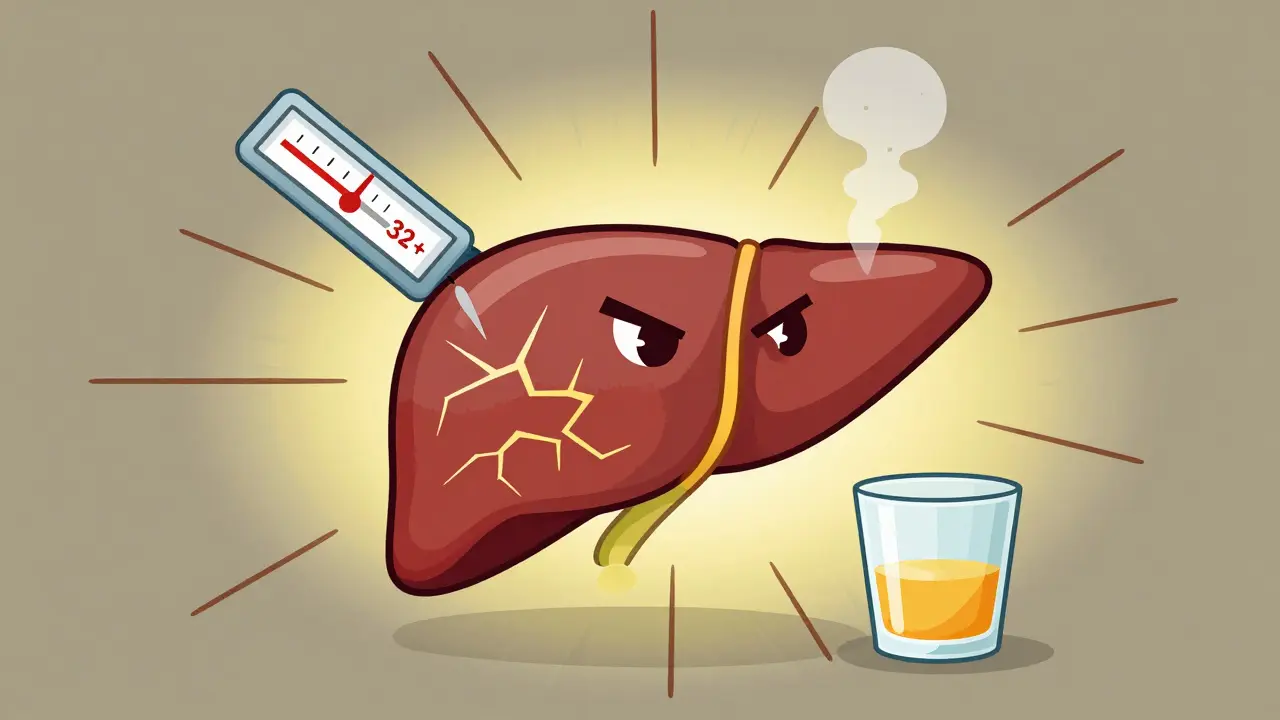
When drinking continues, the fat turns into inflammation. This is alcoholic hepatitis - or as it’s now called, alcohol-associated hepatitis (AH). It’s not just fat anymore. Your liver is angry. Swollen. Damaged. About 30-35% of people with fatty liver who keep drinking will reach this stage, usually after 5 to 10 years of heavy use. But sometimes, it hits fast - after a single binge of 100 grams of alcohol (about 8 standard drinks) in one day.
Symptoms start showing now. Yellow eyes and skin (jaundice). Fever. Nausea. Loss of appetite. Belly pain. In severe cases, fluid builds up in the abdomen (ascites), and you might feel confused or drowsy (hepatic encephalopathy). A doctor will use the Maddrey Discriminant Function score to measure severity. A score over 32 means you’re in danger - 30-40% of people with severe AH die within a month without treatment.
Treatment isn’t simple. Stopping alcohol is non-negotiable. But for severe cases, steroids like prednisolone are used to calm the inflammation. The STOPAH trial showed steroids reduce 28-day death rates from 20% to under 18%. But only about 40% of patients respond. For others, it’s too late. And if you keep drinking? Your chances of dying within a year jump dramatically.
What’s scary is that half the people who develop severe alcoholic hepatitis have never been told they have liver problems before. One minute you feel fine. The next, you’re in the hospital. That’s why regular check-ups matter - especially if you drink regularly.
Stage 3: Cirrhosis
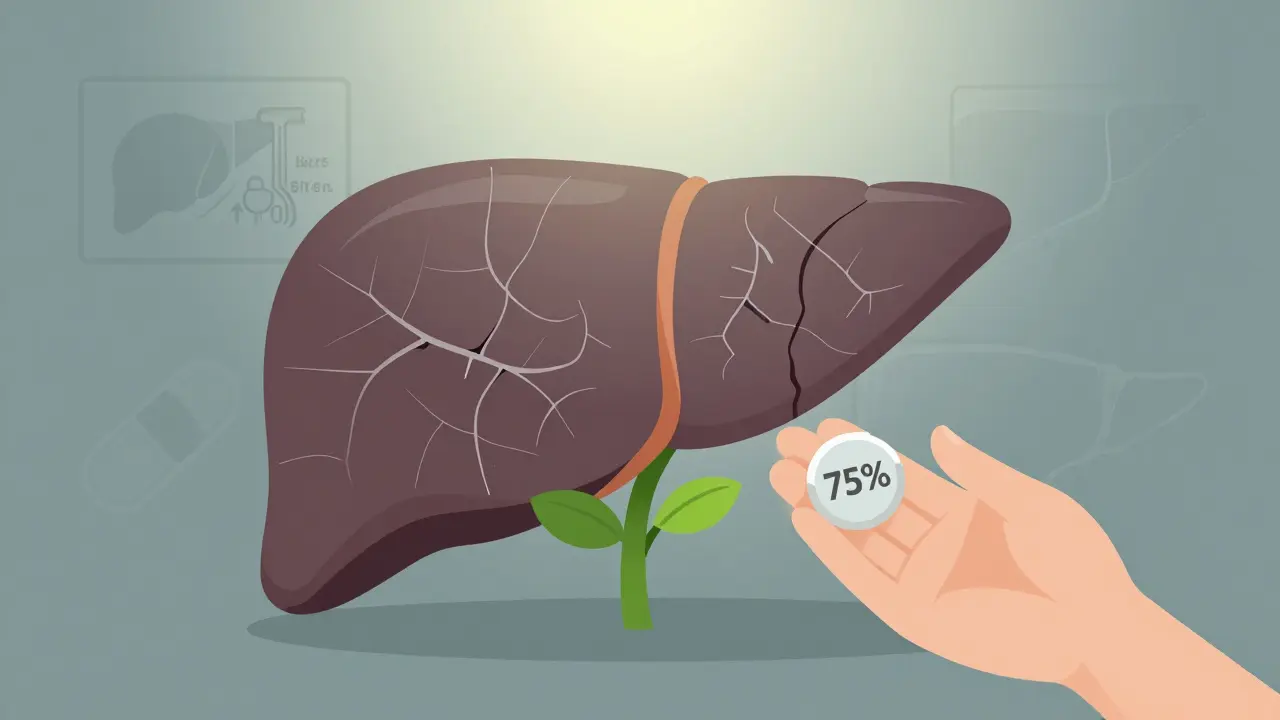
This is the point of no return - or so people think. Cirrhosis means your liver is covered in scar tissue. More than 75% of its normal structure is gone. The liver can’t filter toxins, make proteins, or store energy like it used to. This stage affects 10-20% of long-term heavy drinkers, but it doesn’t happen evenly. Women, people with certain genes (like PNPLA3), or those with diabetes or obesity develop cirrhosis faster - sometimes after just 5-7 years of heavy drinking.
There are two types: compensated and decompensated. Compensated means your liver is scarred but still doing enough to keep you alive. You might feel tired or have mild swelling. But decompensated cirrhosis is life-threatening. Fluid floods your belly. You vomit blood from burst veins in your esophagus. Your brain gets foggy from toxins your liver can’t remove. Half of people with decompensated cirrhosis die within two years - unless they get a transplant.
Here’s the truth most doctors won’t say outright: cirrhosis isn’t always permanent. If you stop drinking completely, 50-60% of people with compensated cirrhosis stabilize. Their liver stops getting worse. Their survival rate jumps from 30% to over 70% over five years. One study showed abstinence after cirrhosis diagnosis increased median survival from just 2 years to over 12 years. That’s not a cure - but it’s a second chance.
Medications help manage symptoms. Beta-blockers like propranolol reduce the risk of bleeding from swollen veins by 45%. Lactulose clears brain toxins and cuts encephalopathy flare-ups by half. But none of these fix the root problem. Only abstinence does.
What Makes It Worse?
Not everyone who drinks heavily gets liver disease. Why? Genetics play a big role. If you have a variant in the PNPLA3 gene, you’re more likely to develop cirrhosis even with moderate drinking. Women are more vulnerable - they develop liver damage after consuming less alcohol than men, because their bodies process alcohol differently.
Other factors pile on. If you have hepatitis C or B, your liver is already under stress. Alcohol speeds up the damage. If you’re overweight or have diabetes, you’re already at risk for fatty liver. Add alcohol? You’re doubling your risk. Even moderate drinking - just 20-40 grams a day - can make existing fatty liver turn into fibrosis three times faster.
And then there’s stigma. Many people delay seeing a doctor because they’re ashamed. One patient told a support forum, "My doctor didn’t connect my fatigue to my drinking for two years." Another said, "I thought I was just getting old until I turned yellow." Shame kills. It delays diagnosis. It prevents recovery.
What Can You Do?
If you’re in stage one - fatty liver - stop drinking. Period. No halfway measures. Six weeks without alcohol can erase it. If you’re in stage two - hepatitis - stop drinking and get medical help immediately. Steroids might save your life. If you’re in stage three - cirrhosis - stop drinking and talk to a liver specialist about transplant options. You won’t get listed unless you’ve proven you can stay sober for at least six months.
There’s new hope too. Fecal microbiota transplants (FMT) - basically, transplanting healthy gut bacteria - showed a 40% improvement in survival in early trials. New drugs targeting liver inflammation are in phase 3 trials. But none of these work if you keep drinking.
The most powerful treatment isn’t a pill. It’s not a scan. It’s not even a doctor. It’s your decision to stop. Every day you go without alcohol after diagnosis improves your odds. People who quit within six months of a fatty liver diagnosis have an 80% chance of full recovery. Those who wait a year? Only 35% bounce back.
It’s not about being perfect. It’s about being honest. If you’ve had more than a few drinks a day for years, get your liver checked. Ask for a FibroScan - a painless ultrasound that measures liver stiffness. It’s more accurate than a biopsy now. If your enzymes are off, don’t ignore it. Don’t wait for jaundice. Don’t wait for swelling. Don’t wait for a hospital bed.
Your liver doesn’t ask for much. Just stop. And give it time. It’s one of the few organs that will forgive you - if you give it the chance.
Can you reverse alcoholic liver disease?
Yes - but only if you stop drinking and act early. Fatty liver reverses completely in 4-6 weeks with abstinence. Alcoholic hepatitis can improve significantly if caught early and treated with steroids. Cirrhosis can stabilize in half of cases if drinking stops, though scar tissue doesn’t vanish. The earlier you stop, the better your outcome.
How much alcohol causes liver damage?
More than 3-4 standard drinks daily over time increases risk. Fatty liver can appear after just 3-5 days of heavy drinking. Women are more vulnerable - damage can occur after consuming as little as 20 grams of alcohol per day (about 1.5 standard drinks). There’s no safe amount if you’re at risk, but cutting back isn’t enough - abstinence is required for recovery.
Is alcoholic liver disease the same as fatty liver disease?
No. Fatty liver can be caused by alcohol (alcoholic fatty liver) or by obesity and metabolic issues (non-alcoholic fatty liver). Both look the same on scans, but the cause is different. Alcoholic liver disease includes all stages - fatty liver, hepatitis, and cirrhosis - caused specifically by alcohol. Non-alcoholic fatty liver disease (NAFLD) doesn’t involve alcohol at all.
Can you drink again after liver damage?
If you’ve been diagnosed with any stage of alcoholic liver disease, the answer is no. Even small amounts of alcohol can restart damage. In fatty liver, drinking again brings fat back within weeks. In hepatitis or cirrhosis, it accelerates scarring and increases death risk. Abstinence isn’t optional - it’s the only treatment that works.
What tests diagnose alcoholic liver disease?
Blood tests check liver enzymes (AST, ALT, GGT). An AST-to-ALT ratio over 2 suggests alcohol damage. Imaging like ultrasound or FibroScan detects fat and stiffness in the liver. A FibroScan is now preferred over biopsy - it’s painless and 85-90% accurate for detecting fibrosis. In some cases, a liver biopsy is still used to confirm severity, especially in unclear cases.
How long does it take for alcohol to damage the liver?
Fat accumulation starts within 72 hours of heavy drinking. Fatty liver can develop in days. Inflammation (hepatitis) usually takes 5-10 years of regular heavy drinking. Cirrhosis may take 10-20 years, but with risk factors like female sex, obesity, or genetics, it can happen in as little as 5 years. The timeline varies - but damage begins much sooner than most people think.
Is liver transplant an option for alcoholic liver disease?
Yes - but only if you’ve proven you can stay sober. Most transplant centers require at least 6 months of documented abstinence before listing. Survival rates after transplant are high - 70-75% at 5 years - but relapse after transplant leads to rapid recurrence of disease and high death rates. Transplant isn’t a reward for quitting - it’s a last-resort treatment for end-stage damage.
What Comes Next?
If you’re reading this and you’ve been drinking for years, don’t wait for the next symptom. Don’t wait for your doctor to bring it up. Get tested. Get honest. Talk to someone - a doctor, a counselor, a support group. You’re not alone. Thousands have walked this path and turned it around.
The liver doesn’t hold grudges. It doesn’t judge. It just works. And if you give it the chance - by stopping - it will heal. Not perfectly. Not always completely. But enough to give you years. Enough to give you life.
Adarsh Dubey
December 24, 2025 AT 18:16This is one of the clearest breakdowns of alcoholic liver disease I’ve ever read. The way it maps progression from fatty liver to cirrhosis without sugarcoating is rare. I’ve seen too many people dismiss elevated liver enzymes as "just a fluke" - this should be required reading for anyone who drinks more than a few drinks a week.
Especially the part about AST/ALT ratio. That’s such a simple diagnostic clue, yet so many doctors overlook it. And the stat about 85% reversal in 4-6 weeks? That’s hope with data behind it.
Also, the mention of FibroScan over biopsy? Huge. Less invasive, just as accurate. Why isn’t this standard everywhere?
Bartholomew Henry Allen
December 26, 2025 AT 14:07bharath vinay
December 27, 2025 AT 18:54Aurora Daisy
December 28, 2025 AT 01:40Paula Villete
December 28, 2025 AT 14:43Georgia Brach
December 28, 2025 AT 20:20Diana Alime
December 28, 2025 AT 20:30Chris Buchanan
December 29, 2025 AT 13:09Wilton Holliday
December 30, 2025 AT 19:44Hey - if you’re reading this and thinking "I’m not that bad," I get it. I was there too. I thought one beer after work was harmless. Then I started needing two. Then three. Then I’d wake up with my stomach swollen and think it was just bloating.
But here’s the thing: your liver doesn’t need you to be perfect. It just needs you to be honest. If you stop drinking for 30 days, your body will thank you. Not with fanfare. Not with a medal. But with a quiet, steady healing.
And if you’re scared to quit? Find someone. A friend. A forum. A therapist. You don’t have to do this alone. I didn’t. And now I’m alive. And I’m here. And I’m proud of myself.
You can be too. Just start today. One day. One drink less. One step. You’ve got this. 💪
Raja P
January 1, 2026 AT 09:30Joseph Manuel
January 2, 2026 AT 04:12Delilah Rose
January 3, 2026 AT 04:59I’ve spent the last three years researching this because my mother died of cirrhosis at 52. She never drank hard liquor. She drank wine. Two glasses a night. Always with dinner. She thought it was heart-healthy. She was told that by her doctor. She never had a single symptom until the day she collapsed. The autopsy said she had stage three cirrhosis with no warning signs. No jaundice. No swelling. Just sudden liver failure.
What this article doesn’t say loud enough is that alcohol doesn’t discriminate by type or quantity - it discriminates by time and biology. And for women, especially those with a genetic predisposition, the window is terrifyingly narrow. One glass a day for 15 years can be enough. There’s no "safe" threshold. Only thresholds of consequence. And most of us don’t realize we’ve crossed them until it’s too late.
So if you’re reading this and you’re someone who drinks "moderately" - please, just get a FibroScan. It takes 15 minutes. It’s painless. It’s cheaper than a monthly subscription to a streaming service. And it might save your life. Not tomorrow. Not next year. But now. Because your liver doesn’t have time to wait for your next resolution.
I wish someone had told my mom. I’m telling you.